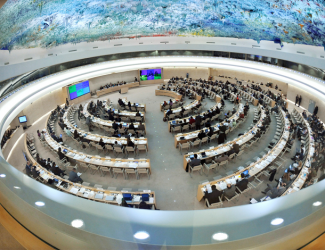
Jean-Marc Ferré | Flickr (CC BY-NC-ND 2.0)
A general view of participants at the 16th session of the Human Rights Council in Geneva, Switzerland.

Análisis Especiales

AWID es un organización feminista internacional de membresía, que brinda apoyo a los movimientos que trabajan para lograr la justicia de género y los derechos de las mujeres en todo el mundo.

Consejo de Derechos Humanos (CDH)

El Consejo de Derechos Humanos (CDH) es el cuerpo intergubernamental del sistema de las Naciones Unidas responsable de la promoción y protección de todos los derechos humanos en todo el mundo. El HRC se reúne en sesión ordinaria tres veces al año, en marzo, junio y septiembre.  La La Oficina del Alto Comisionado para los Derechos Humanos (ACNUDH) es la secretaría del Consejo de Derechos Humanos.

El CDH  trabaja de la siguiente forma:

  • Debate y aprueba resoluciones sobre cuestiones mundiales de derechos humanos y el estado de los derechos humanos en determinados países

  • Examina las denuncias de víctimas de violaciones a los derechos humanos o las de organizaciones activistas, quienes interponen estas denuncias representando a lxs víctimas.

  • Nombra a expertos independientes que ejecutarán los «Procedimientos Especiales» revisando y presentado informes sobre las  violaciones a los derechos humanos desde una perspectiva temática o en relación a un país específico

  • Participa en discusiones con expertos y  gobiernos respecto a cuestiones de derechos humanos.

  • A través del Examen Periódico Universal, cada cuatro años y medio, se evalúan los  expedientes de derechos humanos de todos los Estados Miembro de las Naciones Unidas

Aprende más sobre el CDH


La Sesión actual - CDH44

Se está llevarando a cabo en Ginebra, Suiza del 30 de junio al 17 de julio de 2020.

AWID trabaja con socios feministas, progresistas y de derechos humanos para compartir conocimientos clave, convocar diálogos y eventos de la sociedad civil, e influir en las negociaciones y los resultados de la sesión.

Con nuestrxs socixs, nuestro trabajo será:


◾️ Monitorear, rastrear y analizar actores, discursos y estrategias anti-derechos y su impacto en las resoluciones

◾️ Desarrollar conjuntamente una labor de promoción conjunta para contrarrestar a los actores anti-derechos y debatir más a fondo las conclusiones del Informe de Tendencias de OUR de 2017

◾️ Apoyar, coordinar y desarrollar de manera colaborativa el Caucus feminista emergente en el CDH


Contenido relacionado

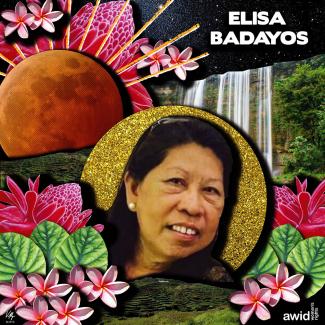
Elisa Badayos

Elisa era coordinadora de la organización de derechos humanos Karapatan, en la Provincia de Negros Oriental de Filipinas.

También era organizadora de comunidades urbanas empobrecidas de la Provincia de Cebú, y trabajaba con Desaparecidos, una organización de familiares de personas desaparecidas.

Elisa y dos de sus colegas fueron asesinadxs el 28 de noviembre de 2017 por dos hombres no identificados en Barangay San Ramón, en la ciudad de Bayawan de la Provincia de Negros Oriental, durante una misión que investigaba presuntas violaciones de derechos territoriales en la zona.

La sobreviven cuatro hijxs.


Elisa Badayos, Philippines

Snippet FEA Travesti (EN)

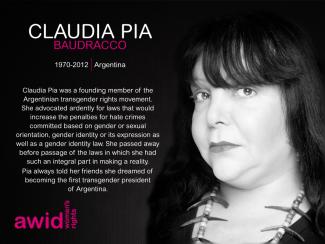
TRAVESTI

A latin-american gender identity

The term travesti is often mistakenly translated as "transvestite" in English. However, it is a Latin American gender identity with no equivalent in other languages, and exclusively female. It is a person designated male at birth who identifies as female. They may or may not undergo bodily changes, and should always be addressed with she/her pronouns.

Travesti is not only a gender identity located outside of gender binarism, it is also a cultural identity rooted in Latin American movements. The term was initially pejorative, but it was later re-appropriated as a symbol of resistance and dignity.

Every travesti is trans because she does not identify with the gender designated at birth, however not every travesti considers themselves as a trans woman, since travesti is already a gender identity on its own.

Source: Berkins, Lohana. (2006). Travestis: una Identidad Política [Travestis: a Political Identity]. Trabajo presentado en el Panel Sexualidades contemporáneas en las VIII Jornadas Nacionales de Historia de las Mujeres/ III Congreso Iberoamericano de Estudios de Género Diferencia Desigualdad. Construirnos en la diversidad, Villa Giardino, Córdoba, 25 al 28 de octubre de 2006.

Snippet - WITM why - RU

Почему Мне Следовало Бы Пройти Этот Опрос?

Key impacts on the international human rights system

Anti-rights actors have had a substantive impact on our human rights framework and the progressive interpretation of human rights standards, especially rights related to gender and sexuality.

When it comes to the impact of conservative actors in international policy spaces, the overall picture today is of stasis and regressions.


We have witnessed the watering down of existing agreements and commitment; deadlock in negotiations; sustained undermining of UN agencies, treaty review bodies and Special Procedures; and success in pushing through regressive language in international human rights documents.

Commission on the Status of Women (CSW)

The CSW, held annually in March, has long been one of the most contested sites in the UN system. In March 2015, conservative efforts set the tone before events or negotiations even began; the outcome document of the Commission was a weak Declaration negotiated before any women’s rights activists even arrived on the ground.

At 2016’s CSW, the new Youth Caucus was infiltrated by large numbers of vocal anti-abortion and anti-SRHR actors, who shouted down progressive youth organizations. Again, intensive negotiations resulted in a lacklustre text, which included regressive language on ‘the family.’

Precisely when addressing women’s human rights is of urgent importance, the CSW has been rendered a depoliticized and weakened space. Using it to advance rights has become harder and harder since progressives’ energy is taken up trying to hold the ground against conservative backlash.

Human Rights Council (HRC)

As the intergovernmental body responsible for the promotion and protection of human rights around the globe, the HRC is a key entry point for conservative actors. In recent years, this mechanism has been the scene for a number of damaging anti-human rights moves.

In conversation with other anti-rights actors, one strategy of conservative states, and blocs of states, is to aggressively negotiate out positive language and to introduce hostile amendments to resolutions, most often resolutions focusing on rights related to gender and sexuality.

To take one example, during the June 2016 session of the HRC, opposition was mounted towards a resolution on discrimination against women by the member states of the Organization of Islamic Cooperation (OIC) and allies. During contentious negotiations, multiple provisions were removed, including women’s and girls’ right to have control over their sexuality, sexual and reproductive health, and reproductive rights; and the need to repeal laws which perpetuate the patriarchal oppression of women and girls in families, and those criminalizing adultery or pardoning marital rape.

The HRC has also been the site of pernicious conservative initiatives to co-opt human rights norms and enact conservative “human rights” language, such as that of the Russia-led “traditional values” resolutions, and more recently the “Protection of the Family” agenda.

Human Rights Committee

In 2015, moving their sights to another front, a number of religious right organizations began to target the Human Rights Committee, the treaty monitoring body for the International Covenant on Civil and Political Rights (ICCPR), a pivotal human rights instrument.

Anti-human rights groups mobilized in hopes of cementing their anti-abortion rhetoric into the treaty.

When the Committee announced it was drafting a new authoritative interpretation of the right to life, over 30 conservative non-state actors sent in written submissions, advocating their misleading discourse on ‘right to life’ - that life begins at conception and that abortion is a violation of the right - be incorporated in the Committee’s interpretation of article 6.

Conservative groups targeting the Human Rights Committee was a shift considering that historically anti-human rights actors have repeatedly attempted to undermine and invalidate the essential work of the treaty monitoring bodies, including the Human Rights Committee.

SDG negotiations and Agenda 2030

Anti-human rights actors were involved in lobbying towards the development of the new Sustainable Development Goals (SDGs) in 2015, focusing again on rights relating to gender and sexuality. These efforts had limited traction in their attempts to embed regressive language in Agenda 2030.

However, after successfully pushing back against progressive language in the final text, conservative actors then pivoted to another strategy. In an attempt to evade state accountability and undermine the universality of rights, several states have repeatedly made reservations to the Goals.

On behalf of the African Group, Senegal claimed that African states would only “implement the goals in line with the cultural and religious values of its countries.”

The Holy See also made a number of reservations, stating it was “confident that the related pledge ‘no one will be left behind’ would be read” as meaning “the right to life of the person, from conception until natural death.”

Saudi Arabia went one step further, declaring that the country would not follow any international rules relating to the SDGs that reference sexual orientation or gender identity, describing them as running “counter to Islamic law.”

General Assembly (GA)

Anti-rights actors have made increasing headway at the UN General Assembly (GA).  Most recently, during the 71st session in 2016, the GA was the scene of feverish anti-rights organizing in opposition to the new mandate created by the Human Rights Council resolution on sexual orientation and gender identity in June 2016: the Independent Expert on SOGI. Four separate attempts were made to undercut the mandate in GA spaces.

One approach was to introduce a hostile resolution at the Third Committee[1], led by the African Group, which in essence aimed to indefinitely defer the new mandate. While this approach was not successful, such an attempt in the GA to retroactively block the creation of a mandate brought forward by the Human Rights Council represented a new and troubling tactic - anti-right actors are now working to directly undermine the HRC’s authority respective to the General Assembly.

Another approach targeted the Fifth Committee (responsible for administration and budgetary matters) as an entry point to attack the mandate. In an unprecedented move a number of States attempted (again, unsuccessfully) to block the funding of UN human rights experts, including the new IE on SOGI[2],.

While these multiple efforts were unsuccessful in blocking the creation and continuation of the new mandate, the significant support they received, the novel strategizing employed, and the strong alliances built along regional lines through negotiations point to difficulties ahead.


[1] The Third Committee of the GA deals with agenda items relating to a range of social, humanitarian affairs, and human rights issues.  Each year it discusses and issues resolutions on issues including the advancement of women, the protection of children, family, and youth.

[2] While UN Special Procedures experts (i.e. Special Rapporteurs, Working Group members and Independent Experts) work pro bono, some funds are generally allocated to facilitate country visits on the invitation of the national government, and support staff.


Other Chapters

Read the full report
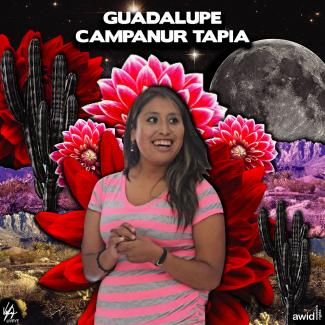
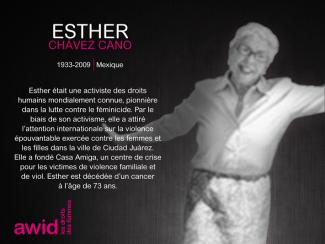
Guadalupe Campanur Tapia

Guadalupe était une activiste environnementale impliquée dans la lutte contre le crime à Cherán, au Mexique.

En 2011, Guadalupe a aidé à renverser le gouvernement local. Elle participait à des patrouilles de sécurité locale, notamment dans les forêts municipales et faisait partie des dirigeant-e-s autochtones de Cherán qui ont appelé les gens à défendre leurs forêts contre l’abattage implacable et illégal. Son travail pour les aînés, les enfants, les travailleurs-euses a fait d'elle une icône dans sa communauté.

Elle a été assassinée à Chilchota, au Mexique, à environ 30 kilomètres au nord de Cherán, sa ville natale.


Guadalupe Campanur Tapia, Mexico

Snippet FEA Lohana Berkins (ES)

Una de las líderes fundadoras de la cooperativa fue Lohana Berkins, activista, defensora y promotora de la identidad trans. Lohana jugó un papel crucial en la lucha por los derechos de las personas trans y travesti.

A través de su lucha se consiguió, entre muchas otras cosas, la aprobación de la Ley de Identidad de Género. Es una de las legislaciones más progresistas del mundo, garantizando derechos fundamentales a las personas trans y travestis. Ahora, las personas pueden cambiar sus nombres y géneros solo con una declaración jurada, y tener acceso a atención médica integral sin intervención/aprobación judicial o médica (Outright International, 2012).

Snippet - WITM To Strengthen - PT

Para fortalecer a nossa voz e poder coletivos para obter mais recursos de melhor qualidade para a organização feminista, de direitos das mulheres, de LBTQI+ e de aliados globalmente.

Sala de prensa

AWID en los medios

Compilación de noticias sobre la organización y/o el trabajo de AWID


Notas de prensa

Notas de prensa, dosieres y kits


Kits de social media

Contacto para medios

Email de contacto

+1 416 594 3773

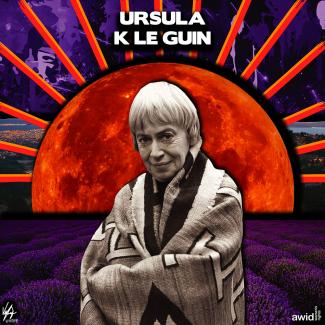
Ursula K Le Guin

Ursula was an American novelist who worked mainly in the genres of fantasy and science fiction.

She found fame with The Left Hand Of Darkness, which imagines a future society where people are ambisexual – they have no fixed sex. It explores the effects of gender and sex in society, and was one of the first major feminist science fiction books. Ursula was inspiring in her subversive and original writing, and also for the themes of feminism and freedom she held so dearly.

In a 1983 address at Mills College in California, she told graduates: “Why should a free woman with a college education either fight Macho-man or serve him? Why should she live her life on his terms? I hope you live without the need to dominate, and without the need to be dominated.”


Ursula K Le Guin, USA

Snippet FEA Exclusion and Stigma (FR)

Une illustration d'un mégaphone en bleu marine. Des lignes représentant des ondes sonores sortent de l'extrémité du haut-parleur, en bordeaux.

L'EXCLUSION, LA STIGMATISATION ET LES ABUS INSTITUTIONNELS
auxquels les personnes trans et les travestis continuent de faire face au quotidien

Snippet - WITM Why now_col 2 - PT

O financiamento dos movimentos feministas é fundamental para garantir uma presença mais justa e pacífica, e um futuro liberto.

Na última década, os financiadores investiram significativamente mais dinheiro na igualdade de género; no entanto, apenas 1% do financiamento filantrópico e de desenvolvimento foi efetivamente direcionado para apoiar diretamente mudanças sociais lideradas por feministas
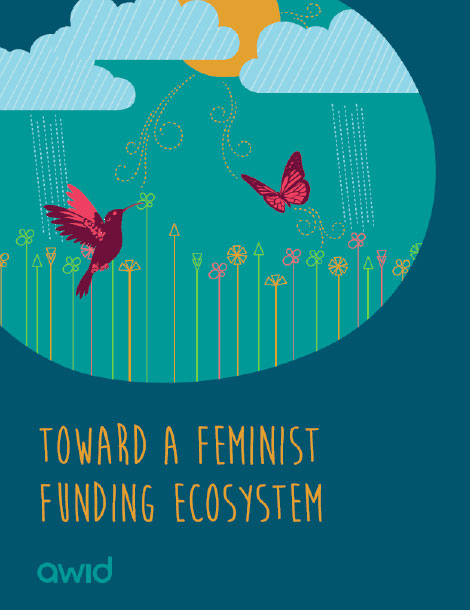
Na busca da abundância, e para acabar com esta escassez crónica, o inquérito WITM é um convite para os defensores do feminismo e da justiça de género se envolverem no percurso da recolha coletiva de testemunhos e de casos para mobilizar mais recursos financeiros de melhor qualidade e recuperar o poder no ecossistema de financiamento neste momento. Em solidariedade com os movimentos que continuam invisibilizados, marginalizados e sem acesso a financiamento central, de longo prazo, flexível e baseado em fundos fiduciários, o inquérito WITM destaca o estado efetivo dos recursos, desafia soluções falsas e aponta.

Here are your report and infographics: Toward a feminist funding ecosystem

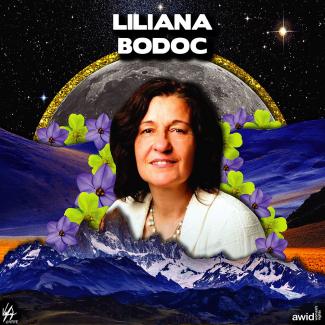
Liliana Bodoc

Liliana fue una maestra argentina, una tejedora y una escritora muy reconocida.

Su trilogía La saga de los confines recibió varios premios y es única en el género fantástico por su uso y reimaginación de la mitología de los pueblos indígenas de América del Sur.

El compromiso de Liliana con el feminismo se expresaba en las diversas, ricas y fuertes voces de mujeres en su escritura y especialmente en su extensa obra para lectorxs jóvenes. También tomó posición públicamente en favor del aborto, la justicia económica y la equidad de género.


Liliana Bodoc, Argentina

Snippet FEA The fight for a world full of workplaces (EN)

The fight for a world full of workplaces that are free from of all forms of discrimination, stigma and exclusion is  a worthy one. A world in which sex work is decriminalized and recognized as work is part of this.

A world where all workers have safe working conditions, dignified wages, and can enjoy the same rights like health care, pension pay, sick days, holidays, job security and more, no matter their gender, race, ethnicity, age or ability. Labor rights are feminist issues, and feminist unions play a key role in advancing the legal, labor and economic rights of all workers, especially migrant workers, domestic workers, informal workers and sex workers. These are folks who have most recently been disproportionately affected by the pandemic, its burdens of care, lockdowns, curfews and increased policing. Let us introduce you to the stories of feminists and union organizers that are fighting for better working conditions and better worlds for all.

Какую цель преследует опрос «Где деньги?»

Ключевая цель исследования – осветить финансовое положение различных феминистских движений, инициатив за права женщин, гендерную справедливость, ЛГБТКИ+ и смежных движений по всему миру и, основываясь на этом, еще больше усилить аргументы в пользу увеличения объема денежных средств и передачи власти феминистским движениям.

Cláusula de exención de responsabilidad: Comunicaciones con el equipo de AWID

Si has recibido correos electrónicos de integrantes del equipo de AWID, nos gustaría que tengas presente lo siguiente:

  • La información contenida en esta comunicación es confidencial y está destinada exclusivamente la persona que lo recibe.

  • Esta comunicación podría contener información que es propiedad de la Asociación para los Derechos de las Mujeres y el Desarrollo (AWID, por sus siglas en inglés). Esta información no puede reproducirse ni diseminarse  ni parcialmente ni  en su totalidad sin el consentimiento escrito de AWID.

  • AWID no garantiza que la información aquí contenida sea completa o correcta. Esta comunicación no es una oferta para elaborar ningún tipo de acuerdo y no es una confirmación de ningún acuerdo descrito en este documento, a menos que el contexto indique claramente lo contrario.

  • AWID no está actuando en calidad de asesora de ningún acuerdo que pueda surgir de este documento, y esta comunicación no constituye una recomendación, guía o propuesta para elaborar un acuerdo.

  • AWID no garantiza o asegura los resultados esperados de cualquier acuerdo. Esta comunicación puede contener puntos de vista y opiniones que pueden no corresponderse con aquellos de AWID.

  • No tendrá derecho a utilizar la información contenida en esta comunicación con fines de llegar a cualquier tipo de propuesta de acuerdo u otro.