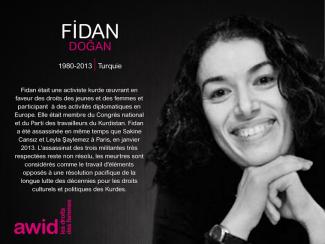
Fidan Dogan
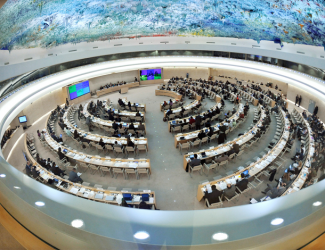
Le Conseil des droits de l'homme (CDH) est un organe intergouvernemental clé du système des Nations Unies, responsable de la promotion et la protection des droits humains autour du globe. Il se réunit trois fois par an en session ordinaire, en Mars, Juin et Septembre. Le Bureau du Haut-Commissariat des Nations Unies aux Droits de l’Homme (HCDH) constitue le secrétariat pour le CDH.
Débat et adopte des résolutions sur les questions globales des droits humains ainsi que sur la situation des droits humains dans des pays particuliers
Examine les plaintes des victimes de violations des droits humains et des organisations activistes, au nom des victimes de violations des droits humains
Nomme des experts indépendants (que l'on connaît sous le nom de « Procédures Spéciales ») pour réviser les cas de violation des droits humains dans des pays spécifiques, ainsi que pour examiner et suivre des questions globales relatives aux droits humains
Prend part à des discussions avec les experts et les gouvernements sur les questions de droits humains
Évalue les bilans des États membres de l'ONU en matière de droits humains tous les quatre ans et demi, dans le cadre de l'examen périodique universel.
La prochaine session du CDH a lieu à Genève, en Suisse, du 30 juin au 17 juillet 2020.
AWID travaille avec des partenaires féministes, progressistes et du domaine des droits humains pour partager nos connaissances clé, convoquer dialogues et évènements avec la société civile, et influencer les négociations et les résultats de la session.
Мы запрашиваем эти данные, чтобы облегчить просмотр ответов, избежать дублирования и иметь возможность связаться с вашей организацией в случае, если вы не смогли завершить опрос и/или если у вас возникли сомнения или дополнительные вопросы. Здесь вы можете узнать больше о том, как мы используем личную информацию, которую собираем в ходе нашей работы.
Alors que les fondamentalismes, les fascismes et autres systèmes d’oppression se métamorphosent et trouvent de nouvelles tactiques et stratégies pour consolider leur pouvoir et influence, les mouvements féministes persévèrent et célèbrent leurs victoires nationales, régionales et internationales.
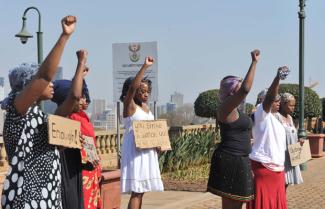
La reconnaissance en 2019 par le Conseil des droits de l’Homme du droit à l’intégrité et à l’autonomie corporelles, par exemple, a marqué une étape cruciale. Des résolutions du Conseil sur la discrimination envers les femmes et les filles admettent cependant un recul lié à des groupes de pression rétrogrades, des conceptions idéologiques ou un détournement de la culture ou la religion pour s’opposer à l’égalité de leurs droits. Des avancées féministes sont aussi notées dans le travail des Procédures spéciales, qui soulignent notamment l’obligation des États de contrer les doctrines de l’idéologie du genre, rappellent à l’ordre les antidroits qui détournent des références à la « culture », et signalent que les convictions religieuses ne peuvent pas servir à justifier la violence ou la discrimination.
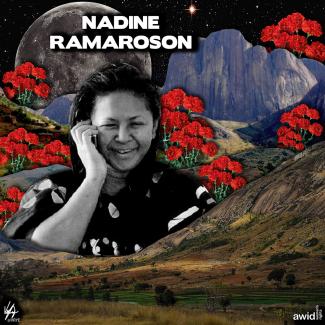
Nadine fue un ejemplo para muchxs por su trabajo en apoyo de las mujeres y lxs más vulnerables de su comunidad. Estaba comprometida con ayudar a l pobres, especialmente a las personas sin techo.
Aunque su muerte se informó como accidente, la familia Ramaroson, encabezada por su padre, André Ramaroson, llevó adelante una investigación que arrojó evidencias de que había sido asesinada. Se informó que había muerto en un accidente fatal ocurrido entre Soanierano - Ivongo y Ste Marie, una historia que fue desmentida por su familia. Ella había recibido numerosas amenazas de muerte por sus audaces posiciones políticas. Su caso todavía está en la corte de Antananarivo (la capital de Madagascar).
The AWID Forum is just one stop in the Feminist Realities journey. Let’s travel this path together and explore our power in action!
O questionário está disponível até o final de julho de 2024. Queira preencher o mesmo dentro deste prazo para garantir que as suas respostas são incluídas na análise.
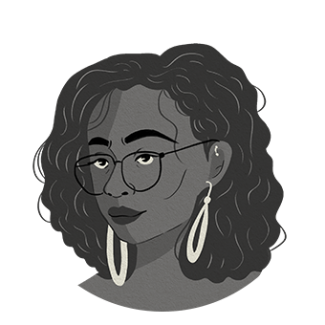 |
Akosua Hanson is an artistic activist, based in Accra, Ghana. Her work spans radio, television, print media, theatre, film, comic art exhibitions, art installations, and graphic novels. Akosua’s activism has been centred around pan-Africanism and feminism, with an interest in the intersection of art, pop culture, and activism. She has a Masters in Philosophy in African Studies with a focus on Gender and African Philosophical Thought. Akosua Hanson is the creator of Moongirls, a graphic novel series that follows the adventures of four superheroes fighting for an Africa free from corruption, neocolonialism, religious fundamentalism, rape culture, homophobia and more. She works as a radio host at Y 107.9 FM, Ghana. |
In these panels, the Moongirl Wadjet is engaged in BDSM lovemaking with a two-gender daemon. Of the four Moongirls, Wadjet is the healer and philosopher, the conduit of the Oracle. She does this to launch a scientific and spiritual process – an experiment she calls “Illumination by the Light of the Full Moon” – through which she traces a vibrational time arc between her memories, sensations, emotions, visions, and imagination. It is a form of vibrational time travel in order to discover what she terms as “truth-revelations.”
During the experience, some of Wadjet’s hazy visions include: an approaching apocalypse brought about by humans’ environmental destruction in service to a voracious capitalism; a childhood memory of being hospitalized after a mental health diagnosis; and a vision of a Moongirls’ origin story of the Biblical figure of Noah as an ancient black Moongirl warning of the dangers of environmental pollution.
More than a fun kink to explore for the sensations, BDSM can be a way of addressing emotional pain and trauma. It has been a medium of sexual healing for me, providing a radical form of liberation. There is a purge that happens when physical pain is inflicted on the body. Inflicted with consent, it draws out emotional pain – almost like a “calling forth.” The whip on my body allows me to release suppressed emotions: anxiety, depression, my sense of defenselessness to the stresses that overwhelm me sometimes.
When engaging in BDSM as an avenue for healing, lovers must learn to be very aware of and responsible for each other. Because even though consent may have been initially given, we must be attentive to any changes that might occur in the process, especially as feelings intensify. I approach BDSM with the understanding that in order to surrender pain, love and empathy have to be the basis of the process and by that, I create space or open up for love.
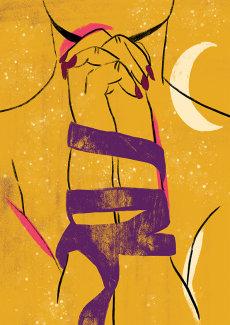
The engagement with aftercare after the infliction of pain is a completion of the process. This can be done in very simple ways such as cuddling, checking if they need water, watching a movie together, sharing a hug or just sharing a joint. It can be whatever your chosen love language is. This holding space, with the understanding that wounds have been opened, is necessary to complete the process of healing. It is the biggest lesson in practising empathy and learning to really hold your partner, due to the delicacy in blurring the lines between pain and pleasure. In this way, BDSM is a form of care work for me.
After BDSM sex, I feel a clarity and calm that puts me in a great creative space and spiritually empowers me. It is an almost magical experience watching the pain transform into something else in real time. Similarly, this personally liberating experience of BDSM allows Wadjet to access the foreknowledge, wisdom, and clarity to aid in her moongirl duties in fighting African patriarchy.
Moongirls was birthed during my tenure as the director for Drama Queens, a young artistic activist organization based in Ghana. Since our inception in 2016, we’ve employed different artistic media as part of their feminist, pan-Africanist, and environmentalist activism. We used poetry, short stories, theatre, film, and music to address issues such as corruption, patriarchy, environmental degradation, and homophobia.
Our inaugural theatre production, “The Seamstress of St. Francis Street” and “Until Someone Wakes Up” addressed the problem of rape culture in our communities. Another one, “Just Like Us,” was arguably one of the first Ghanaian theatre productions to directly address the country’s deep-seated issue of homophobia. Queer Universities Ghana, our queer film workshop for African filmmakers, has trained filmmakers from Ghana, Nigeria, South Africa, and Uganda. Films birthed during the workshop, like “Baby Girl: An Intersex Story” by Selassie Djamey, have gone on to be screened at film festivals. Therefore, moving to the medium of graphic novels was a natural progression.
About seven years ago, I’d started a novel that I never completed about the lives of four women. In 2018, the Open Society Initiative for West Africa (OSIWA) opened up a grant opportunity that launched the production of the project and my uncompleted novel was turned into Moongirls.
There have been two seasons of Moongirls made up of six chapters each. Contributing writers and editors for the first season were Suhaida Dramani, Tsiddi Can-Tamakloe, George Hanson, and Wanlov the Kubolor. Writers for the second season were Yaba Armah, Nadia Ahidjo, and myself. Character illustrations and conceptualizations were by Ghanaian artist Kissiwa. And AnimaxFYB Studio, a premium animation, design, and visual effects studio, does the illustrations.
|
|
Writing Moongirls between 2018 and 2022 has been a labour of love for me, even, a labour for liberation. I aim to be very explorative in form and style: I’ve dabbled in converting other forms of writing, such as short stories and poetry, to graphic novel format. By merging illustration and text, as graphic novels do, Moongirls aims to tackle the big issues and to honor real life activists. My decision to centre queer women superheroes – which is rare to see in this canon – came to mean so much more when a dangerous backdrop started developing in Ghana in 2021.
Last year saw a marked hike in violence for the Ghanaian LGBT+ community that was sparked by the shutdown of an LGBT+ community centre. This was followed by arbitrary arrests and imprisonment of people suspected to be on the queer spectrum, as well as of those accused of pushing an “LGBT agenda.” Crowning this was the introduction in Ghanaian Parliament of an anti-LGBT bill named “Proper Human Sexual Rights and Ghanaian Family Values.” This bill is arguably the most draconian anti-LGBT bill ever drafted in the region, following previous attempts in countries like Nigeria, Uganda and Kenya.
I remember quite vividly the first time I read the draft of this bill.
It was a Friday night, typically a night I take off to rest or party after a long work week. By sheer luck, the draft was leaked and shared with me on a WhatsApp group. As I read it, a deep sense of fear and alarm made burnt toast of my Friday night chill. This bill proposed to slap any LGBT+ advocacy with five to ten years of imprisonment, and to fine and imprison people who identify as LGBT+ unless they “recanted” and accepted conversion therapy. In the draft bill, even asexual people were criminalized. The bill went for all fundamental freedoms: freedoms of thought, of being, and the freedom to hold one’s personal truth and choose to live your life by that truth. The bill even went for social media and art. If it passed, Moongirls would be banned literature. What the bill proposed to do was so evil and far-reaching, I was stunned into a depression at the depth of hate from which it had been crafted.
Scrolling through my Twitter timeline that night, the terror I felt inside me was mirrored. The timeline was a livestream of emotions as people reacted in real time to what they were reading: disbelief to terror to a deep disappointment and sorrow when we realized how far the bill wanted to go. Some tweeted their readiness to fold up and leave the country. Then, in the way Ghanaians do, sorrow and fear is alchemized to humour. From humour came the zest to upscale the fight.
So, the work still continues. I created Moongirls to provide an alternative form of education, to provide knowledge where it has been suppressed by violent patriarchy, and to create visibility where the LGBT+ community has been erased. It is also important that African BDSM is given this platform of representation when so much of BDSM representation is white. Sexual pleasure, through BDSM or otherwise, as well as non-heterosexual love, transcend race and continent because sexual pleasure and its diversity of experience are as old as time.

"He dado testimonio de la discriminación que vi en las calles, he sufrido burlas y abusos verbales ahí. También he hecho numerosas amistades y he conocido a mucha gente. Puede que haya peligros ahí fuera, pero soy una sobreviviente y aquí es donde estaré por ahora." - Sainimili Naivalu
Exigió a las autoridades políticas y a otras partes interesadas que proporcionaran políticas y servicios favorables a la movilidad de las personas con discapacidad, como la construcción de rampas en pueblos y ciudades para aumentar su accesibilidad. Sin embargo, las barreras físicas no fueron las únicas que Sainimili se esforzó por cambiar. Por experiencia propia, sabía que era necesario que se produjeran cambios más complejos en las esferas sociales y económicas. Muchos de los retos a los que se enfrentan las personas con discapacidad tienen su origen en actitudes que llevan a la discriminación y al estigma.
Como sobreviviente y luchadora, Sainimili contribuyó a la creación conjunta de realidades feministas que fomentasen la inclusión y cambiasen las actitudes hacia las personas con discapacidad. Como afiliada a la Asociación de Lesiones de la Espina Dorsal de Fiji (SIA, por sus siglas en inglés) y a través del proyecto del Foro para Personas con Discapacidades del Pacífico “Pacífico Habilita”, Sainimili asistió a la formación de la Organización Internacional del Trabajo "Inicie su Negocio" en Suva, lo que le permitió transformar sus ideas en su propio negocio. Fue emprendedora en el puesto 7 del mercado de Suva, donde ofrecía servicios de manicura, y también se encargaba del puesto del mercado de las mujeres de SIA, donde vendía artesanías, sulus y otros objetos. El plan de Sainimili era expandir su negocio y convertirse en una importante empleadora de personas con discapacidad.
Además de su activismo, también fue medallista y campeona juvenil de tenis de mesa.
Sainimili era única, con una personalidad vivaz. Siempre podías saber si Sainimili estaba en una habitación porque su risa y sus historias eran los primero que notabas. - Michelle Reddy
Sainimili falleció en 2019.