
Carmela Elisarraraz Mendez
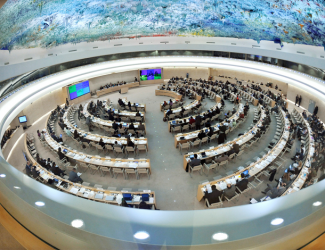
Le Conseil des droits de l'homme (CDH) est un organe intergouvernemental clé du système des Nations Unies, responsable de la promotion et la protection des droits humains autour du globe. Il se réunit trois fois par an en session ordinaire, en Mars, Juin et Septembre. Le Bureau du Haut-Commissariat des Nations Unies aux Droits de l’Homme (HCDH) constitue le secrétariat pour le CDH.
Débat et adopte des résolutions sur les questions globales des droits humains ainsi que sur la situation des droits humains dans des pays particuliers
Examine les plaintes des victimes de violations des droits humains et des organisations activistes, au nom des victimes de violations des droits humains
Nomme des experts indépendants (que l'on connaît sous le nom de « Procédures Spéciales ») pour réviser les cas de violation des droits humains dans des pays spécifiques, ainsi que pour examiner et suivre des questions globales relatives aux droits humains
Prend part à des discussions avec les experts et les gouvernements sur les questions de droits humains
Évalue les bilans des États membres de l'ONU en matière de droits humains tous les quatre ans et demi, dans le cadre de l'examen périodique universel.
La prochaine session du CDH a lieu à Genève, en Suisse, du 30 juin au 17 juillet 2020.
AWID travaille avec des partenaires féministes, progressistes et du domaine des droits humains pour partager nos connaissances clé, convoquer dialogues et évènements avec la société civile, et influencer les négociations et les résultats de la session.
Alexandra es una feminista anglo-colombiana con más de 20 años de experiencia en programas locales, nacionales e internacionales sobre VIH y salud y derechos sexuales y reproductivos. Posee amplia experiencia en movilización de recursos y en relaciones con los donantes con fundaciones filantrópicas privadas y organismos multilaterales en nombre de ONG internacionales, nacionales y locales, sobre todo en América Latina y el Caribe. Antes de AWID, Alexandra trabajó en la Fundación Si Mujer, que presta servicios de aborto feminista, y como educadora en Colombia, RedTraSex y la International HIV/AIDS Alliance.
Es Licenciada en Relaciones Internacionales y Estudios para el Desarrollo de la Universidad de Sussex y posee un Máster en Salud Pública de la Escuela de Higiene y Medicina Tropical de Londres. En los pocos momentos en que no está trabajando o maternando, adora practicar natación, comer y, recientemente, comenzó a jugar al Zelda: Breath of the Wild con su hijo.
Yes! Please read the Call for Activities and apply here. Deadline is February 1st, 2024.
AWID is a part of an incredible ecosystem of feminist movements working to achieve gender justice and social justice worldwide. With our 40th anniversary, we are celebrating all that we’ve built over these last 40 years. As a global feminist movement support organization we know that working with fierce feminisms is our way forward, acknowledging both the multiplicity of feminisms and the value of fierce and unapologetic drive for justice. The state of the world and of feminist movements calls for brave conversations and action. We look forward to working together with our members, partners and funders in creating the worlds we believe in, celebrating the wins and speaking truth to power in service of feminist movements globally.
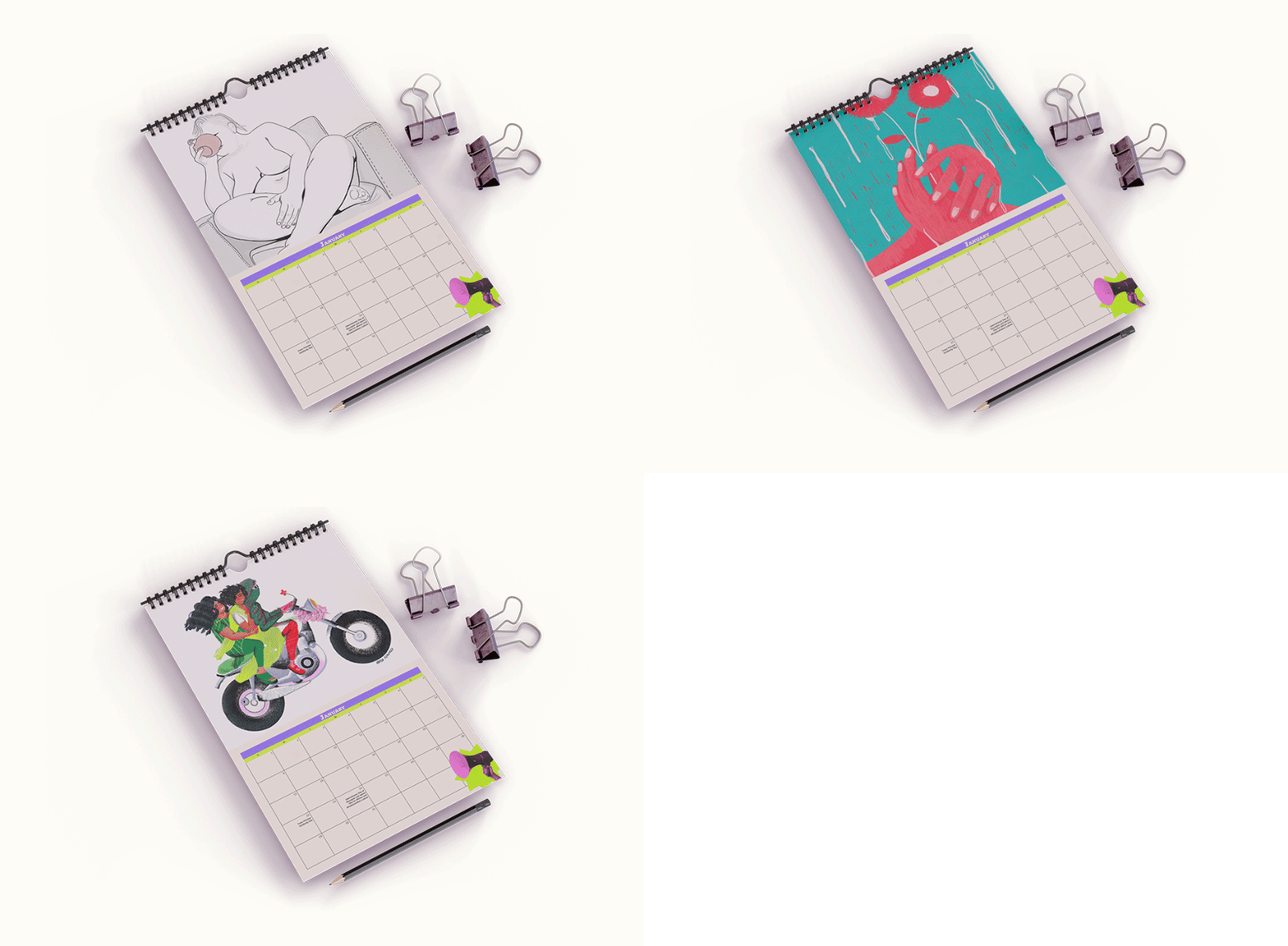
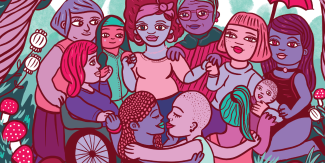
The 2023 Feminist Calendar is our gift to movements. It features the artwork of some of our amazing AWID members.
Get it in your preferred language! |
Select image quality |
| English | Print Quality | Digital Version |
| Français | Print Quality | Digital Version |
| Español | Print Quality | Digital Version |
| Português | Print Quality | Digital Version |
| عربي | Print Quality | Digital Version |
| Русский | Print Quality | Digital Version |
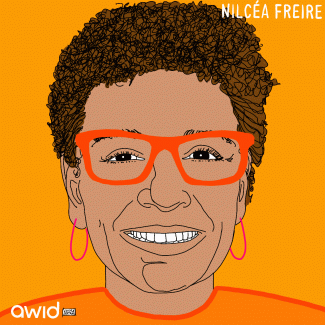
Nilcéa Freire was a Brazilian feminist activist, politician and academic. A persevering advocate for women’s rights and those of underrepresented minorities in the country, her life and work carried a long history of struggles and victories.
"While resisting we have to keep pushing for progress, and what we can achieve at this time, in my view, will be through the stupendous organization of young white women, and especially black women, in all of the state capitals and large cities of Brazil." - Nilcéa Freire
In 1999 she became the first woman to occupy the position of Dean at the State University of Rio de Janeiro. Here, she spearheaded the implementation of the first affirmative action policy for students graduating from public schools, requiring reserved places specifically for low-income black students in a public university. This system was adopted in dozens of other public universities.
Some years later, Nilcéa headed the Special Secretariat of Policies for Women in the government of former president Luiz Inácio Lula da Silva. In this capacity, she led the first National Women’s Conference. Over 12,000 women from across the country participated and the result of this collective work was embodied in the National Plan for Policies for Women.
Her commitment to women, Afro-Brazilians and indigenous peoples was also strongly reflected in her work to promote their rights through initiatives of the Brazil Ford Foundation office where she was a regional director.
The feminist activist Manoela Miklos recounted Nilcéa to be "a woman without equal".
At the age of 66, Nilcéa passed away in Rio de Janeiro on 29 December 2019 of cancer.
"Without words for the news of the death of dear Nilcea Freire. It is too sad to know that she left so early. She was always part of the ranks of those who do not settle for the injustices of the world. She was the Minister of Women, an activist, always active in the feminist cause. Much missed!” - Jandira Feghali, Federal Deputy
Watch Brazilian feminist Nilcea Freire on why we need to show solidarity with Brazil
Jemutai es una apasionada amante de las plantas que encuentra inspiración en el mundo natural y su intrincada red de interconexiones. Esta fascinación con las interrelaciones del universo se refleja en su abordaje del trabajo, la construcción de comunidad, el cuidado y el apoyo. Cree en la vibrante presencia de sus ancestres dentro de sí misme, y vive para experimentar, recordar, sostener, apreciar y celebrar sus luchas, triunfos y valores.
Como activista queer, interseccional, feminista y por los derechos humanos, Jemutai ha dedicado su carrera a abogar por la equidad y la inclusividad. Es une apasionade del desarrollo organizacional, con formación en otorgamiento de subvenciones y administración, y ahora está dedicade a crear experiencias de impacto para encuentros y a brindar liderazgo y apoyo operacionales, garantizando que los espacios sean inclusivos, seguros y organizados con precisión y cuidado.
Jemutai también es une firme creyente en la filosofía de Ubuntu: la idea de que «yo soy porque nosotres somos». Esta creencia en nuestra humanidad compartida y en nuestra mutua interdependencia configura su enfoque colaborativo y su compromiso con la promoción de un ambiente inclusivo y que fomenta el apoyo para todes y, en especial, para gente silenciada y marginada.
No, no es necesario ser afiliadx de AWID para participar, pero lxs afiliadxs de AWID reciben una tarifa de inscripción con descuento, así como otros beneficios.
Obtén más información sobre cómo sumarte a la membresía de AWID.
A living collection of resources to support feminist movements, policy-makers, and allies to resist fascisms, fundamentalisms, and anti-rights trends.

We’re committed to protecting your privacy, so here we explain how we use cookies on our website.
If you have any questions, please get in touch via the form on our contact page.
A cookie is a small data file downloaded by your web browser (for example Chrome or Internet Explorer) and stored on your computer. They are downloaded automatically when you visit websites. Cookies are used to perform essential tasks on a website, to record how people use a website and to gather data for marketing.
We provide essential information on our website to millions of people every year. To do this, we have to manage our website effectively and to reach out to more people who need our support and information. Cookies are a small, but essential way to make all this happen. We use cookies to:
You can update your cookie preferences by clicking on the button below.
In addition, most browsers allow you to manage cookies saved on your device – just go to the help section of your browser. To learn more about cookies and how to manage them, visit the ICO website.
Cookies never record your credit card details or easily identifiable personal data such as your name and address. You have every right to refuse to accept cookies from our website.
If you disable cookies you will still be able to access nearly all the information on our website. But please remember that this may affect some functionality.
You can disable cookies by changing your settings in your web browser or you can use the incognito option on Google Chrome. To find out more about your browser settings, visit the relevant support page below:
Thanks to our global feminist community! From May to August 2024, nearly 1,200 organizations working for Women's rights, gender justice, and LBTQI+ equality shared their experiences in the WITM survey. The results offer a unique picture of how feminist movements are resourced and where gaps remain.
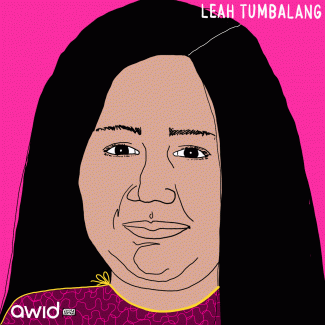
Leah Tumbalang fue una mujer lumad de Mindanao, en Filipinas. La historia del pueblo indígena lumad abarca generaciones de resistencia contra la minería corporativa a gran escala, de protección de los territorios ancestrales, los recursos y la cultura, y de lucha por la autodeterminación.
Leah era una líder lumad, y dirigente de Kaugalingong Sistema Igpasasindog to Lumadnong Ogpaan (Kasilo), una organización lumad y campesina que lucha contra la instalación de corporaciones mineras en Bukidnon, en la provincia de Mindanao. Fue inclaudicable en su activismo anti minería, al emprender con fervor campañas contra los efectos devastadores de la extracción de minerales en el medio ambiente y las tierras de los pueblos indígenas. Era también una organizadora política de la lista electoral Bayan Muna, que integra el partido político de izquierda Makabayan.
Durante casi una década Leah (junto con otrxs integrantes de Kasilo) recibió amenazas debido a su oposición al despliegue de grupos paramilitares, que se cree son respaldados por intereses mineros.
«Como líder lumad de su comunidad, ella está en la primera línea de lucha por sus derechos a la tierra ancestral y a la autodeterminación.» - Kalumbay Regional Lumad Organization
Estar en la vanguardia de la resistencia también significa, a menudo, ser un blanco para la violencia y la impunidad, y Leah no solamente recibió numerosas amenazas de muerte, sino que fue asesinada el 23 de agosto de 2019 en la ciudad de Valencia, en Bukidnon.
Según un informe de Global Witness, «en números absolutos, Filipinas fue el país peor afectado» en lo que respecta a activistas ambientalistas asesinadxs en 2018.
Lee el informe de Global Witness, publicado en julio de 2019
Nos membres forment un réseau dynamique de personnes dans le monde entier. Ce sont des chercheur-euse-s, des universitaires, étudiant-e-s, éducateur-trice-s, militant-e-s, femmes et hommes d’affaires, des responsables politiques, des praticien-ne-s du développement, des bailleurs de fonds. Nos membres, de tous âges, font de l’AWID une association féministe mondiale unique.
Nous proposons divers types d’adhésions en fonction du niveau de revenus et selon que vous êtes une personne ou une organisation. À l’heure actuelle, nous comptons plus de 5 000 membres, individuel-lle-s et institutionel-lle-s, issu-e-s de 164 pays.
Nous collaborons aux plaidoyers sur des problématiques spécifiques ; nos membres votent à l’élection des membres de notre conseil d’administration et peuvent également participer à nos actions prioritaires par le truchement de webinaires, d’enquêtes, d’actions urgentes, pour ne citer que quelques exemples.
Nos membres institutionnel-le-s représentent des organisations qui souhaitent faire progresser la justice de genre et les droits humains des femmes. Il s’agit d’organisations de droits des femmes, de l’échelle locale à la scène mondiale, de réseaux communautaires, de grandes institutions internationales, de ministères gouvernementaux, de programmes universitaires, et bien plus encore. Quelque 63 % de nos membres proviennent des pays du Sud et 38 % ont moins de 30 ans.
Oui ! Nous explorons actuellement des technologies innovantes qui permettront une connexion et une participation considérables.
¿Quieren juntar a distintas personas para fortalecer la resistencia? Esta metodología de talleres ofrece ejercicios grupales para incrementar el conocimiento y el poder colectivos, con opciones para adaptarlos a las distintas necesidades.
This policy governs all pages hosted at www.awid.org, and any other websites under the control of the AWID (the “Website”) and registrations for these sites. It does not apply to pages hosted by organisations other than AWID, to which we may link and whose privacy policies may differ. Please read the following policy to understand our privacy policy regarding nature, purpose, using and sharing of your personal identifiable information that is collected via this website.
Generally, you can browse this website without submitting your personal information to us. However, in some circumstances, we will ask for your personal information.
When you are on the website and are asked for personal information, you are sharing that information only with AWID.
When you register to use the website – for example, subscribe to receive emails from us or apply to become a member - you provide us with the mandatory information about you like Name, country, language to receive email updates and email address. This information is provided by you through secure forms and is stored on secure servers.
Also, while becoming a member or registering for events, you may need to provide payment information. AWID doesn’t store any credit card information on its servers and uses payment gateway to process the payment information.
When you communicate with AWID, provide optional information through forms on the website or use the site to communicate with other members, we collect information about your communication and any information you choose to provide.
When you communicate with us, we collect your communication and any other information you choose to provide us.
In addition, when you interact with the Website, our servers may keep an activity log that does not identify you individually (“Non-Personal Information”). Generally, we collect the following categories of Non-Personal Information:
For more information about cookies, please see www.allaboutcookies.org.
If you do not wish to receive cookies you can easily modify your web browser to refuse cookies, or to notify you when you receive a new cookie, see how here.
AWID uses the information we collect about you to:
If you have subscribed to AWID´s e-newsletters or email updates or you have become a member, we will send you regular communications as specified in the relevant area of the website. You are able to unsubscribe from any of the e-newsletters or email updates at any time by using the unsubscribe information provided in our emails.
The accuracy of your individual identifying information is important to AWID. We are always looking for ways to make it easier for you to review and correct the information that AWID maintains about you through our website. If you change your email address, or if any of the other information we hold is inaccurate or out of date, please write to us here.
Except as explained below, AWID will not disclose any of your personally identifiable information, and will not sell or rent lists containing your information to third parties. AWID may disclose information when it has your permission to do so or under special circumstances, such as when it believes in good faith that the law requires it.
We are continuously implementing and updating administrative, technical, and physical security measures to help protect your information against unauthorized access, loss, destruction, or alteration. Some of the safeguards we use to protect your information are firewalls and data encryption, and information access controls. If you know or have reason to believe that your AWID membership credentials have been lost, stolen, misappropriated, or otherwise compromised or in case of any actual or suspected unauthorized use of your AWID membership account, please contact us through on Contact Us.
This policy may change from time to time. The changed policy will be posted on this website and Last updated date at the end of the policy will be updated. There will be an email update sent to you for the revised policy and if you do not agree with the revised policy, you will have the option to cancel you registration(s) with us. You can also write to us here. We welcome your feedback!
Last updated: May 2019
With 1,773 fossil fuel lobbyists at last year's COP29, we're heading alongside other feminists to Belém, Brazil for COP30, from 10 November – 21 November 2025, where we will continue to denounce false solutions, call out corporate capture, demand that States uphold their commitments under the Common but Differentiated Responsibilities and Respective Capabilities and push for feminist economic alternatives.
$2.7 trillion for the military. $300 billion for climate justice. We're here to flip the script.