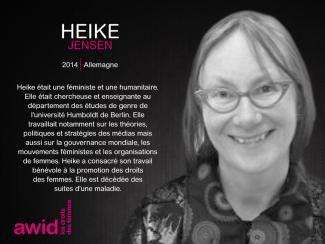
Heike Jensen
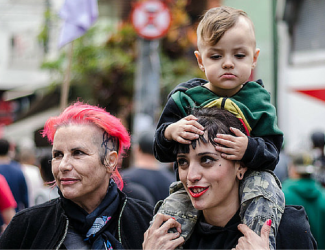
Au cours des dernières années, nous avons observé une nouvelle tendance inquiétante dans les espaces internationaux consacrés aux droits humains. Les discours axés sur « la protection de la famille » sont en effet utilisés pour défendre des violations des droits de membres de la famille, pour renforcer et justifier l’impunité des auteurs de ces violations et pour restreindre l’égalité des droits au niveau de la vie familiale.
La campagne en faveur de la « Protection de la famille » est motivée par une volonté conservatrice d’imposer des conceptions « traditionnelles » et patriarcales de la famille et de priver les membres de la famille de leurs droits pour les transférer à « l’institution familiale ».
Depuis 2014, un groupe d’Etats travaille de front dans les espaces dédiés aux droits humains sous le nom de « Group of Friends of the Family » (Groupe des ami-e-s de la famille) ; des résolutions sur la « Protection de la famille » ont été adoptées chaque année depuis 2014.
Ce programme s’est propagé au-delà du Conseil des droits humains. Nous avons observé l’introduction d’un discours régressif autour de la « famille » à la Commission sur la condition de la femme, ainsi que des tentatives d’introduction dans les négociations sur les Objectifs de développement durable.
L’AWID travaille avec des partenaires et des allié-e-s pour s’opposer ensemble à la « Protection de la famille » et à d’autres programmes régressifs et défendre l’universalité des droits humains.
En réponse à l’influence croissante d’acteurs régressifs au sein des espaces dédiés aux droits humains, l’AWID a rejoint des allié-e-s afin de créer l’Observatoire sur l'Universalité des droits (OURs) (site en anglais). L’OURs est un projet de collaboration qui surveille, analyse et diffuse les informations concernant les initiatives anti-droits telles que la « Protection de la famille ».
Le premier rapport de l’OURs, Nos droits en danger, trace une cartographie des acteurs et actrices qui constituent le lobby mondial anti-droits et identifie leur réthorique et stratégies clés ainsi que leur impact sur les droits humains.
Le rapport précise que le programme de « Protection de la famille » a développé une collaboration entre un large éventail d’acteurs régressifs aux Nations Unies, qu’il décrit comme « un cadre stratégique abritant des positions anti-droits et patriarcales multiples, où le cadre vise entre autres à légitimer et institutionnaliser ces positions. »
Filter your search by funders’ priority support areas that speak to your organizing efforts
«No adhiero al concepto de “Tercer Mundo”. Hago películas para que las personas (no importa de qué raza o color sean) puedan entenderlas. Para mí, solamente existen explotadores y explotadxs, eso es todo. Hacer una película significa tomar una posición.» - Sarah Maldoror
La innovadora Sambizanga (1972), su «película revolucionaria», sigue la lucha de liberación anticolonial de lxs militantes de Angola y capta la perspectiva de una mujer en el momento histórico en que se encuentra.
«Para muchxs cineastas africanxs, el cine es una herramienta revolucionaria, una educación política para crear consciencia. Se inscribe en la evolución de un Tercer Cine, que se orienta a descolonizar el pensamiento y promover cambios radicales en la sociedad.» - Sarah Maldoror
A lo largo de su carrera, Sarah (junto con otrxs artistas africanxs y caribeñxs) cofundó, en 1956, la primera troupe de teatro negra de Francia. Realizó alrededor de cuarenta películas, incluidos importantes documentales que difundieron la vida y la obra de artistas negrxs, entre lxs cuales se encuentra su amigo y poeta, Aimé Césaire, quien le escribió:
«A Sarah Maldo
que, cámara en mano,
lucha contra la opresión, la alienación
y se planta de cara
frente a la estupidez humana.»
Sarah estaba también dedicada a lograr que las mujeres africanas se apropiaran más del proceso de filmación. En una entrevista, señaló:
«Las mujeres africanas deben estar en todos lados. Deben estar en las imágenes, detrás de la cámara, en la sala de edición, y participar en todas las etapas de la realización de una película. Ellas deben ser quienes hablen sobre sus problemas.»
Sarah dejó un legado formidable para que sea continuado.
Nacida el 19 de julio de 1929, Sarah falleció el 13 de abril de 2020 debido a complicaciones por el coronavirus.
Mira Sambizanga y lee una reseña de la película en un artículo del New York Times de 1973 (solo en ingles)
Every year, AWID seeks to renew and enrich the perspectives and experience reflected in our Board of Directors by bringing in new members.
Currently, we are looking for individuals to serve 3-year terms on AWID’s Board, starting in early 2023. This is an opportunity to contribute to our organisation’s governance and to be part of an amazing group of feminists from around the world.
Please help us to identify thoughtful and bold feminists to nominate for election by July 29, 2022.
Please also share this invitation to nominate with your networks!
First and foremost, we are looking for candidates who are committed to AWID’s mission, who can make connections between local and global struggles, and who can help us to be thoughtful about how to best leverage AWID's positioning and strengths in a constantly evolving context. Candidates must be willing to uphold the legal duties and responsibilities of the AWID Board in the best interests of the organization.
This is a voluntary role that requires commitment and engagement throughout the year. Board members are expected to commit a minimum of 10-15 days per year to attend in-person and virtual meetings, and contribute to other communications.
We aspire for our Board to reflect diversity in all its forms, particularly in terms of gender identity, sexual orientation, age, geography and background. Additionally, we seek Board members with experience relevant to AWID’s priority areas of work.
While we will consider all candidates, in light of the current composition of the board, priority consideration will be given to:
Candidates with experience working at the intersections of women’s rights/gender justice and :
Candidates from the following regions:
The Board of Directors is key to inform AWID’s strategic direction and support our organisation to fulfill its mission in coherence with the world we live in and the needs of our movements.
Board members contribute to the organization in many ways: bringing governance experience from other spaces, perspectives from diverse sectors of feminist movements, and substantive expertise in areas relevant to AWID’s strategy.
The candidates who are ultimately elected will be joining the AWID Board in 2023, accompanying us for the launch of our new strategic plan led by AWID’s new Co-Executive Directors, and the planning of our next international Forum.
(You can nominate yourself or someone you know - with their consent)
Please also share this invitation to nominate with your networks!
Thank you, in advance, for helping us find our next wonderful Board members to support AWID in its journey ahead!
For many of us, 2020 was an especially challenging year due to the global health pandemic. Feminists and activists rose to the new challenges meeting community needs in innovative ways. Here are 5 highlights of how AWID contributed to feminist co-creation and resistance.
Si tu grupo u organización recibe financiamiento, es posible que desees discutir con tus donantes desde ahora si pueden apoyar tu viaje y participación en el Foro. Muchas instituciones planifican sus presupuestos para el próximo año a principios de 2023, por lo que es mejor no retrasar esta conversación para el próximo año.
Are you a UN policy maker and want to know the main anti-rights groups and discourses to look out for? Or a feminist looking for quick counter-arguments? This 8-page primer provides key information at a glance.
ÉCONOMIES DES SOINS AGROÉCOLOGIE ET SOUVERAINETÉ ALIMENTAIRECOOPÉRATIVISME FÉMINISTESYNDICALISME FÉMINISTE
María Digna Montero était une défenseuse Garifuna (d’origine africaine et autochtone) du droit à la terre et membre de l’Organisation fraternelle noire hondurienne (OFRANEH), une organisation communautaire oeuvrant à protéger les communautés Garifunas, leurs droits, leur culture, leurs ressources et leur territoire ancestraux.
María a également enseigné dans l'école locale et été membre du groupe de travail sur l'éducation bilingue interculturelle de l'OFRANEH.
Le 12 octobre 2019, jour de la Résistance autochtone, des inconnus ont tiré à plusieurs reprises sur María, alors qu’elle se trouvait dans l’arrière-cour de sa maison.
Elle est l'une des six défenseuses Garifunas à avoir été assassinées entre septembre et octobre 2019 et selon OFRANEH, ces crimes n’ont fait l’objet d’aucune enquête de la part des autorités. Dans une déclaration officielle, l'organisation a également souligné le lien entre la violence à l’encontre des dirigeants Garifunas et le développement des industries extractives qui exploitent les ressources naturelles de leurs communautés, affirmant que cette violence s’inscrivait dans une "stratégie d'intimidation et d'expulsion systématique" menée par l'État hondurien.
“La tension accrue et les risques croissants pour la sécurité et les droits humains des dirigeants des communautés et des territoires ancestraux sont le résultat de la dépossession, du déplacement et de la criminalisation des communautés et des mégaprojets d'extraction promus par l'État en collaboration avec les entreprises nationales et internationales". - Communiqué de l'OFRANEH, 12 octobre 2019
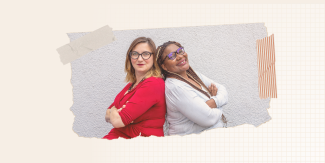
Las dos amigas se llaman a sí mismas las «Triple Cripples» [«Triples Inválidas»] porque, como mujeres discapacitadas negras, se ven sometidas a tres niveles de discriminación. Jay, actualmente de 31 años, contrajo polio cuando era bebé y utiliza una férula y unas muletas como sostén, mientras que Kym, de 25 años, tiene esclerosis múltiple y se moviliza en silla de ruedas. El nombre del dúo surge de un esfuerzo por redefinir la palabra «inválida» que, según ellas, «ha sido un término habitualmente usado contra las personas discapacitadas como injuria, como una forma infalible de recordarnos que estábamos “falladas” y que siempre íbamos a ser “menos que”.»
Como mujeres negras, Kym y Jay han sido víctimas del estereotipo racial globalizado que hipersexualiza la piel oscura. En su libro Heart of the Race: Black Women’s Lives in Britain [Corazón de la raza: las vidas de las mujeres negras en Gran Bretaña], Beverley Bryan, Stella Dadzie y Suzanne Scafe describen cómo las mujeres negras han sido históricamente definidas como un «riesgo de alta promiscuidad» por los doctores, debido a su libido y su fertilidad. Jay explica que «la gente piensa que estoy siempre dispuesta a hacer de todo y cualquier cosa todo el tiempo porque soy una mujer negra». Aunque ambas mujeres han sido sometidas a una intensa fetichización debido a su color de piel, sus discapacidades han confundido a muchas personas. Kym describe así su experiencia como mujer con curvas: «Tengo el tipo de cuerpo que la gente quiere manosear, y les parece que yo debería poder aceptarlo, pero, al mismo tiempo, existe esta idea de que yo no debería tener pretensiones, por mi discapacidad.»
En las plataformas de citas en línea, a Jay le han preguntado si puede realizar ciertas posiciones sexuales, dado que ciertas potenciales parejas «han decidido que quieren estar contigo de este modo y quieren saber si tu corporalidad puede facilitarlo.» Durante una consulta de control, Kym hizo disculparse a unx profesional médicx que, mientras completaba un formulario de admisión, le preguntó cuántas parejas sexuales ha tenido con un tono que implicaba «yo sé que estas preguntas no son aplicables en tu caso, pero tenemos que seguir el proceso estándar del cuestionario.»
El error de pensar que la falta de autonomía física equivale a una falta de deseo sexual es generalizado.
En la escuela, Jay era excluida de las clases de educación sexual, porque se presuponía que estaba incapacitada para tener sexo. Ella explica que incluso las organizaciones bien intencionadas que promueven el acceso a los servicios de salud sexual y reproductiva a menudo no tienen en cuenta las necesidades específicas de las mujeres discapacitadas. Por ejemplo, las píldoras son consideradas con frecuencia un método anticonceptivo efectivo, sin ninguna mención de que pueden agravar los riesgos de coágulos de las mujeres que usan sillas de ruedas.
Con sede en Londres, las Triple Cripples esperaban ansiosamente participar, junto con el equipo Decolonising Contraception [descolonizar la contracepción], en el SexFest2020, un festival de un día organizado para personas de color y dedicado a la salud y el bienestar sexuales. Desafortunadamente, el evento fue cancelado debido a la pandemia del COVID-19. A pesar de ello, sin desanimarse, Jay y Kim se volcaron a sus plataformas de activismo en línea, para oponerse a la forma en que la sexualidad es vista desde una perspectiva estrictamente heteronormativa y para desafiar la idea de que la femineidad está definida por la capacidad de procrear. El dúo inauguró un canal de YouTube y un podcast (también llamado «The Triple Cripples») para promover la representación de las personas discriminadas de múltiples formas como seres humanos holísticos. Sus planes a futuro incluyen un documental creativo y una muestra fotográfica dedicada a luchar contra la discriminación y a difundir las voces de personas de color discapacitadas.
La experiencia de discriminación basada en la raza, el género y la discapacidad es más que acumulativa.
Si bien las mujeres discapacitadas de color comparten experiencias de discriminación por motivos de discapacidad con otras personas discapacitadas, experiencias de sexismo con otras mujeres, y experiencias de racismo con otras personas de color, estas experiencias interactúan y no pueden ser separadas: las mujeres discapacitadas de color experimentan una discriminación singular como mujeres discapacitadas de color.
Si bien las Triple Cripples reconocen que las ideas anticuadas y superficiales sobre la diversidad no se transformarán, como por arte de magia, en espacios inclusivos de un día para otro, siguen confiando en que sus pequeños hachazos finalmente lograrán derribar los grandes robles que las prácticas discriminatorias representan para ellas.
La alegría de aceptarse y crecer al calor de esa luz.

La mujeridad obligatoria es un dispositivo colonial heterocispatriarcal de violencia hacia cuerpos asignados femeninos al nacer. Los cuerpos trans seguimos resistiendo a pesar de la invisibilización y apagamiento histórico. No soy mujer, me asignaron un género a partir de mis genitales.
![“Asignado Nderentendei Al Nacer” [Assigned Nderentendei at Birth] by Bastión Moral](https://web.archive.org/web/20210928161447/https://www.awid.org/sites/default/files/thumbnails/image/web_bastion-nderentendei.png "“Asignado Nderentendei Al Nacer” [Assigned Nderentendei at Birth] by Bastión Moral")
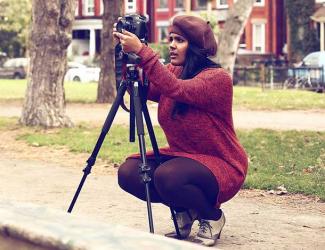
Avec plus de dix ans d'expérience en finance, Lucy a consacré sa carrière à développer les missions du secteur lucratif et non lucratif. Elle a notamment travaillé et été bénévole auprès d'organisations à but non lucratif. Issue du monde trépidant de la finance, Lucy reste à l'écoute des nouvelles compétences technologiques du domaine de la finance avec passion. Elle a rejoint l'AWID en 2014. Pendant son temps libre, elle aime écouter de la musique, voyager et pratiquer divers sports.
Nous sommes en communication avec les rassemblements régionaux et thématiques ainsi que les rencontres entre bailleurs de fonds prévus pour 2023-2024, afin d'assurer le bon déroulement des conversations et des connexions. Si vous organisez un événement et souhaitez le mettre en relation avec le Forum de l'AWID, n'hésitez pas à prendre contact avec nous !
El primer informe del Observatorio sobre la Universalidad de los Derechos funciona como un compendio de información sobre tendencias anti-derechos en espacios internacionales. Este informe permite conocer mejor a los principales actores anti-derechos religiosos, sus discursos y tácticas dentro de la ONU.

En 2023, le budget annuel médian des organisations féministes et de défense des droits des femmes était de 22 000 USD. Cette médiane masque de profondes inégalités : quelques groupes accèdent à des ressources considérables, tandis que la grande majorité survit avec des budgets très limités.
Un examen plus attentif des budgets réels révèle une immense diversité et une grande disparité dans les revenus.
Explorez les données relatives à la taille des budgets féministes
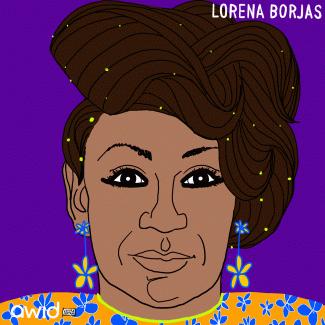
Lorena Borjas, a trans Latina woman and activist, lived and worked in the Jackson Heights neighborhood of Queens, New York City. In those streets, she looked after her community for years, advocating for trans and immigrant rights, supporting survivors of human trafficking and abuse, campaigning for sex workers’ rights and those of people living with HIV and AIDS.
Lorena was strong and tireless in her fight to support, defend, and have the back of those most marginalized and discriminated by transphobia, misogyny and racism.
“She pushed us to shine authentically, to become a scream of subversion that says, ‘I am here, and I deserve happiness, too.’” - Cecilia Gentili, a trans activist and Lorena’s friend
Having faced numerous traumas and hardships herself, as a trans immigrant woman and victim of human trafficking, Lorena pulled knowledge and emotional memory from the well of her experiences in order to help build and strengthen the community she was part of and which was part of her. Some of the ways she did this was to organize and mobilize support ranging from providing condoms and connecting trans women to different services, to setting up an HIV testing clinic in her own home.
"She was such a beautiful soul who helped others when her journey was difficult and painful as an immigrant, as a trans immigrant. She believed the trans community needed love, acceptance, and compassion, and she gave it all.” - Luchia Dragosh, QPTV Supervising producer of a documentary about Lorena
In more than 25 years of activism, she also founded the Lorena Borjas Community Fund together with Chase Strangio (lawyer and trans rights activist). The Fund helps the many different members of her community (and especially trans persons) dealing with immigration challenges to avoid the cycle of arrest-jail-deportation.
Lorena passed away in March 2020 of complications from COVID-19.
Her enormous and beautiful legacy will be taken forward through the streets of Queens by the network and community she co-created.
“We will pick up her work where she left it, work that is essential to the well-being of “mis pajaras” as she called the trans girls of Queens under her wing.” - Cecilia Gentili
"Lorena brought light to us when we were living through a very dark time here in New York. She brought us light when we were dealing with the crack epidemic, when we were dealing with the AIDS crisis, dealing with changes in immigration policies." - Cristina Herrera, founder and CEO of Translatina Network and Lorena’s friend
"Lorena has done more than anyone else I know to shine a light on the epidemic of trafficking in transgender communities and to help other trans women escape exploitation." - Lynly Egyes (represented Borjas on behalf of the Transgender Law Center)
Watch a documentary about Lorena Borjas
Read a postscript in The New Yorker about Lorena Borjas
Read an opinion piece in the New York Times by Cecilia Gentilin
Dear feminist movements,
Love is what keeps our feminist fire burning. Along with care for our communities, anger and rage in the face of injustice, and the courage to take action.
In September 2022, we stepped with great excitement into our leadership roles at AWID, as Co-Executive Directors. We felt the warmth and embrace of the feminist sisterhood as you welcomed us.
Reflecting on our most precious memories as feminists, we recall powerful moments of togetherness at street protests, sharp analysis, and brave voices shaking the status quo at gatherings. We held those intimate conversations into the night, laughed for hours, and danced at parties together.
Feminist fires need to be fed, especially in difficult times when there is no lack of external challenges, from the climate crisis and the rise of right-wing forces to exploitative economies and persisting patterns of oppression within our own social movements. It's these fires, burning ablaze everywhere, that light our ways and keep us warm, but we can’t disregard the exhausting effects of political violence and repression directed against many of our struggles, movements, and communities.
We understand the desire to change the world as an essential ingredient of feminist organizing. We can never forget that we are the ones we have been waiting for, in building alternatives and shaping our future. Yet, vibrant feminist energy cannot be taken for granted and must be safeguarded in many ways. In this, we will continue to be vigilant. Greater and equal access to care and wellbeing, to healing and pleasure, are not only instruments to prevent burnout and sustain our movements, though that is an important function; first and foremost, they are the way in which we hope to live our lives.
We are thrilled to roll up our sleeves and work with you. AWID’s new strategic plan “Fierce Feminisms: Together We Rise” reflects our conviction that now is the time for us to be fierce and unapologetic in our agendas while making an effort to connect across movements and truly get to know each other’s realities, so that we may rise together - because, for us, this is the only way.
Our plans include the long-awaited AWID Forum! We look forward to meeting you all in person and online in 2024. We are hearing from you the need to connect and recharge, to rest and heal, to be challenged and inspired, to share good food, and to laugh and dance together. Few things in this world are as powerful and transformative, as feminists from all parts of the world coming together, and we truly hold our breath for this moment, because we know the magic that we can create together.
Our membership engagement has taken on a life of its own through the AWID Community (our online platform for members), and our focus on building connection and solidarity resonates with many of you. Please join and connect with us and others in feminist movements around the world. We know the importance of connection in a time and space where the rules are not made for us, and we hold close our community, where each of us matters.
Together with our fantastic AWID colleagues, we promise to do our best to support feminist movements, as is the mission and purpose of AWID. Please hold us to account.
For the past 40 years, you - feminist movements - have shaped AWID’s history, and pushed us to be braver, creative, and radical. 40 is a fabulous age, and we look forward to another 40 years with you all. We are looking forward to the partnerships, calls to justice, collaboration, policy influencing, and badass feminist power that you all bring in navigating the ever-increasing backlash on gender, racial and environmental justice. We have so much to learn from you and from each other, as we collectively build the worlds we believe in.
Cindy Clark and Hakima Abbas, thank you for paving the way for us and preparing us to fill your enormous shoes. We always appreciate all those on whose shoulders we stood and continue to stand. We understand ourselves to be part of a broader movement landscape, feminist histories, presents, and daring futures.
AWID’s Board of Directors, we are grateful to you for the support and feminist love you show us, and for your commitment to Global South leadership and the co-leadership model. We send our love and respect to each and every AWID colleague, we feel honoured to be working with such an exceptional feminist team of dedicated professionals.
This is our first time writing a love letter together, how could we conclude it without expressing love, care, and respect for each other? It’s a pretty intense relationship we’ve stepped into! We both bring our different and diverse perspectives and skills to our work, and as individuals, we also bring our lived experiences and authentic selves.
Together with you all, we are a story in the making, a part of a beautiful woven - and often beautifully challenging - tapestry that continues into the future. We had fun starting this journey together with each other and with you, and we very much hope to keep the romance alive.
In solidarity, with love and care
Inna and Faye
21 February 2023, Member Mixer 5 on Feminist Politics with Faye and Inna.
Not a member yet? Find out more about AWID Membership.
Priscilla has nearly two decades of experience working in the non-profit sector with social justice organizations that worked on women and youth rights, conservation, peacebuilding and development. Her interests are in setting up progressive processes and systems that will help an organization live to their values and principles and thrive, and finding ways to support organizations and fundraisers to locate and secure the resourcing they need to do good work. . Priscilla joined AWID in 2018 as Resource Mobilization Manager and in July 2023, took on the role of Director of Operations and Funding Partnerships.
Priscilla holds an MSc in International Politics from the School of Oriental and African Studies (SOAS), a growing pile of books she is still trying to find time to read, and sits on the Board of Hodan Somali Community, a London-based charity.