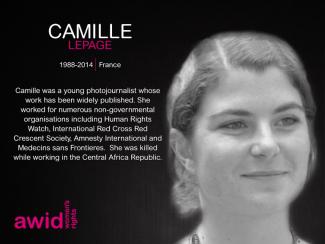
Camille Lepage
Au cours des dernières années, nous avons observé une nouvelle tendance inquiétante dans les espaces internationaux consacrés aux droits humains. Les discours axés sur « la protection de la famille » sont en effet utilisés pour défendre des violations des droits de membres de la famille, pour renforcer et justifier l’impunité des auteurs de ces violations et pour restreindre l’égalité des droits au niveau de la vie familiale.
La campagne en faveur de la « Protection de la famille » est motivée par une volonté conservatrice d’imposer des conceptions « traditionnelles » et patriarcales de la famille et de priver les membres de la famille de leurs droits pour les transférer à « l’institution familiale ».
Depuis 2014, un groupe d’Etats travaille de front dans les espaces dédiés aux droits humains sous le nom de « Group of Friends of the Family » (Groupe des ami-e-s de la famille) ; des résolutions sur la « Protection de la famille » ont été adoptées chaque année depuis 2014.
Ce programme s’est propagé au-delà du Conseil des droits humains. Nous avons observé l’introduction d’un discours régressif autour de la « famille » à la Commission sur la condition de la femme, ainsi que des tentatives d’introduction dans les négociations sur les Objectifs de développement durable.
L’AWID travaille avec des partenaires et des allié-e-s pour s’opposer ensemble à la « Protection de la famille » et à d’autres programmes régressifs et défendre l’universalité des droits humains.
En réponse à l’influence croissante d’acteurs régressifs au sein des espaces dédiés aux droits humains, l’AWID a rejoint des allié-e-s afin de créer l’Observatoire sur l'Universalité des droits (OURs) (site en anglais). L’OURs est un projet de collaboration qui surveille, analyse et diffuse les informations concernant les initiatives anti-droits telles que la « Protection de la famille ».
Le premier rapport de l’OURs, Nos droits en danger, trace une cartographie des acteurs et actrices qui constituent le lobby mondial anti-droits et identifie leur réthorique et stratégies clés ainsi que leur impact sur les droits humains.
Le rapport précise que le programme de « Protection de la famille » a développé une collaboration entre un large éventail d’acteurs régressifs aux Nations Unies, qu’il décrit comme « un cadre stratégique abritant des positions anti-droits et patriarcales multiples, où le cadre vise entre autres à légitimer et institutionnaliser ces positions. »
O questionário está disponível até o final de julho de 2024. Queira preencher o mesmo dentro deste prazo para garantir que as suas respostas são incluídas na análise.
La Organización Sindical de Trabajadoras del Sexo (OTRAS) es el primer sindicato de trabajadoras del sexo de la historia de España. Nació de la necesidad de garantizar los derechos sociales, legales y políticos de las trabajadoras sexuales en un país donde los movimientos de extrema derecha están cada vez más fuertes.
Después de años de luchas contra el sistema legal español y los grupos abolicionistas del trabajo sexual que solicitaron su cierre, OTRAS finalmente obtuvo su estatus legal como sindicato en 2021.
¿Su objetivo? Despenalizar el trabajo sexual y garantizar condiciones y entornos de trabajo dignos para todxs lxs trabajadorxs sexuales.
El sindicato representa a más de 600 trabajadorxs sexualxs, muchxs de lxs cuales son inmigrantes, racializadxs y sexo/genero disidentes.
Celebramos el derecho de todas las personas a elegir sus identidades, relaciones, metas, trabajos, sueños y placeres, y lo que hacen con su mente, cuerpo y espíritu. Trabajamos por el acceso a los recursos, a la información, y a ambientes seguros y habilitantes que permitan que esto suceda.
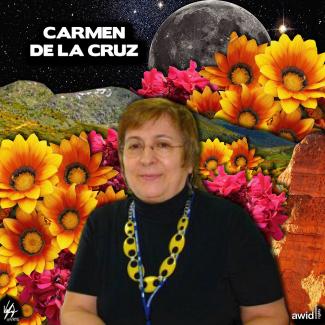
Carmen tuvo una larga carrera en la defensa de los derechos de las mujeres tanto en organizaciones no gubernamentales como en el sistema de las Naciones Unidas.
Dio clases en varias universidades españolas y latinoamericanas y publicó numerosos artículos e informes sobre mujeres, género y paz en países en desarrollo. Sus escritos y reflexiones críticas repercutieron en toda una generación de mujeres jóvenes.
En sus últimos años, fue responsable del Área Práctica de Género en el Centro Regional para América Latina del Programa de las Naciones Unidas para el Desarrollo (PNUD), desde donde apoyó iniciativas muy valiosas en favor de la igualdad de género y los derechos humanos de las mujeres.
Anti-rights actors have had a substantive impact on our human rights framework and the progressive interpretation of human rights standards, especially rights related to gender and sexuality.
When it comes to the impact of conservative actors in international policy spaces, the overall picture today is of stasis and regressions.
We have witnessed the watering down of existing agreements and commitment; deadlock in negotiations; sustained undermining of UN agencies, treaty review bodies and Special Procedures; and success in pushing through regressive language in international human rights documents.
The CSW, held annually in March, has long been one of the most contested sites in the UN system. In March 2015, conservative efforts set the tone before events or negotiations even began; the outcome document of the Commission was a weak Declaration negotiated before any women’s rights activists even arrived on the ground.
At 2016’s CSW, the new Youth Caucus was infiltrated by large numbers of vocal anti-abortion and anti-SRHR actors, who shouted down progressive youth organizations. Again, intensive negotiations resulted in a lacklustre text, which included regressive language on ‘the family.’
Precisely when addressing women’s human rights is of urgent importance, the CSW has been rendered a depoliticized and weakened space. Using it to advance rights has become harder and harder since progressives’ energy is taken up trying to hold the ground against conservative backlash.
As the intergovernmental body responsible for the promotion and protection of human rights around the globe, the HRC is a key entry point for conservative actors. In recent years, this mechanism has been the scene for a number of damaging anti-human rights moves.
In conversation with other anti-rights actors, one strategy of conservative states, and blocs of states, is to aggressively negotiate out positive language and to introduce hostile amendments to resolutions, most often resolutions focusing on rights related to gender and sexuality.
To take one example, during the June 2016 session of the HRC, opposition was mounted towards a resolution on discrimination against women by the member states of the Organization of Islamic Cooperation (OIC) and allies. During contentious negotiations, multiple provisions were removed, including women’s and girls’ right to have control over their sexuality, sexual and reproductive health, and reproductive rights; and the need to repeal laws which perpetuate the patriarchal oppression of women and girls in families, and those criminalizing adultery or pardoning marital rape.
The HRC has also been the site of pernicious conservative initiatives to co-opt human rights norms and enact conservative “human rights” language, such as that of the Russia-led “traditional values” resolutions, and more recently the “Protection of the Family” agenda.
In 2015, moving their sights to another front, a number of religious right organizations began to target the Human Rights Committee, the treaty monitoring body for the International Covenant on Civil and Political Rights (ICCPR), a pivotal human rights instrument.
Anti-human rights groups mobilized in hopes of cementing their anti-abortion rhetoric into the treaty.
When the Committee announced it was drafting a new authoritative interpretation of the right to life, over 30 conservative non-state actors sent in written submissions, advocating their misleading discourse on ‘right to life’ - that life begins at conception and that abortion is a violation of the right - be incorporated in the Committee’s interpretation of article 6.
Conservative groups targeting the Human Rights Committee was a shift considering that historically anti-human rights actors have repeatedly attempted to undermine and invalidate the essential work of the treaty monitoring bodies, including the Human Rights Committee.

Anti-human rights actors were involved in lobbying towards the development of the new Sustainable Development Goals (SDGs) in 2015, focusing again on rights relating to gender and sexuality. These efforts had limited traction in their attempts to embed regressive language in Agenda 2030.
However, after successfully pushing back against progressive language in the final text, conservative actors then pivoted to another strategy. In an attempt to evade state accountability and undermine the universality of rights, several states have repeatedly made reservations to the Goals.
On behalf of the African Group, Senegal claimed that African states would only “implement the goals in line with the cultural and religious values of its countries.”
The Holy See also made a number of reservations, stating it was “confident that the related pledge ‘no one will be left behind’ would be read” as meaning “the right to life of the person, from conception until natural death.”
Saudi Arabia went one step further, declaring that the country would not follow any international rules relating to the SDGs that reference sexual orientation or gender identity, describing them as running “counter to Islamic law.”
Anti-rights actors have made increasing headway at the UN General Assembly (GA). Most recently, during the 71st session in 2016, the GA was the scene of feverish anti-rights organizing in opposition to the new mandate created by the Human Rights Council resolution on sexual orientation and gender identity in June 2016: the Independent Expert on SOGI. Four separate attempts were made to undercut the mandate in GA spaces.
One approach was to introduce a hostile resolution at the Third Committee[1], led by the African Group, which in essence aimed to indefinitely defer the new mandate. While this approach was not successful, such an attempt in the GA to retroactively block the creation of a mandate brought forward by the Human Rights Council represented a new and troubling tactic - anti-right actors are now working to directly undermine the HRC’s authority respective to the General Assembly.
Another approach targeted the Fifth Committee (responsible for administration and budgetary matters) as an entry point to attack the mandate. In an unprecedented move a number of States attempted (again, unsuccessfully) to block the funding of UN human rights experts, including the new IE on SOGI[2],.
While these multiple efforts were unsuccessful in blocking the creation and continuation of the new mandate, the significant support they received, the novel strategizing employed, and the strong alliances built along regional lines through negotiations point to difficulties ahead.
[1] The Third Committee of the GA deals with agenda items relating to a range of social, humanitarian affairs, and human rights issues. Each year it discusses and issues resolutions on issues including the advancement of women, the protection of children, family, and youth.
[2] While UN Special Procedures experts (i.e. Special Rapporteurs, Working Group members and Independent Experts) work pro bono, some funds are generally allocated to facilitate country visits on the invitation of the national government, and support staff.
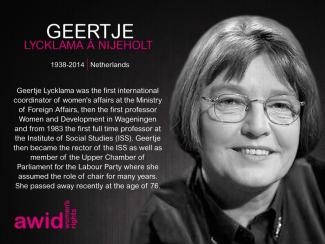
Sobre la base de nuestros 20 años de historia movilizando más y mejor financiamiento para el cambio social encabezado por los feminismos, AWID te invita a responder la nueva edición de nuestra encuesta insignia, WITM
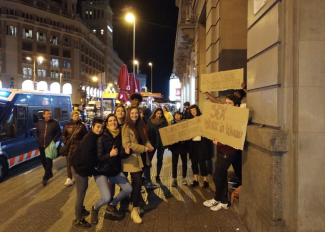
En rejoignant l’AWID, j’espère pouvoir contribuer à la mobilisation du mouvement féministe. Pas seulement pour les femmes privilégiées, mais pour TOUTES les femmes et activistes féministes..- Angelina Mootoo, féministe intersectionnelle et caribéenne, Guyane/USA
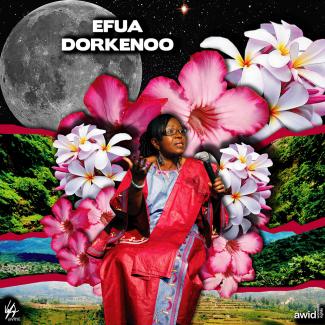
Affectueusement connue sous le nom de « Mama Efua », Efua a lutté contre les mutilations génitales féminines (MGF) pendant trois décennies et a contribué à attirer l'attention et l'action de la communauté internationale pour mettre fin à cette pratique néfaste.
En 1983, Efua a cofondé FORWARD (fondation pour la santé, la recherche et le développement des femmes), qui est devenue une organisation de premier plan dans la lutte contre les MGF. Son livre intitulé « Cutting the Rose: Female Genital Mutilation » (couper la rose), publié en 1994, est considéré comme le premier ouvrage sur les mutilations génitales féminines. Il figure parmi « Les 100 meilleurs livres africains du XXe siècle » de l’Université de Columbia.
Originaire du Ghana et infirmière de formation, Efua a rejoint l'OMS en 1995 et a réussi à faire en sorte que les mutilations génitales féminines fassent partie des agendas politiques des États membres de l'OMS. Elle a également travaillé en étroite collaboration avec le gouvernement nigérian pour élaborer une politique nationale globale qui servirait de base légale aux lois nigérianes contre les mutilations et qui est toujours en vigueur à ce jour.
Son travail de pionnière a abouti à une campagne menée par l'Afrique intitulée « The Girl Generation », qui s'est engagée à mettre fin aux MGF en une génération. Efua a montré comment une seule personne peut devenir la voix unificatrice d'un mouvement : « Une identité partagée peut aider à rassembler des activistes d'horizons différents dans un but commun ». Ces mots, emplis de sagesse, sont plus pertinents que jamais.
Compilación de noticias sobre la organización y/o el trabajo de AWID
Notas de prensa, dosieres y kits
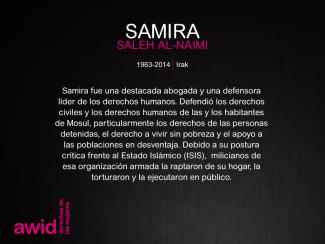
When people come together on a global scale, as individuals and movements, we generate a sweeping force. Join us in Bangkok, Thailand and online in December 2024.
AWID offers the WITM Toolkit to support individuals and organizations who want to conduct their own research on funding trends for a particular region, issue or population by adapting AWID’s research methodology.
AWID’s WITM Toolkit builds on 10 years research experience. AWID’s WITM research and WITM Toolkit is a political and practical demonstration of the resources and steps it takes to conduct solid action-research.
Learn more about the context around the WITM research methodology
The Resourcing Feminist Movements team also offers technical and political support before and during the research process. Review the toolkit and contact us at fundher@awid.org if you need more information.
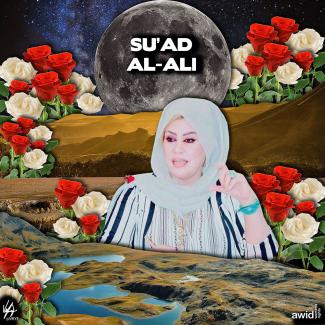
Su’ad was a strong advocate of women’s and children’s rights, and was the head of Al-Weed Al-Alaiami - an Iraqi human rights organisation.
She participated in the July 2018 demonstrations that took place in Basra and several other Iraqi cities protesting unemployment and demanding jobs and proper public services for citizens, as well as calling for the elimination of rampant corruption.
On 25 September 2018, Su’ad was assassinated in the Al-Abbasiyah district in downtown Basra. A video of the incident showed a person approaching her as she was getting into her car, firing a bullet at the back of her head and pointing another bullet at her driver Hussain Hassan, who was injured in the shoulder. Al-Ali was 46 and the mother of four children.
Click on the image to open the PDF
 |
Where we are now |
Where we want to be |
Current funding by sector |
 |
 |
 |
| Download & share | Download & share | Download & share |
Obtén más información sobre los próximos eventos de la CSW69 que AWID está coorganizando