L´AWID est une organisation féministe mondiale qui consacre ses efforts à la justice de genre, au développement durable et aux droits humains des femmes
S'opposer à l’extractivisme et au pouvoir des entreprises
Dans le monde entier, les femmes défenseuses des droits humains défendent leurs terres, leurs moyens de subsistance et leurs communautés contre le pouvoir des entreprises et des industries extractives. Elles se mobilisent et défient de puissants intérêts économiques et politiques qui motivent la spoliation de terres, le déplacement de communautés, la perte des moyens de subsistance et la dégradation de l'environnement.
Pourquoi résister à des industries extractives?
L’extractivisme est un modèle économique et politique de développement qui œuvre à la marchandisation de la nature et privilégie le profit au détriment des droits humains et de l'environnement. Enraciné dans l'histoire coloniale, il creuse les inégalités sociales et économiques au niveau local et mondial. Le plus souvent, les femmes rurales, noires ou autochtones sont les plus touchées par l’extractivisme et sont largement exclues des espaces de prise de décision en la matière. Les femmes se mobilisent pour défier ces forces patriarcales et néocoloniales et défendre les droits, les terres, les personnes et la nature.
Les principaux risques et les violences basées sur le genre
Les femmes qui s’opposent aux industries extractives vivent une série de risques, de menaces et de violations de leurs droits comme la criminalisation, la stigmatisation, la violence et l'intimidation. Leurs histoires révèlent des aspects évidents de violences sexuelles et basées sur le genre. Parmi les auteurs de ces abus se trouvent les autorités locales et fédérales, les entreprises, la police, les militaires, les forces de sécurité paramilitaires et privées, et parfois mêmes leurs propres communautés.
Agir ensemble
L'AWID et la Coalition internationale des femmes défenseures des droits humains (WHRDIC) ont le plaisir d'annoncer la sortie de leur publication « Les défenseuses des droits humains résistent à l’extractivisme et aux pouvoir des entreprises », un rapport basé sur un projet de recherche transrégional qui relate les expériences vécues par des défenseuses en provenance d'Asie, d'Afrique et d'Amérique latine.
Nous encourageons les activistes, les membres de mouvements sociaux, la société civile, les donateurs et les décideurs à lire et à faire usage des documents suivants pour leur travail de plaidoyer, comme outil pédagogique et comme source d’inspiration :
Dites-nous comment vous utilisez la boîte à outils sur les défenseur-e-s des droits humains qui résistent à l'extractivisme et aux pouvoir des entreprises.
◾️ Comment ces ressources peuvent-elles soutenir votre activisme et votre plaidoyer ?
◾️ De quelles informations ou connaissances supplémentaires avez-vous besoin pour utiliser au mieux ces ressources ?
C’est avec gratitude que l’AWID reconnaît les contributions précieuses de chaque défenseur-e des droits humains qui a participé à ce projet. Cette recherche a été rendue possible grâce à votre volonté à partager vos expériences. Votre courage, créativité et résilience est une source d’inspiration pour nous toutes et tous. Merci !
Contenu lié
6. Realiza una investigación secundaria
La investigación secundaria la puedes realizar en todos los estadios del proceso investigativo. Te puede ayudar a formular el marco, a elegir las preguntas de la encuesta y a comprender mejor los resultados.
Realizar investigación secundaria durante todo el proceso investigativo te ayudará a formular el marco de referencia, elegir las preguntas de la encuesta, interpretar la información según el contexto o percibir aspectos interesantes de los resultados de la investigación. Por ejemplo, podrás comparar similitudes y diferencias entre los resultados de tu investigación y la información recogida de la sociedad civil y del sector donante.
Tal vez percibas tendencias en la información que te aporta la encuesta y quieras entenderlas mejor.
Por ejemplo, imagina que la encuesta te indica que los presupuestos de las organizaciones se están reduciendo, pero no te puede decir por qué está sucediendo esto. Consultar publicaciones te puede ayudar a entender el contexto y las posibles razones que explican esa tendencia.
La utilización de fuentes secundarias garantiza que la investigación incorpore el conocimiento ya construido, confirmando así la validez y relevancia de tus resultados.
Estos resultados pueden complementar o contradecir el conocimiento construido, pero deben guardar relación con él.
Para asegurarte de investigar todo el panorama del financiamiento para la temática que estés relevando, necesitarás estudiar un conjunto diverso de sectores donantes.
Puedes tener en cuenta:
Fondos de mujeres
Fundaciones privadas y públicas
Organizaciones no gubernamentales internacionales (ONGI)
Entidades bilaterales y multilaterales
Actores del sector privado
Filantropía individual
Micromecenazgos (crowdfunding)
Incluye a todo otro actor que resulte relevante para la investigación.
Por ejemplo, puedes decidir que también será importante relevar a las organizaciones no gubernamentales (ONG)
Posibles fuentes para la investigación secundaria (lista no exhaustiva)
1. Sitios de donantes en Internet y sus informes anuales
Estas son fuentes directas de información que revelan lo que están haciendo las financiadoras y por lo general también informan acerca de sus políticas y presupuestos. Incluir estos materiales en la investigación antes de entrevistar a donantes te podrá ayudar a formular preguntas más puntuales y a recoger más información durante la entrevista.
Snippet Intro The Feminist Realities Magazine (EN)
The Feminist Realities Magazine
Feminist Realities are embedded in the multiple ways that show us that there is a different way of living, thinking and doing - from the daily expressions of how we live and relate to each other, to alternative systems of governance and justice. Feminist Realities resist dominant power systems such as patriarchy, capitalism, and white supremacy.
These are powerful propositions that orient us toward a vision of what is possible, and show how feminist organizing is blazing a path toward justice in movements and communities around the world.
More than just an event, the AWID Forum is part of our Feminist Realities Journey, with many spaces to come together, online and offline, for sharing, discussing, strategizing and co-creating feminist realities.
Ursula était une romancière américaine dont les genres littéraires de prédilection étaient la science-fiction et le genre fantastique.
Elle a connu le succès grâce à son roman « La main gauche de la nuit », où elle imagine une société du futur où les personnes sont ambisexuelles - leur sexe n’est pas déterminé. Parmi les premiers grands livres de science-fiction féministes, ce roman explore les influences du genre et du sexe dans la société. Ursula était une source d'inspiration pour ses écrits subversifs et originaux, ainsi que pour les thèmes du féminisme et de la liberté qui lui tenaient tellement à cœur.
En 1983, lors d'un discours au Mills College en Californie, elle a déclaré aux diplômé-e-s : « Pourquoi une femme libre ayant suivi une formation universitaire devrait-elle combattre Macho-Man ou le servir ? Pourquoi devrait-elle vivre sa vie selon son bon vouloir ? J'espère que vous vivrez sans avoir besoin de dominer et sans avoir besoin d'être dominé-e ».
Nous croyons que l'économie, le marché, le système financier et les prémisses sur lesquelles ils reposent sont des domaines critiques pour la lutte féministe.
Ainsi, notre vision pour une économie juste dépasse la promotion des droits et de l'autonomisation des femmes sur le marché. Elle propose d'évaluer le rôle des oppressions liées au genre lors de l'élaboration de mesures économiques, afin de les modifier pour favoriser l'égalité de genre et la justice économique.
Processus
Nous ne partons pas de zéro et nous ne sommes pas seules à tenter de mettre en avant des propositions féministes pour une économie juste. Beaucoup des propositions formulées dans ce document existaient déjà en théorie et aussi dans la pratique, au sein de diverses communautés qui défient et résistent face aux systèmes économiques fondés sur la croissance et le marché.
Il est également très important de noter qu'il y a une prise de conscience croissante du fait que les micros solutions n’apportent pas toujours de réponses aux problèmes macros, même si elles représentent des espaces importants pour la construction de la résistance et des mouvements. Certaines alternatives spécifiques peuvent ne pas être en mesure de remédier aux injustices du système capitaliste actuel à l'échelle mondiale.
Objectifs
Cela dit, les alternatives féministes pour une économie juste sont essentielles pour ouvrir des brèches dans le système et pouvoir en tirer des leçons, en faveur d’un changement systémique transformateur. Nous n’avons pas la prétention de proposer un compte-rendu complet et exhaustif sur la manière de créer un modèle économique qui soit juste d’un point de vue féministe, ou même des modèles.
À partir d’un dialogue inter-mouvements avec des syndicats, des mouvements ruraux et paysans et des mouvements environnementaux, nous pouvons néanmoins formuler une série de propositions pour cheminer vers cette vision.
Que voulons-nous changer?
Le modèle néolibéral qui domine l'économie mondiale a démontré à maintes reprises son incapacité à traiter les causes profondes de la pauvreté, des inégalités et de l'exclusion. En réalité, le néolibéralisme a même contribué à provoquer et à exacerber ces injustices.
Caractérisées par la mondialisation, la libéralisation, la privatisation, la financiarisation et l'aide conditionnelle, les politiques générales de développement de ces trois dernières décennies ont fait des ravages dans la vie et les moyens de subsistance de tous et toutes. Ces politiques ont également contribué sans faillir à creuser le fossé des inégalités, aux injustices de genre et à une destruction de l'environnement que le monde ne peut plus se permettre de supporter.
Il y a encore des personnes qui affirment qu’en donnant carte blanche aux sociétés et aux entreprises pour favoriser la croissance économique, le vent finira par atteindre les voiles de tous les navires.
Cependant, la notion du développement dominante au cours des dernières décennies, qui repose en grande partie sur le principe d’une croissance économique illimitée, traverse actuellement une crise idéologique.
Le mythe de la croissance économique en tant que panacée capable de résoudre tous nos problèmes prend l’eau.
Опрос доступен на английском, арабском, испанском, португальском, русском и французском языках!
Snippet FEA Bauen Hotel (ES)
Solo un año después de su fundación, las integrantes de Nadia Echazú comenzaron a trabajar en la alta costura y organizaron un desfile de moda en el histórico Hotel Bauen.
Mostraron cinco modelos y algunas trabajadoras de la cooperativa textil desfilaron con sus propios diseños.
Esto fue revolucionario no sólo porque estaban diseñando alternativas a la moda convencional, sino también porque estaban creando ropa accesible e inclusiva para cuerpos trans y travesti.
¡No hay economías feministas sin ropa que nos haga sentir increíbles y cómodxs!
Will the AWID Forum still be in Taipei in light of the COVID-19?
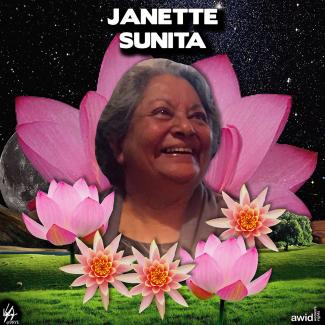
From India, Janette was feisty, formidable, compassionate and loving.
Janette’s intolerance of injustice and fierce commitment to standing up for all people’s rights led her to work at TARSHI (an NGO that works on sexuality and sexual and reproductive health and rights) for more than 15 years. Janette ably managed and led the finance, human resources and operations aspects of TARSHI’s work, adeptly navigating the labyrinthine bureaucracy to which Indian NGOs are subjected.
Her team remembers that “She stood watch so we could steer well in open waters. A woman of many talents, Janette not only helped us procure our own office space but also designed it for optimal usage.She loved travel and animals and was interested in animal assisted therapy."
There are varied conceptualizations about the commons notes activist and scholar Soma Kishore Parthasarathy.
Conventionally, they are understood as natural resources intended for use by those who depend on their use. However, the concept of the commons has expanded to include the resources of knowledge, heritage, culture, virtual spaces, and even climate. It pre-dates the individual property regime and provided the basis for organization of society. Definitions given by government entities limit its scope to land and material resources.
The concept of the commons rests on the cultural practice of sharing livelihood spaces and resources as nature’s gift, for the common good, and for the sustainability of the common.
Context
Under increasing threat, nations and market forces continue to colonize, exploit and occupy humanity’s commons.
In some favourable contexts, the ‘commons’ have the potential to enable women, especially economically oppressed women, to have autonomy in how they are able to negotiate their multiple needs and aspirations.
Feminist perspective
Patriarchy is reinforced when women and other oppressed genders are denied access and control of the commons.
Therefore, a feminist economy seeks to restore the legitimate rights of communities to these common resources. This autonomy is enabling them to sustain themselves; while evolving more egalitarian systems of governance and use of such resources. A feminist economy acknowledges women’s roles and provides equal opportunities for decision-making, i.e. women as equal claimants to these resources.
Feminism And The Politics Of The Commons by Silvia Federici looks at the politics of the commons from a feminist standpoint shaped by the struggle against sexual discrimination and reproductive work, to clarify the conditions under which the principle of the common/s can become the foundation of an anti-capitalist program.
Об исследовании «Где же деньги для феминистских объединений?»
Глобальный опрос «Где деньги для феминистских объединений?» является ключевым элементом третьего этапа нашего исследования, ориентированного на конкретные действия: «Где деньги для феминистских объединений» (короткое название – «Где деньги?»). Результаты опроса будут доработаны и обстоятельно изучены в ходе бесед с активистами и донорами, а также сопоставлены с другими имеющимися аналитическими материалами и исследованиями о состоянии ресурсов феминистских движений и инициатив по достижению гендерного равенства во всем мире.
Полный отчет организации «Где деньги для феминистских объединений?» будет опубликован в 2026 году.
Чтобы узнать больше о том, как AWID освещает вопросы финансирования феминистских движений, ознакомьтесь с историей инициативы «Где деньги?» и нашими предыдущими отчетами здесь.
Snippet FEA The fight for a world full of workplaces (FR)
La lutte pour un monde rempli de lieux de travail exempts de toute forme de discrimination, de stigmatisation et d'exclusion est une lutte noble. Un monde où le travail sexuel est décriminalisé et reconnu comme travail en fait partie intégrante.
Un monde où tous·tes les travailleur·euses ont des conditions de travail sûres, des salaires décents et peuvent jouir des mêmes droits tels que l'accès à la santé, le droit à la retraite, aux congés maladie, aux vacances, à la sécurité de l'emploi et plus encore, quels que soient leur genre, leur race, leur origine ethnique, leur âge ou leurs capacités. Les droits du travail sont des questions féministes, et les syndicats féministes jouent un rôle clé dans la promotion des droits juridiques, du travail et économiques de tous·tes les travailleur·euses, en particulier les travailleur·euses migrant·e·s, les travailleur·euses domestiques, les travailleur·euses informel·les et les travailleur·euses du sexe. Ce sont ces personnes qui ont récemment été touchées de manière disproportionnée par la pandémie, sa crise des soins, les confinements, les couvre-feux ainsi que la surveillance et la répression policière accrue. Nous vous présentons ici les histoires de militantes féministes et syndicalistes qui se battent pour de meilleures conditions de travail et un monde meilleur pour tous·tes.
Why did AWID decide to change the Forum location from Bali to Taipei?
Events in Indonesia, in late 2019 - in particular, signs of intensifying militarization and backlash against LGBTQ rights - led us to question AWID’s ability to maintain a reasonably safe and welcoming environment for the diversity of participants we aspire to bring together at the Forum.
After careful consideration the AWID Board of Directors decided to change the venue for the 14th International AWID Forum, in November 2019 from Bali to Taipei.
Taipei offers a strong degree of logistical capacities, and is accessible for many travellers (with a facilitated e-visa process for international conferences).
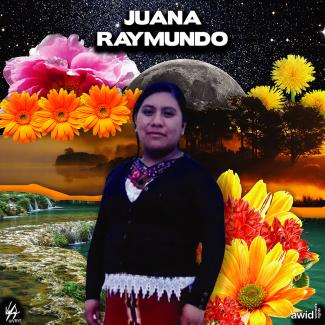
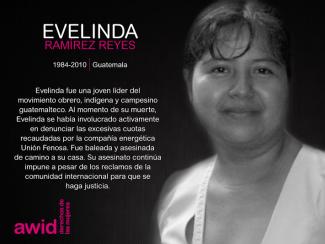
Juana fue una indígena maya ixil, enfermera profesional y coordinadora del Comité de Desarrollo Campesino – CODECA de la microrregión de Nebaj Quiché.
El comité es una organización de derechos humanos formada por granjerxs indígenas dedicada a promover los derechos sobre la tierra y el desarrollo rural para las familias indígenas. Inicialmente, Juana se unió a CODECA como integrante de su rama juvenil, la Juventud de CODECA. Al momento de su muerte, había sido elegida para ser parte del Comité Ejecutivo del Movimiento de Liberación de los Pueblos (MLP).
Su cuerpo fue encontrado por lxs vecinxs, junto a un pequeño río en el camino cerca de Nebaj y Villa Acambalam, en Guatemala. Según CODECA, el cuerpo de Juana mostraba signos de tortura.
Despite their rigidity in matters of doctrine and worldview, anti-rights actors have demonstrated an openness to building new kinds of strategic alliances, to new organizing techniques, and to new forms of rhetoric. As a result, their power in international spaces has increased.
There has been a notable evolution in the strategies of ultra conservative actors operating at this level. They do not only attempt to tinker at the edges of agreements and block certain language, but to transform the framework conceptually and develop alternative standards and norms, and avenues for influence.
Strategy 1: Training of UN delegates
Ultra conservative actors work to create and sustain their relationships with State delegates through regular training opportunities - such as the yearly Global Family Policy Forum - and targeted training materials.
These regular trainings and resources systematically brief delegates on talking points and negotiating techniques to further collaboration towards anti-rights objectives in the human rights system. Delegates also receive curated compilations of ‘consensus language’ and references to pseudo-scientific or statistical information to bolster their arguments.
The consolidated transmission of these messages explains in part why State delegates who take ultra-conservative positions in international human rights debates frequently do so in contradiction with their own domestic legislation and policies.
Strategy 2: Holding international convenings
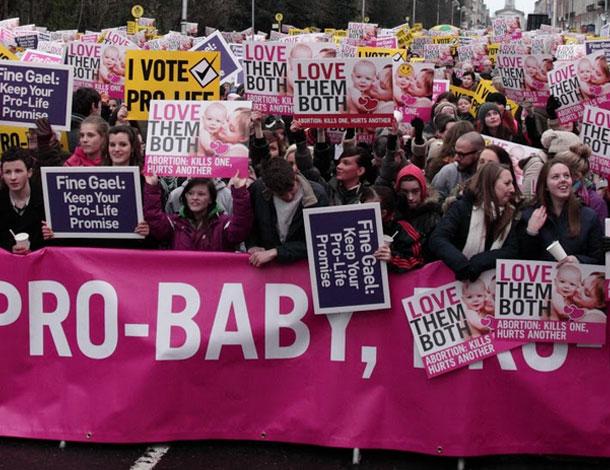
Anti-rights actors’ regional and international web of meetings help create closer links between ultra conservative Civil Society Organizations (CSOs), States and State blocs, and powerful intergovernmental bodies. The yearly international World Congress of Families is one key example.
These convenings reinforce personal connections and strategic alliances, a key element for building and sustaining movements. They facilitate transnational, trans-religious and dynamic relationship-building around shared issues and interests, which leads to a more proactive approach and more holistic sets of asks at the international policy level on the part of anti-rights actors.
Strategy 3: Placing reservations on human rights agreements
States and State blocs have historically sought to undermine international consensus or national accountability under international human rights norms through reservations to human rights agreements, threatening the universal applicability of human rights.
The Convention on the Elimination of Discrimination Against Women (CEDAW) has received by far the most reservations, most of which are based on alleged conflict with religious law. It is well-established international human rights law that evocations of tradition, culture or religion cannot justify violations of human rights, and many reservations to CEDAW are invalid as they are “incompatible with the object and purpose” of CEDAW. Nevertheless, reference to these reservations is continually used by States to dodge their human rights responsibilities.
‘Reservations’ to UN documents and agreements that are not formal treaties - such as Human Rights Council and General Assembly resolutions - are also on the rise.
Strategy 4: Creating a parallel human rights framework
In an alarming development, regressive actors at the UN have begun to co-opt existing rights standards and campaign to develop agreed language that is deeply anti-rights.
The aim is to create and then propagate language in international human rights spaces that validates patriarchal, hierarchical, discriminatory, and culturally relativist norms.
One step towards this end is the drafting of declarative texts, such as the World Family Declaration and the San Jose Articles, that pose as soft human rights law. Sign-ons are gathered from multiple civil society, state, and institutional actors; and they are then used a basis for advocacy and lobbying.
Strategy 5: Developing alternative ‘scientific’ sources
As part of a strategic shift towards the use of non-religious discourses, anti-rights actors have significantly invested in their own ‘social science’ think tanks. Given oxygen by the growing conservative media, materials from these think tanks are then widely disseminated by conservative civil society groups. The same materials are used as the basis for advocacy at the international human rights level.
While the goals and motivation of conservative actors derive from their extreme interpretations of religion, culture, and tradition, such regressive arguments are often reinforced through studies that claim intellectual authority. A counter-discourse is thus produced through a heady mix of traditionalist doctrine and social science.
Strategy 6: Mobilizing Youth
This is one of the most effective strategies employed by the religious right and represents a major investment in the future of anti-rights organizing.
Youth recruitment and leadership development, starting at the local level with churches and campuses, are a priority for many conservative actors engaged at the international policy level.
This strategy has allowed for infiltration of youth-specific spaces at the United Nations, including at the Commission on the Status of Women, and creates a strong counterpoint to progressive youth networks and organizations.
Key anti-rights strategies
Strategy 7: Defunding and delegitimizing human rights mechanisms
When it comes to authoritative expert mechanisms like the UN Special Procedures and Treaty Monitoring Bodies and operative bodies like the UN agencies, regressive groups realize their potential for influence is much lower than with political mechanisms[1].
In response, anti-rights groups spread the idea that UN agencies are ‘overstepping their mandate,’ that the CEDAW Committee and other Treaty Bodies have no authority to interpret their treaties, or that Special Procedures are partisan experts working outside of their mandate. Anti-rights groups have also successfully lobbied for the defunding of agencies such as the United Nations Population Fund (UNFPA).
This invalidation of UN mechanisms gives fuel to state impunity. Governments, when under international scrutiny, can defend their action on the basis that the reviewing mechanism is itself faulty or overreaching.
Strategy 8: Organizing online
Conservative non-state actors increasingly invest in social media and other online platforms to promote their activities, campaign, and widely share information from international human rights spaces.
The Spanish organization CitizenGo, for example, markets itself as the conservative version of Change.org, spearheading petitions and letter-writing campaigns. One recent petition, opposing the establishment of a UN international day on safe abortion, gathered over 172,000 signatures.
Overarching Trends:
Learning from the organizing strategies of feminists and other progressives.
Replicating and adapting successful national-level tactics for the international sphere.
Moving from an emphasis on ‘symbolic protest’ to becoming subversive system ‘insiders.’
By understanding the strategies employed by anti-rights actors, we can be more effective in countering them.
[1] The fora that are state-led, like the General Assembly, the Human Rights Council, and UN conferences like the Commission on the Status of Women and the Commission on Population and Development
Есть много причин, по которым ваше участие в опросе очень важно. Это возможность поделиться своим опытом привлечения финансирования для деятельности вашей организации; заявить о себе как об эксперте в вопросах движения денежных средств и их получателей; внести свой вклад в коллективную и последовательную адвокацию среди доноров, чтобы привлечь более объемное и эффективное финансирование. За последние два десятилетия исследования AWID в этой области зарекомендовали себя как ключевой ресурс для активисток(-тов) и доноров. Мы приглашаем вас присоединиться к нам в реализации третьей части инициативы «Где деньги?», чтобы осветить реальное состояние ресурсного обеспечения, оспорить ошибочные решения и указать на то, как необходимо изменить финансирование, чтобы движения процветали и реагировали на сложные вызовы нашего времени.
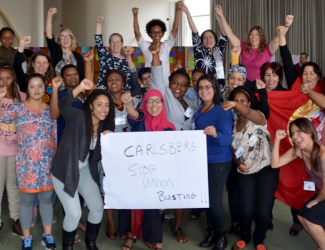




 Чтобы узнать больше о том, как AWID освещает вопросы финансирования феминистских движений, ознакомьтесь с историей инициативы «Где деньги?» и нашими предыдущими отчетами