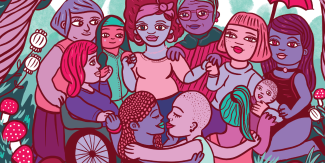
Anit-Racism Movement (ARM) / Flickr (CC BY-NC-ND 2.0)
Priority Areas
Supporting feminist, women’s rights and gender justice movements to thrive, to be a driving force in challenging systems of oppression, and to co-create feminist realities.
Around the world, feminist, women’s rights, and allied movements are confronting power and reimagining a politics of liberation. The contributions that fuel this work come in many forms, from financial and political resources to daily acts of resistance and survival.
AWID’s Resourcing Feminist Movements (RFM) Initiative shines a light on the current funding ecosystem, which range from self-generated models of resourcing to more formal funding streams.
Through our research and analysis, we examine how funding practices can better serve our movements. We critically explore the contradictions in “funding” social transformation, especially in the face of increasing political repression, anti-rights agendas, and rising corporate power. Above all, we build collective strategies that support thriving, robust, and resilient movements.
Our Actions
Recognizing the richness of our movements and responding to the current moment, we:
Create and amplify alternatives: We amplify funding practices that center activists’ own priorities and engage a diverse range of funders and activists in crafting new, dynamic models for resourcing feminist movements, particularly in the context of closing civil society space.
Build knowledge: We explore, exchange, and strengthen knowledge about how movements are attracting, organizing, and using the resources they need to accomplish meaningful change.
Advocate: We work in partnerships, such as the Count Me In! Consortium, to influence funding agendas and open space for feminist movements to be in direct dialogue to shift power and money.
Related Content
Our arepa: Resistance from the Kitchen
by Alejandra Laprea, Caracas, Venezuela (@alejalaprea)
I live in a country of the impossible, where there are no bombs yet we are living in a war.
A war that exists only for those of us living in this territory.
I live in a country no one understands, which few can really see, where various realities co-exist, and where the truth is murdered time and again.
I live in a country where one has to pay for the audacity of thinking for oneself, for taking on the challenge of seeing life another way.
I live in a country of women who have had to invent and reinvent, time and again, how they live and how to get by.
I live in Venezuela, in a time of an unusual and extraordinary threat.
Since 2012 my country has been subjected to an unconventional war. There are no defined armies or fire power. Their objective is to dislocate and distort the economy, affecting all households, daily life, the capacity of a people to dream and build a different kind of politics, an alternative to the patriarchal, bourgeois, capitalist democracy.
Venezuelan women are the primary victims of this economic war. Women who historically and culturally are responsible for providing care, are the most affected and in demand. However, in these years of economic and financial embargo, Venezuelan women have gone from being victims to the protagonists on the front lines defending our territory.
Battles are fought from the barrios, kitchens, and small gardens. We defend the right of girls and boys to go to school, and to be given something so simple as some arepas for breakfast.
Arepas are a kind of corn cake that can be fried, roasted or baked and served sweet or savoury as a side or main dish. It is a staple in the diet of all Venezuelans.
In Venezuela, arepas mean culture, family, food sovereignty, childhood nostalgia, the expert hands of grandmothers molding little balls, the warmth that comforts you when recovering from illness.
Arepas connect us as a people with the pre-Colombian cultures of corn, a resistance that has endured for more than five centuries. They are the Caribbean expressed differently on firm ground.
They are an act of resistance.
When my mother was a girl, they would start grinding the dry corn early in the morning to make arepas. The women would get up and put the kernels of corn in wooden mortars and pound it with heavy mallets to separate the shells. Then they would boil, soak, and grind the corn to make dough, and finally they would mold it into round arepas. The process would take hours and demand a lot of physical effort.
In the mid-20th century a Venezuelan company industrialized the production of corn meal. For an entire generation that seemed like an act of liberation, since there was now a flour that you could simply add water to and have hot arepas in 45 minutes time.
But that also meant that the same generation would lose the traditional knowledge on how to make them from scratch. My grandmother was an expert arepa maker, my mother saw it as a girl, and for me the corn meal came pre-packaged.
In the war with no military, the pre-cooked corn meal came to be wielded as an instrument of war by the same company that invented it, which was not so Venezuelan anymore: today the Polar group of companies is transnational.
We women began to recuperate our knowledge by talking with the eldest among us. We searched in the back of the closets for our grandmothers’ grinders, the ones we hadn’t thrown away out of affection. Some families still prepared the corn in the traditional way for important occasions. In some towns there were still communal grinding stations which had been preserved as part of local history or because small family businesses refused to die. All of these forms of cultural resistance were activated, and we even went so far as to invent new arepas.
Today we know that in order to resist we cannot depend on one food staple. Although corn arepas continue to be everyone’s favourite, we have invented recipes for arepas made of sweet potato, cassava, squash, and celery root.
We have learned that we can use almost any root vegetable to make arepas. Cooperative businesses have developed semi-industrial processes to make pre-cooked corn meal. In other words, we have recuperated our arepas and their preparation as a cultural good that belongs to all.
My artivism aims to decolonize our senses in everyday life. I like to create spaces that communicate how we weave together our different struggles, and that render visible dissident (re)existences, other possible worlds, and living bodies here in the SOUTH.
As we continue to fight in our struggles, let us remember how essential it is that we support each other, believe each other, and love ourselves and our sisters. When this system fucks us over, we must take time to look after our (physical and mental) health, that of our sisters, and to understand that each one of us carries unique stories, making us fighters in resist
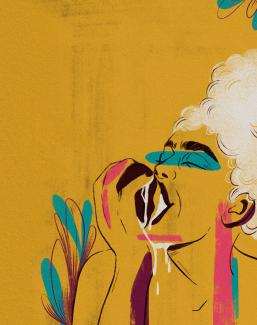
Marga RH (@Marga.RH)
Until dignity becomes a habit
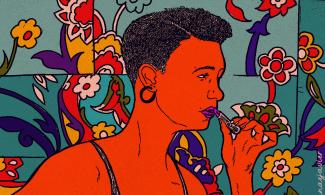
These portraits are inspired by the voices of resistance and protest movements in Latin America, especially by the key role that feminised bodies play in these struggles. It is a tribute to the grassroots feminist movements in resistance.
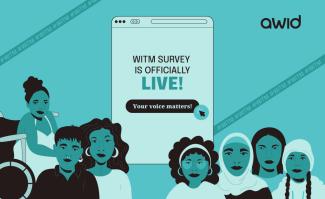
Snippet - WITM Our objectives - PT
Os nossos objetivos da pesquisa WITM:
1
Fornecer a membres da AWID, parceires do movimento e financiadores uma análise atualizada, robusta, baseada em fatos e orientada para a ação das realidades do financiamento de movimentos feministas e do estado atual do ecossistema do financiamento feminista.
2
Identificar e demonstrar oportunidades para transferir mais recursos de maior qualidade para a organização feminista, expor soluções falsas e interromper tendências que fazem com que o financiamento não seja bem-sucedido e/ou se mova contra a justiça de género e objetivos feministas interseccionais.
3
Articular visões, propostas e objetivos feministas para a justiça no financiamento.
A Film Series on Feminist Realities from the SWANA region
by Esra Ozban
In a product-obsessed world, prioritizing process is a fundamental feminist method. Processes matter, and curation is no exception. While figuring out which of the films from the SWANA region would speak the loudest to the Feminist Realities theme, the global pandemic we are still facing shifted our everyday lives tremendously. Even to think, write, or express myself has become an everyday struggle. I kept missing all of my deadlines and sending apology emails to Kamee Abrahamian, whom I was working with as an independent curator for AWID’s Feminist Film Club. Kamee’s invaluable support, understanding, and suggestions reminded me that even in two different parts of the world, as colleagues who never met in person, we can co-create micro versions of the Feminist Realities for which we live and yearn.
Feminist Realities for me have a lot to do with sisterhoods. Sisterhoods that help womxn clearing mines in Artsakh/Nagorno-Karabakh. Sisterhoods baked in Vegan Inclusive Trans Cake by young trans feminists in Ankara that remind cis-ters that they are not welcomed by the Z generation. Sisterhoods that are growing into the mint on Dragica Alafandi’s rooftop in the Dheisheh Refugee Camp in Occupied Palestine in Sowing seeds of resistance. Sisterhoods that embrace intimate, sexual, and revolutionary proximities in Gezi Park in #resistayol. Sisterhoods that unearth an imagined encounter between two generations of womxn in exile in the streets of Haifa in Your father was born 100 years old and so was the Nakba. Cross-species sisterhoods that build in a fictional (brave) space created by Mounia Akl in Submarine for her rebel character Hala, who refuses to evacuate from a city full of garbage and is left behind with a dog friend.
This selection gathers bits and pieces of many Feminist Realities that have been realized in the SWANA region over the last couple of years. We will continue to imagine, learn, and share feminist embodiments of hope and power. In the meantime, let’s immerse ourselves in the powerful alternatives brought to life by the filmmakers and protagonists of these films. We may co-create every step, every act, and every attempt as we continue to cohabitate this world with others who are living Feminist Realities and continue to dream more of them into existence.
MOTHERLAND
By Emily Mkrtichian& Jesse Soursourian
“With beautiful visuals paired with compelling verité scenes, Motherland is a show of female camaraderie and strength… The film is a testament of women around the world who are willing to work harder to overcome any obstacle they meet.”
- Nosarieme Garrick, award winning filmmaker
“Motherland is an inspiring visualization of solidarity, courage, and grit…”
- Hers is Ours Collective, organizers of the Outsider Moving Art & Film Festival
Emily Mkrtichian on Feminist Realities and Artsakh/NKR: We shot the short film, Motherland, in the Republic of Artsakh in 2018. I was drawn to each of these women for their strength, their resilience and their humor -- despite the context in which they lived. In 2018, that context was the aftermath of a brutal war in the 1990’s, after which their country remained an unrecognized (or, in the international community, disputed) territory that was not given the autonomy and independence so many other countries enjoy. Artsakh was also deeply affected by the consequences we see in almost all places that go through violent conflict -- consequences that so often fall on women to bear: PTSD, high rates of alcoholism, high rates of domestic abuse, less equality and freedoms granted to women, little to no representation of women in politics and civil service. In the face of all these challenges, this film tries to capture the fire and power of the women of Artsakh, one that might not fit the traditional Western feminist paradigm, but one they have created for themselves through deep community ties, care for their families, hard work, and the ability to laugh with eachother through it all. Today, the Republic of Artsakh has been newly devastated by another war that left it without 70% of the lands these women grew up understanding were theirs. Yet, I can promise you that these women, and thousands of others, continue to pull their families, communities, and culture together through the same networks of care, commitment to hard work, and deep riotous laughter in the face of an uncertain future.
SOWING SEEDS OF RESISTANCE
By Baladi-Rooted Resistance
“A timely film to watch after having born witness to the latest bombardment of Gaza by Israeli Defence Forces. A glimpse into the way that women in Palestinian communities survive structural oppression, through the story of a library of traditional seeds.. and the women that sustain them as a form of nourishing rebellion.”
- Jessica Horn, PanAfrican feminst strategist, writer and co-creator of the temple of her skin
“Watching women coming together and working collectively for food autonomy is both therapeutic and empowering for me.”
- Hers is Ours Collective, organizers of the Outsider Moving Art & Film Festival
Baladi-Rooted Resistance Team on Feminist Realities: How to talk about Feminist Realities when you live in Deheisheh, a Palestinian refugee camp, built 70 years ago to serve 3000 refugees, but now home to 15000 people, in the occupied West Bank? Or when the land you farm is under constant threat by illegal settlers.
If you’re a woman in occupied Palestine you will have to struggle not only against patriarchy but also against colonialism and a brutal military occupation.
Dragiča and Vivien are fighting these multiple systems of domination in their own way.
Vivien uses native seeds to help Palestinians maintain their identity. Growing traditional food in traditional ways has great significance: “If you’re not a producer anymore, you’re a consumer, and what better way to enslave someone than turning them into your consumer. This is happening all around the world, but here you have it doubled with the military occupation.”
31.5% of households in the West Bank are food insecure. Through a rooftop edible garden, Dragiča managed to increase her family’s food autonomy. In the crowded camp, where the Israeli army conducts regular nighttime incursions to arrest and harass residents, Dragiča’s rooftop garden not only nourishes her family, but it especially nourishes her soul.
#RESISTAYOL
By Ruzgar Buski
Ruzgar Buski on Feminist Realities: I don’t know what to say about Feminist Realities but as a trans artist, an activist from Turkey, I know our realities are harsh. We live with violences- physical, emotional, economical, sexual! That is why we have to build our own networks, and co-creating micro realities for each other is a Feminist Reality for me. #resistayol is my first film, and at the beginning I was planning to make a film by/for/with trans people that does not try to convince anyone to the fact that trans people are human or focuses on raising awareness on trans issues. However, Gezi Uprising, one of the biggest uprising in the history of Turkey, happened and the film became something different.
I believe the production process really affects what the film is. We tried very hard for women, trans and non-binary people to work on every step of the film. This film is made by people who gathered with camaraderie and friendship. Kanka Productions is founded on transfeminist comradeship. I want the film to give hope, to heal because we carry a lot of traumas in our bodies- this is what makes us and what bonds us. Healing is a never-ending process and we have to create spaces to breath. #resistayol is an hour of breathing collectively.
Boysan Yakar in #resistayol: Well lubunyas (queers) were sitting in the park, all of a sudden bulldozers arrived and everyone got pissed off. Actually in summary this is it. It's Lubunya's park,and we had thirty days to explain that to this huge city. Everyone acknowledged that at night ibnes (faggots) fuck in that park...LGBTI Block carried our commune there. We already didn't trust the state and police and didn't have any security, we've established our own ways of doing things, our own laws and customs to survive... We carried our law to Gezi rapidly...With an effort to establish some common language and understanding among all these groups, the LGBT language of togetherness spread all through the park. Every day was a Pride march, everyone was continuously saying ‘ayol’. We spruced up the stinky, fusty language of the left. I guess we had such an impact because we've been disowned for all these years. From the most radical ones to the most conservative and nationalist ones, they all needed us, because everyone got used to being confronted with everything. Τhey were not used to such energy, our energy. That’s why it was a great political space for us. Every day, we actualized our biggest and main struggle there, that is, a struggle for visibility and recognition. That’s why we left Gezi with a huge gain.
VEGAN INCLUSIVE TRANS CAKE
By Pembe Hayat
“...a multifaceted statement, showing the joy that exists in the friendships within the queer community in Turkey as a display of rebellion and resistance.”
- Nosarieme Garrick, award winning filmmaker
“...fun, light, and random. In a world constantly marked and scarred by violence against the trans community, nothing, no action, is (unfortunately) deprived of meaning. So to more joy, love, and meaningful randomness!”
Cayan Azadi in Vegan Inclusive Trans Cake: Hello Barbies, Kens, porcelain dolls, Olive Oyls, cabbage dolls. Brides of Chucky, sisters of Chucky, brother-in-laws of Chucky and last but not least, esteemed brother-in-law lovers.
So why did we make this cake.
Now we got the news that a trans woman sex worker has attempted suicide due to the violence from street-guards and police on the street. She’s being kept at a police station now and that’s exactly why we made this cake. This transvestite cake is baked to show that we exist in every part of life, that we exist persistently and this cake shows that won’t be wiped off or ignored in this society.
Yes, there is violence in our lives, yes there is a lot of shade as well but despite all of that, we can still have fun, enjoying life as much as we can. Bon appetit, sis!
YOUR FATHER WAS BORN 100 YEARS OLD AND SO WAS THE NAKBA ابوكي خلق عمره ١٠٠ سنة، زي النكبة
By Razan AlSalah
SUBMARINE
By Mounia Akl
“It is directed as a poem is written… simple, a touch abstract, and moving.”
Esra Ozban: Esra Ozban is a film programmer and filmmaker from Turkey. Their artistic, curatorial, and scholarly work intersects critical archival practices, sex work, pornography, feminist/queer film cultures among others.
Follow us on Social Media to receive news about upcoming events and screenings:
Facebook: @AWIDWomensRights
Instagram: @awidwomensrights
Twitter ENG: @awid
Twitter FR: @awid_fr
Twitter ES: @awid_es
LinkedIn: Association for Women's Rights in Development (AWID)
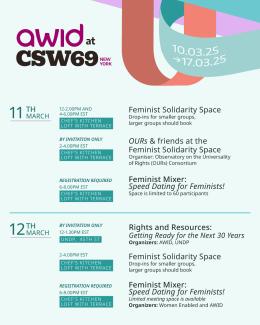
Snippet - CSW69 - Full Calendar - EN
A Joy to the World: Six Questions with Naike Ledan
Interviewed by Chinelo Onwualu
Naike Ledan is a social justice defendant, a committed feminist that brings forward 20 years of experience in human rights and health justice advocacy, women’s empowerment, the fight for universal access to basic services and social inclusion, as well as civil society capacity building. She has built extensive work in Canada, West and southern Africa, as well as in Haiti, in civil rights advocacy, capacity building for CSOs, while emphasising the social determinants of structural exclusion. She values the principles of shared leadership, anticolonial, anti-oppressive, and anti-patriarchal spaces.
Chinelo You’re billed as a trans rights activist; I’m curious about how you made that journey.
Naike So, I grew up in Haiti until I was 18, then I lived in Montreal for 19 years. Coming back to Haiti in 2016, I thought I would be coming back home, but the place had changed and I had to readjust. I did not necessarily reconnect in the way that I’d expected to with childhood family and friends. I came back as an expat with a comfortable work situation, and I felt very much like a foreigner for a very long time. And at the same time, I felt very much at home because of the language, the understood silence, the not having to explain when we start singing a commercial – you know, that thing we share, that energy, that space, that spirit.
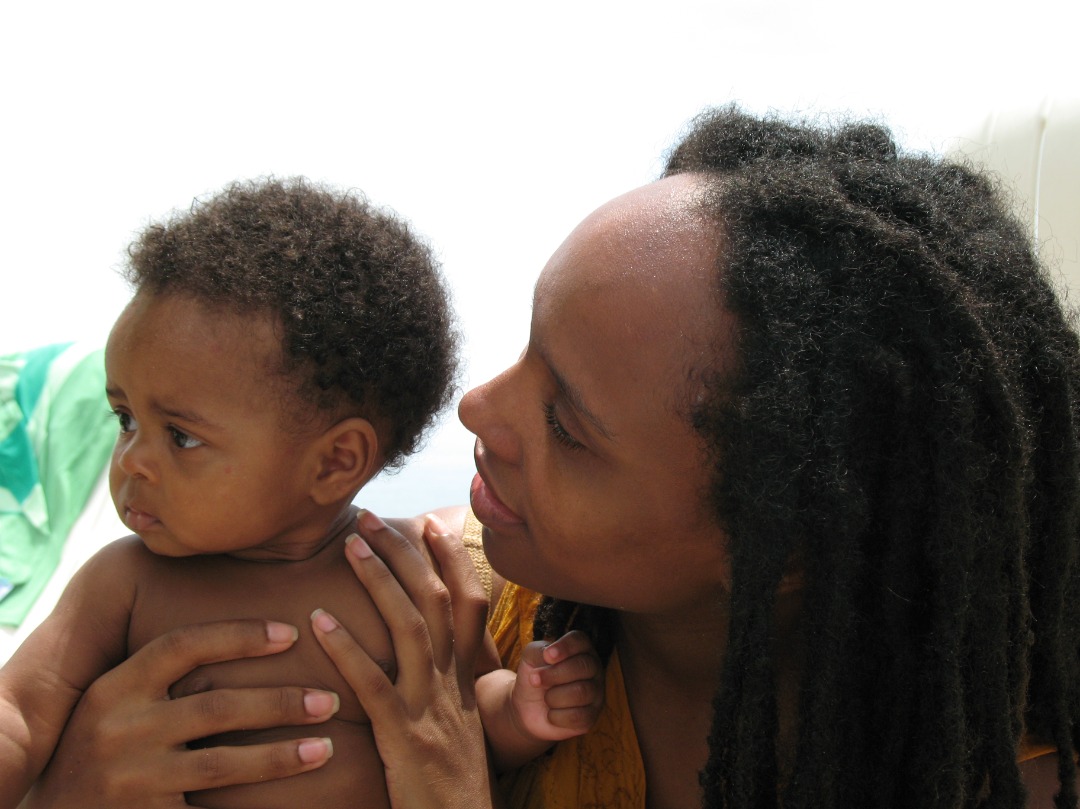
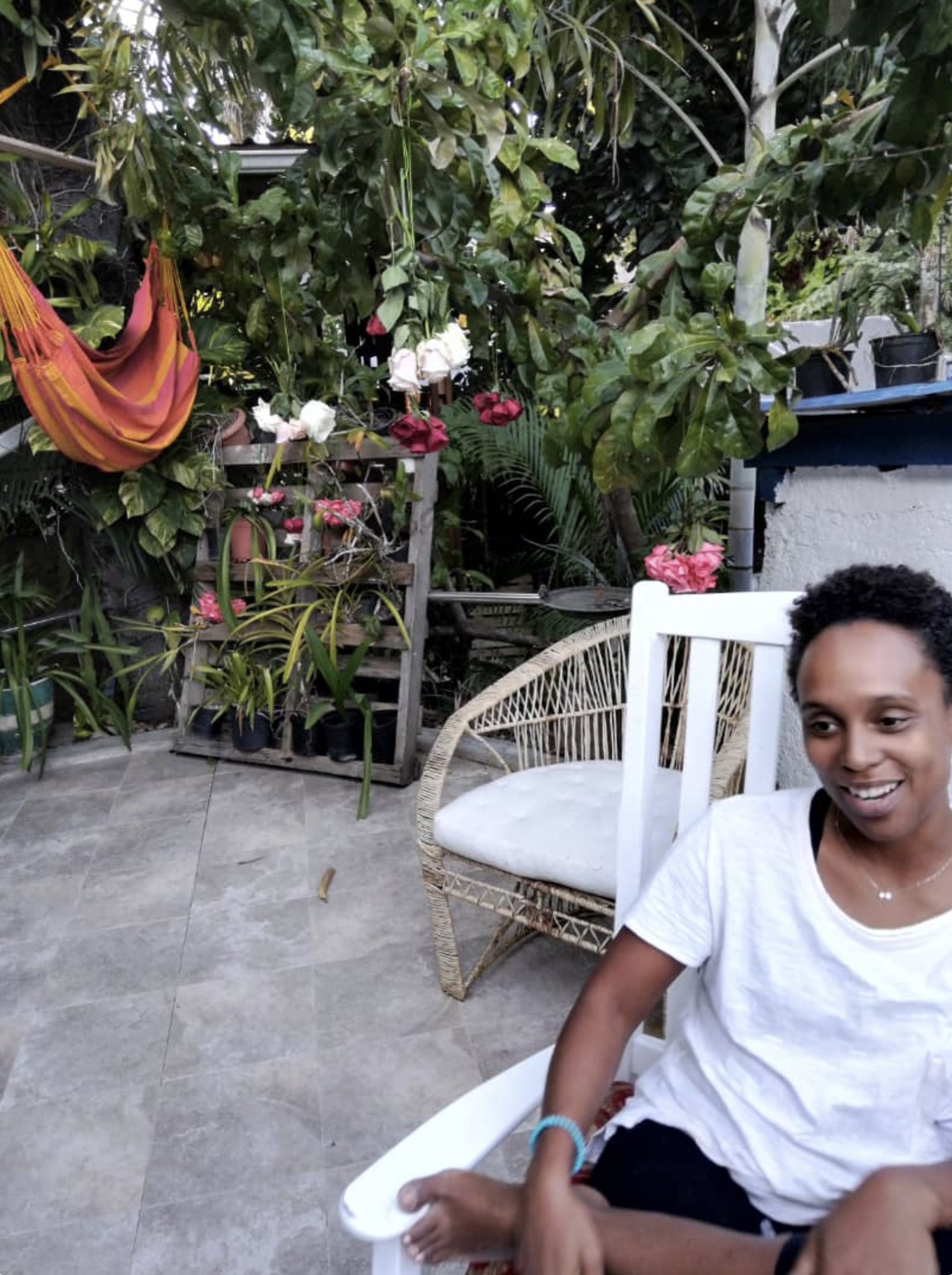
My return to self-love – I would call “rebirth” – coinciding with giving birth to my first child, giving birth to myself, and falling in love with my queerness or same-gender lovingness. (Photo credit: Naike Ledan)
What helped me was, I loved the work of going into the country and documenting people’s knowledge. So I left the comfort. I became a country director of a regional organisation that was queer as fuck! Most of my work was to find resources and build the capacity of civil society. My strategy was to go into the countryside, look for all these little organizations, help build their capacity, and fund them. I was not interested in politicians and shaking hands and taking pictures . I had a very good ally, Charlot Jeudy – the [queer] activist that got killed three years ago in his house. We got very close after an Afro-queer film festival we were planning got banned in Haiti. But it made a lot of noise and sparked conversations about queerness everywhere, so Charlot introduced me to every little CSO in every little corner of the country. And I would just be there to help organisation[s] with registering legally or building their strategic plan. So it’s been a lot of these kinds of work that made me a queer activist and by extension, a trans activist. Although I don’t call myself that – an activist. It’s such a loaded word, you know? And it’s something people call you. I think I’m just a lover and a fighter .
Chinelo Tell me about the workshop you conducted with AWID for the festival. What was it about and what was the context?
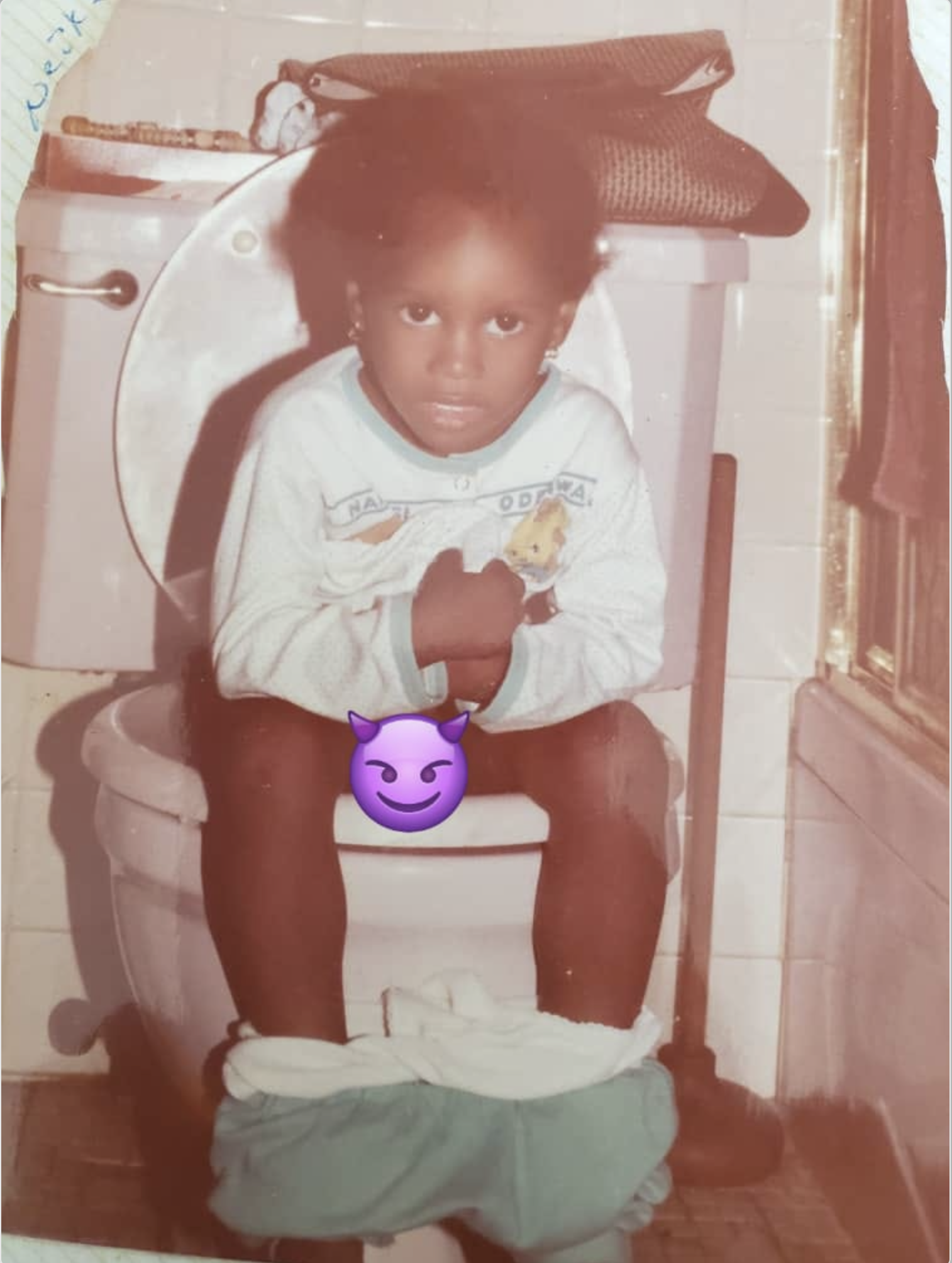
My deep self awareness during my childhood years and my engagement in questioning inequalities and injustice at a very very young age (+/- 4 years old). (Photo credit: Naike Ledan)
Naike International media doesn’t really talk about Haiti, but with a political environment that is as bad as ours, the economic environment is even more catastrophic. Being a more middle class Haitian, speaking different languages, having different passports, I was initially hesitant to take the space. But I often see myself as a bridge more than someone that would talk about themself. That is how I came to invite Semi, who is a brilliant young trans woman from outside Port-au-Prince, to take the space to talk for herself and walk us through the ecosystem of the realities for trans women in Haiti. We ended up building a session about uninclusive feminism – or, I would say, formal feminist spaces – and how trans girls in Haiti do not have spaces where they can contribute to women’s knowledge and sharing of women’s realities. So the AWID festival was the opportunity for me to give the space to the women who should have it. We had a wonderful time; we had wine online while hosting the conversation. My co-facilitator, Semi, shared what it is like to be a trans child/girl/woman at different stages of her life. She also shared the dangers of the street, of poverty, of exclusion, of “not passing,” and her victories as well.
Chinelo What is the relationship of trans women to feminist organizations in Haiti? What has been your experience with that?
Naike It’s been really hard – heartbreaking, actually – the experience of trans women in Haiti. From not existing at all to just being extremely sexualized. The other thing that’s been happening is how they’re being killed, and how those killings have gone unreported in the media. This is how non-existent, how erased trans women are. They’re everywhere but not in job settings, not in feminist settings, not in organizational settings. Not even in LGBT organizations. It’s only recently, and because of a lot of advocacy push, that some of these organization are kind of readjusting, but in feminist spaces, this is still out of the question. We are still having to deal with the old exclusionary discourse of “They’re not women. Of course, if they can pass…” The culture of passing, it’s a risk management conversation – how much you pass and how much you don’t pass and what it means for your body and the violence it inflicts. In the trans-exclusionary realities we live in, which are reproduced in a lot of feminist spaces, those that pass completely may be considered girls, but only to a certain extent. But how about falling in love, how about having a conversation, how about being in the closet, how about wanting a certain aesthetic, or a career? So really, the conversation about hormone therapy becomes about risk reduction, as Semi herself shared at the workshop. But we don’t have the option of hormone therapy, we don’t have the medical framework nor the system to support those who would like to pursue that option.
Chinelo When you talk about the way that trans people and queer people are thought of in society, it sounds like it might be similar to Nigeria, which can be a deeply homophobic environment.
Naike Haiti is a very complex country in a very beautiful way. Nothing is simple, you know, nothing is ever one way. Haitians are very tolerant – and they’re also very homophobic. You’re going to find regions in the countryside where people aren’t that homophobic at all because all the Vodou temples there, and this is a religion that respects life. One basic principle of the Vodou religion is that all children are children. So, there is no right or wrong in the religion. For the longest time, people thought of Haiti as a haven, a place where people are tolerant – we’re talking 70s, 80s, pre-HIV, 90s even. Then you had the earthquake [in 2010] where around 300,000 people died. And then all this money came from the south of the US through the Evangelicals to rebuild the country and find Jesus. So, the homophobia in Haiti is very recent. In the depth, in the heart of the soul of the culture, I cannot really say that it is homophobic. But in the everyday life, it surely lands on the skin of queer people, that violence. And that of women, of poor women, of dark women as well, because colorism runs deep in the Caribbean.
Chinelo How have you managed this? What’s been your strategy for survival?
My return to Haiti as part of my decolonizing process, and choosing to physically position my senses and my family’s senses to magic and blackness uncompromisingly. (Photo credit: Naike Ledan)
Naike I’m really in love with my work. I love working. When I first arrived, I was working with this horrible NGO but I was doing amazing work. I was always in the countryside, conversing and learning from people, from women. And that filled my heart for so long because I’m very much in love with my culture, with black people, with black women – old black women, black babies. It just fills me up in a spiritual way. When we were in Canada my kids were in these all-white schools and tokenized. They did not speak Creole nor French. And now, they’re running free in the yard and starting to fight in Creole. I also found hubs of survival with the people I met. I created bonds with the queers and others who were weirdos like me and it’s been really wonderful. But now I’m struggling because I don’t feel safe in Haiti anymore. We have about 40 kidnappings per week in Port-Au-Prince – and it’s been like that since 2018. I’ve developed anxiety and panic attacks. So It’s time to go, and I’ve been asking myself, “where is home?” I spent 19 years in Montreal but I never felt at home there. When I left, I never missed it so I don’t want to go back. I’ve been crying a lot lately because it feels like entering a second exile.
Chinelo What’s your relationship to pleasure, leisure, and rest?
Naike My relationship with pleasure, leisure, and rest are for me one and the same. It is the lived moment when I indulge in the heat of the sun on my face for example. It is pleasure, leisure, and rest at the same time.
Pleasure: My go-to space, most solely a haven of celebration of myself. I reserve myself the power and the right to be loud or quiet in the enjoyment of the pleasure I experience. All the pleasure I viciously and abundantly indulge in, including and not limited to the pleasure of solitude and silence.
Leisure: biking, music festivals, eating, wine discoveries, dancing in Haitian traditional Vodou dances are amongst many that occur at the moment.
Rest: is what I live for. As an overachiever and a person that is literally in love with work, it is a paradox how lazy I am. No one knows that because all of what the world sees is this: an accomplished overworker. They do not know how I can just, uncompromisingly and profoundly indulge in idleness.
ExploreTransnational Embodiments
This journal edition in partnership with Kohl: a Journal for Body and Gender Research, will explore feminist solutions, proposals and realities for transforming our current world, our bodies and our sexualities.
نصدر النسخة هذه من المجلة بالشراكة مع «كحل: مجلة لأبحاث الجسد والجندر»، وسنستكشف عبرها الحلول والاقتراحات وأنواع الواقع النسوية لتغيير عالمنا الحالي وكذلك أجسادنا وجنسانياتنا.
📅 Wednesday, March 12, 2025
🕒 6.30–8:00pm EST
🏢 Church Center of the United Nations, 777 United Nations Plaza, New York, NY 10017
🎙️Co-facilitated by: Inna Michaeli, Co-Executive Director
Organizer: Jass, Gender at Work, and Count Me In! Consortium
Introducing AWID’s next Co-Executive Directors
Dear Feminist Movements,
On behalf of the AWID Board of Directors, I am proud to introduce AWID’s next Co-Executive Directors: Faye Macheke and Inna Michaeli!
Faye Macheke is a passionate Pan-African feminist, active in movements for women's rights, racial justice, migrant and labor rights, and environmental justice. Her activism builds on the legacy of the struggle against apartheid in South Africa and the aftermath of the apartheid era in Zimbabwe. In 2019, Faye joined AWID as the Director of Finance, Operations and Development. She brings extensive experience in feminist leadership, strategy, and all aspects of organisational development. Faye is a committed Board Member of UAF-Africa and other women's rights organizations. She is based in Cape Town, South Africa.
Inna Michaeli is a feminist lesbian queer activist and sociologist with many years of deep engagement in feminist and LGBTQI+ struggles, political education and organizing by and for migrant women, and Palestine liberation and solidarity. Inna joined AWID in 2016 and served in different roles, most recently as the Director of Programs. She brings extensive experience in research and knowledge building, policy advocacy and organizational development. Inna serves on the Board of the Jewish Voice for Peace - Germany. She is based in Berlin, Germany.
This decision is the result of a rigorous process with full participation of the Board and the staff of AWID. The Board recognised and honoured the skills and talents of AWID staff by opening an internal hiring search. As a result, we had two brilliant candidates, who embody the integrity, ethic of care, and feminist intersectional values that drive AWID’s work, apply together as a team. Faye and Inna brought forward a brave and exciting vision to meet the challenges of this moment: building a global feminist community, resisting and disrupting systems of oppression, and supporting feminist movements to thrive.
As AWID celebrates 40 years we are excited for Inna and Faye to co-lead AWID into our next strategy and a new phase of evolving, pushing boundaries, and supporting feminist movements worldwide.
Appointing and supporting AWID’s Co-Executive Directors to lead the organisation is a fiduciary responsibility we take seriously as a Board. How we engage those processes is also a reflection of AWID’s brilliant and diverse membership, which elects AWID’s Board.
As we say good-bye to Cindy and Hakima, we, the Board, unanimously and enthusiastically welcome Faye and Inna as our next Co-EDs as of September 5, 2022. Stay tuned for more updates about our leadership transition in the months ahead.
Most of all, thank you for your ongoing support!
In feminist solidarity and love, Margo Okazawa-Rey
President, AWID Board
Filter your search by funders’ priority support areas that speak to your organizing efforts
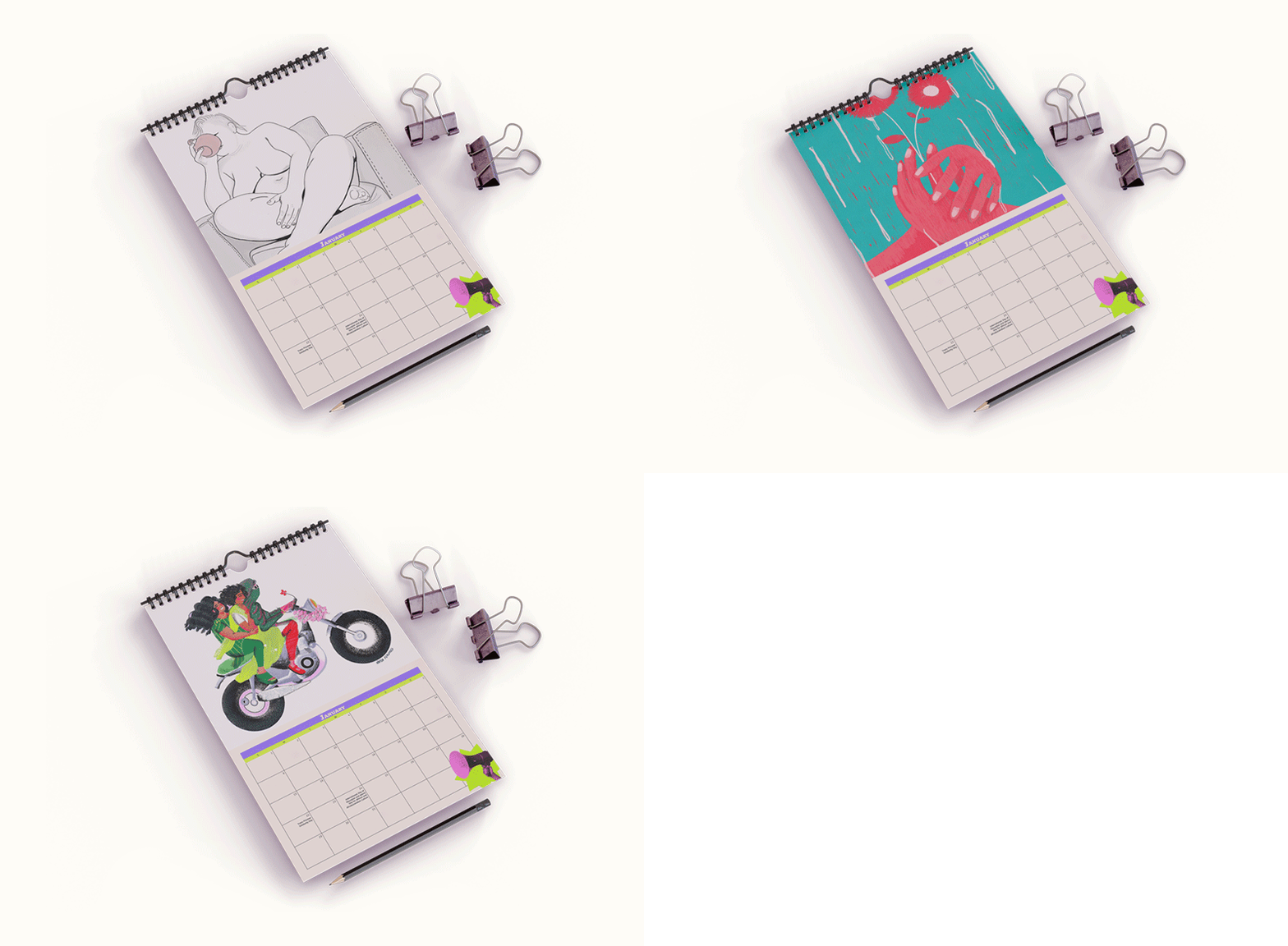
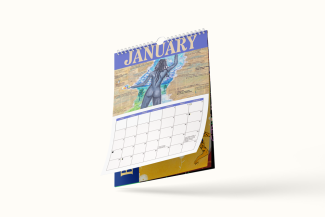
The 2023 Feminist Calendar
AWID is a part of an incredible ecosystem of feminist movements working to achieve gender justice and social justice worldwide. With our 40th anniversary, we are celebrating all that we’ve built over these last 40 years. As a global feminist movement support organization we know that working with fierce feminisms is our way forward, acknowledging both the multiplicity of feminisms and the value of fierce and unapologetic drive for justice. The state of the world and of feminist movements calls for brave conversations and action. We look forward to working together with our members, partners and funders in creating the worlds we believe in, celebrating the wins and speaking truth to power in service of feminist movements globally.
The 2023 Feminist Calendar is our gift to movements. It features the artwork of some of our amazing AWID members.
This campaign is held by 8 partner organizations across continents, building feminist alternatives to the climate crisis, ecocides and genocides.
Snippet - Intro WD2026_EN
Co-Creating a Political Home for Feminist Movements
From 27 - 30 April, 2026, AWID will be at the Women Deliver 2026 Conference, co-creating a political home with feminist and gender justice movements that is rooted in transnational care and solidarity.
In a time when fascism and militarization continue to rise globally, feminist connection and solidarity across borders is what we truly need. We are organizing multiple spaces at Women Deliver and online to connect movements with each other in conversations to build feminist agendas of solidarity and action.
Women human rights defenders (WHRDs) worldwide defend their lands, livelihoods and communities from extractive industries and corporate power. They stand against powerful economic and political interests driving land theft, displacement of communities, loss of livelihoods, and environmental degradation.
Why resist extractive industries?
Extractivism is an economic and political model of development that commodifies nature and prioritizes profit over human rights and the environment. Rooted in colonial history, it reinforces social and economic inequalities locally and globally. Often, Black, rural and Indigenous women are the most affected by extractivism, and are largely excluded from decision-making. Defying these patriarchal and neo-colonial forces, women rise in defense of rights, lands, people and nature.
Critical risks and gender-specific violence
WHRDs confronting extractive industries experience a range of risks, threats and violations, including criminalization, stigmatization, violence and intimidation. Their stories reveal a strong aspect of gendered and sexualized violence. Perpetrators include state and local authorities, corporations, police, military, paramilitary and private security forces, and at times their own communities.
Acting together
AWID and the Women Human Rights Defenders International Coalition (WHRD-IC) are pleased to announce “Women Human Rights Defenders Confronting Extractivism and Corporate Power”; a cross-regional research project documenting the lived experiences of WHRDs from Asia, Africa and Latin America.
We encourage activists, members of social movements, organized civil society, donors and policy makers to read and use these products for advocacy, education and inspiration.
AWID acknowledges with gratitude the invaluable input of every Woman Human Rights Defender who participated in this project. This project was made possible thanks to your willingness to generously and openly share your experiences and learnings. Your courage, creativity and resilience is an inspiration for us all. Thank you!
Related Content
Snippet Kohl - Intro Arabic
التجسيدات العابرة للحدود
قضايا تتعلق بالجسد والجندر ومختلف أنواع الجنسانية، واستكشف الروابط المتشابكة بين القضايا هذه وكونها تجاربَ مجسّدة بعمق ومكانًا يُعترض فيه على الحقوق تكون فيه الأخيرة مهدّدة في المجتمع.
تكمن قوّة الحركات النسوية في طريقة تنظيمنا وتنسيق نشاطنا، ليس ضمن مجتمعاتنا وحركاتنا فحسب إنما بالتعاون مع قضايا ومجموعات حليفة في مجال العدالة الاجتماعية. وفّرت المساحة هذه فرصًا للحركات لمشاركة طرق التنظيم واستراتيجيات تكتيكية مع بعضنا البعض وتعزيزها.
لقد أوضحت جائحة كوفيد-١٩ العالمية فشل الرأسمالية النيوليبرالي فبدا أكبر من قبل وكشفت عن التفكك الموجود في أنظمتنا أكثر من أي وقت سابق، فشددت على ضرورة بناء أنواع واقع جديد وفرص بنائها. يتطلّب التعافي النسوي الاقتصادي والاجتماعي منّا جميعًا أن ننجح كلّنا معًا. نصدر النسخة هذه من المجلة بالشراكة مع «كحل: مجلة لأبحاث الجسد والجندر»، وسنستكشف عبرها الحلول والاقتراحات وأنواع الواقع النسوية لتغيير عالمنا الحالي وكذلك أجسادنا وجنسانياتنا.
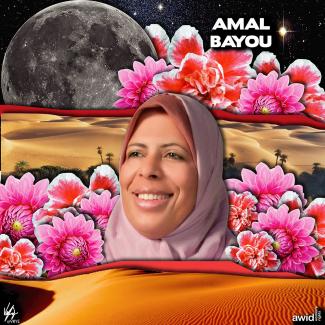
Amal was a prominent politician and parliamentarian in Libya. She was a faculty member at Benghazi University from 1995 until her death in 2017.
Amal was a civil society activist and a member of various social and political initiatives. She assisted the families of martyrs and the disappeared, and was a founding member of a youth initiative called ‘’Youth of Benghazi Libya”. In the 2014 parliamentary elections, Amal was elected to the House of Representatives with more than 14,000 votes (the highest number of votes anyone received in the 2014 elections).
Amal will remain in the memories of many as a woman politician working to ensure a better future in one the most difficult and conflict-ridden contexts in the region.
Faire son coming out au moment le plus fort de ma vie : le forum des féminismes noirs
De nombreuses participantes vivent les Forums de l’AWID comme un espace de liberté unique où elles sont accueillies et célébrées, telles qu’elles sont. Dans un monde où même les féministes les plus privilégiées ont souvent du mal à s’intégrer, pour celles dont l’identité est criminalisée ou condamnée dans leur contexte quotidien, cette expérience de liberté et de célébration peut être profondément transformatrice (et réparatrice). L’histoire de la façon dont OluTimehin Kukoyi - qui participait pour la première fois - a vécu le Forum des féminismes noirs et le Forum de l’AWID à Bahia (2016) illustre bien cela.
Panel: In Panel discussions, explore an issue or challenge from different perspectives, or share a learning or experience, followed by audience questions if time allows.
Talk Show: Have a more spontaneous conversation in Talk-Show style. Talk Shows can be a conversation among several people, facilitated by a talk-show host. Audience questions can determine the conversation’s direction.
Discussion: These can take the form of world cafes, fishbowls, and other methodologies that facilitate participants’ active involvement in conversations. Highly participatory.
Workshop: Interactive sessions that invite participants to build new skills in any and all areas of life and activism.
Strategy Session: This is an invitation to think through an issue or strategy, in depth, with others. A space to learn from each other: what works, what doesn’t, and how do we develop new and collective strategies to create the worlds we dream of.
Sharing Circle (also known as “Birds of a Feather”): Ideal for small groups, in a more intimate setting, to hear from each other, spark discussion and carefully address topics that may be specific, sensitive and complex.
Arts – Participatory Workshop: Participatory activities involving arts and creative expression. Whether through visual art, theater, film, mural, dance, music, collective craft or artmaking, etc., we welcome all ideas celebrating feminist art and creativity as forms of social change, healing, expression and transformation.
Arts – Performances, Installations and Exhibitions: We welcome submissions that offer Forum participants new experiences and perspectives, expand our horizons, and challenge and inspire us to think, feel and organize in new ways.
Healing: Diverse activities tailored both for groups and individuals, from learning relaxation techniques to discussing burnout prevention, from trauma-informed practices of care for our body, mind and soul to healing rifts within our movements.
Snippet - COP30 - 6th International Rights of Nature Tribunal - ES
6to Tribunal International por los Derechos de la Naturaleza: Un nuevo compromiso con la Madre Naturaleza
Donde les organizadores de la primera línea de defensa conducen y las corporaciones rinden cuentas.
📅 Martes 11 de noviembre de 2025
📍 En línea y en la Universidade Federal do Pará, Belém
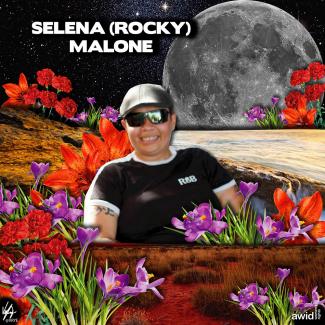
Rocky mostró un liderazgo y una dirección inspiradoras en su trabajo con jóvenes lesbianas, gays, bisexuales, transgénero, intersex, queer, y personas transgénero indígenas de Australia (LGBTIQBBSG) en riesgo.
Rocky comenzó su carrera con el Servicio de Policía de Queensland como Oficial de Policía de Enlace. Para ella, hacer una diferencia era algo importante. Desarrolló una carrera impresionante trabajando con jóvenes LGBTIQBBSG como Gerente del Servicio Juvenil de Puertas Abiertas.
Rocky trabajó con lxs beneficiarixs en situaciones complejas, específicamente relacionadas con la identidad sexual y de género. Esta línea de trabajo le resultaba propia: era una líder comunitaria fuerte, una triunfadora discreta, una amiga leal, una persona que apoyaba compasivamente a lxs demás, alguien que producía el cambio. Rocky fue una de lxs fundadorxs de IndigiLez Leadership y de Support Groes.
En 2016, en la Corte Suprema de Brisbane, Michael Kirby, ex juez del Tribunal Supremo de Apelaciones, mencionó por su nombre a Rocky al elogiar el trabajo que el Servicio Legal LGBTI había desarrollado a lo largo de los años. Rocky luchó de forma extraordinariamente tenaz por los derechos humanos de la comunidad LGBTIQBBSG, corrió los límites y produjo cambios de una forma respetuosa y amorosa.
Nomina a feministas que nos inspiren para formar parte de la Junta Directiva de AWID.
Cada año, AWID busca renovar y enriquecer las perspectivas y experiencias reflejadas en nuestra Junta Directiva mediante la incorporación de nuevxs integrantes.
Actualmente, estamos buscando personas para integrar la Junta Directiva de AWID por períodos de 3 años, a partir de principios de 2024. Esta es una oportunidad para contribuir a la gobernanza de nuestra organización y formar parte de un increíble grupo de feministas de todo el mundo.
Por favor, ayúdanos a identificar feministas conscientes y comprometidas para nominarlxs a la elección antes del 10 de agosto de 2023.
Por favor, también comparte esta invitación a candidaturas entre tus redes.
¿A quién estamos buscando?
Ante todo, buscamos candidatxs que estén comprometidxs con la misión de AWID, que puedan establecer conexiones entre las luchas locales y globales, y que puedan ayudarnos a reflexionar sobre cómo aprovechar mejor el posicionamiento y las fortalezas de AWID en un contexto en constante transformación. Lxs candidatxs deben estar dispuestxs a cumplir con los deberes y responsabilidades legales de la Junta Directiva de AWID en el mejor interés de la organización.
Este es un cargo voluntario que requiere compromiso y participación a lo largo del año. Se espera que lxs integrantes de la Junta Directiva dediquen un mínimo de diez a quince días al año para asistir a reuniones presenciales y virtuales, y que contribuyan con su tiempo y experiencia según sea necesario.
Aspiramos a que nuestra Junta Directiva refleje la diversidad de los movimientos feministas en todo el mundo, en términos de nuestras identidades, geografías, orígenes y afiliaciones a los movimientos. Además, buscamos personas con experiencia relevante para las áreas de trabajo de AWID.
Aunque tendremos en cuenta a todxs lxs candidatxs, basándonos en la composición actual del Consejo, se considerará principalmente a:
Candidatxs con una sólida experiencia en las siguientes áreas:
Derechos y justicia para personas con discapacidad.
Derechos LGBTQI+, y particularmente movimientos de derechos trans
Candidatxs de las siguientes regiones:
Sudamérica
Caribe
¿Qué aporta la Junta a AWID?
La Junta Directiva es clave para configurar la dirección estratégica de AWID y apoyar a nuestra organización para que cumpla su misión en consonancia con el mundo en el que vivimos y las necesidades de nuestros movimientos.
Lxs integrantes de la Junta Directiva contribuyen a la organización de diversas maneras: aportando experiencia en gobernanza desde otros ámbitos, perspectivas de diversos movimientos feministas y conocimientos especializados en áreas relevantes para la estrategia de AWID.
Lxs candidatxs que sean finalmente elegidxs se unirán a la Junta Directiva de AWID en 2024, acompañándonos en el esperado Foro Internacional de AWID y en la implementación de nuestro plan estratégico.
(Puedes nominarte a ti mismx o a alguien que conozcas, con su consentimiento
Por favor, comparte esta invitación a nominar a través de tus redes.
Si bien cualquier persona puede nominar a alguien para la Junta Directiva de AWID, solamente quienes sean afiliadxs pueden votar en nuestra elección de Junta Directiva - ¡Únete a AWID hoy mismo!
Gracias, de antemano, por ayudarnos a encontrar a nuestrxs próximxs y maravillosxs integrantes de la Junta Directiva que respaldarán a AWID en su camino hacia el futuro.
Alors que les dirigeant·es du monde se réunissent au Brésil, il est vital que les mouvements féministes, en particulier les pays de la Majorité globale, aient des espaces indépendants pour se rassembler, mettre au point des stratégies et bouleverser le cours des choses.
Ces pôles remettent en cause l’élitisme des discussions climat, se concentrent sur les expériences vécues et entendent construire le pouvoir collectif au-delà des frontières. Ils constituent un contrepoids critique aux négociations internationales verticales et souvent excluantes. Les pôles visent à encourager des solutions pilotées par la communauté, amplifier les revendications féministes et veiller à ce que les principes féministes de soin et de solidarité façonnent l’agenda climat. Il ne s’agit pas seulement d’être présentes à la COP30, il faut redéfinir la conversation sur la justice climatique, dans des termes féministes.
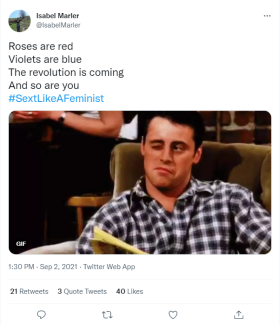
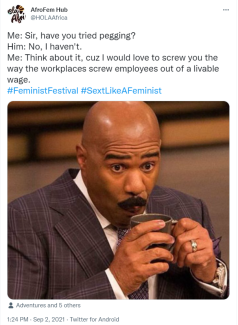
#6 - Sexting like a feminist Tweets Snippet ES
¡Está siempre dispuestx a explorar nuevas experiencias!
Yo: Señor, ¿probó por el culo?
Él: No, no probé.
Yo: Piénselo, porque me gustaría cogérmelo / joderlo tal como a lxs trabajadorxs nos cogen / joden en los trabajos cuando lo que nos pagan no alcanza para vivir.
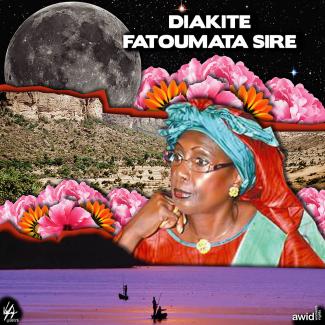
Diakite s'est activement impliquée dans la défense des femmes dans la vie politique et publique au Mali.
Elle a travaillé pour soutenir la formation des candidates aux élections et s'est élevée contre les mutilations génitales féminines (MGF). Elle était un ardente défenseure de la santé et des droits reproductifs.
Le calendrier féministe de l'AWID 2026
Considérez ceci comme un cadeau, que nous vous faisons à vous, et aux 9 500 membres de notre communauté féministe mondiale. Un cadeau porteur d’espoir, de renouveau, d’action collective et de solidarité, en ces temps marqués par d’immenses injustices et violences.
Que ses récits vous rappellent qu’au-delà des frontières et des combats, nous sommes nombreux·ses, nous sommes puissant·es et, qu’ensemble, nous bâtissons les mondes que nous méritons.
Téléchargez-le ici, dans la langue de votre choix.
إن موضوع المنتدى – “النهوض معًا” – هو دعوة للتفاعل مع أنفسنا بالكامل، والتواصل مع بعضنا البعض بتركيز واهتمام وبشجاعة، حتى نتمكن من الشعور بنبض الحركات العالمية والنهوض معًا لمواجهة تحديات هذه الأوقات.
تمر الحركات النسوية وحقوق المرأة والعدالة الجندرية ومجتمع الميم عين والحركات الحليفة في جميع أنحاء العالم بمرحلة حرجة، وتواجه ردة فعل قوية على الحقوق والحريات المكتسبة سابقًا. لقد جلبت السنوات الأخيرة صعوداً سريعاً للأنظمة الاستبدادية، والقمع العنيف للمجتمع المدني، وتجريم النساء والمدافعين عن حقوق الإنسان من مختلف الأنواع الاجتماعية، وتصاعد الحروب والصراعات في أجزاء كثيرة من عالمنا، واستمرار الظلم الاقتصادي، والمشاكل الصحية والأزمات البيئية والمناخية المتقاطعة.
إن حركاتنا تترنح، وفي الوقت نفسه، تسعى إلى بناء والحفاظ على القوة والثبات اللازمين للعمل الذي ينتظرنا. لا يمكننا القيام بهذا العمل بمفردنا، في صوامعنا. يعد الاتصال والشفاء ضروريين لتحويل اختلالات القوة المستمرة والتصدعات داخل حركاتنا. ويجب علينا أن نعمل ونضع الاستراتيجيات بطرق مترابطة، حتى نتمكن من تحقيق النجاح معًا. يعزز منتدى جمعية حقوق المرأة في التنمية هذا العنصر الحيوي المتمثل في الترابط في البقاء أقوياء/ قويات وتأثير النمو والتحول للتنظيم النسوي على مستوى العالم.
📖 Briefing sur les alternatives économiques féministes
Un outil destiné aux militant·es féministes présent·es à la COP30 qui luttent pour des solutions transformatrices, équitables et centrées sur les communautés afin de lutter contre la crise climatique.
« Andaiye » signifie « une fille revient à la maison » en swahili. Née Sandra Williams le 11 septembre 1942 à Georgetown, Guyane, Andaiye adopte ce nouveau nom en 1970 alors que le mouvement des Black Panthers balaie son pays et toute la région des Caraïbes.
Perçue comme une figure transformatrice sur les fronts de la lutte pour la libération et pour la liberté, Andaiye a été l’une des premières membres de l’Alliance du peuple travailleur (WPA), un parti socialiste en Guyane de lutte contre le régime autoritaire et participait activement à sa direction. Tout au long de sa vie, Andaiye a placé la justice pour la classe ouvrière et les droits des femmes vivant en milieu rural au centre de son action militante, et s’est battue pour l’élimination des obstacles ethniques entre les femmes indo-guyaniennes et celles afro-guyaniennes.
Andaiye fut l’une des membres fondatrices des Red Thread Women, une organisation de défense pour la juste rémunération du travail en soins réalisé par les femmes, en plus d’avoir travaillé à l’Université des Indes occidentales et avec l’organisation CARICOM. N’hésitant jamais à défier les gouvernements, elle a pointé du doigt les déséquilibres en matière de genre dans les conseils de l’État, les lois discriminatoires à l’égard des travailleur·euse·s du sexe, réclamé le droit à l’avortement en Jamaïque et s’est érigée contre les accords commerciaux, tels que le Marché unique des Caraïbes (CSME) qui permettait la libre circulation des travailleuses domestiques migrantes mais n’octroyait pas ce même droit à leurs enfants.
Elle a publié plusieurs essais universitaires, rédigé des articles d’opinion et révisé les derniers ouvrages de Walter Rodney, l’activiste politique guyanien et coleader du WPA assassiné en 1980. Survivante du cancer, Andaiye a été l’une des fondatrices de la Ligue guyanienne contre le cancer et du Groupe d’action des survivant·e·s du cancer. Elle a également siégé au conseil exécutif de l’Association caribéenne pour la recherche et l’action féministes (CAFRA), dirigé le Help and Shelter et été membre du conseil de la Commission nationale guyanienne pour les femmes. Elle a par ailleurs reçu de nombreux prix, dont le prestigieux Golden Arrow of Achievement (quatrième prix le plus important du Guyana).
Andaiye est décédée le 31 mai 2019, à l’âge de 77 ans. Les nombreux hommages que lui ont rendus des activistes, ami·e·s et celles et ceux que sa vie aura inspiré·e·s ont parlé avec éloquence de son incroyable héritage et de la grandeur de son humanité.
En voici quelques-uns :
“« Andaiye m’a profondément marquée... elle représenttait tellement de choses pour moi : une éducatrice, une combattante, elle m’a appris l’autocritique, à réfléchir plus clairement, elle m’a enseigné la survie, ce qu’est le courage sans limite, la compassion, à dépasser les apparences et traiter les gens comme des gens, sans se laisser impressionner par le statut, la classe, la race... rien de tout ça. » Peggy Antrobus, activiste féministe, auteure, universitaire, La Barbade
« Le genre d’idéalisme confiant que démontrait Andaiye, cette disposition à affronter le monde et une croyance tenace qu’on pouvait vraiment le changer... Cette politique de l’espoir... Comment honorer sa vie, son héritage et sa mémoire autrement qu’en poursuivant le travail éthiquement et en continuant à s’autocritiquer? Et de faire en sorte de placer le travail de soins des femmes au centre. » - Tonya Haynes, La Barbade
« Je peux l’entendre se moquer de notre engouement collectif. Donc, je ris tout en pleurant. Chapeau bas, chère Andaiye, et merci pour tout. Que le voyage de ton esprit soit aimant et lumineux. Passe le bonjour à Walter et aux ancêtres. » - Carol Narcisse, La Jamaïque