Related content
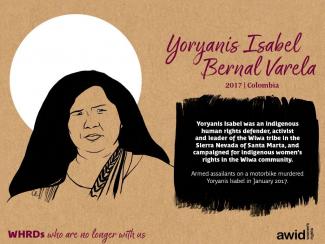
TeleSUR: Indigenous Woman Shot Dead in Colombia as Activists Targeted
TeleSUR: 5 Social Movements Resisting Repression in Latin America
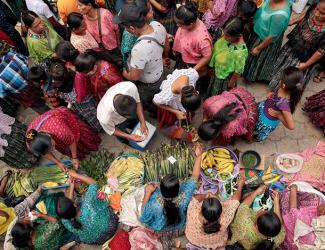
Building Feminist Economies is about creating a world with clean air to breath and water to drink, with meaningful labour and care for ourselves and our communities, where we can all enjoy our economic, sexual and political autonomy.
In the world we live in today, the economy continues to rely on women’s unpaid and undervalued care work for the profit of others. The pursuit of “growth” only expands extractivism - a model of development based on massive extraction and exploitation of natural resources that keeps destroying people and planet while concentrating wealth in the hands of global elites. Meanwhile, access to healthcare, education, a decent wage and social security is becoming a privilege to few. This economic model sits upon white supremacy, colonialism and patriarchy.
Adopting solely a “women’s economic empowerment approach” is merely to integrate women deeper into this system. It may be a temporary means of survival. We need to plant the seeds to make another world possible while we tear down the walls of the existing one.
We believe in the ability of feminist movements to work for change with broad alliances across social movements. By amplifying feminist proposals and visions, we aim to build new paradigms of just economies.
Our approach must be interconnected and intersectional, because sexual and bodily autonomy will not be possible until each and every one of us enjoys economic rights and independence. We aim to work with those who resist and counter the global rise of the conservative right and religious fundamentalisms as no just economy is possible until we shake the foundations of the current system.
Advance feminist agendas: We counter corporate power and impunity for human rights abuses by working with allies to ensure that we put forward feminist, women’s rights and gender justice perspectives in policy spaces. For example, learn more about our work on the future international legally binding instrument on “transnational corporations and other business enterprises with respect to human rights” at the United Nations Human Rights Council.
Mobilize solidarity actions: We work to strengthen the links between feminist and tax justice movements, including reclaiming the public resources lost through illicit financial flows (IFFs) to ensure social and gender justice.
Build knowledge: We provide women human rights defenders (WHRDs) with strategic information vital to challenge corporate power and extractivism. We will contribute to build the knowledge about local and global financing and investment mechanisms fuelling extractivism.
Create and amplify alternatives: We engage and mobilize our members and movements in visioning feminist economies and sharing feminist knowledges, practices and agendas for economic justice.
“The corporate revolution will collapse if we refuse to buy what they are selling – their ideas, their version of history, their wars, their weapons, their notion of inevitability. Another world is not only possible, she is on her way. On a quiet day, I can hear her breathing”.
Arundhati Roy, War Talk
You can now watch the AWID Feminist Film Club program “Feminist Embodiments of Hope and Power” - a film series on Feminist Realities from the SWANA region curated by Esra Ozban
Related content
TeleSUR: Indigenous Woman Shot Dead in Colombia as Activists Targeted
TeleSUR: 5 Social Movements Resisting Repression in Latin America
AWID’s working languages are English, French and Spanish. Thai will be added as the local language, as well as sign language & other accessibility measures. Other languages may be added if funding permits, so check back regularly for updates. We care about language justice and will try to include as many languages as we can and as our resources allow. We hope to create multiple opportunities for many of us to be present in our languages and to communicate with each other.
A living collection of resources to support feminist movements, policy-makers, and allies to resist fascisms, fundamentalisms, and anti-rights trends.

The Deadline to submit activities has been extended to February 1st, 2024
In the spirit of the Forum’s theme, we invite a diversity of activity topics and formats that:
with Nazik Abylgaziva, Amaranta Gomez Regalado, Cindy Weisner, and Lucineia Freitas.

جديد
كمشارك/ة عبر الإنترنت، يمكنك توجيه النشاطات والتواصل والتحدث مع الآخرين/ الأخريات وتجربة الإبداع والفن والاحتفال بمنتدى جمعية حقوق المرأة في التنمية بشكل مباشر. سيستمتع المشاركون/ات المتصلون/ات عبر الإنترنت ببرنامج غني ومتنوع، بدءًا من ورشات العمل والنقاشات وحتى نشاطات الاستشفاء والعروض الموسيقية. ستركز بعض الأنشطة على التواصل بين المشاركين/ات عبر الإنترنت، وسيكون البعض الآخر هجينًا بالفعل، يركز على الاتصال والتفاعل بين المشاركين/ات عبر الإنترنت وأولئك الموجودين/ات في بانكوك.


لويز ماليرب، مبرمجة أفلام وقيّمة معارض وناقدة أفلام مقيمة في برلين. عملت كمبرمجة أفلام لجمعية متروبوليس للسينما في بيروت. حاليا تنسق لويز مشروع ريل ستريمز الذي يهدف إلى دعم نشر السينما المستقلة في المنطقة العربية. هي رئيسة قسم البرمجة لمهرجان صورة السينمائي، وهو مهرجان أفلام كويرية يركز على منطقة جنوب غرب آسيا وشمال أفريقيا. تكتب لويز النقد السينمائيين لـ مانيفستو XXI، وقد بدأت مؤخرًا تنظيم الأفلام والمهرجانات لسينما عقيل.
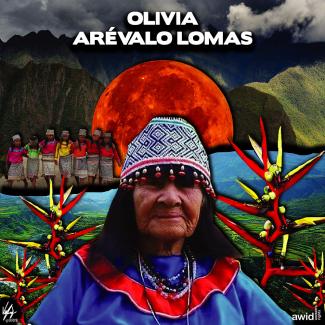
Olivia was the spiritual leader of the Shipibo Konibo indigenous peoples.
A wise Indigenous woman and grandmother, she was known for cultivating traditional medicine and the sacred songs of her people (Íkaros). Olivia Arevalo was an active defender of the cultural and environmental rights of her people. Olivia’s murder occurred in a context of territorial conflict between the Shipibo community and companies that desire to take over their land to cultivate palm oil.
Members of her community have said: “Her death is an aggression against the entire Shipibo community. She was the living memory of her people”.
Please refer to the Call for Activities for this information, including the section “What you need to know”.
5 pm, tonight.


The handwriting on the invitation—
coily and brusque—
I’ve seen it five times in five years.
My body rouses,
feverish.
I need to fuck myself first.
The tide is high tonight and
I get
off.
I want to slow everything down,
taste time and space, etch them
into memory.
*
I’ve never been to this part of town before.
Unknown places excite me,
the way limbs and veins and bones
resist decay,
their fate uncertain.
At the door, I think twice.
The hallway is pitch black
and it makes me pause.
On the other side,
a portal of smell and color
opens like a curse,
into a sunny afternoon.


The breeze
makes my hair dance,
piques its curiosity,
compels it to move.
I hear the wheelchair whirring,
shaping the shadows.
Then I see them:
a lynx face
and a body like mine
and I find myself desiring both
again.
The creature motions me closer.
Their gestures write a sentence;
as I move toward them,
I notice its details:
wither, flesh, bliss
On their command, the vine that covers the hallway
hugging warm stones,
snakes up the wall.
It becomes a verb,
“to climb,”
and I’m reorientated when their claws point
to the vine-bed in the center.
I hear the wheels behind me,
then that sound.
It reverberates
like no other.
Their long black wings
elevate toward the ceiling
then they lunge forward.
The feline vision scans every detail,
every change,
every longing.
Can desire liquefy your muscles?
Can it act sweeter than the strongest
of tranquilizers?


A lynx sews the world
across our differences,
weaving lace around my knees.
Can desire crush the distance of the world,
compressing the seconds?
They come closer still,
lynx eye meeting human eye,
sniffing the air,
turning body into
urgency.
They beat down their wings.
Stirred,
the vines tangle around my waist/waste.
Their tongue thins time,
shifting grounds,
soothes, with their magic,
what stirs beneath.
I see the world in you, and the
world is exhausted.
Then they plead:
Let me feast on you.
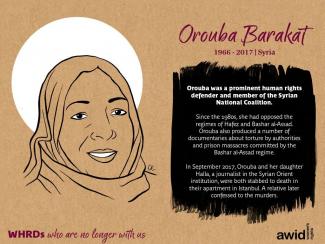
Madiha was a prominent Professor of Sociology who actively engaged with civil society as an advocate for women’s rights in the Arab region.
She chaired the Alliance for Arab Women and was a member of the Committee on Civil Society and the Committee on the Development of Minia Governorate with the National Council for Women. She produced numerous papers that shed light on, and analyzed, gender inequalities and discrimination against women.
She is remembered fondly by colleagues, students and friends.

2-5 ديسمبر 2024، بانكوك، تايلاند! سنجتمع في مركز الملكة سيريكيت الوطني للمؤتمرات (QSNCC) وكذلك افتراضيا عبر
بالنسبة إليّ، هذه الأنواع من الدردشات كانت ضمن تعابير الحبّ التي أتاحت لي الحياة أن أستمتع بها حديثًا فقط. ما كنت أعرف أن هذه الأشكال الأخرى ممكنة – تلك التي توجَد خارج نطاق ورشات العمل، أو أماكن الناشطين أو غرف الصفّ أو أماكن العمل.
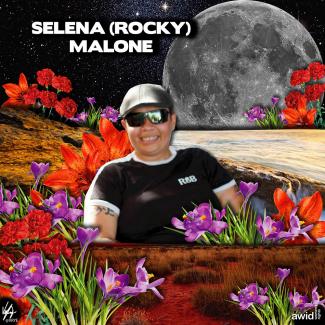
Rocky showed inspirational leadership and direction in working with Lesbian, Gay, Bisexual, Transgender, Intersex, Queer, Brotherboy and Sistergirl (LGBTIQBBSG) youth at risk.
Rocky started her career with the Queensland Police Service as a Police Liaison Officer. Making a difference was important to her. She led an impressive career working with young LGBTIQBBSG people as the Manager of Open Doors Youth Service.
Rocky worked through complex situations with clients relating specifically to gender and sexual identity. She was a natural in this line of work - a strong community leader, a quiet achiever, a loyal friend, a compassionate nurturer, and a change maker. Rocky was a founding member of IndigiLez Leadership and Support Group.
In 2016 at the Supreme Court in Brisbane, Former High Court Justice Michael Kirby mentioned Rocky by name when praising the work of the LGBTI Legal Service over the years. Rocky fought extremely hard for the human rights of the LGBTIQBBSG community, pushed boundaries and created change in a respectful, loving way.
لا تقدم جمعية حقوق المرأة في التنمية خصومات جماعية، ولكننا نقدم خصومات التسجيل للأعضاء/ العضوات. (انقر هنا لمعرفة المزيد عن كيفية الانضمام)