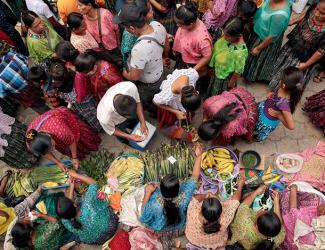

UN Women / Flickr (CC BY-NC-ND 2.0)
Guatemala - Rural Women Diversify Incomes and Build Resilience
Left
Half
Left

Priority Areas

Supporting feminist, women’s rights and gender justice movements to thrive, to be a driving force in challenging systems of oppression, and to co-create feminist realities.

Building Feminist Economies

Building Feminist Economies is about creating a world with clean air to breath and water to drink, with meaningful labour and care for ourselves and our communities, where we can all enjoy our economic, sexual and political autonomy.


In the world we live in today, the economy continues to rely on women’s unpaid and undervalued care work for the profit of others. The pursuit of “growth” only expands extractivism - a model of development based on massive extraction and exploitation of natural resources that keeps destroying people and planet while concentrating wealth in the hands of global elites. Meanwhile, access to healthcare, education, a decent wage and social security is becoming a privilege to few. This economic model sits upon white supremacy, colonialism and patriarchy.

Adopting solely a “women’s economic empowerment approach” is merely to integrate women deeper into this system. It may be a temporary means of survival. We need to plant the seeds to make another world possible while we tear down the walls of the existing one.


We believe in the ability of feminist movements to work for change with broad alliances across social movements. By amplifying feminist proposals and visions, we aim to build new paradigms of just economies.

Our approach must be interconnected and intersectional, because sexual and bodily autonomy will not be possible until each and every one of us enjoys economic rights and independence. We aim to work with those who resist and counter the global rise of the conservative right and religious fundamentalisms as no just economy is possible until we shake the foundations of the current system.


Our Actions

Our work challenges the system from within and exposes its fundamental injustices:

  • Advance feminist agendas: We counter corporate power and impunity for human rights abuses by working with allies to ensure that we put forward feminist, women’s rights and gender justice perspectives in policy spaces. For example, learn more about our work on the future international legally binding instrument on “transnational corporations and other business enterprises with respect to human rights” at the United Nations Human Rights Council.

  • Mobilize solidarity actions: We work to strengthen the links between feminist and tax justice movements, including reclaiming the public resources lost through illicit financial flows (IFFs) to ensure social and gender justice.

  • Build knowledge: We provide women human rights defenders (WHRDs) with strategic information vital to challenge corporate power and extractivism. We will contribute to build the knowledge about local and global financing and investment mechanisms fuelling extractivism.

  • Create and amplify alternatives: We engage and mobilize our members and movements in visioning feminist economies and sharing feminist knowledges, practices and agendas for economic justice.


“The corporate revolution will collapse if we refuse to buy what they are selling – their ideas, their version of history, their wars, their weapons, their notion of inevitability. Another world is not only possible, she is on her way. On a quiet day, I can hear her breathing”.

Arundhati Roy, War Talk

Related Content

Snippet - CSW69 - Feminist Solidarity Space - EN

Feminist Solidarity Space

✉️ By registration for larger groups. Drop-ins for smaller groups. Register here

📅 Tuesday, March 11, 2025
🕒 12.00-2.00pm and 4.00-6.00pm EST

🏢 Chef's Kitchen Loft with Terrace, 216 East 45th St 13th Floor New York

Organizer: AWID

Hospital | Content Snippet EN

“Now might be a good time to rethink what a revolution can look like. Perhaps it doesn’t look like a march of angry, abled bodies in the streets. Perhaps it looks something more like the world standing still because all the bodies in it are exhausted—because care has to be prioritized before it’s too late.” 
- Johanna Hedva (https://getwellsoon.labr.io/)

Hospitals are institutions, living sites of capitalism, and what gets played out when somebody is supposed to be resting is a microcosm of the larger system itself. 

Institutions are set out to separate us from our care systems – we find ourselves isolated in structures that are rigidly hierarchical, and it often feels as if care is something done to us rather than given/taken as part of a conversation. Institutional care, because of its integration into capitalist demand, is silo-ed: one person is treating your leg and only your leg, another is treating your blood pressure, etc. 

Photographer Mariam Mekiwi had to have surgery last month and documented the process. Her portraits of sanitized environments – neon white lights, rows after rows of repetitive structures – in a washed-out color palette reflect a place that was drained of life and movement. This was one of the ways Mariam kept her own spirit alive. It was a form of protest from within the confines of an institution she had to engage with.

The photos form a portrait of something incredibly vulnerable, because watching someone live through their own body’s breakdown is always a sacred reminder of our own fragility. It is also a reminder of the fragility of these care systems, which can be denied to us for a variety of reasons – from not having money to not being in a body that’s considered valuable enough, one that’s maybe too feminine, too queer or too brown.  

Care experienced as disembodied and solitary, that is subject to revocation at any moment, doesn’t help us thrive. And it is very different from how human beings actually behave when they take care of each other. How different would our world look like if we committed to dismantling the current capitalist structures around our health? What would it look like if we radically reimagined it?

Snippet - CSW69 - Challenging the Status Quo - EN

Challenging the Status Quo

A Critical Dialogue on Gender Equality and Human Rights

✉️ Online registration available. Register here

📅 Friday, March 21, 2025
🕒 2.30pm EST

🏢 Church Center of the United Nations, 11th Floor. 777 United Nations Plaza, New York, NY 10017

🎙️AWID speaker: Anissa Daboussi, Manager, Advancing Universal Rights and Justice team

Organizer: IWRAW AP, OURs, AWID, SRI

Snippet Kohl - Panel | Liberated Land & Territories | AR

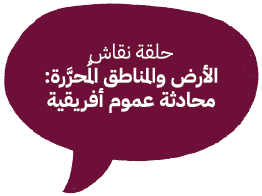
Speech bubble: Panel liberated land and territories

حلقة نقاش | الأرض والمناطق المُحرَّرة: محادثة عموم أفريقية 
مع لوام كيدان ومريامة سونكو ويانيا صوفيا غرسون ڤالنسيا ونوسمة سيزاني

YOUTUBESOUNDCLOUD

Snippet - WCFM type of funding- EN

Type of funding:

Be it core funding, programmes & projects or rapid response/ emergency grants.

#5 - Sexting like a feminist Tweets Snippet AR

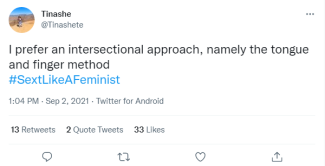
تقديم تحليل كفء للأجساد البحثيّة، يستوجب بالضرورة تسخيرًا شاملا لكافّة الأدوات الحميميّة…

Image of a tweet. Text says: I prefer an intersectional approach, namely the tongue and finger method.

أفضّل المقاربة التقاطعيّة لما تشتمل عليه من مداعبة ممنهجة باللسان والأصابع

Snippet WITM survey result - EN

DATA SNAPSHOTS

Where is the money for feminist organizing?

1,174 feminist, women's rights & LGBTQI+ organizations 
from 129 countries participated in AWID's 2024 survey.

The data reveals the state of resourcing for feminist movements between 2021-2023, amid current major defunding trends in aid and philanthropy.

Our collective power knows no boundaries, but our bank accounts do.

Our partners

This project is built in collaboration with:

Logo for African Women's Development and Communication Network
Logo for Rutgers Center for Women's Global Leadership

Snippet - COP30 - The People's Summit

The People's Summit

The climate summit by movements, for movements.

📅 November 12 - November 16, 2025
📍 Universidade Federal do Pará, Belém

More info here

Snippet - COP30 - Ecozine card - EN

📰 Feminist Transnational Solidarity: an Antidote to Ecocide

This collaborative zine originated from a series of sharing circles that brought together feminists from around the world throughout 2022. The purpose was to exchange ideas and mutually learn how communities are responding to the climate crisis in various local contexts.

Download the Zine

Snippet 8 - What's happening at HRC61 Intro

AWID Forum: Co-creating Feminist Futures

In September 2016, the 13th AWID international Forum brought together in Brazil over 1800 feminists and women’s rights advocates in a spirit of resistance and resilience.

This section highlights the gains, learnings and resources that came out of our rich conversations. We invite you to explore, share and comment!


What has happened since 2016?

One of the key takeaways from the 2016 Forum was the need to broaden and deepen our cross-movement work to address rising fascisms, fundamentalisms, corporate greed and climate change.

With this in mind, we have been working with multiple allies to grow these seeds of resistance:

And through our next strategic plan and Forum process, we are committed to keep developing ideas and deepen the learnings ignited at the 2016 Forum.

What happens now?

The world is a much different place than it was a year ago, and it will continue to change.

The next AWID Forum will take place in the Asia Pacific region (exact location and dates to be announced in 2018).

We look forward to you joining us!

About the AWID Forum

AWID Forums started in 1983, in Washington DC. Since then, the event has grown to become many things to many peoples: an iterative process of sharpening our analyses, vision and actions; a watershed moment that reinvigorates participants’ feminisms and energizes their organizing; and a political home for women human rights defenders to find sanctuary and solidarity.

Learn more about previous Forums

Related Content

Género y discapacidad: la lucha contra la discriminación en Senegal
Género y discapacidad: la lucha contra la discriminación en Senegal

La organización Vie Féminine et Handicap [vida femenina y discapacidad] se afilió a AWID en el año 2008. La Presidenta de la organización, Ndoye Kane, afirma que esto se hizo  « con el fin de defender mejor nuestras ideas, mejorar la concientización  sobre la discriminación experimentada por las mujeres que viven con discapacidad en África y para dar mayor visibilidad a nuestro trabajo». 


Tener en cuenta las necesidades específicas de las mujeres que viven con discapacidad
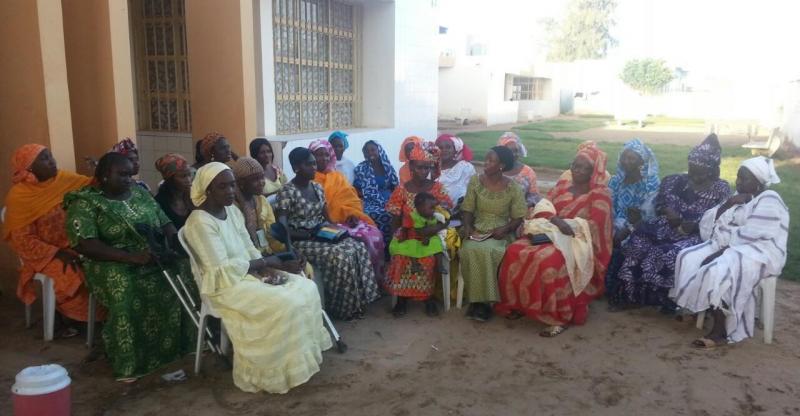
Vie Féminine et Handicap comenzó a operar en 2008 y su misión es luchar contra la pobreza que sufren las mujeres que viven con discapacidad en Senegal y en todo el mundo –aunque   especialmente en el continente africano. En su visión, la discapacidad dejar de ser una barrera para la dignidad o el bienestar de las mujeres. Los principales objetivos de la organización son la lucha contra la pobreza, las infecciones de transmisión sexual y el sida entre las mujeres que viven con diversidad funcional, fortaleciendo su acceso a las nuevas tecnologías de la información.

Vie Féminine et Handicap se creó para abordar cuestiones relevantes a las  mujeres con diversidad funcional — desde una perspectiva que toma en cuenta sus necesidades específicas como mujeres y personas que viven con una discapacidad —;   para garantizar que su situación económica evoluciona de manera positiva;  y para mejorar la sensibilidad social a temas relacionados con la discapacidad, eliminando los prejuicios negativos.

La organización cuenta con 15 integrantes y trabaja, principalmente,  en los departamentos de Pikine y Guédiawaye de la región de Dakar. Su tarea incluye crear conciencia y capacitar a mujeres que viven con diversidad funcional;  y también hacer incidencia con tomadores de decisión por los derechos humanos de las mujeres que viven con discapacidad, su empoderamiento económico y su salud sexual y reproductiva. «Creamos conciencia sobre el tema de la diversidad funcional en las comunidades, invitando a las autoridades, a la juventud y a las personas sin discapacidades, porque en Senegal y en el contexto africano hay, por lo general, muchos prejuicios negativos en torno a las capacidades diferentes. También participamos en conferencias regionales e internacionales para hablar de la situación de las mujeres discapacitadas en África y en el mundo; y para alinear mejor nuestras estrategias», subraya Kane.

«Sin solidaridad, sin una comprensión de que la lucha que nosotras lideramos no es para una sola organización de personas discapacitadas, sino para todas, nunca lograremos ningún resultado. Cada organización de personas con diversidad funcional debe comprender que la lucha que estamos librando es más importante que la competencia y que debemos avanzar juntas para seguir obteniendo resultados duraderos.», explicó Ndoya Kane,  en el 2010 en un informe de AWID.

Recursos combinados y el financiamiento autónomo de la membresía
En febrero de 2010, la organización creó un fondo de autofinanciamiento,  que combina los aportes de su membresía para que cada integrante financie pequeños proyectos personales y para iniciar actividades de generación de ingresos, particularmente bajo la forma de pequeños negocios. La idea de crear este fondo surgió de la propia membresía –un  grupo vulnerable con recursos económicos limitados y para  el que resulta casi imposible acceder al crédito.

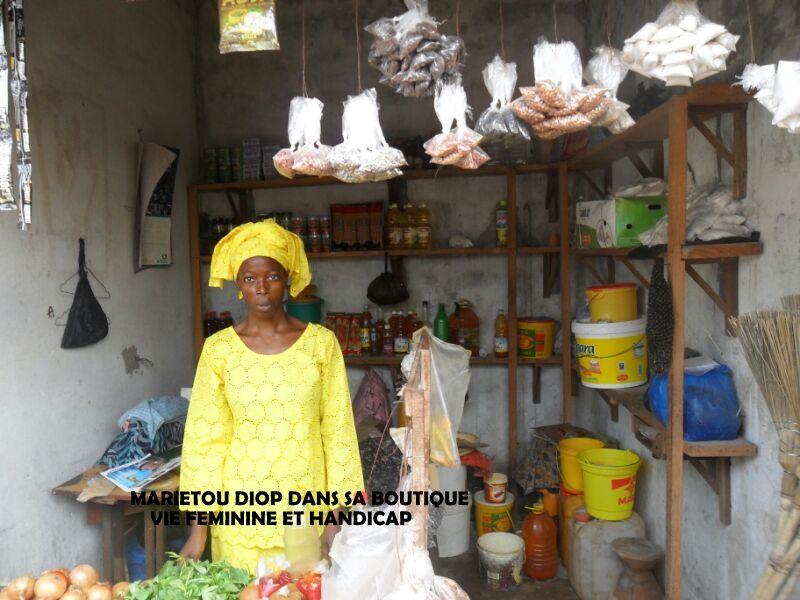
Un ejemplo de este trabajo es la historia de Marétou Dio, quien vive en Guédiawaye: el fondo le permitió instalar un puesto en el mercado de su comunidad y vender productos alimenticios. «Ahora hay mujeres que se están sumando a nuestro fondo autofinanciado para obtener crédito y costear sus actividades», indica Ndoya Kane.

«Las conversaciones grupales son todavía más importantes porque  abren la oportunidad de reunirnos con otras mujeres que viven con discapacidad y  generar relaciones de confianza para hablar cómodamente sobre los problemas que nosotras enfrentamos. Decidimos colectivamente cuáles son los desafíos que afrontamos e intentamos traer especialistas para abordarlos», explica Kane.

Source
AWID

Vie Féminine et Handicap : lutter contre les discriminations au Sénégal

Vie Féminine et Handicap : lutter contre les discriminations au Sénégal

L’association Vie Féminine et Handicap est devenue membre de l’AWID en 2008 « pour mieux défendre nos idées, mieux sensibiliser sur les discriminations dont les femmes en situation de handicap sont victimes en Afrique et offrir une meilleure visibilité de nos actions », confie la Présidente de l’association, Ndoya Kane. 


Prendre en compte les besoins spécifiques des femmes en situation de handicap 

Créée en 2008, Vie Féminine et Handicap se donne pour mission de lutter contre la pauvreté des femmes en situation de handicap au Sénégal et de façon plus globale sur tout le continent africain. Dans le cadre d’une vision où le handicap ne devrait pas constituer un frein à la dignité et au bien-être des femmes, l’association se donne pour objectifs principaux de lutter contre la pauvreté, les Infections Sexuellement Transmissibles et le Sida chez les femmes en situation de handicap, tout en renforçant leur accès aux nouvelles technologies de l’information. 

Vie Féminine et Handicap a été créée pour que les problématiques des femmes handicapées soient gérées à partir d’une perspective qui prenne en compte leurs besoins spécifiques, liés à la fois à leurs statuts de femme et de personne handicapée, et pour que leur situation économique évolue de façon positive et que la société soit mieux sensibilisée aux questions du handicap sans préjugés négatifs. 
Constituée d’une cinquantaine de membres et agissant principalement sur les départements de Pikine et de Guédiawaye dans la région de Dakar, Vie Féminine et Handicap entreprend des activités de sensibilisation et de formation des femmes en situation de handicap ainsi que de plaidoyer envers les autorités, qui portent à la fois sur la question de l’exercice des droits humains des femmes handicapées, leur pouvoir économique et leur santé sexuelle et reproductive.  « Nous organisons des activités de sensibilisation sur le handicap dans les quartiers en y invitant les autorités communales, les jeunes et les personnes « valides » car le handicap est entouré de beaucoup de préjugés négatifs dans la culture sénégalaise et africaine en général. Nous participons aussi à des conférences aux niveaux africain et international pour débattre de la situation des femmes handicapées en Afrique et dans le monde pour une meilleure harmonisation de nos stratégies », souligne Ndoya Kane.

« Sans faire preuve de solidarité, sans comprendre que notre combat n’est pas mené pour défendre les intérêts d’une seule organisation de personnes handicapées, mais de tou-te-s, nous n’obtiendrons jamais de résultats. Toutes les organisations de personnes handicapées doivent comprendre que le combat que nous menons est plus important que les rivalités internes et que nous devons avancer ensemble pour réussir à obtenir des résultats durables », expliquait Ndoya Kane en 2010 dans un rapport de l'AWID.

Mutualisation des ressources et autofinancement des membres

L’association a mis en place depuis février 2010 une caisse d’autofinancement (CAF), qui consiste à mettre en commun les cotisations des membres pour permettre à chacune de disposer de financements de petits projets personnels et d’initier des activités génératrices de revenus pour ses membres, axées notamment autour du petit commerce. L’idée de créer cette CAF est née de la volonté des membres elles-mêmes, qui constituent un groupe très précaire disposant de faibles ressources économiques et dont l’accès aux crédits formels s’avère par conséquent impossible.

La CAF a par exemple permis à Marétou Diop, une habitante de Guédiawaye, d’ouvrir une boutique dans le marché de son quartier pour y vendre des denrées alimentaires. « Maintenant, les autres femmes viennent adhérer à notre Caisse d’Autofinancement pour trouver du crédit et financer leurs activités », souligne Ndoya Kane. 

« Les discussions de groupe sont d’autant plus importantes qu’elles permettent de nous retrouver entre femmes handicapées et renforcent la confiance chez certaines pour parler de leur condition de femme en toute aisance. Nous choisissons ensemble quel problème existe et essayons d’avoir recours à des spécialistes pour nous entretenir sur la question », raconte Ndoya Kane.

Source
AWID

Feminine Life and Disability: Fighting against the discrimination in Senegal

Feminine Life and Disability: Fighting against the discrimination in Senegal

The organization Vie Féminine et Handicap (Feminine Life and Disability) became an AWID member in 2008 “to better defend our ideas, to better promote awareness of the discrimination faced by women living with disability in Africa, and to increase visibility of our work,” says President of the organization, Ndoya Kane. 


Considering the specific needs of women living with disability

Launched in 2008, the mission of Vie Féminine et Handicap is to fight against poverty among women living with disability in Senegal and globally, but especially across the African continent. With a vision where disability is no longer a barrier to a woman’s dignity or well-being, the main objectives of the organization are to combat poverty, sexually transmitted infections, and AIDS among women living with disability, while strengthening their access to new information technologies.    

Vie Féminine et Handicap was created to address the issues of disabled women from a perspective that considers their specific needs, related to both their status as a woman and as a person living with a disability – and to ensure that their economic situation evolves in a positive way and to better sensitize society to disability issues without the negative prejudice. 

Comprised of some fifteen members and working mainly across the Pikine and Guédiawaye departments in the Dakar region, the work of Vie Féminine et Handicap includes awareness raising and training for women living with disability, as well as advocacy with decision-makers around the human rights of women living with disability, their economic empowerment, and their sexual and reproductive health. “We do awareness raising on the issue of disability in neighbourhoods by inviting community authorities, youth and ‘able-bodied’ people, because disability is surrounded by a lot of negative prejudice in the Senegalese and African context in general. We also participate in conferences at the African and International level to discuss the situation of disabled women in Africa and around the world to better align our strategies,” highlights Kane. 

 “Without solidarity, without an understanding that the fight that we lead is not done in the interest of a sole disabled people’s organization, but in the interest of all, we will never achieve any results. Each disabled people’s organization to understand that the fight that we lead outweighs the competition and that we have to go forward together to succeed in getting long lasting results,” explained Ndoya Kane in 2010, in a repport produced by AWID

Pooling resources and the self-financing of members

Since February 2010, the organization has established a self-financing fund, which consists of pooling member contributions to allow each one to finance small personal projects and to initiate income-generating activities for its members, mainly focused on small business. The idea to create the fund originated from our members themselves, a vulnerable group with limited economic resources and for which access to credit is nearly impossible.

The Fund for example allowed Marétou Diop, a resident of Guédiawaye, to open a shop in her neighbourhood market and sell foodstuffs. “Now the other women are joining our self-financing fund to receive credit and finance their activities,” highlights Ndoya Kane.  

“Group discussions are even more important as they give us the opportunity to meet among women living with disability and build confidence in some to comfortably talk about the issues they face as women. Together we decide which challenges exist and try to engage specialists in addressing the issue,” says Kane.    

Source
AWID

AWID in 2016: Co-Creating Feminist Futures

AWID is pleased to share our 2016 Annual Report.

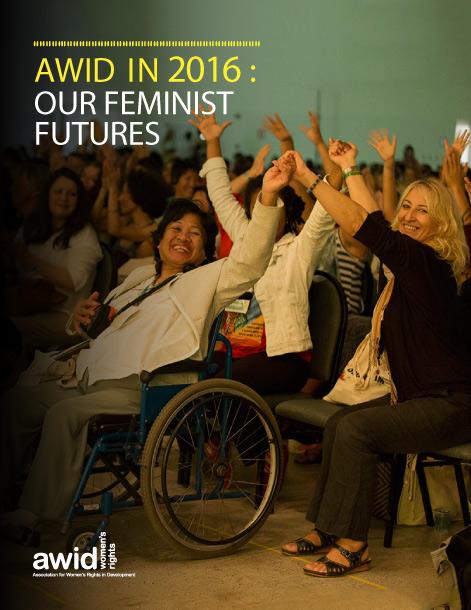
2016 was an incredible year for AWID, we convened the 13th International AWID Forum in Bahia, Brazil, a space for strategizing and alliance building with feminists and other justice movements, which was attended by over 1800 participants from 120 countries and territories across the globe.

We know that women’s rights and feminist movements are key actors in creating sustainable transformative change. Within our movements, organizing, resisting and responding to the challenging context is sharpening, and in our increasingly connected world, the potential for collective action across diverse movements has dramatically grown.

This is the crucial work that AWID seeks to amplify and support every day.


What we achieved in 2016

We expanded solidarity and joint action across diverse movements

A highlight of 2016 was our ground-breaking 13th International Forum with the theme: “Feminist Futures: Building Collective Power for Rights and Justice”, where we harnessed the thinking and energy of nearly 500 partners, presenters, panelists, moderators, artivists, writers, facilitators, IT innovators, and performers, many of them leaders in their movements. We also supported the convening of the first and historical Black Feminisms Forum (BFF) organised by a working group of Black Feminists from across the world.

We strengthened knowledge of issues and strategies

We contributed to collective advocacy

AWID, in partnership with other feminist and women’s rights organisations, engaged in advocacy and dialogue to explore better solutions for women’s rights agendas including our work with the Count Me In! consortium .

We increased the visibility of movements

The experiences of women with disabilities, Black and Afro-descendant women, sex workers, Indigenous women, trans and intersex people, domestic workers and how their lives are impacted by multiple oppressions and violence were placed front and center of the Forum process.

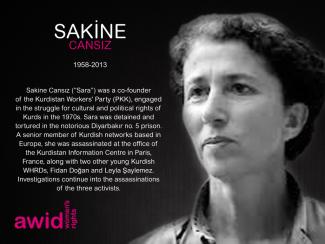
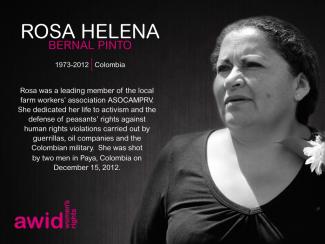
We also launched the 2016 WHRD Tribute to commemorate defenders who are no longer with us, during the 16 Days of activism, and thanks to the contributions from our members,

We drove attention to groups and issues that do not usually receive adequate mainstream media coverage through our partnership with The Guardian and Mama Cash.


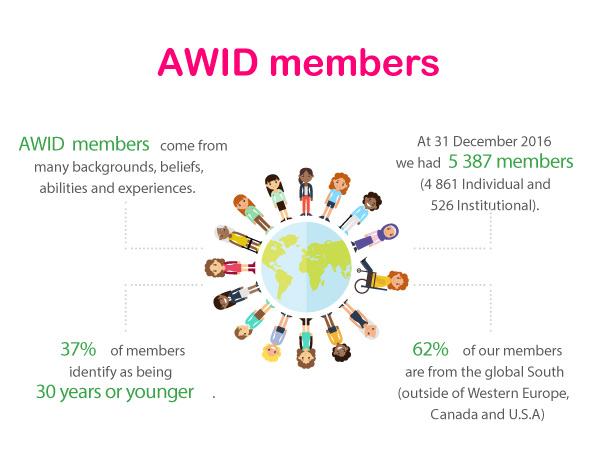
Our members


Inna Michaeli

Biography

Inna is a feminist queer activist and sociologist with many years of deep engagement in feminist and LGBTQI+ struggles, political education and organizing by and for migrant women, and Palestine liberation and solidarity. She joined AWID in 2016 and served in different roles, most recently as Director of Programs. She is based in Berlin, Germany, grew up in Haifa, Palestine/Israel, was born in St. Petersburg, Russia, and carries these political geographies and resistance to colonial past and present into her feminism and transnational solidarity.

Inna is the author of “Women's Economic Empowerment: Feminism, Neoliberalism, and the State” (Palgrave Macmillan, 2022), based on the dissertation which earned her a doctoral degree from the Humboldt University of Berlin. As an academic, she taught courses on globalization, knowledge production, identity and belonging. Inna holds an MA in Cultural Studies from the Hebrew University of Jerusalem. She is a Board Member of the Jewish Voice for a Just Peace in the Middle East (Germany), and previously of +972 Advancement of Citizen Journalism. Previously Inna worked with the Coalition of Women for Peace and she is passionate about mobilizing resources for grassroots activism.

Position
Co-Executive Director
Add to stories
Off

Michelle D'Cruz

Biography

Michelle is a Southeast Asian feminist who enjoys conspiring to bring people together and spark conversations for social change and feminist knowledge sharing, through art, poetry, music and games. With a background in digital advocacy and communications strategy development, she has contributed to initiatives in digital rights, human rights research, and civil society coalition building throughout Southeast Asia. She has an LLB from National University of Singapore, enjoys following her feet down random city streets and likes coffee a little too much.

Position
Membership and constituency Engagement Coordinator
Add to stories
Off

Khaoula Ksiksi

Biography

Khaoula Ksiksi is a passionate advocate for justice, equity, and liberation. As a Gender, Equality, Diversity, and Inclusion (GEDI) Advisor, she works to make inclusivity a lived reality, not just a policy, across humanitarian programs and crisis contexts. She collaborates with teams to challenge structural oppression using bold, transformative tools rooted in lived experience.

Her activism began on the frontlines of Tunisia’s anti-racism movement. With Mnemty, she helped push through the country’s first anti-discrimination law, forcing a national reckoning with racial injustice. She later co-founded Voices of Black Tunisian Women to amplify Black women’s leadership, build solidarity networks, and demand visibility in a society that often silences them.

Khaoula is also a founding member of Falgatna, a radical queer-feminist movement fighting for SOGIESC rights and supporting LGBTQI+ communities through direct action, digital resistance, and survivor-centered advocacy.

Previously, she led regional feminist and climate justice projects at the Rosa Luxemburg Foundation in North and West Africa.

At the heart of her work is a deep belief: no one is free until we all are. Her activism is both a fight and a love letter to her people, her communities, and the world we deserve.

Add to stories
Off