Contenido relacionado
Greenpeace USA: El precio del activismo (página 8)
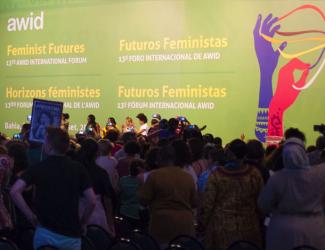
In September 2016, the 13th AWID international Forum brought together in Brazil over 1800 feminists and women’s rights advocates in a spirit of resistance and resilience.
This section highlights the gains, learnings and resources that came out of our rich conversations. We invite you to explore, share and comment!
One of the key takeaways from the 2016 Forum was the need to broaden and deepen our cross-movement work to address rising fascisms, fundamentalisms, corporate greed and climate change.
With this in mind, we have been working with multiple allies to grow these seeds of resistance:
And through our next strategic plan and Forum process, we are committed to keep developing ideas and deepen the learnings ignited at the 2016 Forum.
AWID Forums started in 1983, in Washington DC. Since then, the event has grown to become many things to many peoples: an iterative process of sharpening our analyses, vision and actions; a watershed moment that reinvigorates participants’ feminisms and energizes their organizing; and a political home for women human rights defenders to find sanctuary and solidarity.
لمزيد من الأسئلة، يرجى استخدام نموذج الاتصال. سنستمر في تحديث هذه الوثيقة بناءً على الاستفسارات التي نتلقاها منك!
Contenido relacionado
Greenpeace USA: El precio del activismo (página 8)
Venez découvrir les économies féministes que nous ADORONS.
Quand nous parlons d'économie, nous parlons de comment nous organisons nos sociétés, nos foyers et nos lieux de travail. Comment vivons-nous ensemble? Comment est-ce que nous produisons la nourriture, organisons les soins, ou assurons notre santé et celle de nos communautés? L'économie concerne également la manière dont nous accédons et gérons les ressources, et nos relations avec les autres, avec nous-mêmes et avec la Nature.
Les féministes ont construit des alternatives économiques aux systèmes capitalistes d'exploitation depuis des lustres. Ces alternatives existent ici et maintenant, et elles sont les piliers des mondes plus justes et plus durables dont nous avons tant besoin et que nous méritons.
Nous sommes ravi·es de vous présenter certaines de ces alternatives économiques féministes et les collectifs à travers le monde qui nous inspirent.
📅Monday, March 11
🕒4:30 - 6pm EST
Organisers: AWID, IJSC and NAWI
🏢 Church Center of the United Nations, 777 United Nations Plaza, New York, 11th Floor
(French and Spanish interpretation available)

Publication de la version zéro du document final, mars 2015
 |
 |
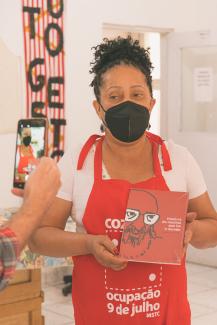 |
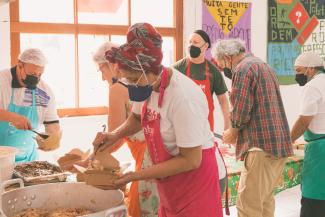
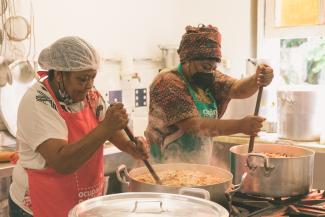
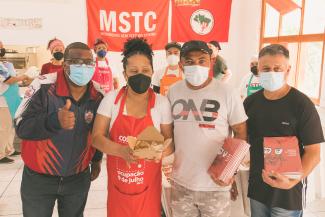 Women and collaborators at the occupation’s kitchen |
 |
Day 3
Development financing has specific threats and opportunities for women's and all people’s human rights. Transformative development financing and policies can make an important contribution to the systemic changes that are needed to ensure the respect, protection and fulfillment of women’s human rights.
2015 is an important year for the FfD process. The Third International Conference on FfD took place from 13-16 July 2015 in Addis Ababa, Ethiopia and governments are finalising the post-2015 development agenda including agreements on how the new Sustainable Development Goals will be financed.
The current stage of the FfD process is an important opportunity to establish a financing framework that will ensure effective financing for the implementation of the post 2015 agenda and the Sustainable Development Goals (SDGs). It is also an opportunity to address the structural conditions, and systemic changes needed, for the full implementation of other agendas and commitments such as Human Rights Conventions, and the Beijing Platform for Action.
Over the last 13 years, women’s rights and feminist organizations have actively engaged in the FfD process.
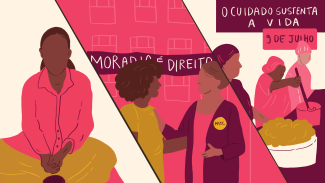
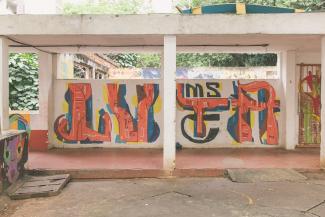
La vivienda es un derecho | El cuidado sostiene la vida
Thanks to our global feminist community! From May to August 2024, nearly 1,200 organizations working for Women's rights, gender justice, and LBTQI+ equality shared their experiences in the WITM survey. The results offer a unique picture of how feminist movements are resourced and where gaps remain.