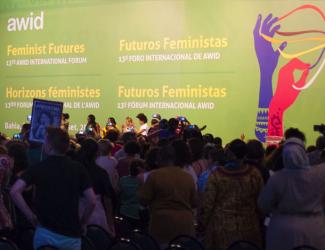

AWID Forum: Co-creating Feminist Futures
In September 2016, the 13th AWID international Forum brought together in Brazil over 1800 feminists and women’s rights advocates in a spirit of resistance and resilience.
This section highlights the gains, learnings and resources that came out of our rich conversations. We invite you to explore, share and comment!
What has happened since 2016?
One of the key takeaways from the 2016 Forum was the need to broaden and deepen our cross-movement work to address rising fascisms, fundamentalisms, corporate greed and climate change.
With this in mind, we have been working with multiple allies to grow these seeds of resistance:
- Our Seed Initiatives, has helped 20 ideas that emerged at the Forum to grow into concrete actions
- The video “Defending people and planet” and guide “Weaving resistance through action” put courageous WHRDs in the spotlight and present concrete strategies they use to confront corporate power.
- With our animations about the State of Our Feminist Movements and Climate and Environmental Justice, movements now have creative tools to support their advocacy work.
- The compiling artistic expressions of our #MovementsMatter series continues to inspire stronger and more creative organizing around the world.
- Movements can also benefit from new methodologies on Visioning Feminist Futures (Coming up soon!)
And through our next strategic plan and Forum process, we are committed to keep developing ideas and deepen the learnings ignited at the 2016 Forum.
What happens now?
The world is a much different place than it was a year ago, and it will continue to change.
The next AWID Forum will take place in the Asia Pacific region (exact location and dates to be announced in 2018).
We look forward to you joining us!
The next AWID Forum will take place in the Asia Pacific region (exact location and dates to be announced in 2018).
We look forward to you joining us!
About the AWID Forum
AWID Forums started in 1983, in Washington DC. Since then, the event has grown to become many things to many peoples: an iterative process of sharpening our analyses, vision and actions; a watershed moment that reinvigorates participants’ feminisms and energizes their organizing; and a political home for women human rights defenders to find sanctuary and solidarity.
Related Content
AWID IN 2015: Building Collective Impact

In 2015 AWID grew and diversified.
We ramped up preparations for the 13th AWID international Forum, focused a lot of energy on the Post 2015 Development Agenda and Financing for Development processes, and continued the core work of our priority areas:
- Challenging Religious Fundamentalisms
- Women Human Rights Defenders
- Economic Justice
- Resourcing Women’s Rights
- Young Feminist Activism
A sneak peak inside the report
The context
- We continue witnessing the rapid breakdown in democracy and democratic institutions, with spaces for dissent shrinking.
- Multiple and concurrent systemic crises (energy, food, finance and climate) continue to deepen inequalities and pose major challenges.
- Corporations are a leading power in determining the development agenda.
- Violence against WHRDs remains an urgent problem.
- Religious fundamentalisms are pervasive and increasingly powerful.
- New forms of online gender-based violence have emerged.
In response, we are moving out of our silos.
Increasingly, women’s rights and other movements worldwide are articulating the systemic and intersectional nature of these and other problems. We are making better connections with the agendas of other social and environmental movements for solidarity, alliance building and collective responses. We are also seeing greater visibility of these movements fighting for justice on the ground.
Our Impact
- For effective strategizing and advocacy, we need facts
- To exchange knowledge and join hands in solidarity, we need a strong online community
- To build our collective power, we need to work together
- To influence international processes, we need to increase our access and voice
- To reposition power we need to give visibility and emphasize the important role that feminist and women’s rights movements are already playing
Our Members
As at 31st December, 2015 we had:

Read the full report
ours chapter 6
Chapter 6
Anti-Rights Trends in Regional Human Rights Systems
In the African Commission and the Inter-American System, anti-rights actors push essentialist notions of culture and gender to hamper progress on rights and undermine accountability. As we see, anti-rights actors are exerting influence in regional human rights systems, as well as international spaces.
Flor Alba Nunez Vargas
Gracias por visitar AWID.
Les agradecemos su interés por visitar el sitio web de AWID. Para obtener más información sobre nuestro trabajo, visiten https://www.awid.org/es
Je n’ai encore jamais voyagé. Que devrais-je savoir ?
Ayant conscience des nombreuses difficultés que les déplacements impliquent, nous vous fournirons davantage d’informations et de détails sur les modalités de voyage jusqu’à Bangkok lorsque les Inscriptions ouvriront, au début de l’année prochaine.
Snippet - COP30 - Resistance Hubs Section Column 1 - ES
Mientras les líderes se reúnen en Brasil, es fundamental que los movimientos feministas, sobre todo los de la mayoría global, contemos con espacios autónomos para encontrarnos, elaborar estrategias y trastocar.
En estos nodos interpelamos el elitismo de las conversaciones sobre el clima, nos centramos en las vivencias y apuntamos a construir el poder colectivo más allá de las fronteras. Se ofrece un contrapeso crítico a las negociaciones internacionales jerárquicas y a menudo excluyentes. En los nodos buscamos promover las soluciones nacidas de la comunidad, amplificar las demandas feministas y garantizar que los principios feministas de los cuidados y la solidaridad sean los que den forma a la agenda por el clima. No se trata únicamente de tener presencia en la COP30, se trata también de reconfigurar las conversaciones sobre la justicia climática en términos feministas.
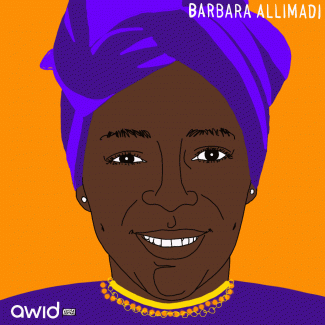
Barbara Allimadi
Barbara Allimadi fue una activista política y defensora de los derechos humanos de Uganda. En 2012, co-organizó una protesta contra la agresión policial a Ingrid Turinawe, una figura política de la oposición, que fue televisada y muestra cómo un policía le aprieta el pecho. Durante la protesta, Barbara, junto con otras compañeras activistas, se quitaron la ropa hasta quedarse en sujetador frente a la Estación Central de Policía de Kampala. Este hecho pasó a conocerse en Uganda como la infame "protesta de los sujetadores".
"Nos decidimos por la protesta de los sujetadores. Pensamos que sería lo más apropiado para lo que había sucedido. Con esta acción, no es que estuviésemos diciendo que no nos respetásemos a nosotras mismas. Estábamos indignadas con lo que había sucedido." - Barbara Allimadi, 2013 (Daily Monitor, en inglés)
Barbara se licenció en Ingeniería Electrónica y de Comunicaciones en la Universidad Metropolitana de Londres, y ejerció como ingeniera de redes en el Reino Unido. Era,además, una fan entusiasta de la música reggae. Regresó a Uganda en 2007, cuando su madre falleció.
En 2019, fue nombrada Coordinadora de Asuntos Internacionales y de la Diáspora de la Alianza para la Transformación Nacional (ANT, por sus siglas en inglés), un partido político lanzado ese año por un líder de la oposición.
"Queremos garantizar la seguridad de la vida y la propiedad, no el dolor, las lesiones o incluso la muerte a manos de unas fuerzas de seguridad que se supone deberían protegernos. Y lo más importante, queremos un entorno estable y propicio donde podamos realizar nuestros sueños y aspiraciones". - Barbara Allimadi, video de ANT (en inglés)
Barbara falleció el 27 de abril de 2020.
Tributos:
"Estaba muy orgullosa de mi hermana por muchas razones, pero, en particular, por su intrépida búsqueda de la paz, la democracia, la justicia y la igualdad en Uganda. En los momentos más álgidos de su activismo, Barbara lideró muchas marchas por las calles de Kampala, hacia las comisarías de policía y el Parlamento". - Doris Allimadi, hermana de Barbara
"Nos enteramos con profunda tristeza del prematuro fallecimiento de Barbara Allimadi. Ella ha sido una fuerza valiente, implacable y valerosa para el movimiento de liberación de Uganda. Queremos dar nuestro más sentido pésame a su familia. La echaremos mucho de menos". - Akina Mama wa Afrika (tweet, 28 April 2020)
"El fallecimiento de Barbara es una noticia muy triste para nosotrxs y para toda su familia. Barbara dedicó su vida a luchar por la justicia, la libertad y los derechos de las personas desde la sociedad civil, hasta que se unió, recientemente, al partido." Maj Gen Mugisha Muntu, coordinador nacional de la ANT (por sus siglas en inglés)
"Una hermana hermosa, encantadora, divertida, carismática e inspiradora. Mis hijxs han perdido a su tía. Uganda ha perdido a una audaz y valiente defensora de la libertad. Barbara dijo una vez: "Mientras siga habiendo aliento en ti, sigue trabajando por conseguir tus sueños". - Doris Allimadi, hermana de Barbara.
Annual Report 2010
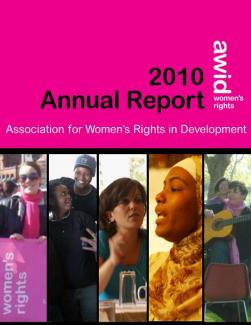
Our 2010 Annual Report highlights the major accomplishments of each of our strategic initiatives during the year.
Along with activity highlights, we include a brief analysis of the impact of our initiatives as well as reflections from our members and partners that further illustrate the relevance of AWID’s work and its connection to broader women’s rights movements.
This interactive document is complete with links to our websites and recent publications with in-depth information on the issues we address in the report.
Llamado a la acción: ¡Basta de infiltración antiderechos en la ONU!
Llamado a la acción
¡Basta de infiltración antiderechos en la ONU!
¿Quieren sumarse al creciente número de personas que le están diciendo «basta» a la infiltración de lxs actores anti-derechos en la ONU?
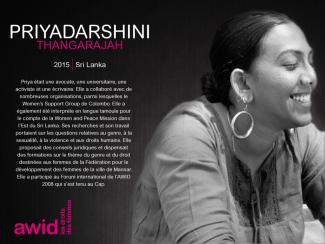
Priyadarshini Thangarajah
Ressources des mouvements féministes
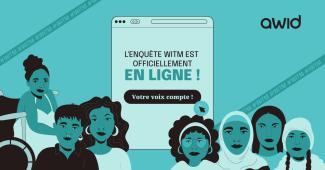
L'enquête "Où est l'argent?" #WITM est maintenant en ligne ! Plongez dans l'enquête et partagez votre expérience du financement de votre organisation avec des féministes du monde entier.
En savoir plus et participer à l’enquête!
Les mouvements féministes, en faveur des droits des femmes et leurs allié-e-s du monde entier s’opposent au pouvoir et imaginent de nouvelles politiques de libération. Des ressources économiques et politiques aux actes quotidiens de résistance et de survie, les contributions qui viennent nourrir ce travail revêtent de nombreuses formes.
L’initiative de l’AWID, Ressources des mouvements féministes (Resourcing Feminist Movements, RFM), met en lumière l’écosystème de financement actuel, qui va des modèles d’attribution des ressources auto-générée aux voies de financement officielles.
A travers nos recherches et analyses, nous examinons de quelles façons les pratiques de financement pourraient mieux servir nos mouvements. Nous faisons une étude critique des contradictions propres au “financement” de la transformation sociale, compte tenu notamment de la répression politique croissante, des programmes anti-droits et du pouvoir grandissant des entreprises. Mais surtout, nous élaborons des stratégies collectives en appui à des mouvements fleurissants, solides et résilients.
Nos Actions
Reconnaissant la richesse de nos mouvements et répondant au contexte actuel, nous oeuvrons à:
-
Créer et élargir les alternatives : Nous développons les pratiques de financement qui accordent une place prépondérante aux priorités des activistes et impliquons un large éventail de donateurs et d’activistes dans la création de nouveaux modèles dynamiques d’attribution de ressources en faveur des mouvements féministes, en particulier dans un contexte qui voit l’espace de participation de la société civile diminuer considérablement.
-
Enrichir nos connaissances : Nous explorons, échangeons et consolidons nos connaissances sur la façon dont les mouvements attirent, organisent et utilisent les ressources qui leur sont nécessaires pour entreprendre des changements significatifs.
-
Plaider : Nous travaillons en partenariat, comme avec le Count Me In! Consortium, afin d’influencer les programmes de financement et permettre aux mouvements féministes d’être en dialogue direct pour déplacer le pouvoir et l’argent.
Related Content
How about climate justice, is this really the time for so many international flights?
Asking ourselves the same question, we believe there are no simple answers. For many participants the AWID Forum might be one of the few international trips they undertake in their life. The pandemic taught us the possibilities but also the limitations of virtual spaces for movement-building: there is nothing like in-person connection. Movements need cross-border connections to build our collective power in the face of the threats we face, notably the climate crisis. We believe that the upcoming AWID Forum can be a strategic space to hold these conversations and to explore alternatives to international travel. The hybrid element of the Forum is an important part of this exploration.
Snippet - COP30 - Feminist Economic Alternatives Brief - ES
📖 Informe sobre las alternativas económicas feministas
Una herramienta para activistas feministas presentes en la COP30 que luchan por soluciones transformadoras, equitativas y comunitarias para responder a la crisis climática.
Demo article
Ghiwa Sayegh Snippet
Ghiwa Sayegh es una anarcoescritora queer, editora independiente y archivista. Es la editora fundadora de Kohl, una revista para la investigación sobre cuerpo y género, y la cofundadora de Intersectional Knowledge Publishers. Posee una maestría en estudios de género de Université Paris 8 Vincennes, Saint-Denis. Le apasionan la teoría queer, las circulaciones transnacionales y las historias imaginadas o desconocidas. Sus influencias son Audre Lorde y Sara Ahmed.
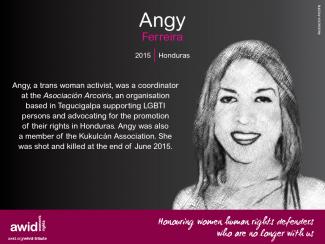
Angy Ferreira
CFA 2023 - breadcrumbs Menu _ awid-forum-en
Snippet - COP30 Join thousands CTAs - EN
Join thousands demanding real climate justice:
Follow the campaign:
Join us!
Join our Membership| Join AWID Community
Stay updated
Questions?
Contact us: communications @ awid.org
Margarita Salas Guzmán
Biography
Margarita is a feminist and LGBTIQA activist from Latin America; her passion is social transformation and collective wellbeing. She holds degrees in Psychology, Communications and Public Administration, as well as certificates in Public Policy, Leadership, Management & Decision Making. In her professional capacity, Margarita has had extensive experience with grassroots organizations, national and regional NGOs, universities and the public sector, developing facilitation, capacity building, political advocacy, communications & policy assessment.
Position
Special Projects Manager
Add to stories
Off
Snippet Kohl - Table ronde | Terres et territoires libérés : une conversation panafricaine
avec Luam Kidane, Mariama Sonko, Yannia Sofia Garzon Valencia et Nomsa Sizani.