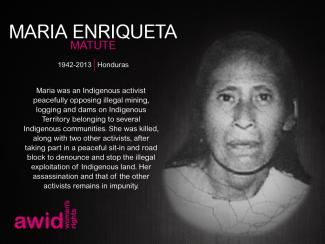
Maria Enriqueta Matute
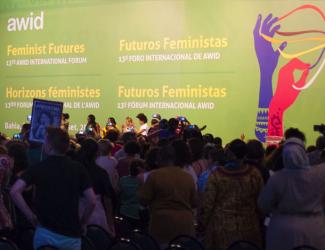
In September 2016, the 13th AWID international Forum brought together in Brazil over 1800 feminists and women’s rights advocates in a spirit of resistance and resilience.
This section highlights the gains, learnings and resources that came out of our rich conversations. We invite you to explore, share and comment!
One of the key takeaways from the 2016 Forum was the need to broaden and deepen our cross-movement work to address rising fascisms, fundamentalisms, corporate greed and climate change.
With this in mind, we have been working with multiple allies to grow these seeds of resistance:
And through our next strategic plan and Forum process, we are committed to keep developing ideas and deepen the learnings ignited at the 2016 Forum.
AWID Forums started in 1983, in Washington DC. Since then, the event has grown to become many things to many peoples: an iterative process of sharpening our analyses, vision and actions; a watershed moment that reinvigorates participants’ feminisms and energizes their organizing; and a political home for women human rights defenders to find sanctuary and solidarity.
نحن نراقب هذه المخاطر والمخاطر الأخرى بعناية، وسننشر معلومات شاملة عن الصحة والسلامة عند فتح التسجيل، حتى تتمكن/ين من اتخاذ القرار. بالإضافة إلى ذلك، تم تصميم التنسيق الهجين لتوفير تجربة مشاركة هادفة للمشاركين/ات الذين/ اللواتي يفضلون عدم السفر أو غير القادرين على السفر.
Samira était une activiste syrienne sous le régime de Bachar al-Asad.
Dès son plus jeune âge, Samira s'est opposée à toutes les formes de despotisme et en particulier au régime autoritaire dans lequel elle vivait. Samira a été kidnappée en 2013 avec trois autres activistes de premier plan. Elle aurait été enlevée au Centre de documentation sur les violations à Douma, une ville située en périphérie rurale de Damas.
Le principal suspect associé à sa disparition est le groupe rebelle syrien Jaych al-Islam (l'armée de l'islam), qui nie son implication. Aucune enquête officielle n’a été ouverte sur la disparition de Samira et elle n’a plus donné de nouvelles depuis lors. Samira était attachée à son pays et refusait de quitter la Syrie tant qu'elle estimait que son rôle en faveur de l'émancipation des femmes et la documentation des crimes était utile et nécessaire.

Second High-level Dialogue on Financing for Development
Durante décadas, lxs investigadorxs y activistas feministas han articulado conceptos importantes en relación al género para entender y cuestionar la opresión y la discriminación. Ahora, esos conceptos se han convertido en el blanco de los actores anti-derechos, quienes afirman que los roles de género patriarcales y opresivos son de «sentido común» y, estratégicamente, presentan a todas las otras ideas, normas culturales y formas de vida social como una peligrosa ideología conspirativa.
Lee nuestro resumen Narrativas sobre la «Ideología de género»: Una amenaza para los derechos humanos

Participa en co-crear el 15° Foro Internacional de AWID en Bangkok, Tailandia.
Florence was a disability rights activist who worked with several disabled women’s organizations in Uganda.
She also held the position of Chairperson of the Lira District Disabled Women Association, as well as the Lira District Women Councilors’ caucus. Trained as a counsellor for persons with disabilities and parents of children with disabilities, she supported many projects that called for greater representation of persons with disabilities.
She died of a motorcycle accident.

El Quinto Diálogo de Alto Nivel sobre la Financiación para el Desarrollo, realizado el 7 y 8 de diciembre de 2011, marcó el comienzo de las conversaciones en torno a la Agenda de Desarrollo Post-2015 y sus relaciones con la financiación para el desarrollo. Esta conferencia puso especial énfasis en incrementar la ayuda para financiar los ODM. En sus observaciones finales, el Presidente en Funciones de la Asamblea General pidió a los Estados Miembros que comenzaran a pensar en el marco para el desarrollo post-2015.
ÉCONOMIES DES SOINS AGROÉCOLOGIE ET SOUVERAINETÉ ALIMENTAIRECOOPÉRATIVISME FÉMINISTESYNDICALISME FÉMINISTE

✉️ By Invite Only
📅Tuesday, March 12
🕒2-3.30pm EST
Organiser: Observatory on the Universality of Rights (OURs) Consortium
🏢Blue Gallery, 222 E 46th St, New York
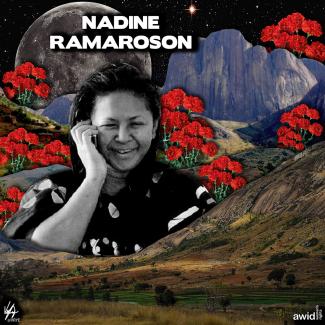
Nadine fue un ejemplo para muchxs por su trabajo en apoyo de las mujeres y lxs más vulnerables de su comunidad. Estaba comprometida con ayudar a l pobres, especialmente a las personas sin techo.
Aunque su muerte se informó como accidente, la familia Ramaroson, encabezada por su padre, André Ramaroson, llevó adelante una investigación que arrojó evidencias de que había sido asesinada. Se informó que había muerto en un accidente fatal ocurrido entre Soanierano - Ivongo y Ste Marie, una historia que fue desmentida por su familia. Ella había recibido numerosas amenazas de muerte por sus audaces posiciones políticas. Su caso todavía está en la corte de Antananarivo (la capital de Madagascar).
When you come to the center of São Paulo, you will see the building of the Ocupação 9 de Julho - a landmark in the struggle for social housing and an important cultural site. This is the work of The Homeless Workers Movement (Movimento dos Sem-Teto do Centro, MSTC) a movement of over 2000 people that operates in the city center and converts abandoned spaces into housing for low-income workers, children, women, adults, the elderly, migrants and refugees. In this particular building, they provide food and shelter to 122 families.
"He dado testimonio de la discriminación que vi en las calles, he sufrido burlas y abusos verbales ahí. También he hecho numerosas amistades y he conocido a mucha gente. Puede que haya peligros ahí fuera, pero soy una sobreviviente y aquí es donde estaré por ahora." - Sainimili Naivalu
Exigió a las autoridades políticas y a otras partes interesadas que proporcionaran políticas y servicios favorables a la movilidad de las personas con discapacidad, como la construcción de rampas en pueblos y ciudades para aumentar su accesibilidad. Sin embargo, las barreras físicas no fueron las únicas que Sainimili se esforzó por cambiar. Por experiencia propia, sabía que era necesario que se produjeran cambios más complejos en las esferas sociales y económicas. Muchos de los retos a los que se enfrentan las personas con discapacidad tienen su origen en actitudes que llevan a la discriminación y al estigma.
Como sobreviviente y luchadora, Sainimili contribuyó a la creación conjunta de realidades feministas que fomentasen la inclusión y cambiasen las actitudes hacia las personas con discapacidad. Como afiliada a la Asociación de Lesiones de la Espina Dorsal de Fiji (SIA, por sus siglas en inglés) y a través del proyecto del Foro para Personas con Discapacidades del Pacífico “Pacífico Habilita”, Sainimili asistió a la formación de la Organización Internacional del Trabajo "Inicie su Negocio" en Suva, lo que le permitió transformar sus ideas en su propio negocio. Fue emprendedora en el puesto 7 del mercado de Suva, donde ofrecía servicios de manicura, y también se encargaba del puesto del mercado de las mujeres de SIA, donde vendía artesanías, sulus y otros objetos. El plan de Sainimili era expandir su negocio y convertirse en una importante empleadora de personas con discapacidad.
Además de su activismo, también fue medallista y campeona juvenil de tenis de mesa.
Sainimili era única, con una personalidad vivaz. Siempre podías saber si Sainimili estaba en una habitación porque su risa y sus historias eran los primero que notabas. - Michelle Reddy
Sainimili falleció en 2019.
Other useful links to stay informed: