Special Focus

AWID is an international, feminist, membership organisation committed to achieving gender equality, sustainable development and women’s human rights

AWID Forum: Co-creating Feminist Futures

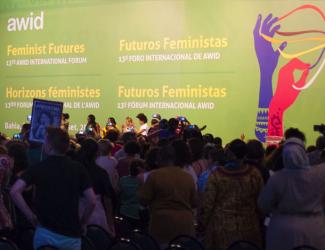
In September 2016, the 13th AWID international Forum brought together in Brazil over 1800 feminists and women’s rights advocates in a spirit of resistance and resilience.

This section highlights the gains, learnings and resources that came out of our rich conversations. We invite you to explore, share and comment!


What has happened since 2016?

One of the key takeaways from the 2016 Forum was the need to broaden and deepen our cross-movement work to address rising fascisms, fundamentalisms, corporate greed and climate change.

With this in mind, we have been working with multiple allies to grow these seeds of resistance:

And through our next strategic plan and Forum process, we are committed to keep developing ideas and deepen the learnings ignited at the 2016 Forum.

What happens now?

The world is a much different place than it was a year ago, and it will continue to change.

The next AWID Forum will take place in the Asia Pacific region (exact location and dates to be announced in 2018).

We look forward to you joining us!

About the AWID Forum

AWID Forums started in 1983, in Washington DC. Since then, the event has grown to become many things to many peoples: an iterative process of sharpening our analyses, vision and actions; a watershed moment that reinvigorates participants’ feminisms and energizes their organizing; and a political home for women human rights defenders to find sanctuary and solidarity.

Learn more about previous Forums

Related Content

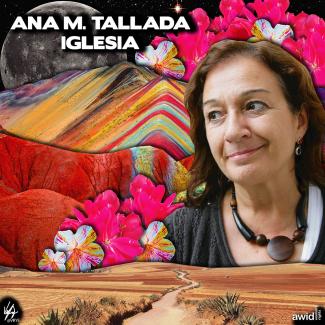
Ana M. Tallada Iglesia

Ana was a strong advocate of women’s rights and worked with a broad cross-section of women, from those in grassroots networks to those in the private sector.

She believed in building bridges across sectors. Ana was a member of the National Network for the Promotion of Women (RNPM), and was active in developing many social programs that address issues such as sexual and reproductive health and rights. 


Ana M. Tallada Iglesia, Peru

Snippet FEA Sopo Japaridze Quote (EN)

"We know everything is against us and there is very little chance to change that. But we believe in intervention and I do think we have a chance and should use it. That’s why we're doing everything we're doing. We're willing to push for things that are unheard of."

Sopo Japaridze to OpenDemocracy

Photo @სოლიდარობის ქსელი / Solidarity Network

Reason to join 6

Engage with the AWID International Forum - a major global feminist gathering - and have access to special AWID member discounts and enty points for virtual dialogue. Co-created by feminist movements, the Forum is a unique space for deep discussion and imagination where we challenge and strengthen our organizing, where we connect our struggles and feminist realities together.

Должен ли я отвечать на все вопросы сразу или я могу делать это с перерывами?

При необходимости, вы можете сохранить свои ответы и вернуться к опросу позже. Eсли Вы хотите сохранить ответы и вернуться к опросу позже, это можно сделать при условии, что Вы продолжите работу на том же устройстве. KOBO сохранит Ваши ответы в левом верхнем углу страницы опросника и подгрузит Ваш черновик, когда Вы вернетесь к опросу.

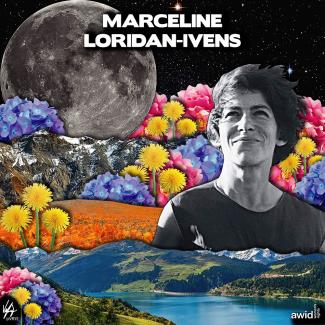
Marceline Loridan-Ivens

Nacida en 1928, Marceline trabajó como actriz, guionista y directora.

Dirigió The Birch-Tree Meadow en 2003, protagonizada por Anouk Aimee, así como varios otros documentales. También fue una sobreviviente del Holocausto. Tenía solo quince años cuando ella y su padre fueron arrestadxs y enviadxs a campos de concentración nazis. Los tres kilómetros entre su padre en Auschwitz y ella en Birkenau eran una distancia infranqueable, sobre la cual escribió en una de sus novelas más influyentes: Pero no regresaste.

Al hablar sobre su trabajo, una vez afirmó: «Todo lo que puedo decir es que todo lo que pueda escribir, todo lo que pueda develar, es mi tarea hacerlo».


Marceline Loridan-Ivens, France

Snippet FEA Otras Union meetings and demonstrations (ES)

Reuniones y protestas del Sindicato OTRAS

Our values - esponsibility, Accountability, and Integrity

Responsabilidad, rendición de cuentas e integridad

Nos esforzamos por ser transparentes, por utilizar nuestros recursos en forma responsable, por ser equitativxs en nuestras colaboraciones, y por ser responsables e íntegrxs con nuestrxs afiliadxs, contrapartes y donantes, y con los movimientos con los que trabajamos y en los que participamos. Estamos comprometidxs a reflejar nuestras experiencias, a compartir abiertamente nuestrxs aprendizajes, y a esforzarnos por cambiar nuestras prácticas en consecuencia.

L’AWID EN 2014 : Renforcer les processus d’organisation en faveur des droits des femmes dans le monde entier

Respondi ao inquérito, mas mudei de ideias e quero que a nossa resposta seja eliminada. Como devo proceder?

Tem o direito de eliminar a sua resposta, por qualquer motivo e se assim o desejar. Queira entrar em contacto connosco através deste formulário, ao indicar "WITM Survey" ("Inquérito WITM") no título da sua mensagem, e iremos proceder à eliminação da sua resposta.

Dilma Ferreira Silva

Dilma Ferreira Silva fue una destacada activista por los derechos de las comunidades del Amazonas y luchó durante décadas por los derechos de las personas afectadas por las represas.

Ella misma fue una de las 32.000 personas desplazadas por el Tucuruí, una mega central hidroeléctrica, construida en Brasil durante la dictadura militar de 1964-1985.

En 2005 Dilma fue invitada a unirse al Movimiento de los Pueblos Afectados por las Represas en Brasil (MAB), y en 2006 formó el colectivo de mujeres, y eventualmente se convirtió en coordinadora regional del movimiento.

Al hablar de su activismo, sus colegas comentaban:

"Se destacó muy rápido porque siempre fue muy intrépida en la lucha".

Dilma vivió en el asentamiento rural de Salvador Allende, a 50 kilómetros de Tucuruí, y dedicó toda su vida a proteger a las comunidades y las tierras afectadas por la construcción de mega proyectos. Dilma se preocupaba especialmente por el impacto de género que esos proyectos podrían causar, y defendía los derechos de las mujeres.

En una reunión nacional del MAB en 2011, Dilma, dirigiéndose a las mujeres afectadas por las represas, dijo:

"Somos las verdaderas Marías, guerreras, luchadoras que están allí, enfrentando el desafío de la lucha diaria".

En los años siguientes, Dilma organizó grupos de base del MAB y trabajó con la comunidad para formar cooperativas agrícolas que condujeron a una mejor redistribución de los alimentos entre la comunidad. Conjuntamente, mejoraron la comercialización de la pesca y desarrollaron un proyecto de cisternas para el agua potable. También  fue defensora de la comunidad de agricultores cuyas tierras eran codiciadas por los "grileiros" (acaparadores de tierras).

El 22 de marzo de 2019, a la edad de 48 años, Dilma, su marido y su amigo fueron brutalmente asesinados. Los tres asesinatos fueron parte de una ola de violencia en la Amazonia contra el Movimento dos Trabalhadores Sem Terra (traducido como 'Movimiento de los Trabajadores Sin Tierra') y lxs activistas medioambientales e indígenas.

Snippet FEA Union Otras Photo 5 (FR)

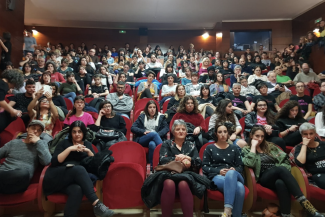
Photo de personnes assises sur des chaises rouges dans une salle de conférence

14th AWID international Forum is cancelled (forum page)

Le Forum international de l’AWID est annulé

Étant donnée la situation mondiale, notre Conseil d’administration a pris la décision difficile d’annuler le Forum, qui devait avoir lieu en 2021 à Taipei. 

Lire le communiqué

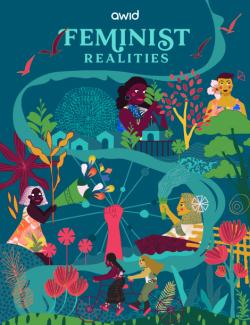
2019: Feminist Realities in a changing world

AWID began preparing this annual report just as the global pandemic began to unravel how we gather, organize and live our lives. It is impossible to review what we have done without COVID-19 tinting our assessment. 

Download the full 2019 Annual review


frmagazine cover eng


Co-Creating Feminist Realities is no longer just an AWID Forum theme - it is a rallying cry in response to a pandemic that has laid bare the failures of social, political and economic systems.

It is an urgently needed affirmation that there are other, more just ways of organizing our lives. During 2019 hundreds of groups shared their experiences and proposals for feminist realities with us, ranging from radical networks of community support in Latin America facilitating self-managed abortion, to practices of community-centered economies in Indonesia and community-centered food systems in India and the US, to a  re-imagination and new practice of harm-free rites of passage in Sierra Leone. These are the experiences that will chart a path forward for a “new normal”. 
Yet long histories of oppression and violence can make it difficult to imagine the possible. A key part of our work in 2019 was to spark these explorations through a toolkit AWID launched to support groups interested in unearthing the stories and aspirations that are the building blocks of feminist propositions.

While we focus on our proposals for a different world, we recognize the challenging context around us.

Through the Observatory on the Universality of Rights, Feminists for a Binding Treaty, Count Me In! and other alliances, AWID has continued to push back against unfettered corporate power and fascist and fundamentalist agendas that undermine women’s rights and gender justice. With dim prospects for transformative change through multilateral processes  and limited responsiveness from most states, we are redoubling our efforts  to ensure that feminist movements, in all their diversity, are resourced in ways that match the critical roles they play - supporting their communities, demanding rights and responding to crises. In 2019 we introduced feminist principles and approaches to ground-breaking funds like the Spotlight Initiative and the Equality Fund, and succeeded in leveraging resources through feminist reality seed grant funding from feminist funders.

As we look ahead, it is clear that the context is calling for a transformation of our organizing strategies:

  • we are learning to navigate global advocacy confined to online channels,
  • we grapple with the uncertainty of when and how we can convene in person, and
  • we use the tools at our disposal to tighten connections across local to global spheres.

AWID is embarking on a new membership model that lowers barriers to access and emphasizes opportunities for engagement and cross-member connection. We will continue to experiment with different online tools and processes for building community. Cross-movement engagement will stay at the center of our work. AWID’s actions in solidarity with oppressed movements and identities, even and especially where these are marginalized in feminist movements, are important to drive change and support broad and inclusive movements for all.

Crisis is not new to feminist and social movements.

We are resilient, we adapt, and we show up for each other. And we have to keep doing better. Thank you to all who are part of the journey with us.

Download the full 2019 Annual review

Download the full 2019 Annual review

هل يمكنني مشاركة الاستطلاع مع الآخرين/ الأخريات؟

نعم! الرجاء القيام بذلك! نشجعكم/ن على مشاركة رابط الاستطلاع في شبكاتكم/ن. سيسمح لنا جمع وجهات النظر أكثر تنوعاً، فهم البيئة التمويلية للحركات النسوية بشكل أكبر.

Molara Ogundipe

« Mais quand le maître
s’est-il laissé éloigner du pouvoir?
Quand un système a-t-il jamais été brisé
par l’acceptation?
Quand le CHEF te remettra-t-il le pouvoir avec amour?
À Jobourg, à Cancun, à l’ONU? », Molara Ogundipe.

 Dans un entretien à la Foire internationale du livre du Ghana en 2010, Molara Ogundipe s’est présentée avec ces mots : « ... Je suis une Nigériane. J’ai vécu absolument partout, sauf en Union soviétique et en Chine ».

À travers les continents et les pays, la professeure Ogundipe a enseigné la littérature comparée, l’écriture, le genre et les études anglaises, se servant de la littérature comme outil de transformation sociale, de même que pour revisiter les relations de genre. 

Penseuse, écrivaine, rédactrice, critique sociale, poète et activiste féministe, Molara Ogundipe est parvenue à allier le travail théorique et l’action créative et la créativité. Elle est considérée comme l’une des principales voix critiques du(des) féminisme(s) africain(s), des études de genre et de la théorie littéraire.

Molara est connue pour avoir créé le concept de « stiwanisme », à partir de l’acronyme STIWA, pour Social Transformations in Africa Including Women (transformations sociales en Afrique incluant les femmes), reconnaissant la nécessité de « s’éloigner de la définition du ou des féminismes en lien avec l’Euro-Amérique ou avec toute autre région, et de la déclamation de loyautés ou déloyautés ».

Avec son ouvrage fondateur « Re-creating Ourselves » de 1994 (publié sous le nom de Molara Ogundipe-Leslie), Molara Ogundipe a laissé derrière elle un immense éventail de connaissances qui ont décolonisé le discours féministe et « recentré les femmes africaines sur leurs récits entiers et complexes... menées par une exploration de la libération économique, politique et sociale des femmes africaines et la restauration de la capacité d’agir féminine dans plusieurs cultures en Afrique ».

À propos des difficultés rencontrées en tant que jeune universitaire :

« Lorsque j’ai commencé à parler et à écrire sur le féminisme à la fin des années soixante et soixante-dix, on me considérait comme une bonne et admirable fille qui s’était égarée, une femme dont l’esprit avait été gâté par trop d’apprentissages ».

Molara Ogundipe s’est démarquée grâce à son leadership alliant activisme et université. En 1977, elle comptait parmi les fondatrices de l’AAWORD (Association of African Women for Research and Development). En 1982, elle fonde WIN (Women in Nigeria) pour défendre des « droits économiques, sociaux et politiques » entiers pour les Nigérianes. Elle crée et dirige ensuite la Foundation for International Education and Monitoring, et passe plusieurs années à oeuvrer au comité de rédaction de The Guardian.

Ayant grandi avec les Yoruba, leurs traditions, leur culture et leur langue, elle a un jour déclaré :

« Je pense que célébrer la vie, célébrer les personnes qui décèdent après une vie bien remplie est l’un des plus beaux aspects de la culture yoruba ». 

Le nom de fête « oiki » de Molara en yoruba était Ayike. Née le 27 décembre 1940, Molara est décédée à l’âge de 78 ans, le 18 juin 2019 à Ijebu Igbo, dans l’État d’Ogun au Nigeria.
Snippet FEA Principles of work Transparency (EN)

A pink umbrella

TRANSPARENCY

Contributors of toolkit (WITM landing page)

We would like to thank the contributors and advisors of this toolkit:

  • Angelika Arutyunova
  • Cindy Clark
  • Kamardip Singh
  • Martin Redfern
  • Pei Yao Chen
  • Srilatha Batliwala
  • Veronica Vidal

    Download the Toolkit in PDF