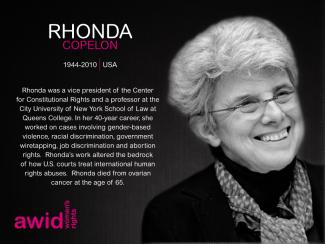
Rhonda Copelon
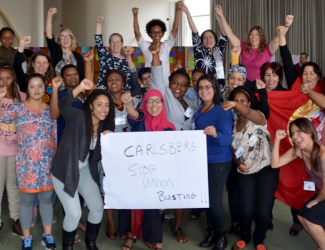
Women human rights defenders (WHRDs) worldwide defend their lands, livelihoods and communities from extractive industries and corporate power. They stand against powerful economic and political interests driving land theft, displacement of communities, loss of livelihoods, and environmental degradation.
Extractivism is an economic and political model of development that commodifies nature and prioritizes profit over human rights and the environment. Rooted in colonial history, it reinforces social and economic inequalities locally and globally. Often, Black, rural and Indigenous women are the most affected by extractivism, and are largely excluded from decision-making. Defying these patriarchal and neo-colonial forces, women rise in defense of rights, lands, people and nature.
WHRDs confronting extractive industries experience a range of risks, threats and violations, including criminalization, stigmatization, violence and intimidation. Their stories reveal a strong aspect of gendered and sexualized violence. Perpetrators include state and local authorities, corporations, police, military, paramilitary and private security forces, and at times their own communities.
AWID and the Women Human Rights Defenders International Coalition (WHRD-IC) are pleased to announce “Women Human Rights Defenders Confronting Extractivism and Corporate Power”; a cross-regional research project documenting the lived experiences of WHRDs from Asia, Africa and Latin America.
"Women Human Rights Defenders confronting extractive industries: an overview of critical risks and Human Rights obligations" is a policy report with a gender perspective. It analyses forms of violations and types of perpetrators, quotes relevant human rights obligations and includes policy recommendations to states, corporations, civil society and donors.
"Weaving resistance through action: Strategies of Women Human Rights Defenders confronting extractive industries" is a practical guide outlining creative and deliberate forms of action, successful tactics and inspiring stories of resistance.
The video “Defending people and planet: Women confronting extractive industries” puts courageous WHRDs from Africa, Asia, and Latin America in the spotlight. They share their struggles for land and life, and speak to the risks and challenges they face in their activism.
Challenging corporate power: Struggles for women’s rights, economic and gender justice is a research paper outlining the impacts of corporate power and offering insights into strategies of resistance.
AWID acknowledges with gratitude the invaluable input of every Woman Human Rights Defender who participated in this project. This project was made possible thanks to your willingness to generously and openly share your experiences and learnings. Your courage, creativity and resilience is an inspiration for us all. Thank you!
Ritu is a feminist technologist who brings her experience in the non-profit sector, driven by a passion for utilizing innovative approaches to finding feminist technological solutions. Holding a Master's in Technology in Computer Applications from the Indian Institute of Technology, her role at AWID encompasses a diverse range of responsibilities. From overseeing digital security and server management to database administration, capacity building, technology evaluation, software implementation and cloud solutions, Ritu ensures that AWID's IT infrastructure is resilient and effective. Prior to joining AWID, she played a pivotal role in advancing technological initiatives in the Health Promotion and Environment sectors, fueled by her dedication to leveraging technology for social good.
|
Editorial Team Design and Illustration Communications Strategist
Translation Manager AWID’s Team |
Arabic Translators English to Spanish Proofreaders Proofreaders Portuguese to English Proofreader |
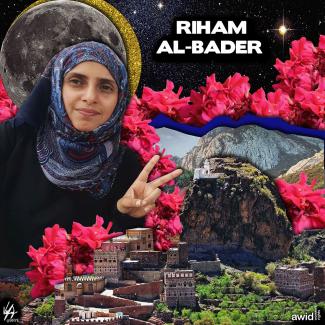
Riham était avocate et activiste engagée à suivre de près la question des violations des droits au Yémen.
Elle a travaillé avec d'autres activistes pour fournir de la nourriture et de l'eau aux civils piégés par les milices houthies dans la banlieue de la ville de Taiz.
Riham a été tuée en février 2018. La cause de son décès, soit par la main d’un tireur d'élite ou par un tir de mortier, n’a pas été confirmée. Personne n'a été tenu responsable de son meurtre.
Priscilla posee prácticamente dos décadas de experiencia de trabajo en el sector sin fines de lucro con organizaciones por la justicia social abocadas a los derechos de las mujeres y las juventudes, la conservación, la consolidación de la paz y el desarrollo. Sus intereses se centran en establecer procesos y sistemas progresistas que ayuden a una organización a operar de acuerdo a sus valores y principios y a prosperar, así como en encontrar formas de ayudar a las organizaciones y los donantes a identificar y garantizar los recursos que necesitan para una buena labor. Priscilla se unió a AWID en 2018, como Gerente de Movilización de Recursos y, en julio de 2023, asumió el cargo de Directora de Operaciones y Alianzas para el Financiamiento.
Posee una Maestría en Política Internacional de la Escuela de Estudios Orientales y Africanos (SOAS), una pila cada vez más alta de libros para los que todavía intenta encontrar tiempo para leer e integra la Junta de Hodan Somali Community, una entidad benéfica radicada en Londres.
Sim, é acessível para pessoas com uma variedade diversificada de capacidades auditivas, de movimento, visuais e cognitivas.
المضيفة: نحن نميل إلى الاعتقاد أنّ التعبير عن الرغبة يقتصر على العلاقة الحميمة داخل غرفة النوم وعلى علاقاتنا الشخصيّة. ولكن هل يمكننا أيضًا اعتبار هذا النوع من التعبير كبُنية، أو ممارسة أيديولوجيّة توجّه عملنا، وما نحن عليه، وكيف سنكون في هذا العالم؟
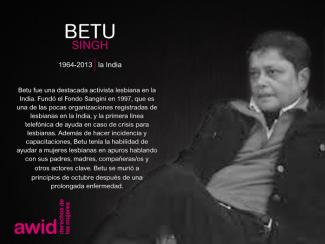
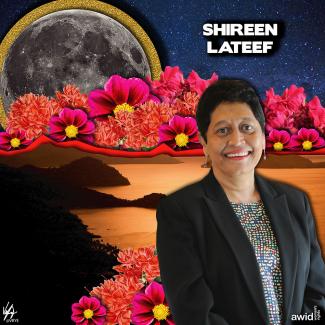
Shireen was an inspiration to many feminists in Fiji and a powerful ally to the women’s movement. She advocated tirelessly for gender equality locally and regionally.
She began her career as a junior gender specialist at the Asian Development Bank and brought about drastic changes to the institution’s gender policies.
Her research, “Rule by the Danda: Domestic violence amongst Indo Fijians” was one of the earliest pieces of research on domestic violence, marriage and women in Fiji. This seminal work has been a catalyst for feminist work in this area.
Shireen’s legacy lives on as many remember her influence, commitment and support to the women’s movement in Fiji and the Pacific.
Marta est chercheur·se et activiste queer, transféministe et non binaire, originaire de l'ex-Yougoslavie, actuellement basé·e à Barcelone. Iel facilite des mouvements transnationaux, tisse des alternatives systémiques et est économiste féministe. Iel a cofondé et coordonné avec d’autres la Tapisserie mondiale des alternatives, un processus mondial qui cherche à identifier, documenter et relier les alternatives aux niveaux local, régional et mondial. À l’échelle locale, Marta est engagé·e au sein d’organisations antiracistes, transféministes, queer et migrantes. Iel détient également un doctorat en sciences et technologies environnementales de l'Université autonome de Barcelone, consacré aux perspectives féministes décoloniales d'une pluralité d'alternatives systémiques et à la création de systèmes alternatifs féministes basés sur les soins et la pérennité de la vie. Pendant son temps libre, iel aime boxer, jouer de la guitare et de la batterie dans un groupe de samba, faire de la photographie, de la randonnée, cuisiner pour ses proches et gâter ses deux chats.
الوقت المقدّر لتعبئة الاستطلاع هو 30 دقيقة.
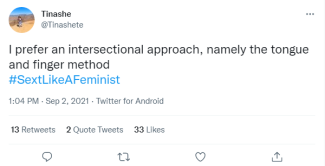
أفضّل المقاربة التقاطعيّة لما تشتمل عليه من مداعبة ممنهجة باللسان والأصابع
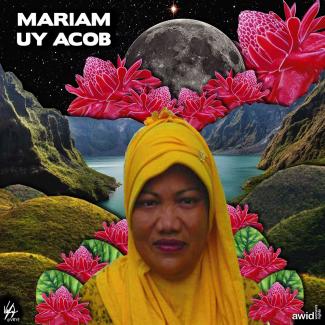
Mariam era asistente jurídica en la Alianza Kawagib Moro por los Derechos Humanos.
Fue una acérrima crítica de la militarización de las comunidades moro, y denunció sistemáticamente los bombardeos aéreos y la concentración de campamentos militares. Tuvo que buscar refugio luego de exponer y denunciar las injusticias cometidas contra las comunidades musulmanas en Filipinas.
Se cree que fue asesinada por agentes militares sospechosos debido a su trabajo como defensora de derechos humanos. Los atacantes que mataron a Mariam la esperaron, se pusieron a la par del vehículo en el que se desplazaba y le dispararon siete veces.
Joanne is an African feminist who is passionate about dismantling gender inequalities on the African continent. Joanne has worked with a number of global organizations, media and think tanks including Amnesty International, Wrthy, Local Development Research Institute, BBC, East African Community (EAC) among others.She serves on a couple of boards including Freely in hope-an NGO based in Kenya and Zambia that seeks to equip survivors and advocates to lead in ending sexual violence and Msingi Trust-a movement of activists that meet at the confluence of faith and human rights. She has a Masters in Business Administration, Masters of Public Policy and a Bachelor of Laws. She is a book junkie with a penchant for fiction.
Если по какой-либо причине вы хотите, чтобы ваш ответ был отозван и удален, вы имеете на это право. Пожалуйста, свяжитесь с нами через форму здесь, указав «Опрос «Где деньги?»» в качестве заголовка вашего сообщения, и мы удалим ваш ответ.
Moriviví est un collectif de jeunes femmes artistes qui travaille sur l'art public depuis Avril 2013. Basé·e·s à Porto Rico, nous sommes reconnu·e·s pour la création de fresques et d'arts dirigés par la communauté.
Florence était une militante des droits des personnes handicapées qui travaillait avec plusieurs organisations de femmes handicapées en Ouganda.
Elle a également occupé le poste de présidente de l’Association des femmes handicapées du district de Lira, ainsi que du caucus des conseillères du district de Lira. Formée en tant que conseillère pour personnes handicapées et parents d'enfants handicapés, elle a soutenu de nombreux projets appelant à une plus grande représentation des personnes handicapées.
Elle est morte dans un accident de moto.