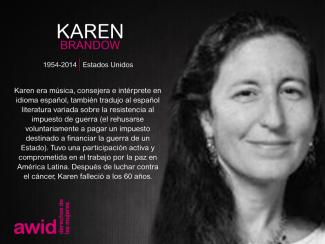
Karen Brandow
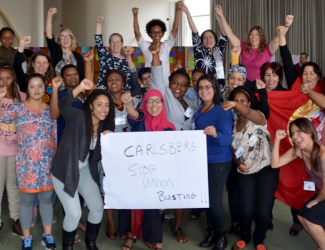
Women human rights defenders (WHRDs) worldwide defend their lands, livelihoods and communities from extractive industries and corporate power. They stand against powerful economic and political interests driving land theft, displacement of communities, loss of livelihoods, and environmental degradation.
Extractivism is an economic and political model of development that commodifies nature and prioritizes profit over human rights and the environment. Rooted in colonial history, it reinforces social and economic inequalities locally and globally. Often, Black, rural and Indigenous women are the most affected by extractivism, and are largely excluded from decision-making. Defying these patriarchal and neo-colonial forces, women rise in defense of rights, lands, people and nature.
WHRDs confronting extractive industries experience a range of risks, threats and violations, including criminalization, stigmatization, violence and intimidation. Their stories reveal a strong aspect of gendered and sexualized violence. Perpetrators include state and local authorities, corporations, police, military, paramilitary and private security forces, and at times their own communities.
AWID and the Women Human Rights Defenders International Coalition (WHRD-IC) are pleased to announce “Women Human Rights Defenders Confronting Extractivism and Corporate Power”; a cross-regional research project documenting the lived experiences of WHRDs from Asia, Africa and Latin America.
"Women Human Rights Defenders confronting extractive industries: an overview of critical risks and Human Rights obligations" is a policy report with a gender perspective. It analyses forms of violations and types of perpetrators, quotes relevant human rights obligations and includes policy recommendations to states, corporations, civil society and donors.
"Weaving resistance through action: Strategies of Women Human Rights Defenders confronting extractive industries" is a practical guide outlining creative and deliberate forms of action, successful tactics and inspiring stories of resistance.
The video “Defending people and planet: Women confronting extractive industries” puts courageous WHRDs from Africa, Asia, and Latin America in the spotlight. They share their struggles for land and life, and speak to the risks and challenges they face in their activism.
Challenging corporate power: Struggles for women’s rights, economic and gender justice is a research paper outlining the impacts of corporate power and offering insights into strategies of resistance.
AWID acknowledges with gratitude the invaluable input of every Woman Human Rights Defender who participated in this project. This project was made possible thanks to your willingness to generously and openly share your experiences and learnings. Your courage, creativity and resilience is an inspiration for us all. Thank you!
Merci de calculer le coût de votre voyage à Bangkok, vos frais d'hébergement et vos indemnités journalières, le montant de votre visa, vos besoins en matière d'accessibilité et les frais accessoires, en plus des frais d'inscription qui seront annoncés sous peu. Les hôtels du quartier de Sukhumvit à Bangkok coûtent entre 50 et 200 dollars américains par nuit pour une chambre double. Les membres de l'AWID bénéficient d'une réduction lors de l'inscription. Si ce n’est pas encore fait, nous vous invitons à envisager de devenir membre et à rejoindre notre communauté féministe mondiale.
Los actores anti-derechos adoptan una estrategia doble. Además de atacar abiertamente al sistema multilateral, los actores anti-derechos también socavan los derechos humanos desde adentro. Se involucran con el fin de cooptar procesos, consolidar normativas regresivas, y erosionar responsabilidades.
Related content
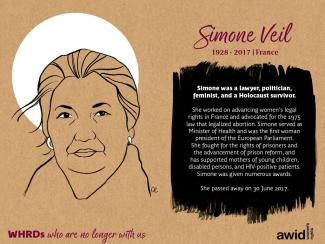
The Guardian: Simone Veil, Auschwitz survivor and abortion pioneer, dies aged 89
BBC: Simone Veil: French politician and Holocaust survivor dies
Reuters: French Holocaust survivor and pro-abortion campaigner Simone Veil dies at 89
We know that first time travel can be exciting but also stressful. In recognition of the many challenges involved, we will be providing more information and details about how to get to Bangkok when Registration opens early next year.
Feminist and women’s rights organizations don’t just rely on institutional funding, we resource ourselves. Our organizing is powered by passion, political commitment, solidarity and collective care.
These resources are self- generated and autonomous, and often invisible in our budgets, but they are the backbone of our organizing.
Dans cette BD illustrée par Sophia, suivez les aventures de notre super-héroïne féministe qui dément les récits des antidroits dans le monde entier et sauve la mise aux mouvements féministes.

Publication de la version zéro du document final, mars 2015
Los idiomas de trabajo de AWID son inglés, francés y español. El tailandés se agregará como idioma local, al igual que el lenguaje de señas y otras medidas de accesibilidad. Es posible que se añadan otras lenguas si la financiación lo permite, así que mantente atentx a las actualizaciones. Nos importa la justicia lingüística y trataremos de incluir tantos idiomas como sea posible y según nuestros recursos lo permitan. Esperamos crear múltiples oportunidades para que muchxs de nosotrxs podamos participar en nuestras lenguas y comunicarnos entre nosotrxs.
As the world struggles with multiple intersecting crises, local communities and collectives of various kinds are resisting as also creating constructive alternatives.
📅 Wednesday, November 12, 2025
📍 Seminario Mar Nossa Sra Da Assunção, Pará, Brazil
بدأنا التخطيط لعدد المجلّة هذا مع نانا داركوا قُبيل مهرجان «ابدعي، قاومي، غيٍّري: مهرجان للحراكات النسوية» لجمعية «حقوق المرأة في التنمية» AWID، وانطلقنا وقتها من سؤالٍ هو بالأحرى ملاحظة حول حالة العالم، ورغبة في تغيير الاعتقادات السائدة: لماذا لا تزال جنسانيّاتنا وملذّاتنا تخضع للترويض والتجريم مع أنّه يتمّ تذكيرنا مراراً وتكراراً بأنّها لا تأتي بأيّ قيمة أو تطوّر؟ واستنتجنا أنّ جنسانيّاتنا، لمّا تتجسّد، فيها ما يتعارض مع النظام العالمي الذي ما زال يتجلّى من خلال ضوابط الحدود، والتمييز العنصري في توزيع اللقاح، والاستعمار الاستيطاني، والتطهير العرقي، والرأسمالية المُستشرية. هل يمكننا إذاً القول إنّ لجنسانيّاتنا قدرةٌ تعطيليّة؟ وهل يصحّ هذا القول عندما ننظر إلى واقع حركاتنا التي يتمّ الاستيلاء عليها ومأسستها في سعيها للتزوّد بالموارد؟
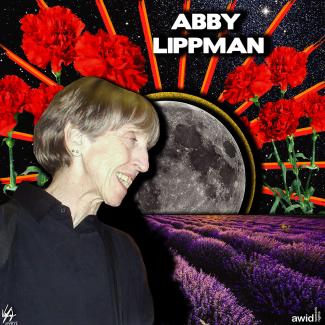
Abby était une féministe pionnière, militante des droits humains.
Ancienne épidémiologiste de l'Université McGill, Abby était réputée pour défendre les causes sociales et pour ses critiques perspicaces concernant les technologies de procréation humaine assistée et d'autres sujets médicaux. Plus précisément, elle a fait campagne contre ce qu'elle a appelé la « généticisation » des technologies de procréation, contre l'hormonothérapie substitutive et pour des recherches plus qualitatives et plus longues avant l'approbation de nouveaux vaccins comme celui contre le papillomavirus humain.
À la nouvelle de son décès, ses ami-e-s et collègues l'ont décrite avec affection comme une « ardente défenseure » de la santé des femmes.
Development financing has specific threats and opportunities for women's and all people’s human rights. Transformative development financing and policies can make an important contribution to the systemic changes that are needed to ensure the respect, protection and fulfillment of women’s human rights.
2015 is an important year for the FfD process. The Third International Conference on FfD took place from 13-16 July 2015 in Addis Ababa, Ethiopia and governments are finalising the post-2015 development agenda including agreements on how the new Sustainable Development Goals will be financed.
The current stage of the FfD process is an important opportunity to establish a financing framework that will ensure effective financing for the implementation of the post 2015 agenda and the Sustainable Development Goals (SDGs). It is also an opportunity to address the structural conditions, and systemic changes needed, for the full implementation of other agendas and commitments such as Human Rights Conventions, and the Beijing Platform for Action.
Over the last 13 years, women’s rights and feminist organizations have actively engaged in the FfD process.
El creciente poder de los actores anti-derechos no se está desarrollando en un vacío. Entender el auge del ultranacionalismo, del poder corporativo irrestricto, del incremento de la represión y de la disminución del espacio cívico resulta clave para contextualizar las amenazas anti-derechos que enfrentamos actualmente.