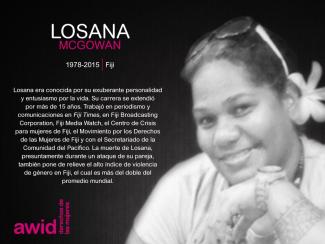
Losana McGowan
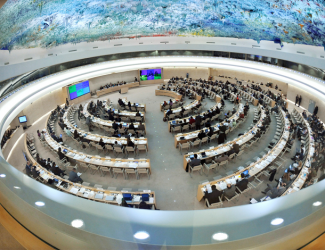
The Human Rights Council (HRC) is the key intergovernmental body within the United Nations system responsible for the promotion and protection of all human rights around the globe. It holds three regular sessions a year: in March, June and September. The Office of the UN High Commissioner for Human Rights (OHCHR) is the secretariat for the HRC.
Debating and passing resolutions on global human rights issues and human rights situations in particular countries
Examining complaints from victims of human rights violations or activist organizations on behalf of victims of human rights violations
Appointing independent experts (known as “Special Procedures”) to review human rights violations in specific countries and examine and further global human rights issues
Engaging in discussions with experts and governments on human rights issues
Assessing the human rights records of all UN Member States every four and a half years through the Universal Periodic Review
AWID works with feminist, progressive and human rights partners to share key knowledge, convene civil society dialogues and events, and influence negotiations and outcomes of the session.
Les organisations féministes et de défense des droits des femmes ne dépendent pas uniquement des financements institutionnels, elles s’autofinancent. Nos mouvements sont animés par la passion, la solidarité, l’engagement politique et le soin collectif.
Ces ressources autonomes et autogénérées sont souvent invisibles dans les budgets, mais elles sont le pilier de notre action collective.
Voulez-vous vous inspirer des stratégies de résistance créatives des féministes du monde entier ? Souhaitez-vous découvrir des initiatives féministes qui nous montrent comment nous pouvons tou.te.s vivre dans un monde plus juste ? Voulez-vous en savoir plus sur les modèles de soins et de guérison féministes à apporter à votre propre communauté ? Est-ce un oui retentissant que nous entendons ? OUI!
Alors consultez Crear | Résister | Transform : un festival pour les mouvements féministes. Ce festival s'est déroulé virtuellement tout au long du mois de septembre 2021 sur toutes les plateformes de l'AWID, et vous pouvez désormais en faire l'expérience à votre rythme.
Les sessions ci-dessous sont pour vous et tou.te.s les incroyables militant.e.s féministes et de justice sociale que vous connaissez. Rassemblons-nous pour partager nos stratégies de résistance, co-créer de la magie féministe et transformer ce monde ensemble.
Les exposant.e.s ont participé en parlant leur langue préférée et à AWID, nous avons inclus des sous-titres sur les vidéos pour votre accessibilité.
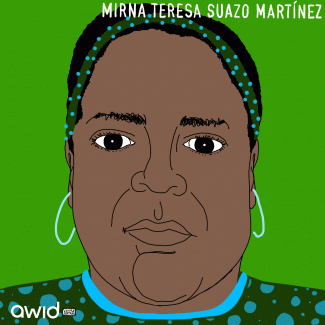
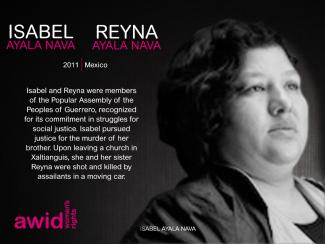
Mirna Teresa Suazo Martínez was part of the Garifuna (Afro-descendent and Indigenous) Masca community, living on the North Caribbean coast of Honduras. She was a community leader and a fervent defender of the Indigenous territory, a land that was violated when the National Agrarian Institute of Honduras gave territorial licenses to people outside of the community.
This deplorable deed resulted in repeated harassment, abuse and violence against the Masca, where economic interests of different groups met those of Honduran armed forces and authorities. According to the Black Fraternal Organization of Honduras (OFRANEH), the strategy of these groups is to evict and exterminate the Indigenous population.
“Masca, the Garifuna community located next to the Cuyamel Valley, is part of the area of influence of one of the supposed model cities, a situation that has triggered territorial pressures along the Garifuna coast.” - OFRANEH, 8 September 2019
Mirna Teresa, president of the Board of Trustees of the Masca Community in Omoa, was also firmly rejecting the construction of two hydroelectric plants on the river that carries the same name as her community, Masca.
“The Garífuna community attributes the worsening of the situation in their region to their opposition to tourist exploitation, the monoculture of African palm and drug trafficking, at the same time that it seeks to build an alternative life through the cultivation of coconut and other products for self-consumption.” - Voces Feministas, 10 September 2019
Mirna Teresa was murdered on 8 September 2019 in her Restaurant “Champa los Gemelos”.
She was one of six Garifuna women defenders murdered between September and October 2019 alone. According to OFRANEH, there was no investigation by the authorities into these crimes.
“In the case of the Garífuna communities, a large part of the homicides are related to land tenure and land management. However, squabbles between organized crime have resulted in murders, such as the recent ones in Santa Rosa de Aguán.” - OFRANEH, 8 September 2019
Conferencia Internacional de Seguimiento sobre la Financiación para el Desarrollo, Doha, Qatar
Modèles de gouvernance alternative comme moyens de sortir de la crise climatique.
📅 Mercredi 12 novembre 2025
📍 Seminario Mar Nossa Sra Da Assunção, Pará, Brésil
Site web en anglais
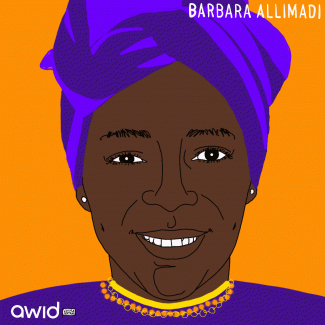
Barbara Allimadi fue una activista política y defensora de los derechos humanos de Uganda. En 2012, co-organizó una protesta contra la agresión policial a Ingrid Turinawe, una figura política de la oposición, que fue televisada y muestra cómo un policía le aprieta el pecho. Durante la protesta, Barbara, junto con otras compañeras activistas, se quitaron la ropa hasta quedarse en sujetador frente a la Estación Central de Policía de Kampala. Este hecho pasó a conocerse en Uganda como la infame "protesta de los sujetadores".
"Nos decidimos por la protesta de los sujetadores. Pensamos que sería lo más apropiado para lo que había sucedido. Con esta acción, no es que estuviésemos diciendo que no nos respetásemos a nosotras mismas. Estábamos indignadas con lo que había sucedido." - Barbara Allimadi, 2013 (Daily Monitor, en inglés)
Barbara se licenció en Ingeniería Electrónica y de Comunicaciones en la Universidad Metropolitana de Londres, y ejerció como ingeniera de redes en el Reino Unido. Era,además, una fan entusiasta de la música reggae. Regresó a Uganda en 2007, cuando su madre falleció.
En 2019, fue nombrada Coordinadora de Asuntos Internacionales y de la Diáspora de la Alianza para la Transformación Nacional (ANT, por sus siglas en inglés), un partido político lanzado ese año por un líder de la oposición.
"Queremos garantizar la seguridad de la vida y la propiedad, no el dolor, las lesiones o incluso la muerte a manos de unas fuerzas de seguridad que se supone deberían protegernos. Y lo más importante, queremos un entorno estable y propicio donde podamos realizar nuestros sueños y aspiraciones". - Barbara Allimadi, video de ANT (en inglés)
Barbara falleció el 27 de abril de 2020.
"Estaba muy orgullosa de mi hermana por muchas razones, pero, en particular, por su intrépida búsqueda de la paz, la democracia, la justicia y la igualdad en Uganda. En los momentos más álgidos de su activismo, Barbara lideró muchas marchas por las calles de Kampala, hacia las comisarías de policía y el Parlamento". - Doris Allimadi, hermana de Barbara
"Nos enteramos con profunda tristeza del prematuro fallecimiento de Barbara Allimadi. Ella ha sido una fuerza valiente, implacable y valerosa para el movimiento de liberación de Uganda. Queremos dar nuestro más sentido pésame a su familia. La echaremos mucho de menos". - Akina Mama wa Afrika (tweet, 28 April 2020)
"El fallecimiento de Barbara es una noticia muy triste para nosotrxs y para toda su familia. Barbara dedicó su vida a luchar por la justicia, la libertad y los derechos de las personas desde la sociedad civil, hasta que se unió, recientemente, al partido." Maj Gen Mugisha Muntu, coordinador nacional de la ANT (por sus siglas en inglés)
"Una hermana hermosa, encantadora, divertida, carismática e inspiradora. Mis hijxs han perdido a su tía. Uganda ha perdido a una audaz y valiente defensora de la libertad. Barbara dijo una vez: "Mientras siga habiendo aliento en ti, sigue trabajando por conseguir tus sueños". - Doris Allimadi, hermana de Barbara.
Lancement du processus préparatoire intergouvernemental de la troisième Conférence sur le financement du développement, octobre 2014
Come meet the feminist economies we LOVE.
The economy is about how we organize our societies, our homes and workplaces. How do we live together? How do we produce food, organize childcare, provide for our health? The economy is also about how we access and manage resources, how we relate with other people, with ourselves and with nature.
Feminists have been building economic alternatives to exploitative capitalist systems for ages. These alternatives exist in the here and now, and they are the pillars of the just, fairer and more sustainable worlds we need and deserve.
We are excited to share with you a taste of feminist economic alternatives, featuring inspiring collectives from all around the world.
Women's Forum on Financing for Gender Equality
The Third UN International Conference on Financing for Development
Expose corporate capture. Understand false solutions. Build alternatives. Everything you need to run your own "Whose COP Is It?" campaign.
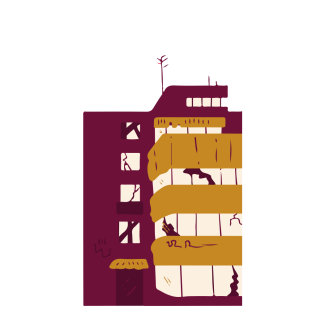
Fuente: Censo de População de Rua, Prefeitura de São Paulo
 |
Edificios abandonados/desocupados |
 |
||
Personas que viven en la calle |
||||
|
31,000 |
40.000 |
El tema del 14° Foro Internacional de AWID es «Realidades feministas: nuestro poder en acción».
Entendemos las realidades feministas como los diferentes modos de existir y ser que nos muestran lo que es posible, a pesar de los sistemas de poder dominantes, y en desafío y resistencia contra ellos. Entendemos estas realidades feministas como recuperaciones y corporizaciones de esperanza y poder, multidimensionales, dinámicas, y arraigadas en contextos y momentos históricos específicos.