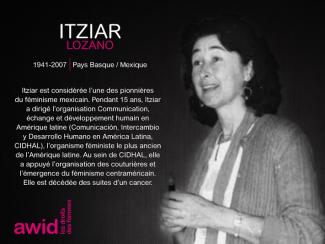
Itziar Lozano
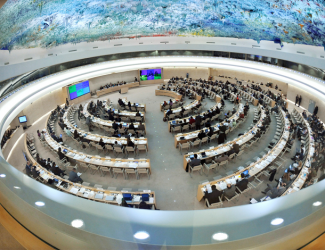
The Human Rights Council (HRC) is the key intergovernmental body within the United Nations system responsible for the promotion and protection of all human rights around the globe. It holds three regular sessions a year: in March, June and September. The Office of the UN High Commissioner for Human Rights (OHCHR) is the secretariat for the HRC.
Debating and passing resolutions on global human rights issues and human rights situations in particular countries
Examining complaints from victims of human rights violations or activist organizations on behalf of victims of human rights violations
Appointing independent experts (known as “Special Procedures”) to review human rights violations in specific countries and examine and further global human rights issues
Engaging in discussions with experts and governments on human rights issues
Assessing the human rights records of all UN Member States every four and a half years through the Universal Periodic Review
AWID works with feminist, progressive and human rights partners to share key knowledge, convene civil society dialogues and events, and influence negotiations and outcomes of the session.
Esta edición en alianza con Kohl: una publicación para Body and Gender Research analizará soluciones, propuestas y realidades feministas para transformar nuestro mundo actual, nuestros cuerpos y nuestras sexualidades.
Asma was a leading Pakistani rights activist, fearless critic of the military’s interference in politics and a staunch defender of the rule of law.
She was the founding chairwoman of the Human Rights Commission of Pakistan, an independent group, and was a trustee of the International Crisis Group. She won international awards and served as the United Nations rapporteur on human rights and extrajudicial killings.
She is remembered fondly by colleagues and friends at AWID
“With her life, Asma rewrote the history that many of us were told as women. Asma changed the world. She changed it in Pakistan, and she changed it in our imaginations."

Con más de 10 años de experiencia en finanzas, Lucy ha dedicado su carrera a misiones con y sin fines de lucro. También ha prestado trabajo voluntario para organizaciones sin fines de lucro. Desde el acelerado mundo de las finanzas, Lucy siente pasión por estar al día con las competencias tecnológicas asociadas con este ámbito. Lucy se incorporó a AWID en 2014. En su tiempo libre disfruta de la música, de viajar y de practicar una variedad de deportes.
The Call for Activities lists a number of suggested formats and methodologies. Be creative and make sure to read the section “What you need to know”.

El Nemrah
Não, apreciamos o seu trabalho, mas, de momento, não solicitamos respostas de indivídues.
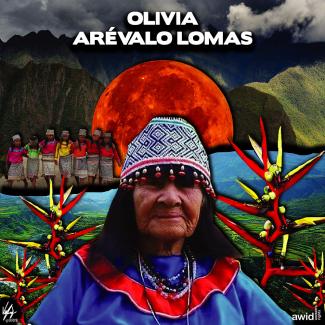
Olivia era la líder espiritual del pueblo indígena Shipibo Konibo.
Sabia mujer indígena y abuela, era conocida por practicar la medicina tradicional y cantar las canciones sagradas de su pueblo (Íkaros). Olivia Arévalo fue una activa defensora de los derechos culturales y ambientales de su pueblo. Su asesinato tuvo lugar en un contexto de conflicto territorial entre la comunidad shipibo y las empresas que quieren apropiarse de sus tierras para cultivar palma aceitera.
Integrantes de su comunidad han dicho: «Su muerte es una agresión contra toda la comunidad shipibo. Ella era la memoria viviente de su pueblo».
Kasia soutient le travail des mouvements féministes et de justice sociale depuis 15 ans. Avant de rejoindre l'AWID, Kasia dirigeait les politiques et le plaidoyer d’ActionAid et d’Amnesty International, tout en se mobilisant avec des féministes et des groupes de justice sociale en Pologne pour l'accès à l'avortement et la lutte contre les violences aux frontières européennes. Kasia est passionnée par le ressourcement des organisations féministes dans tout leur courage, leur richesse et leur diversité. Elle partage son temps entre Varsovie et son village communautaire de bricolage dans la forêt. Elle adore les saunas et aime follement son chien Wooly.
Je vais être honnête : lorsque Angélica et Fabi m’ont proposé de créer une collection de textes érotiques écrits par des femmes noires, j’ignorais ce que c’était que de produire un recueil. Je maîtrisais le thème de l’érotisme, mais créer un recueil…
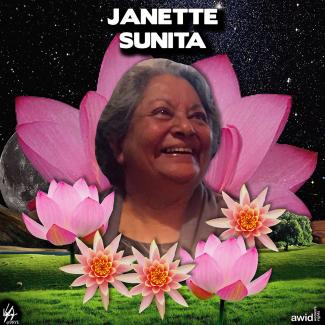
Originaire d'Inde, Janette était une personne formidable, fougueuse, bienveillante et aimante.
Son intolérance à l’égard de l’injustice et sa ferme volonté de défendre les droits de toutes les personnes l’ont amenée à travailler pour TARSHI (une ONG qui travaille sur la sexualité et la santé sexuelle et reproductive) pendant plus de 15 ans. Janette a géré et dirigé avec compétence les aspects financiers, les ressources humaines et les aspects opérationnels de TARSHI, naviguant adroitement dans la bureaucratie labyrinthique à laquelle sont soumises les ONG indiennes.
Son équipe se souvient « elle assurait nos arrières pour que nous puissions naviguer en eaux libres. Femme aux multiples talents, Janette nous a non seulement aidés à acquérir nos propres bureaux, mais elles les a également aménagés pour leur utilisation optimale. Elle aimait les voyages et les animaux et s'intéressait à la thérapie assistée par les animaux ».
Marta is a queer, transfeminist non-binary activist-researcher from ex-Yugoslavia, currently based in Barcelona. They work as a transnational movement organizer, a feminist economist and a weaver of systemic alternatives. They are the co-founder and one of the coordinators of the Global Tapestry of Alternatives, a global process that seeks to identify, document and connect alternatives on local, regional and global levels. Locally, they are engaged in anti-racist, transfeminist, queer, migrant organizing. They also hold a doctoral degree in Environmental Science and Technology from the Autonomous University of Barcelona, dedicated to decolonial feminist perspectives of a pluriverse of systemic alternatives and the creation of feminist alternative systems based on care and the sustainability of life. During their free time, they enjoy boxing, playing the guitar and the drums as part of a samba band, photography, hiking, cooking for loved ones and spoiling their two cats.
Les hôpitaux sont des institutions, des sites vivants du capitalisme, et ce qui se joue lorsque quelqu’un est censé se reposer est un microcosme du système lui-même.

Всего 47 вопросов, из которых 27 являются обязательными*, а остальные 20 – дополнительными. Большинство вопросов – это вопросы с множественным выбором. Мы надеемся, что вы ответите на все вопросы.