AWID’s Tribute is an art exhibition honouring feminists, women’s rights and social justice activists from around the world who are no longer with us.
In 2020, we are taking a turn
This year’s tribute tells stories and shares narratives about those who co-created feminist realities, have offered visions of alternatives to systems and actors that oppress us, and have proposed new ways of organising, mobilising, fighting, working, living, and learning.
49 new portraits of feminists and Women Human Rights Defenders (WHRDs) are added to the gallery. While many of those we honour have passed away due to old age or illness, too many have been killed as a result of their work and who they are.
This increasing violence (by states, corporations, organized crime, unknown gunmen...) is not only aimed at individual activists but at our joint work and feminist realities.
The stories of activists we honour keep their legacy alive and carry their inspiration forward into our movements’ future work.
The portraits of the 2020 edition are designed by award winning illustrator and animator, Louisa Bertman.
AWID would like to thank the families and organizations who shared their personal stories and contributed to this memorial. We join them in continuing the remarkable work of these activists and WHRDs and forging efforts to ensure justice is achieved in cases that remain in impunity.
“They tried to bury us. They didn’t know we were seeds.” - Mexican Proverb
The Tribute was first launched in 2012
It took shape with a physical exhibit of portraits and biographies of feminists and activists who passed away at AWID’s 12th International Forum, in Turkey. It now lives as an online gallery, updated every year.
"My dreams and objectives have always been the same as those of Lohana Berkins: for the cooperative to continue standing and not to close. To continue to give this place to our travesti comrades, to give them work and a place of support"
Las realidades de la dotación de recursos y del estado del financiamiento para los movimientos feministas cambia con rapidez, ¿la encuesta es de carácter excepcional?
No, no lo es. Se basa en los 20 años de historia de AWID movilizando más y mejor financiamiento para el cambio social encabezado por los feminismos, y se trata de la tercera edición de la investigación ¿Dónde está el dinero para las organizaciones feministas? Aspiramos a repetir la encuesta ¿Dónde está el dinero? cada tres años.
Agroecology and Food Sovereignty
Context
The search for alternative means of food production based on environmental sustainability is gaining ground across regions. This worldwide search comes with a common characteristic: the need to involve rural people and particularly women, building on their local priorities and knowledge by employing the principle of agroecology.
Definition
Agroecology is a way of practicing agriculture or using technologies that do not harm the environment. It proposes breaking with the hegemonic rural development model based on large landed estates and single-crop plantations that benefit mostly agricultural businesses and entrenches social exclusion.
In family farming, agroecology manifests as a resistance to the current development model and its social, cultural, environmental, and economic problems. It opposes the lack of the farmer’s financial capital autonomy; and it symbolizes a resistance to the current agribusiness model.
Feminist perspective
Efforts based solely on agroecology may not be sufficient to solve all problems of women’s marginalization and invisibility. A feminist perspective is then crucial to analyze the norms associated with the idea of family as currently constituted as the perfect institution, as well as with the condition of women’s subordination.
In simpler terms, it is important to include in this debate a reflection on socially constructed gender roles to advance the emancipatory potential of agroecology.
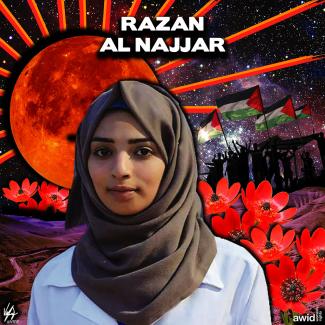
Razan était une infirmière palestinienne bénévole âgée de 21 ans.
Elle a été tuée par balle à l'est de la ville de Khan Younis, au sud de Gaza, alors qu'elle courait vers une clôture de la frontière fortifiée dans le but de porter secours à une victime.
Dans son tout dernier post sur Facebook, Razan avait déclaré : « J’y retourne et ne reculerai pas », ajoutant: « Frappez-moi de vos balles. Je n'ai pas peur ».
Puis-je vous contacter si j’ai des questions ou des inquiétudes?
Si vous avez des questions ou des inquiétudes, merci de nous contacter par le biais de ce formulaire, en indiquant « Enquête WITM » dans l’objet de votre message. Vous pouvez également nous écrire à witm@awid.org.
AWID Members Engaging at CSW61
Member states and women's rights advocates and organisations are gathering at the United Nations Headquarters in New York from 13 - 24 March for the 61st Commission on the Status of Women to address ‘women’s economic empowerment’ in the context of Sustainable Development Goal 5.
Whilst AWID is looking forward to physically meeting those of you who will be in New York, we want to engage with all those who cannot attend CSW, and as much as possible, amplify your voices in relevant spaces.
Continue reading to find out how to engage with AWID around CSW, whether you are attending physically or not.
Participate in an artistic takeover!
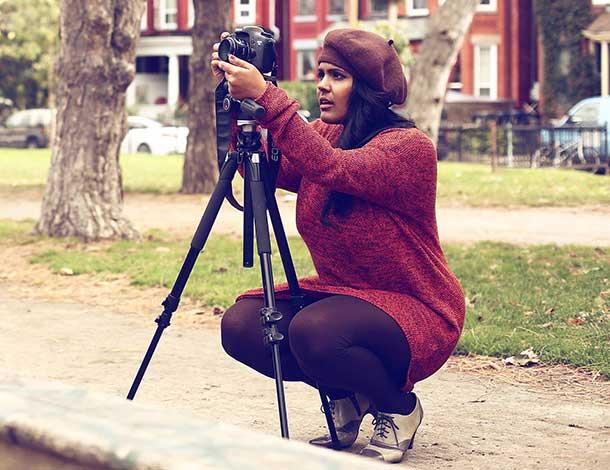
We are thrilled that AWID member Nayani Thiyagarajah is attending CSW this year and will take over the AWID Instagram. She will be available onsite to connect with other members for a possible feature on our Instagram. She will also explore possibilities of including some AWID members in a short film on the theme, ‘The personal is political’, a story of Nayani’s participation in this year’s CSW.
Nayani Thiyagarajah
Who is Nayani?
Nayani Thiyagarajah is a director, producer, and writer, dedicated to stories for the screen. A daughter of the Tamil diaspora, she calls Toronto home. For over 10 years, Nayani has worked in the arts and cultural industries. Her first independent feature documentary Shadeism: Digging Deeper (2015) had its World Premiere at the 2015 Zanzibar International Film Festival, where it won a Special Jury Prize. Nayani recently launched [RE]FRAME, with her producing partner Camaro West, a production company based out of Atlanta and Toronto, focused on re-framing the narratives around Black, Indigenous, and other people of colour through storytelling on screen.
On a more serious note, it should be noted that Nayani has a strange laugh, she's quite awkward, and her head is always in the clouds. She feels blessed beyond belief to create stories for the screen and play make believe for a living. Above all else, she believes in love.
Interested in meeting Nayani and being considered for inclusion in the film?
Send an email to membership@awid.org with the subject line “CSW Artistic Takeover”
By 13 March 2017
Please include your full name and country information.
Can't attend? Voice it!
If you are not able to attend CSW61 because of a travel ban, either due to the one imposed by the Trump administration or one you are facing from your own government, please share your story with us.
Send us messages you want heard in the United Nations spaces concerning funding, the impact of the reinstatement of the Global Gag Rule, and the need to push back against all types of religious fundamentalisms. You can send these in the following formats:
Video: no longer than two minutes and sent through a file sharing folder (for example dropbox, google drive)
Audio: no longer than two minutes and sent through a file sharing folder (for example dropbox, google drive)
Image: you can share a photo or a poster of your message
Text: no longer than 200 words and sent in the body of an email or in a word document
AWID members tell us that connecting with other members at CSW is valuable. In such a huge advocacy space, it is useful to connect with others including activists working on similar issues, or originating from the same country or region. Recognising the importance of connecting for movement building, we invite you to:
Interested in connecting with other members @CSW61?
If you are attending the CSW, we’d love to see what’s going on through your eyes!
Show us by capturing a moment you find speaks to the energy in the CSW space, be it on or off site. We hope to publish some of your ‘images’ on our social media channels and share on awid.org.
You can send us:
colour and/ or black and white photographs with a title (if you wish) and
a caption (no longer than 100 words) about the story your image tells.
Please also include:
your full name and country of origin and
let us know if we can publish the information you shared (in part or in full).
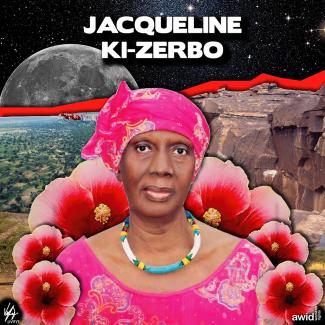
Jacqueline was a pioneering Malian/Burkinabe feminist, nationalist and educator.
She taught English in Senegal, before being recruited in 1961 as an English teacher at the Lycée Philippe Zinda Kaboré in Ouagadougou, Burkina Faso. Through her activism, she was involved in the popular uprising of January 3, 1966. Between 1961 and 1966, Jacqueline was also responsible for the trade union press, Voices of the Teachers. She was appointed as the head of the Normal Course for Young Girls (now known as Nelson Mandela High School) until 1974, and dedicated herself to girls’ education and advancing women’s rights.
In 1984 she was awarded the Paul G. Hoffmann Award for outstanding work in national and international development.
لبناء وقائع نسوية ترتكز على الأدلة عن كيف يتحرك المال ولمن يصل
Actores principales de la oposición
Estamos presenciando un nivel de participación sin precedentes de actores anti-derechos en los espacios internacionales de derechos humanos. Para reforzar su impacto y amplificar sus voces, estxs actores se dedican cada vez más a la construcción de alianzas tácticas que atraviesan sectores, fronteras regionales y nacionales y credos religiosos.
Esta «alianza non-santa» conformada por actores conservadores de tradición religiosa católica, evangélica, mormona, ortodoxa rusa y musulmana, ha encontrado una causa común en una serie de discursos compartidos y acciones de incidencia que intentan hacer retroceder los logros de lxs feministas y del movimiento de derechos sexuales a nivel internacional.
Santa Sede
Actividades principales: La «Santa Sede», como gobierno de la iglesia católica romana, utiliza su condición singular de estado Observador Permanente en la ONU para ejercer presión a favor de nociones conservadoras, patriarcales y heteronormativas de la feminidad, las identidades de género o «la familia» y para difundir políticas contra el aborto y la anticoncepción.
Sede: Ciudad del Vaticano, Roma, Italia.
Afiliación religiosa: Católica
Conexiones con otrxs actores anti- derechos: grupos de la derecha cristiana estadounidenses; alianzas ortodoxas interreligiosas; organizaciones de la sociedad civil (OSC) católicas
Organization of Islamic Cooperation [Organización para la Cooperación Islámica, OIC]
Actividades principales: Se describe a sí misma como la «voz colectiva del mundo musulmán» y actúa como un bloque de estados en los escenarios de la ONU. La OIC intenta crear lagunas en la protección de los derechos humanos a partir de referencias a la religión, la cultura o la soberanía nacional. También propaga el concepto de «familia tradicional», y contribuye a un régimen de derechos humanos paralelo pero restrictivo (ver como ejemplos la Declaración de los Derechos Humanos en el Islam o la Declaración de El Cairo de 1990).
Sede: Yeda, Arabia Saudita
Afiliación religiosa: Musulmana
Conexiones con otrxs actores anti-derechos: Representaciones de estados ultra conservadores (como Rusia) ante la ONU.
World Congress of Families [Congreso Mundial de las Familias]
Actividades principales: Conferencias internacionales y regionales; investigación, producción y difusión de conocimiento; cabildeo en las Naciones Unidas «para defender la vida, la fe y la familia»
Sede: Rockford, Illinois, Estados Unidos
Afiliación religiosa: Predominantemente católica y cristiana evangélica
Conexiones con otrxs actores anti-derechos: Sutherland Institute, un grupo de expertxs conservador; Iglesia de los Santos de los Últimos Días; Departamento para la Familia y la Vida de la iglesia ortodoxa rusa; Sacerdotes por la Vida (anti-abortistas); Foundation for African Culture and Heritage [Fundación para la Cultura y el Patrimonio Africano]; Polish Federation of Pro-Life Movements [Federación Polaca de Movimientos Pro-vida]; European Federation of Catholic Family Associations [Federación Europea de Asociaciones de Familias Católicas]; Comité de las organizaciones no gubernamentales sobre la familia ante Naciones Unidas; Red Política por los Valores; Georgian Demographic Society [Sociedad Demográfica Georgiana]; parlamentarioxs de Polonia, Moldavia y otros países; FamilyPolicy [Instituto de Políticas de la Familia]; Russian Institute for Strategic Studies [Instituto Ruso de Estudios Estratégicos]; Hatze Oír y C-Fam; entre otrxs.
Center for Family and Human Rights [Centro para la familia y los derechos humanos, C-Fam]
Actividades principales: Cabildeo en las Naciones Unidas, en particular ante la Comisión de la Condición Jurídica y Social de las Mujeres, para «defender la vida y la familia»; difusión de información en medios (boletín Friday Fax); construcción de movimientos; formación para activistas conservadorxs.
Sede: Nueva York y Washington D.C., Estados Unidos
Afiliación religiosa: Católica
Conexiones con otrxs actores anti-derechos: International Youth Coalition [Coalición Internacional de Jóvenes]; Alianza Mundial de la Juventud; Human Life Internacional [Vida Humana internacional]; Santa Sede; Sociedad Civil para la Familia (la coordina); Family Research Council (Estados Unidos) [Comité de investigación sobre la familia] y otras OSC cristianas/católicas anti-derechos; delegación de los Estados Unidos ante la CSW.
Family Watch International [Observatorio Internacional de la Familia]
Actividades principales: Cabildeo en favor de políticas por «la familia», anti-LGBTQ y anti-ESI (educación sexual integral) en escenarios internacionales de derechos humanos; capacitación para sociedad civil y representantes de Estados (por ejemplo, una guía de recursos sobre lenguaje consensuado de las Naciones Unidas en torno a la familia); difusión de información; producción y análisis de conocimiento; campañas en línea.
Sede: Gilbert, Arizona, Estados Unidos.
Afiliación religiosa: Mormón
Conexiones con otrxs actores anti-derechos: líder del UN Family Rights Caucus [Grupo de incidencia por los derechos de la familia ante la ONU]; C - Fam; Jews Offering New Alternatives to Homosexuality [Judíos ofreciendo nuevas alternativas a la homosexualidad, JONAH]; National Association for Research and Therapy of Homosexuality [Asociación Nacional de Investigación y Terapia de la Homosexualidad, NARTH]; Congreso Mundial de las Familias; CitizenGo; Magdalen Institute [Instituto Magdalena]; Asociación La Familia Importa; Group of Friends of the Family [Grupo de Amigos de la Familia], que es un bloque de 25 Estados.
Alianza Mundial de la Juventud
Actividades principales: Incidencia en espacios políticos internacionales, entre ellos Naciones Unidas, la Unión Europea y la Organización de Estados Americanos por «la familia», y contra los derechos sexuales y los derechos reproductivos; capacitación a sus jóvenes integrantes en el uso de la diplomacia y la negociación, relaciones internacionales, actividades de grupos de base y creación de mensajes; programa de pasantías para fomentar la participación de lxs jóvenes en su trabajo; Emerging Leaders Conference [Conferencia de Líderes Emergentes] que tiene lugar en forma regular; producción y difusión de conocimiento.
Sede: Nueva York (Estados Unidos) y oficinas regionales en Nairobi (Kenia), Quezon City (Filipinas), Bruselas (Bélgica), Ciudad de México (México) y Beirut (Líbano).
Afiliaciones religiosas: Principalmente católica pero tiene como objetivo lograr una membresía pluriconfesional.
Conexiones con otrxs actores anti-derechos: C-Fam; Vida Humana Internacional; Santa Sede; Campaign Life coalition [Coalición Campaña por la Vida].
Iglesia ortodoxa rusa
Actividades principales: La iglesia ortodoxa rusa, capitalizando sus estrechos vínculos con el Estado ruso, ha actuado como un agente promotor de cambios en las normas en debates internacionales sobre derechos humanos. Rusia y su iglesia ortodoxa han cooptado el lenguaje de los derechos para poner el acento en la «moralidad» y en los «valores tradicionales» como supuestas fuentes principales de los derechos humanos. Rusia lideró una serie de resoluciones sobre «valores tradicionales» ante el Consejo de Derechos Humanos y es la primera en presentar enmiendas hostiles a las resoluciones progresistas en áreas como la mortalidad materna, la protección del espacio para la sociedad civil y el derecho a la protesta pacífica.
Conexiones con otrxs actores anti-derechos: Organización para la Cooperación Islámica; iglesias ortodoxas de Europa oriental y del Cáucaso, por ejemplo la iglesia ortodoxa georgiana; derecha cristiana de los Estados Unidos incluyendo a los grupos evangélicos; Congreso Mundial de las Familias; Grupo de Amigos de la Familia (bloque de Estados).
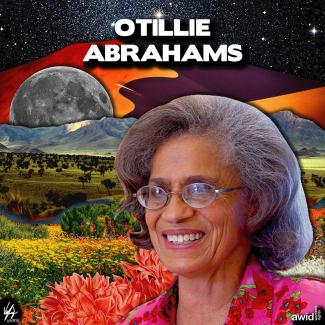
Ottilie fue una activista feminista, educadora y política de Namibia.
Fue una de las fundadoras de la Organización Popular del Sudoeste Africano (SWAPO), del Club Yu Chi Chan (un grupo armado revolucionario) y del Frente Nacional de Liberación del Sudoeste Africano (SWANLIF). También fue una de las fundadoras de la Asociación de Mujeres de Namibia y del Proyecto Niñas. A lo largo de su vida, Ottilie defendió el derecho a discutir, a pensar, a disputar y a exigir. Movilizó a las mujeres, organizó a estudiantes y docentes y criticó a otrxs camaradas por su elitismo y su corrupción.
Ottilie trabajó intensamente para desmantelar el patriarcado y para crear una democracia participativa concreta, feminista, transformadora y liberadora.
A menudo decía: «Descansaré cuando muera».
Body
Snippet FEA Workers demonstrations in Georgia 2 (EN)