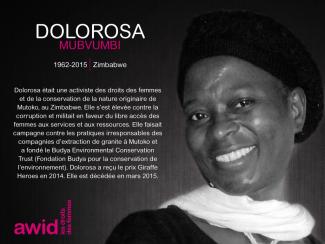
Dolorosa Mubvumbi
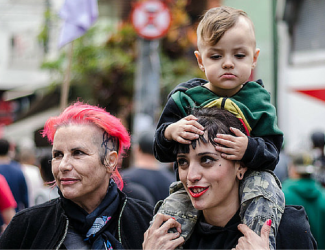
Over the past few years, a troubling new trend at the international human rights level is being observed, where discourses on ‘protecting the family’ are being employed to defend violations committed against family members, to bolster and justify impunity, and to restrict equal rights within and to family life.
The campaign to "Protect the Family" is driven by ultra-conservative efforts to impose "traditional" and patriarchal interpretations of the family, and to move rights out of the hands of family members and into the institution of ‘the family’.
Since 2014, a group of states have been operating as a bloc in human rights spaces under the name “Group of Friends of the Family”, and resolutions on “Protection of the Family” have been successfully passed every year since 2014.
This agenda has spread beyond the Human Rights Council. We have seen regressive language on “the family” being introduced at the Commission on the Status of Women, and attempts made to introduce it in negotiations on the Sustainable Development Goals.
AWID works with partners and allies to jointly resist “Protection of the Family” and other regressive agendas, and to uphold the universality of human rights.
In response to the increased influence of regressive actors in human rights spaces, AWID joined allies to form the Observatory on the Universality of Rights (OURs). OURs is a collaborative project that monitors, analyzes, and shares information on anti-rights initiatives like “Protection of the Family”.
Rights at Risk, the first OURs report, charts a map of the actors making up the global anti-rights lobby, identifies their key discourses and strategies, and the effect they are having on our human rights.
The report outlines “Protection of the Family” as an agenda that has fostered collaboration across a broad range of regressive actors at the UN. It describes it as: “a strategic framework that houses “multiple patriarchal and anti-rights positions, where the framework, in turn, aims to justify and institutionalize these positions.”
Get started with these resources.
COP30 Political Education Toolbox Play the Climate Justice Organizing Deckgame
Read the Feminist Economic Alternatives Brief Download the Climate Justice Zine
Los idiomas de trabajo de AWID son inglés, francés y español. El tailandés se agregará como idioma local, al igual que el lenguaje de señas y otras medidas de accesibilidad. Es posible que se añadan otras lenguas si la financiación lo permite, así que mantente atentx a las actualizaciones. Nos importa la justicia lingüística y trataremos de incluir tantos idiomas como sea posible y según nuestros recursos lo permitan. Esperamos crear múltiples oportunidades para que muchxs de nosotrxs podamos participar en nuestras lenguas y comunicarnos entre nosotrxs.
Since coming into myself, I have refused to pray in jamaat with my family. Joining in the ranks of hierarchy, “women” behind “men” irks me. It grates my skin and teeth to the degree where I can’t focus, and the standing, bowing, and kneeling feels like a battle against my true being. Each second listening, a betrayal of my nature. Instead, I pray by myself in my own way.
Yet this Ramadan, I feel different. Back in my childhood home after many years, I am choosing to fast. I choose suhoor with my family, and praying together feels like a natural extension of eating together. After eating, my mother, father, brother and I line up for fajr.
I pray behind Baba, but my prayer is my own. I close my eyes, staying with my breath and my body.
My eyes closed, I open my inner sight to a wide open window on a vista of mountains, bright sun spreading over a light mist of clouds. This was the view I had while praying in jamaat at a queer Muslim wedding I attended in the mountains of the South of France last September.
I lined up with the wedding guests, queer and trans folks of North and West African, Arab, and European descent. Folks of all faiths joined while some chose to stand in respect at the sides or behind. The groups did not fall along fault lines of “Muslim” or “non-Muslim,” “religious” or “non religious.” The two lovers marrying each led us in prayer, and so did the Muslim woman officiating the nikkah. Each of the three led us in two rounds of prayers, two raqat.
I showed up as I was, my body uncovered. I had not washed. I only passed my camera to a friend who chose to stand at the side.
In the first sujood, I broke down crying. I wore a jean dress that loves my body, one found at a thrift store my ex-girlfriend pointed me to.
The sobs come through my whole body during the prayer, and I put my head to the earth with my community like a homecoming. A return to the embrace of love both intensely personal and communal, and I am held.
It feels like swimming in the sea with multiple people: joyful togetherness. But when you go beneath the water, it’s just you and the current.
Like a dozen people buried in the same graveyard. Separate, but sharing the same soil. Becoming one with the growing earth.
That was how it felt to pray in communion at a queer Muslim wedding.
I welcomed the light of acceptance while showing up as myself that day, with a group of people who had also chosen to claim all the parts of themselves in love. That light made a home in me, and it illuminates my heart in the dark living room at fajr this Ramadan morning. Though I pray with my birth family who do not accept all of me, I see myself praying in jamaat at that glorious wedding with all of my queer Muslim ancestors, my queer angels, my lineage, my soul family, my queer Muslim family, all standing in prayer. Bowing as one.
My family’s home does not always feel like my own, though I am here now. I take the bukhoor from room to room, barefoot. Smolder from the censer, an incense that says, “Here I am.” Baraka, blessings from the source of all, Allah and the Goddess to each room in the house, bidding good and dispersing the unbidden.
As I write this the sky turns the same royal blue I am familiar with from exiting the club and pulling all-nighters. It is the gradient of morning I step into as I go to sleep.
Ramadan: the Muslim holy month, traditionally observed with 29 days of fasting without food or water during daylight hours
Keffiyah: a patterned scarf common in the SWANA region. The black and white version referred to here is associated with the Palestinian liberation movement
Pray in jamaat: Islamic ritual prayer in a group. Participants follow one person, traditionally male, who calls the prayer aloud.
Suhoor: the meal before the fast starts at dawn
Fajr: the dawn prayer
Baba: father
Raqat: one round of prayer consisting of standing, bowing, kneeling, and pressing the head to the ground
Sujood:the prayer position when one presses one’s head to the earth
Nikkah: the religious marriage ceremony
Bukhoor: an Arabic incense, woodchips soaked in resin
Baraka: blessing
Pictures of angels in my life, just some women and non-binary people of color hanging out, taking care of themselves and expressing love to each other. It's these simplest moments that are the most empowering.


< Freeing the Church, Decolonizing the Bible for West Papuan Women
بدأنا التخطيط لعدد المجلّة هذا مع نانا داركوا قُبيل مهرجان «ابدعي، قاومي، غيٍّري: مهرجان للحراكات النسوية» لجمعية «حقوق المرأة في التنمية» AWID، وانطلقنا وقتها من سؤالٍ هو بالأحرى ملاحظة حول حالة العالم، ورغبة في تغيير الاعتقادات السائدة: لماذا لا تزال جنسانيّاتنا وملذّاتنا تخضع للترويض والتجريم مع أنّه يتمّ تذكيرنا مراراً وتكراراً بأنّها لا تأتي بأيّ قيمة أو تطوّر؟ واستنتجنا أنّ جنسانيّاتنا، لمّا تتجسّد، فيها ما يتعارض مع النظام العالمي الذي ما زال يتجلّى من خلال ضوابط الحدود، والتمييز العنصري في توزيع اللقاح، والاستعمار الاستيطاني، والتطهير العرقي، والرأسمالية المُستشرية. هل يمكننا إذاً القول إنّ لجنسانيّاتنا قدرةٌ تعطيليّة؟ وهل يصحّ هذا القول عندما ننظر إلى واقع حركاتنا التي يتمّ الاستيلاء عليها ومأسستها في سعيها للتزوّد بالموارد؟
Movements marching globally for climate justice.
📅 Saturday, November 15, 2025
📍 Multiple Locations
El creciente poder de los actores anti-derechos no se está desarrollando en un vacío. Entender el auge del ultranacionalismo, del poder corporativo irrestricto, del incremento de la represión y de la disminución del espacio cívico resulta clave para contextualizar las amenazas anti-derechos que enfrentamos actualmente.
Bienvenue à Crear | Résister | Transform : un festival dédié aux mouvements féministes !
L'AWID s'engage à créer un espace en ligne qui nous invite et nous pousse tou·te·s à faire preuve de courage, de curiosité, de générosité et de responsabilité partagée.
Nous vous invitons à créer à nos côtés des espaces sans harcèlement ni violence, où chacun·e est respecté·e dans son identité et son expression de genre, sa race, ses capacités, sa classe, sa religion, sa langue, son ethnicité, son âge, sa profession, son type d'éducation, sa sexualité, sa taille et son apparence physique. Des espaces où nous reconnaissons les inégalités de notre monde et où nous nous efforçons de les transformer au gré de nos propres interactions avec les autres.
Soyez là les un·e·s pour les autres en étant activement à l’écoute. Essayons de nous sentir proches, même si tout est virtuel. Pour cela, vous aurez accès à l’interprétation de la discussion et à des moyens de communications ouverts (comme la boîte de dialogue et autres outils) pour réagir et échanger. Nous vous recommandons de porter des écouteurs ou un casque pendant la séance pour mieux entendre les autres et vous faire entendre. Dans la mesure du possible, essayez de fermer votre messagerie électronique ou toute autre distraction pendant que vous prenez part à la discussion.
Célébrons les multiples façons dont le savoir se manifeste dans nos vies. Nous vous invitons à aborder la conversation avec curiosité et ouverture d’esprit pour apprendre des autres, en se permettant de désapprendre et de réapprendre à travers ces échanges, comme une manièrede commencer à construire collectivement des connaissances.
Nous nous engageons à adopter une approche holistique de l'accessibilité en tenant compte des différents besoins physiques, linguistiques, mentaux et de sécurité. Nous voulons un espace qui accueille des personnes d'origines, de croyances, de capacités et d'expériences différentes. Nous anticiperons au mieux mais vous demanderons également de nous communiquer vos besoins, et nous ferons de notre mieux pour y répondre.
Nous nous engageons tou·te·s individuellement et collectivement à respecter la vie privée de chacun·e· et à demander le consentement des autres avant de partager des images ou du contenu qui les concerne, générés au cours de la conversation.
Créer un environnement sécurisé, respectueux et agréable durant ces conversations est la responsabilité de tou·te·s .
Si vous remarquez qu'une personne a un comportement discriminatoire ou offensant, veuillez contacter la personne de référence qui vous sera indiquée en début de session.
Tout·e participant·e qui utilisera un langage ou des images abusives sera exclu·e de la conversation et ne sera pas réadmis·e. Nous n’aurons plus de relations avec cette personne de quelque manière que ce soit.
with Luam Kidane, Mariama Sonko, Yannia Sofia Garzon Valencia, and Nomsa Sizani.
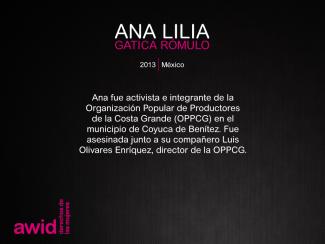
Nuevo
Lxs participantes se reunirán físicamente en varios lugares fuera de la sede de Bangkok, en diferentes partes del mundo, durante cada día del Foro. Todos estos lugares autoorganizados se conectarán en forma virtual con la sede del Foro en Bangkok. Como en el caso de las personas que se conecten en línea, lxs participantes de los nodos podrán facilitar actividades, unirse a conversaciones y disfrutar de un programa rico y diverso.
En 2024, informaremos sobre las localizaciones de los nodos.
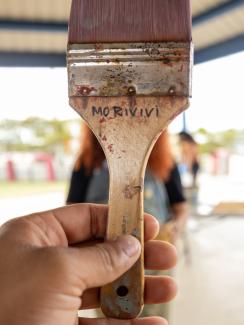
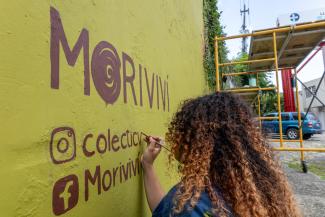
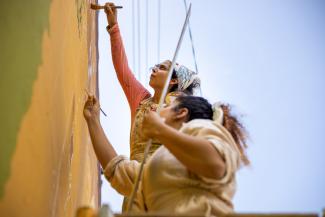
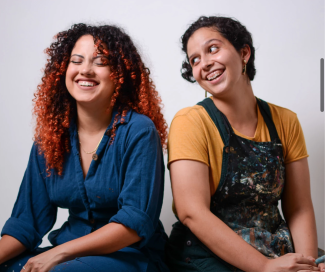
Colectivo Moriviví is an all women artistic collective. Our artistic production consists of muralism, community-led muralism, and protest performance/actions. Our work is about democratizing art and bringing the narratives of Puerto Rican communities to the public sphere to create spaces in which they are validated. We believe that through artivism we can promote consciousness on social issues and strengthen our collective memory.
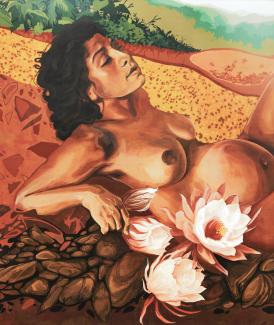
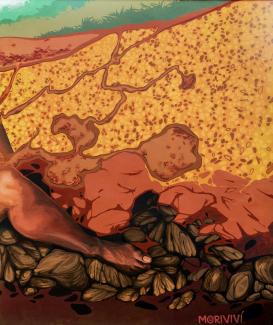
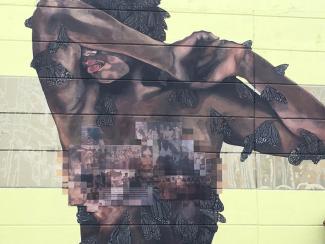
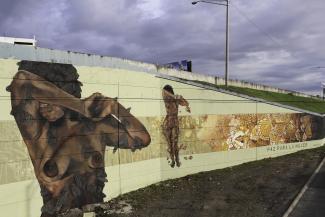
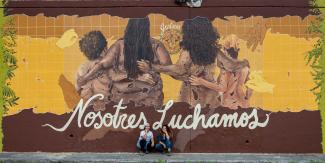
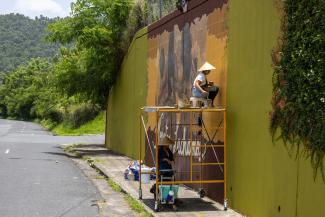
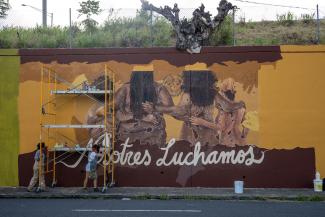
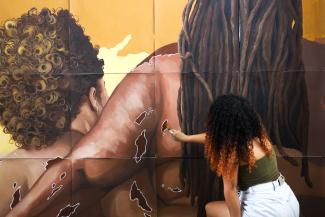
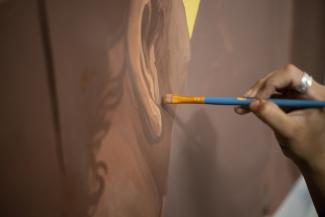
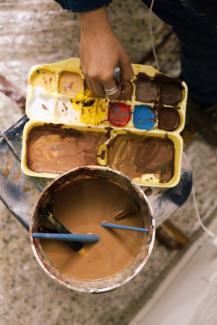
As part of their participation in AWID’s Artist Working Group, Colectivo Morivivi gathered a diverse group of members, partners and staff to facilitate a collaborative process of dreaming into, informing, and deciding on the content for a community mural through a multi-stage co-creation process. The project began with a remote conceptualization with feminists from different parts of the planet brought together by AWID, and then it evolved to its re-contextualization and realization in Puerto Rico. We were honored to have the input of local artists Las Nietas de Nonó(@lasnietasdenono), the participation of local women in the Community Painting Session, the logistics support from the Municipality of Caguas, and FRIDA Young Feminist Fund’s additional support to the collective.
The mural explores the transcendence of borders by presenting bodies like a map, in an embrace that highlights the intersection of the different feminist manifestations, practices and realities.
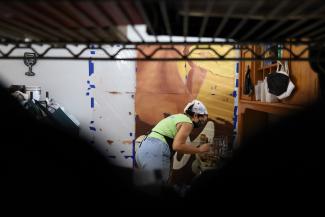
We also thank Kelvin Rodríguez, who documented and captured the different stages of this project in Puerto Rico:
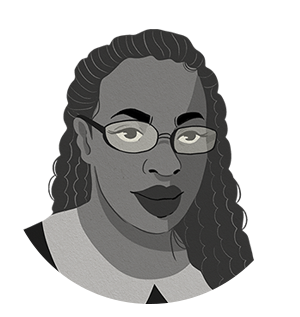
Chinelo Onwualu is an editorial consultant with nearly 10 years of experience in crafting strategic communications for nonprofits across the world. Her clients have included ActionAid Nigeria, The BBC World Trust, Open Society Initiative for West Africa (OSIWA), and AWID. She has a master’s degree in Journalism from Syracuse University and has worked as a writer, editor, and researcher in Nigeria, Canada, and the United States. She is also the non-fiction editor of Anathema magazine and co-founder of Omenana, a magazine of African Speculative Fiction. Her short stories have been featured in several award-winning anthologies and she’s been nominated for the British Science Fiction Awards, the Nommo Awards for African Speculative Fiction, and the Short Story Day Africa Award. She’s from Nigeria but lives in Toronto with her partner and child.
Esta publicación (zine) colaborativa surgió de una serie de círculos de intercambio que reunieron a feministas de todo el mundo durante 2022. El propósito fue intercambiar ideas y aprender mutuamente de qué manera las comunidades responden a la crisis climática en diversos contextos locales.

Panel: en las discusiones de panel, explora un tema o un desafío desde diferentes perspectivas, o comparte un aprendizaje o una experiencia, con preguntas del público a continuación, si el tiempo lo permite.
Programa de entrevistas: puedes tener una conversación más espontánea al estilo de un programa de entrevistas. Estos programas de entrevistas pueden ser una conversación entre varias personas, facilitadas por la persona que presenta el programa. Las preguntas del público pueden determinar la dirección de la conversación.
Conversación: estas pueden tomar la forma de «world café», de pecera y de otras metodologías que facilitan el involucramiento activo de lxs participantes en las conversaciones. Es un formato sumamente participativo.
Taller: actividades o clases interactivas que invitan a lxs participantes a adquirir nuevas habilidades en cualquiera y todas las áreas de la vida y el activismo.
Sesión estratégica: esta es una invitación a pensar en profundidad sobre un tema o una estrategia, junto con otras personas. Un espacio para aprender unxs de otrxs: qué funciona, qué no funciona, y cómo desarrollamos estrategias nuevas y colectivas para crear los mundos que soñamos.
Círculo para compartir [«birds of a feather»]: ideal para grupos pequeños, en un ambiente más íntimo, para oírse unxs a otrxs, iniciar una conversación y tratar con cuidado temas que pueden ser específicos, sensibles y complejos.
Artes – Taller participativo: actividades participativas de arte y expresión creativa. Ya sea a través de artes visuales, teatro, cine, pintura mural, danza, música, creación de artesanías y obras de arte colectivas, etc., apreciamos todas las ideas que celebren el arte y la creatividad feministas como formas de cambio social, sanación, expresión y transformación.
Artes – Performances, instalaciones y exhibiciones: son bienvenidas todas las propuestas que ofrezcan a lxs participantes del Foro nuevas experiencias y perspectivas, que expandan nuestros horizontes y que nos desafíen e inspiren para pensar, sentir y organizarnos de manera innovadora.
Sanación: actividades diversas diseñadas tanto para grupos como para personas individuales: desde aprender técnicas de relajación hasta hablar sobre la prevención del desgaste, desde prácticas informadas por el trauma para el cuidado de nuestro cuerpo, nuestra mente y nuestra alma hasta la reparación de fisuras dentro de nuestros movimientos.