
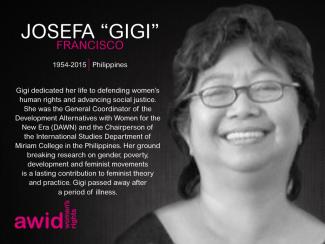
Josefa "Gigi" Francisco
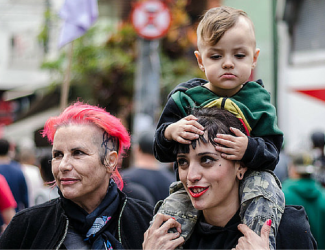
Over the past few years, a troubling new trend at the international human rights level is being observed, where discourses on ‘protecting the family’ are being employed to defend violations committed against family members, to bolster and justify impunity, and to restrict equal rights within and to family life.
The campaign to "Protect the Family" is driven by ultra-conservative efforts to impose "traditional" and patriarchal interpretations of the family, and to move rights out of the hands of family members and into the institution of ‘the family’.
Since 2014, a group of states have been operating as a bloc in human rights spaces under the name “Group of Friends of the Family”, and resolutions on “Protection of the Family” have been successfully passed every year since 2014.
This agenda has spread beyond the Human Rights Council. We have seen regressive language on “the family” being introduced at the Commission on the Status of Women, and attempts made to introduce it in negotiations on the Sustainable Development Goals.
AWID works with partners and allies to jointly resist “Protection of the Family” and other regressive agendas, and to uphold the universality of human rights.
In response to the increased influence of regressive actors in human rights spaces, AWID joined allies to form the Observatory on the Universality of Rights (OURs). OURs is a collaborative project that monitors, analyzes, and shares information on anti-rights initiatives like “Protection of the Family”.
Rights at Risk, the first OURs report, charts a map of the actors making up the global anti-rights lobby, identifies their key discourses and strategies, and the effect they are having on our human rights.
The report outlines “Protection of the Family” as an agenda that has fostered collaboration across a broad range of regressive actors at the UN. It describes it as: “a strategic framework that houses “multiple patriarchal and anti-rights positions, where the framework, in turn, aims to justify and institutionalize these positions.”
✉️ By registration only. Register here
📅 Wednesday, March 12, 2025
🕒 5.00-7.00pm EST
🏢 Chef's Kitchen Loft with Terrace, 216 East 45th St 13th Floor New York
Organizers: Women Enabled International and AWID
by Ana María Belique
The Naranjo Batey community is far from the city, but it’s full of hard-working people brimming with enthusiasm. A girl named Dieula lived there. (...)
< artwork: “Fury” by Diana Manilla Arroyo
By Nkhensani Manabe
The conversation title "Pansexual, Gynasexual or Abrosexual? A dive into queerness, pleasure and sex positivity" gives one much to think about. Tiffany Kagure Mugo, author, educator and curator of HOLAAfrica, begins the discussion with a reading from Touch, a recently published collection of fiction and non-fiction essays on sex, sexuality and pleasure. In this excerpt, the author puts forward the idea that pleasure is constant and ongoing, it is to be found in everyday activities and is not confined to sexual intercourse.
This idea, that pleasure is as much a part of daily life as anything else, runs through the discussion, which also covers topics of desire, attraction and sexual orientation.
Early on, there is this sense of hope and possibility. Tiffany presents options and explains alternatives, giving us new language to speak about who we are, what we like, and how we want it. This is about desire and sex, but mostly it is about self-knowledge and empowerment. Tiffany speaks passionately about making decisions from a place of power: learning your own identity so that you are able to make the best choices for yourself.
In a conversation that is open and free, representing the attitude that Tiffany would have us all adopt, we learn that knowledge about sex and sexuality is ever-changing, the boundaries are shifting. What we may have learned or, more importantly, been kept away from as children or adults is exactly where we should start unlearning and reprogramming. Tiffany notes that young people these days need tools to understand the experiences they are already having, a reminder to never underestimate what children and teenagers know about the kind of pleasure(s) they want to pursue in life.
The conversation opened my mind to something: knowing myself will help to build my confidence; I will be able to approach relationships with care not only for myself but for others, too. Learning the language of orientation, attraction, desire and pleasure will go towards deepening my future connections. I appreciated the space to think about this aspect of my life -- the private, intimate parts that I don’t access often. Tiffany’s enthusiasm about pleasure and identity pushed my own boundaries, allowing me to entertain new personal possibilities.
The idea of learning how to make holistic connections is still not common. Largely, we live in a culture of instant and fleeting connections. There is hardly any time to truly reflect on how and why we are seeking relationship or partnership -- at least, not until a moment of crisis.
Of course, there are selected spaces that welcome questions and discussions, such as the AWID Crear Résister Transform Festival and other free-thinking online platforms or publications -- but access to information from a helpful, non-judgemental source is something people are still trying to figure out. This may be in part because people are not confident in the language of sexuality and pleasure.
The notion of language and tools repeats itself throughout Tiffany’s presentation. Tiffany and her colleagues are doing the work of talking, teaching and nurturing. Seeing what people need, where they are, what they want for themselves, and walking alongside them as they build their ideal worlds. Giving them new words and definitions to help give shape to their identities at different stages of their lives.
These are the kinds of conversations that are necessary, even in a society that has myriad healthcare messages broadcast with varying degrees of details at any given moment. Sometimes people need to be brought back from the big picture moments and encouraged to learn about their individual opinions and desires. This is what Tiffany’s talk does: it gives people a space in the larger puzzle.
Sexual -- as in, the express desire to have intercourse with a person or people
Sensual -- the desire to touch a person or people, to be physically close without necessarily including intercourse
Romantic -- the desire to date or be in a relationship with a person or people
Platonic -- the desire to build close friendships
Aesthetic -- the desire to look at and be pleased by the appearance of a person or people
These five types or levels of attraction offer a shorthand for desire and pleasure, and help to contextualise the different kinds of pleasure people can experience.
Thinking of attraction beyond the physical or sexual offers a new perspective on connection. It is a chance to take the pressure off relationships, which opens up opportunities for different, more enlightened and fulfilling partnerships.
This freedom and knowledge that Tiffany presents is a roadmap to the future. The presentation offered a new perspective on what is possible.
As the opening excerpt states, pleasure is ongoing. In light of Tiffany’s discussion, it is also clear that it is dynamic and exciting. There is always more to know.
This may be daunting at first, but on the other side of hesitation is hope, potential and freedom.
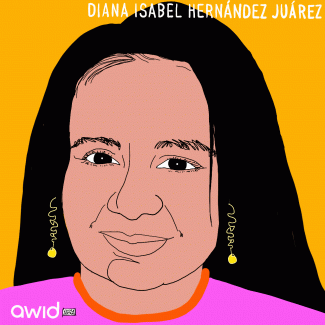
Diana Isabel Hernández Juárez was a Guatemalan teacher, human rights defender and environmental and community activist. She was the coordinator of the environmental program at Our Lady of Guadalupe Parish on the South coast of the country.
Diana dedicated her life to co-creating environmental awareness, working especially closely with local communities to address environmental issues and protect natural resources. She initiated projects such as forest nurseries, municipal farms, family gardens and clean-up campaigns. She was active in reforestation programmes, trying to recover native species and address water shortages, in more than 32 rural communities.
On 7 September 2019, Diana was shot and killed by two unknown gunmen while she was participating in a procession in her hometown. Diana was only 35 years old at the time of her death.
The Forum is a live example of what the bigger WE can do. We go to the Forum, we are seeds, we then get sowed. This we have to celebrate.
- Sara Abu Ghazal, Lebanon
✉️ Requiere inscripción previa para grandes grupos. Entrada libre para grupos reducidos. Reserven aquí
📅 Miércoles 12 de marzo de 2025
🕒 de 02:00 a 04:00 p.m., EST
🏢 Chef's Kitchen Loft with Terrace, 216 East 45th St 13th Floor, New York
Organiza: AWID
Ya está disponible nuestro programa final del Club de Cine Feminista: “Films from Nuestramérica” es una serie de películas sobre realidades feministas latinoamericanas / centroamericanas curada por Alejandra Laprea (Venezuela).
Querida y maravillosa persona:
Sé que estás muy cerca. Puedes sentirlo, ¿verdad?: cómo las cosas necesitan cambiar y cómo necesitas centrarte.
Esta es una carta para decirte que lo hagas. Elige tu sanación. Elige estar bien. Mejor que bien. Elige estar plenx, ser feliz. Llora a lágrima viva solo por tí y por nadie más. Elige cerrar la puerta ante el mundo y decirle «Vuelvo en 5 minutos». O en cinco días. O en cinco años.
O nunca.
Elige no hacerte cargo de todo. Elige no asumir nada. Porque nada de eso es tuyo. Nunca lo fue. Te dijeron desde que naciste que eran tuyos. Los problemas de tu familia. Los problemas de tus amantes. Los problemas de tus vecinxs. Los problemas del mundo. Ese susurro constante de que esos problemas te pertenecen. Que son tuyos. Tuyos para cargarlos, tuyos para llevarlos sobre los hombros. Tuyos para solucionarlos.
Eso fue una mentira.
Un engaño
Un engaño de larga duración.
Una estafa.
Los problemas del universo no son tuyos.
Los únicos problemas que son tuyos son los tuyos. Todxs lxs demás pueden irse de paseo.
Permítete dejarlo todo y adentrarte en la selva. Hazte amigx de una ninfa vestida de margaritas, crea una biblioteca pequeña en las raíces de un árbol. Baila desnudx y aúlla a la luz de la luna. Conversa con Oshun en el lecho del río.
O simplemente tómate una taza de té cuando necesites un momento para respirar.
Permítete desaparecer en la niebla y reaparecer tres países más allá como unx misteriosx chocolaterx con un pasado dudoso y afición por capas espectaculares y cigarros puros.
O deja de responder a las llamadas del trabajo durante los fines de semana.
Permítete nadar hasta una isla desierta con unx amante y vestirte solo con las cáscaras de los cocos que usaron para hacer el ron de coco que beben al atardecer.
O di que no cuando no tengas la capacidad de crear un espacio de contención para alguien.
Las opciones para sostenerte a ti mismx son infinitas.
Hagas lo que hagas, debes saber que el mundo siempre seguirá girando. Por eso es bello y por eso duele.. No importa a quién o qué elijas por encima de tí mismx y de tu alma, el mundo siempre seguirá girando.
Por lo tanto, elígete a tí mismx.
Por la mañana, con la primera luz, elígete a tí mismx. Cuando sea la hora del almuerzo, o te den ganas de llorar durante las horas de trabajo, elígete a tí mismx. Por la noche, cuando estés calentando las sobras porque no tuviste tiempo de volver a cocinar, elígete a vos mismx. Cuando la ansiedad te despierte y la existencia esté en silencio a las 3:45 am.
Elígete a tí mismx.
Porque el mundo siempre seguirá girando, inclinado, y tú mereces tener a alguien que siempre intente acomodarlo para tí.
Cariños,
tu ninfa de la selva con capa espectacular.
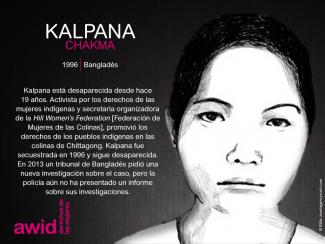
Jaitun, comúnmente conocida como «Amma», estaba comprometida con garantizar los derechos reproductivos de las mujeres y niñas de India. Se dedicó, particularmente, a abogar por quienes viven en la pobreza y son más marginadas, incluidas las mujeres y niñas dalit y musulmanas.
Jaitun fue la fuerza vital detrás del caso Jaitun versus Janpura Maternity Home & Ors. Su perseverancia por la justicia llevó a que la Corte Suprema de Delhi emitiera una sentencia innovadora, que obligó al gobierno indio a hacerse responsable del incumplimiento de cierto número de obligaciones legalmente vinculantes, tales como la atención a la salud reproductiva y el derecho a la alimentación.
A su hija Fatema, quien vivía por debajo de la línea de pobreza, se le negaron los servicios reproductivos, y tuvo que dar a luz en público, bajo un árbol. En ese momento, tanto Jaitun como Fatema estaban en situación de calle, ya que su casa había sido demolida por el gobierno como parte del programa de reurbanización y gentrificación de Nueva Delhi.
«Desde entonces, esta sentencia ha sido utilizada por innumerables abogadxs y activistas de todo el mundo, incluyendo al ex-Relator Especial de la ONU sobre el derecho a la salud, no solamente como fuente de inspiración, sino como una sólida plataforma para promover la justicia.» - Jameen Kaur
Jaitun ha sido una inspiración para que muchas otras mujeres que viven en la pobreza reclamen sus derechos. Falleció en 2017.
«Con la muerte de Jaitun, hemos perdido una incomparable guerrera de la justicia, pero su espíritu de desafío pervive.» -Jameen Kaur
«En mis dieciocho años como defensora de los derechos humanos, nunca he encontrado una mujer que me inspirara ni que conmoviera mi espíritu de la forma en que lo hacía Amma. Su sonora valentía, su inimitable humor (solíamos compararla con la actriz de Bollywood, Hema Melini) cuando se sentía molesta porque habíamos pasado tanto tiempo lejos de ella... con un brillo en los ojos, decía “Ustedes se han olvidado de Amma, Amma ahora no les habla”, y luego con gran dramatismo se ponía de espaldas para darse vuelta enseguida riendo y estirando los brazos para un abrazo. Su bondad y, en definitiva, su amor y su alegría por el amor y el derecho de todxs nosotrxs a vivir con dignidad. La extraño terriblemente.» - Jameen Kaur
Feminist and gender justice movements continue to be chronically underfunded in the face of global funding cuts and freezes. Particularly in Global South regions with shrinking civic spaces, resource scarcity has impacted the most vulnerable communities.
In the face of these setbacks, AWID has updated the Who Can Fund Me? Database - an easy-to-use, practical tool for movements looking for funders from philanthropic foundations, multilateral funders to women’s and feminist funds to support vital lifesaving efforts.
Crear | Résister | Transform est fait pour vous et pour tou·te·s les superbes activistes féministes et de la justice sociale que nous connaissons. Rassemblons-nous pour partager nos stratégies de résistance, co-créer un peu de magie féministe, et transformer ce monde ensemble.
I am pleased to share with you one of my remarkable dates as feminist with disability. It was May 30, 2014 when we (the Nationwide Organization of Visually-Impaired Empowered Ladies NOVEL) participated in the Philippine Fashion Week Holiday 2014 for our white cane advocacy campaign. Two ladies who are blind walked down the catwalk to promote the white cane as one of the symbols of gender equality, empowerment, full inclusion and equal participation of women and girls with visual impairment in society.
Their walk in front of the crowd were extremely a nerve-wracking experience for me, as the proponent of our project with the Runway Productions (I enduringly waited for a year for its approval), knowing that they were not models, they were the crowned Ms. Philippines Vision and 1st Runner Up of 2013 Ms. Philippines on Wheels, Signs and Vision by Tahanang Walang Hagdanan, Inc. (House with No Steps). Also, they fell on their orientation and practiced the evening before the event and they didn’t have practice with professional models. Before the show started, I talked to them via mobile phone to boost their confidence and to pray together for God’s guidance. When they exited the catwalk, I breathed deeply while my tears were flowing. I was feeling euphoric because we did it despite the challenges we’ve been through! Our message to the world that women and girls with visual impairment can walk with dignity, freedom and independence on an equal basis with others, with the use of our assistive device - white canes was successfully delivered! We trended in social media and we were featured by television networks.
My life as a feminist with disability started as a means to mend my broken spirit and to see a different path towards finding my life’s purpose after I became victim-survivor to a vicious acid attack in 2007 while I was waiting for a ride going home from office. My eyes were severely damaged, to the point that I became a woman with low vision.
I never knew how joyful and purposeful my life could be again until I met women leaders in the gender and disability movement who influenced me to keep going. Their words of encouragement attracted me and became the sweetest music to my ears. My broken heart leaped like a hummingbird in flight every time I think of them and feminism which stimulated me to partake in making difference for our invisible sisters with disabilities and to those who continue to experience discrimination. To date, I am consumed by the desire to be with the movement. I cannot hide my excitement whenever I submit project proposals to different stakeholders for our sisters with disabilities' empowerment, development and advancement; and to make representations in local, national and international conversations to amplify our voices even at my expense.
Unexpectedly, I was selected as our country’s female representative in the 2012 World Blind Union (WBU) General Assembly in Thailand even though I was a newcomer in the disability movement. In the same year, I was elected as the only woman officer of the Philippine Blind Union (PBU) in its assembly. I was inspired to reach out, gather and empower our sisters with visual impairment on their rights and to know their intersecting issues. In 2013, we officially launched the Nationwide Organization of Visually-Impaired Empowered Ladies (NOVEL) to support the empowerment of our sisters with disabilities, build coalitions with cross-disability and women’s movements and promote gender and disability-inclusive development.
My participation as co-focal person of women with disabilities in our 2016 CEDAW Shadow Report submission convened by Women’s Legal and Human Rights Bureau (WLB) with the marginalized groups of women, opened many doors such as working with various women’s organizations and attending the 2017 Inclusion Days International in Berlin, Germany together with 3 Filipino women leaders with disabilities to share our good practices, mainly our engagement with the women’s movement in our country.
My journey as feminist with disability has been an emotional roller coaster for me. It gave me happiness and a sense of worth when I participated in promoting for our sisters with disabilities full inclusion, equal and effective participation in society, yet I felt frustrated and upset when I gave my all but I received negative remarks. Nevertheless, I feel that way because I am in love with the movement.
I see my future working in solidarity with the movement to ensure that our sisters with and without disabilities can equally and fully enjoy and participate in society.
Love lots,
Gina Rose P. Balanlay
Feminist with disability
Philippines
Isabel Cabanillas de la Torre était une jeune artiste et activiste féministe très appréciée de Ciudad Juárez, au Mexique. Elle était connue pour ses belles peintures textiles, très expressives. Les yeux faisaient partie des représentations emblématiques de son travail. Ses peintures murales ont métamorphosé les immeubles décrépis et laissés à l’abandon du centre-ville de Ciudad Juárez, ornant leurs façades de messages de vie et de commentaires politiques.
Isabel voulait, à travers son art et son activisme politique, attirer l’attention sur les violences basées sur le genre omniprésentes dans sa ville natale. Elle était bénévole dans le réseau Mesa de Mujeres pour l’Observatoire citoyen sur le genre, qui supervise le travail des juges, procureurs et avocats de la défense dans les affaires de féminicides et autres violations basées sur le genre. Elle était également membre de Hijas de su Maquilera Madre, un collectif féministe dont le nom fait référence aux filles de mères qui travaillent dans les maquiladoras, ou zones de traitement pour l’exportation. Certaines de ces mères ont figuré parmi les premières victimes de féminicide dans la ville.
Le dernier projet d’Isabel, toujours en cours, était une installation artistique pour protester contre une entreprise canadienne qui cherchait à extraire du cuivre dans le désert de Samalayuca.
Le 18 janvier 2020, Isabel a été tuée par balle alors qu’elle rentrait chez elle à vélo dans le centre de Juárez, dansce qui semble avoir été un acte ciblé, son corps ayant été retrouvé à côté de son vélo.
Le meurtre d’Isabel a déclenché une nouvelle vague d’indignation contre les féminicides dans la région, des centaines de personnes ont manifesté jusqu’au pont frontalier entre le Mexique et les États-Unis, le bloquant pendant des heures et scandant « Ni Una Menos » (pas une de plus) alors que des collectifs féministes continuaient de manifester contre les meurtres de femmes dans tout le pays. Au cours de la seule année 2019, 3 142 femmes et filles ont été tuées au Mexique. Un grand nombre ont été spécifiquement ciblées du fait de leur genre.
Elle adorait faire du vélo.
« Le vélo était son symbole de liberté. Il symbolisait le fait d’être libre dans les rues. » - Marisol (une amie d’Isabel)
Avec jusqu'à 2 500 participant·e·s sur place et 3 000 participant·e·s virtuel·e·s/hybrides, il s'agira du plus grand Forum de l'AWID jamais organisé. Nous envisageons de mettre en place de multiples espaces qui vous permettront d'établir des liens significatifs, d'apprendre, d'échanger, d'avoir des échanges stratégiques, de guérir et de fêter. C'est la première fois que nous nous réunissons dans cet espace depuis la pandémie, et nous brûlons d’impatience.
From building prospect funders lists with *templates*, to understand how to write a solid grant proposal, with ‘Getting the Money we Need’ Guide really we don't have to figure this out alone anymore
Read and download the guide hereText-only version
Los discursos anti-derechos continúan evolucionando. Además de utilizar argumentos relacionados con la religión, la cultura y la tradición, los actores antiderechos cooptan el lenguaje de la justicia social y los derechos humanos para ocultar sus verdaderas agendas y ganar legitimidad.