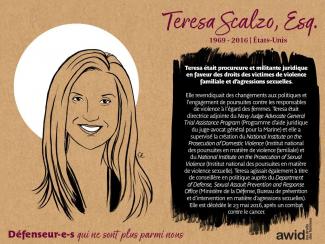
Teresa Scalzo, Esq.
Over the past few years, a troubling new trend at the international human rights level is being observed, where discourses on ‘protecting the family’ are being employed to defend violations committed against family members, to bolster and justify impunity, and to restrict equal rights within and to family life.
The campaign to "Protect the Family" is driven by ultra-conservative efforts to impose "traditional" and patriarchal interpretations of the family, and to move rights out of the hands of family members and into the institution of ‘the family’.
Since 2014, a group of states have been operating as a bloc in human rights spaces under the name “Group of Friends of the Family”, and resolutions on “Protection of the Family” have been successfully passed every year since 2014.
This agenda has spread beyond the Human Rights Council. We have seen regressive language on “the family” being introduced at the Commission on the Status of Women, and attempts made to introduce it in negotiations on the Sustainable Development Goals.
AWID works with partners and allies to jointly resist “Protection of the Family” and other regressive agendas, and to uphold the universality of human rights.
In response to the increased influence of regressive actors in human rights spaces, AWID joined allies to form the Observatory on the Universality of Rights (OURs). OURs is a collaborative project that monitors, analyzes, and shares information on anti-rights initiatives like “Protection of the Family”.
Rights at Risk, the first OURs report, charts a map of the actors making up the global anti-rights lobby, identifies their key discourses and strategies, and the effect they are having on our human rights.
The report outlines “Protection of the Family” as an agenda that has fostered collaboration across a broad range of regressive actors at the UN. It describes it as: “a strategic framework that houses “multiple patriarchal and anti-rights positions, where the framework, in turn, aims to justify and institutionalize these positions.”
กรุณาสมัครใหม่อีกครั้ง โลกได้เปลี่ยนไปจากปี 2564 และเราขอเชิญชวนให้คุณเสนอกิจกรรมที่ถ่ายทอดความจริงและสิ่งที่คุณให้ความสำคัญในปัจจุบัน
Nous vous conseillons de demander conseil à un-e avocat-e, de communiquer avec un refuge pour femmes ou un centre d’accueil près de chez vous.
Les HotPeachPages, une ressource en ligne, contiennent des liens vers les refuges pour femmes dans le monde entier. L’AWID ne peut garantir l’exactitude ou la qualité de ces listes, mais elles peuvent constituer un bon point de départ si vous ne connaissez aucune organisation près de chez vous.
Facebook: @AWIDWomensRights
Instagram: @awidwomensrights
Twitter ENG: @awid
LinkedIn: Association for Women's Rights in Development (AWID)
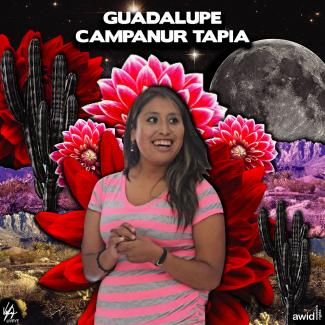
Guadalupe was an environmental activist involved in the fight against crime in Cherán, Mexico.
Guadalupe helped to overthrow the local government in April 2011 and participated in local security patrols including those in municipal forests. She was among the Indigenous leaders of Cherán, who called on people to defend their forests against illegal and merciless logging. Her work for seniors, children, and workers made her an icon in her community.
She was killed in Chilchota, Mexico about 30 kilometers north of her hometown of Cherá.
Follow-up International Conference on Financing for Development, Doha, Qatar
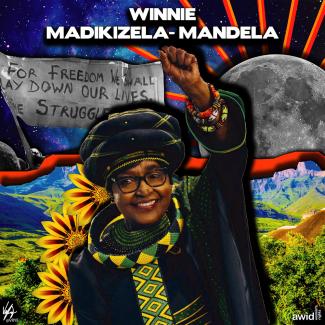
A Winnie la han descripto como una «militante agitadora» que luchó contra el régimen del apartheid en Sudáfrica.
Fue encarcelada numerosas veces y en varias ocasiones fue encerrada en celdas de aislamiento. Ma’Winnie, como la recuerdan afectuosamente, era conocida por hablar abiertamente sobre los desafíos que las mujeres negras enfrentaron durante y después del apartheid, habiendo sido ella misma sometida a esas brutalidades como madre, esposa y activista durante la lucha. Fue más allá del concepto erróneo que sostiene que el liderazgo está basado en el género, la clase o la raza. A pesar de haber sido una figura controvertida, es recordada por muchxs por su nombre en xhosa, «Nomzamo», que significa «la que soporta las pruebas».
Ma’Winnie sigue siendo una inspiración para muchxs, especialmente las jóvenes sudafricanas.
Su muerte incentivó un creciente movimiento bajo el lema: «Ella no murió, se multiplicó».
Día 2
Octubre de 2014: Inicio del proceso preparatorio intergubernamental para la tercera Conferencia Internacional sobre la Financiación para el Desarrollo
COZINHA OCUPAÇÃO 9 DE JULHO
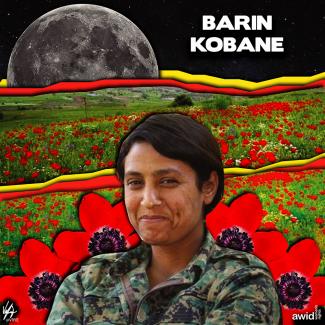
Barin était membre de l’unité de combat exclusivement féminine des Unités de protection du peuple kurde (YPG).
Elle a été tuée alors qu’elle était en service actif.
La journaliste libanaise Hifaa Zuaiter a écrit : « Barin représente tout ce que nous avons entendu à propos du courage des femmes kurdes et sa mort représente bien plus que le meurtre d’un-e rival-e ou une perte résultant d’une lutte politique ou ethnique. L’exhibition monstrueuse de sa dépouille par un groupe de rebelles syriens provient du fait qu’en tant que femme combattant sur un champ de bataille réservé aux hommes, elle a osé menacer l’hégémonie masculine ».