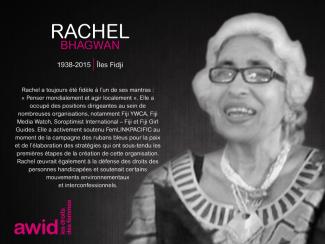
Rachel Bhagwan
Over the past few years, a troubling new trend at the international human rights level is being observed, where discourses on ‘protecting the family’ are being employed to defend violations committed against family members, to bolster and justify impunity, and to restrict equal rights within and to family life.
The campaign to "Protect the Family" is driven by ultra-conservative efforts to impose "traditional" and patriarchal interpretations of the family, and to move rights out of the hands of family members and into the institution of ‘the family’.
Since 2014, a group of states have been operating as a bloc in human rights spaces under the name “Group of Friends of the Family”, and resolutions on “Protection of the Family” have been successfully passed every year since 2014.
This agenda has spread beyond the Human Rights Council. We have seen regressive language on “the family” being introduced at the Commission on the Status of Women, and attempts made to introduce it in negotiations on the Sustainable Development Goals.
AWID works with partners and allies to jointly resist “Protection of the Family” and other regressive agendas, and to uphold the universality of human rights.
In response to the increased influence of regressive actors in human rights spaces, AWID joined allies to form the Observatory on the Universality of Rights (OURs). OURs is a collaborative project that monitors, analyzes, and shares information on anti-rights initiatives like “Protection of the Family”.
Rights at Risk, the first OURs report, charts a map of the actors making up the global anti-rights lobby, identifies their key discourses and strategies, and the effect they are having on our human rights.
The report outlines “Protection of the Family” as an agenda that has fostered collaboration across a broad range of regressive actors at the UN. It describes it as: “a strategic framework that houses “multiple patriarchal and anti-rights positions, where the framework, in turn, aims to justify and institutionalize these positions.”
We are in communication with regional, thematic and funder convenings planned for 2023-2024, to ensure flow of conversations and connections. If you are organizing an event and would like to make a connection to the AWID Forum, please get in touch with us!
Vous souhaitez vous rassembler pour renforcer les résistances ? Cette méthodologie de formation propose des exercices de groupes qui renforcent les connaissances et le pouvoir du collectif, avec des adaptations pour répondre à vos besoins.
Our funder database is currently under revision. We know feminists still need and deserve more and better resources!
Please join our mailing list to stay informe about this update.
You can also become a member and find and create connections with feminists around the world.
Our collective power, wisdom, and commitment have no boundaries, but our bank accounts do.
Data snapshots are based on the responses of 1,174 feminist, women’s rights, LGBTQI+, and allied organizations (hereafter referred to as “feminist and women's rights organizations”) from 128 countries to the Where is the Money for Feminist Organizing? survey. These snapshots reflect experiences from 2021–2023, analyzed in the context of defunding trends unfolding in 2024–2025.
Here’s what you need to know about the current state of resourcing for feminist organizing.
Le financement du développement est, pour les droits des femmes et les droits humains de toutes et tous, un champ qui comporte des menaces et des possibilités spécifiques. Le financement du développement et des politiques à visées transformatrices peut être un facteur déterminant dans la mise en œuvre des changements systémiques nécessaires pour garantir le respect, la protection et la réalisation des droits humains des femmes.
L’année 2015 est une année importante pour le processus sur le FdD. La troisième Conférence internationale sur le FdD (site en anglais) a eu lieu du 13 au 16 juillet à Addis Abeba, en Éthiopie. En outre, les gouvernements mettent actuellement la dernière main au programme de développement pour l'après-2015 et notamment aux accords qui détermineront les modalités de financement des nouveaux objectifs pour le développement durable.
L’étape actuelle du processus sur le FdD est une occasion importante pour définir un cadre de financement susceptible de garantir le financement efficace de la mise en œuvre du programme de développement de l’après-2015 et des Objectifs pour le développement durable (ODD). Elle pourrait également permettre d’aborder les conditions structurelles et les changements systémiques nécessaires à la pleine réalisation d’autres priorités et engagements, tels que les conventions sur les droits humains et le Programme d'action de Beijing.
Au cours de ces treize dernières années, les organisations féministes et de défense des droits des femmes se sont résolument engagées dans le processus sur le FdD.
Tan pronto como podamos, compartiremos información sobre el programa, los espacios y la forma en que todo el mundo puede participar en su construcción, en camino hacia el Foro y durante el Foro. Sigue con atención las actualizaciones.
Alors que le capitalisme hétéropatriarcal s’acharne à nous contraindre au consumérisme et à la conformité, nous constatons que nos luttes sont cloisonnées et séparées par des frontières aussi bien physiques que virtuelles.
Avec les défis supplémentaires d’une pandémie mondiale à surmonter, cette stratégie du « diviser pour mieux régner » a favorisé l’expansion de l’exploitation dans de nombreux domaines.
Malgré tout, du 1er au 30 septembre 2021, le festival Crear | Résister | Transform : un festival dédié aux mouvements féministes ! de l’AWID nous a emmené·e·s à la découverte de ce que cela signifiait d’incarner nos réalités dans des espaces virtuels. Lors du festival, des activistes féministes du monde entier se sont réuni·e·s non seulement pour partager des expériences de libertés, de résistances et de solidarités transfrontalières durement gagnées, mais aussi pour exprimer ce à quoi pourrait ressembler une forme transnationale d’unité.
C’est précisément cette unité qui a le potentiel de dépasser les frontières, permettant de tisser une vision de l’avenir qui est transformatrice parce qu’abolitionniste et anticapitaliste. À travers des infrastructures numériques que nous avons investies avec notre queerness, notre résistance et nos imaginaires, le festival a présenté un moyen de se détourner des systèmes qui nous rendent complices de l’oppression des autres et de nous-mêmes.
Si Audre Lorde nous a appris que « les outils du maître ne détruiront jamais la maison du maître », Sara Ahmed nous a montré en revanche que nous pouvons en faire mauvais usage. Le fait d’avoir à créer un espace de rassemblement, en dépit de toutes les autres contraintes pesant sur nos emplois du temps, nous a permis d’imaginer une façon de rompre avec la réalité du capitalisme hétéropatriarcal.
Maintenant, si nous comprenons le rassemblement comme une forme de plaisir, il devient alors possible de faire le lien entre le plaisir transgressif et la résistance transnationale/transdigitale; entre les types de plaisir qui bousculent les frontières d’une part, et la queerness, la théâtralité, la lutte pour la terre et les autochtones, l’anticapitalisme et l’organisation anticoloniale d’autre part.
La présente édition a tenté de donner une idée de la manière dont l’exercice de rassemblement du festival a revêtu de multiples formes et imaginations. Au-delà des collaborations directes avec certain·e·s de ses orateurices et rêveur·se·s, nous avons fait appel à une pléthore d’autres voix du Sud mondial pour aborder plusieurs de ces sujets et thématiques. Vous trouverez ci-dessous une carte de certains des panels du festival qui nous ont le plus inspiré·e·s.
Le Forum a été un espace clé pour le Mouvement des femmes autochtones (Indigenous Women’s Movement, IWM) dans son rapport au féminisme. Aux Forums de l’AWID, elles ont appliqué la même stratégie que celle utilisée pour les Nations Unies. Au cours de ce processus, les deux mouvements ont été transformés : de nouvelles voix et questions ont émergé au sein de l’IWM, et les féministes ont commencé à changer leurs discours et leurs pratiques autour des droits fonciers et de la spiritualité, elles ont mieux compris les droits collectifs et ont inclus l’IWM dans leurs événements et leurs programmes. Mónica Alemán et María Manuela Sequeira, de l’IWM, nous ont raconté cette histoire.
Where frontline organizers lead and corporations are held accountable.
📅 Tuesday, November 11, 2025
📍 Online and at the Universidade Federal do Pará, Belém
En caso de tener preguntas relacionadas con el Llamado a Proponer Actividades, por favor escríbenos utilizando nuestro formulario de contacto. Seleccione «llamado de actividad» como asunto de mensaje.

“My mission in life is not merely to survive, but to thrive; and to do so with some passion, some compassion, some humor, and some style.” - Maya Angelou
The AWID International Forum is both a global community event and a space of radical personal transformation. A one-of-a-kind convening, the Forum brings together feminist, women’s rights, gender justice, LBTQI+ and allied movements, in all our diversity and humanity, to connect, heal and thrive. The Forum is a place where Global South feminists and historically marginalized communities take center stage, strategizing with each other and allied movements, funders and policy-makers, in order to shift power, make alliances, and usher in a different, better world.
When people come together on a global scale, as individuals and movements, we generate a sweeping force. Join us in Bangkok, Thailand in 2024. Come dance, sing, dream and rise with us.
When: 2–5 December 2024
Where: Bangkok, Thailand; and online
Who: Approximately 2,500 feminists from all over the world participating in-person, and 3,000 participating virtually
Learn more about the forum:
Read our Frequently Asked Questions
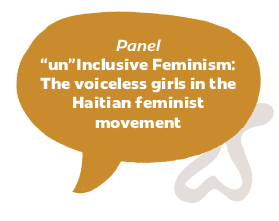
with Naike Ledan and Fédorah Pierre-Louis.

Les agradecemos su interés por visitar el sitio web de AWID. Para obtener más información sobre nuestro trabajo, visiten https://www.awid.org/es
Mientras les líderes se reúnen en Brasil, es fundamental que los movimientos feministas, sobre todo los de la mayoría global, contemos con espacios autónomos para encontrarnos, elaborar estrategias y trastocar.
En estos nodos interpelamos el elitismo de las conversaciones sobre el clima, nos centramos en las vivencias y apuntamos a construir el poder colectivo más allá de las fronteras. Se ofrece un contrapeso crítico a las negociaciones internacionales jerárquicas y a menudo excluyentes. En los nodos buscamos promover las soluciones nacidas de la comunidad, amplificar las demandas feministas y garantizar que los principios feministas de los cuidados y la solidaridad sean los que den forma a la agenda por el clima. No se trata únicamente de tener presencia en la COP30, se trata también de reconfigurar las conversaciones sobre la justicia climática en términos feministas.
Related Content
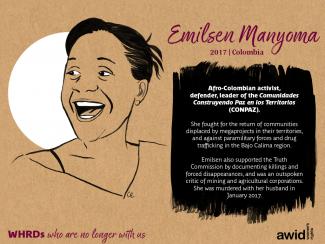
Front Line Defenders: Emilsen Manyoma Killed
ReliefWeb: A human rights defender killed every other day in 2017 in Colombia (between 1 and 23 January 2017)
Global Witness: Defenders of the Earth (2016 Report)
okayafrica.: Who is Killing Colombia's Black Human Rights Activists?
PBI Colombia: We will always accompany your work
Bitch Media: Don’t Touch My Crown: The failure of decapitation and the power of black women’s resistance
Esta información estará disponible recién cuando abramos el proceso de inscripción.
The Forum theme––Rising Together––is an invitation to engage with our whole selves, to connect with each other in focused, caring and brave ways, so that we can feel the heartbeat of global movements and rise together to meet the challenges of these times.
Feminist, women’s rights, gender justice, LBTQI+ and allied movements around the world are at a critical juncture, facing a powerful backlash on previously-won rights and freedoms. Recent years have brought the rapid rise of authoritarianisms, the violent repression of civil society and criminalization of women and gender-diverse human rights defenders, escalating war and conflict in many parts of our world, the continued perpetuation of economic injustices, and the intersecting health, ecological and climate crises.
Our movements are reeling and, at the same time, seeking to build and maintain the strength and fortitude required for the work ahead. We can't do this work alone, in our silos. Connection and healing are essential to transforming persistent power imbalances and fault lines within our own movements. We must work and strategize in interconnected ways, so that we can thrive together. The AWID Forum fosters that vital ingredient of interconnectedness in the staying power, growth and transformative influence of feminist organizing globally.