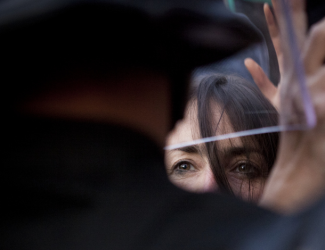
Philippe Leroyer | Flickr (CC BY-NC-ND 2.0)

Special Focus

AWID is an international, feminist, membership organisation committed to achieving gender equality, sustainable development and women’s human rights

Women Human Rights Defenders

WHRDs are self-identified women and lesbian, bisexual, transgender, queer and intersex (LBTQI) people and others who defend rights and are subject to gender-specific risks and threats due to their human rights work and/or as a direct consequence of their gender identity or sexual orientation.

WHRDs are subject to systematic violence and discrimination due to their identities and unyielding struggles for rights, equality and justice.

The WHRD Program collaborates with international and regional partners as well as the AWID membership to raise awareness about these risks and threats, advocate for feminist and holistic measures of protection and safety, and actively promote a culture of self-care and collective well being in our movements.


Risks and threats targeting WHRDs  

WHRDs are exposed to the same types of risks that all other defenders who defend human rights, communities, and the environment face. However, they are also exposed to gender-based violence and gender-specific risks because they challenge existing gender norms within their communities and societies.

By defending rights, WHRDs are at risk of:

  • Physical assault and death
  • Intimidation and harassment, including in online spaces
  • Judicial harassment and criminalization
  • Burnout

A collaborative, holistic approach to safety

We work collaboratively with international and regional networks and our membership

  • to raise awareness about human rights abuses and violations against WHRDs and the systemic violence and discrimination they experience
  • to strengthen protection mechanisms and ensure more effective and timely responses to WHRDs at risk

We work to promote a holistic approach to protection which includes:

  • emphasizing the importance of self-care and collective well being, and recognizing that what care and wellbeing mean may differ across cultures
  • documenting the violations targeting WHRDs using a feminist intersectional perspective;
  • promoting the social recognition and celebration of the work and resilience of WHRDs ; and
  • building civic spaces that are conducive to dismantling structural inequalities without restrictions or obstacles

Our Actions

We aim to contribute to a safer world for WHRDs, their families and communities. We believe that action for rights and justice should not put WHRDs at risk; it should be appreciated and celebrated.

  • Promoting collaboration and coordination among human rights and women’s rights organizations at the international level to  strengthen  responses concerning safety and wellbeing of WHRDs.

  • Supporting regional networks of WHRDs and their organizations, such as the Mesoamerican Initiative for WHRDs and the WHRD Middle East and North Africa  Coalition, in promoting and strengthening collective action for protection - emphasizing the establishment of solidarity and protection networks, the promotion of self-care, and advocacy and mobilization for the safety of WHRDs;

  • Increasing the visibility and recognition of  WHRDs and their struggles, as well as the risks that they encounter by documenting the attacks that they face, and researching, producing, and disseminating information on their struggles, strategies, and challenges:

  • Mobilizing urgent responses of international solidarity for WHRDs at risk through our international and regional networks, and our active membership.

Related Content

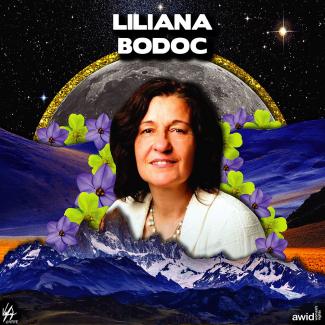
Liliana Bodoc

Liliana was a teacher, a weaver, and a well recognized writer from Argentina.

Her trilogy La saga de los confines received several awards and is unique in the fantasy genre for its use and re-imagining of South American Indigenous mythology.

Liliana’s commitment to feminism was expressed in the diverse, rich and strong women voices in her writing, and particularly in her extensive work for young readers. She also took public positions in favour of abortion, economic justice and gender parity.


Liliana Bodoc, Argentina

Snippet - WITM RESOURCES - AR

المصادر

(متوفرة باللغة الإنجليزية)

Feminist propositions: Glossary of terms

Capitalism:

An economic system in which production and consumption patterns are based on profit using privately owned capital goods and wage labour. The system builds on individual wealth and capital accumulation at the lowest cost to the investor, with little regard for the societal costs and exploitation of the workforce - both paid and unpaid.

Commodification of land:

The conversion of land and activities related to it (like agriculture) into commodities that can be bought or sold for profit.

International Financial Institutions (IFIs):

Institutions (like the World Bank, International Monetary Fund, or regional development banks) that provide loans to countries lacking sufficient money to cover funding shortfalls or to finance development projects. Historically, the lending policies of these institutions have been determined by economically powerful Western countries and private enterprises. Loans to low-income countries in particular typically include conditionalities that prompt economic reforms in these countries to support neo-liberalism.

Neoliberalism:

A set of economic and political theories in which market forces, rather than governments, determine key aspects of the economy with governments acting to support globalized markets and the interests of capital. Neo-liberal economic policies typically include promotion of free trade, privatisation, reduced government spending on social programs, subsidies and tax exemptions for business, deregulation of financial sector and foreign investments, low taxes on the wealthy and corporations, flexible labour and weak environmental protection.

Patriarchy:

Refers to systemic and institutionalized male domination embedded in and perpetuated by cultural, political, economic and social structures and ideologies. Hetero-patriarchy in addition, is a patriarchal system that is also based on the belief that heterosexuality is the only normal and acceptable sexual orientation.
Snippet FEA different lines of work S4 (FR)

Lignes de travail :

CONTRE

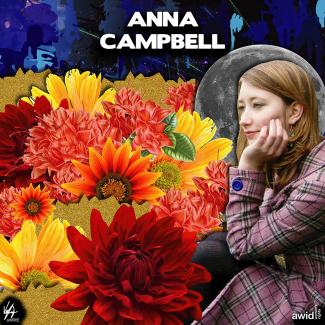
Anna Campbell (şehid Hêlîn Qerecox)

Anna creció en Lewes, Sussex (Reino Unido) y se mudó a Bristol, donde se hizo plomera, luego de decidir que no iba a continuar con su carrera de Inglés en la Universidad de Sheffield.

Dedicó mucho de su tiempo a defender a las personas marginadas y sin privilegios, a participar de marchas antifascistas y a ofrecer apoyo a las mujeres de la Granja Dale cuando estuvieron bajo amenaza de desalojo. Vegana y amante de los animales, participó en sabotajes a partidas de caza y su nombre es honrado en el Monumento «Árbol de la vida», de PETA. En mayo de 2017, Anna se trasladó a Rojava llevada por su fuerte compromiso con el empoderamiento de las mujeres, la plena representación de todas las identidades étnicas y la protección del ambiente.

Murió el 15 de marzo de 2018, al ser alcanzada durante un bombardeo aéreo de fuerzas turcas a la ciudad de Afrin, en el norte de Siria. Anna cayó combatiendo junto a las Unidades de Protección de las Mujeres (YPJ).


Anna Campbell (şehid Hêlîn Qerecox), UK
Main image
ours web tile.png
Body

على من يجب تعبئة الاستطلاع؟

المجموعات، المنظمات والحركات التي تعمل خصوصاً وبالأساس على حقوق النساء، حقوق الفتيات، العدالة الجندرية، حقوق مجتمعات الميم - عين وحلفائها/يفاتها في جميع المناطق وعلى جميع المستويات، إن كانت مجموعات جديدة أو قديمة.

Key opposition actors

We are witnessing an unprecedented level of engagement of anti-rights actors in international human rights spaces. To bolster their impact and amplify their voices, anti-rights actors increasingly engage in tactical alliance building across sectors, regional and national borders, and faiths.


This “unholy alliance” of traditionalist actors from Catholic, Evangelical, Mormon, Russian Orthodox and Muslim faith backgrounds have found common cause in a number of shared talking points and advocacy efforts attempting to push back against feminist and sexual rights gains at the international level.

Holy See

  • Key activities: As the government of the Roman Catholic Church, the “Holy See” uses its unique status as Permanent Observer state at the UN to lobby for conservative, patriarchal, and heteronormative notions of womanhood, gender identities and “the family”, and to propagate policies that are anti-abortion and -contraception  

  • Based in: Vatican City, Rome, Italy.

  • Religious affiliations: Catholic

  • Connections to other anti-rights actors: US Christian Right groups; interfaith orthodox alliances; Catholic CSOs

Organization of Islamic Cooperation (OIC)

  • Key activities: Self-described as the “collective voice of the Muslim world”, the OIC acts as a bloc of states in UN spaces. The OIC attempts to create loopholes in human rights protection through references to religion, culture, or national sovereignty; propagates the concept of the “traditional family”; and contributes to a parallel but restrictive human rights regime (e.g. the 1990 Cairo Declaration on Human Rights in Islam).

  • Based in: Jeddah, Saudi Arabia

  • Religious affiliations: Muslim

  • Connections to other anti-rights actors: Ultra conservative State missions to the UN, such as Russia

World Congress of Families

  • Key activities: International and regional conferences; research and knowledge-production and dissemination; lobbying at the United Nations “to defend life, faith and family”

  • Based in: Rockford, Illinois, U.S.

  • Religious affiliation: Predominantly Catholic and Christian Evangelical

  • Connections to other anti-rights actors: Sutherland Institute, a conservative think-tank; the Church of Latter-Day Saints; the Russian Orthodox Church’s Department of Family and Life; the anti-abortion Catholic Priests for Life; the Foundation for African Culture and Heritage; the Polish Federation of Pro-Life Movements; the European Federation of Catholic Family Associations; the UN NGO Committee on the Family; and the Political Network for Values; the Georgian Demographic Society; parliamentarians from Poland and Moldova, etc; FamilyPolicy; the Russian Institute for Strategic Studies; and HatzeOir; C-Fam; among others

Center for Family and Human Rights (C-Fam)

  • Key activities: Lobbying at the United Nations, particularly the Commission of the Status of Women to “defend life and family”; media and information-dissemination (Friday Fax newsletter); movement building; trainings for conservative activists

  • Based in: New York and Washington D.C., U.S.

  • Religious affiliations: Catholic

  • Connections to other anti-rights actors: International Youth Coalition; World Youth Alliance; Human Life International; the Holy See; coordinates the Civil Society for the Family; the Family Research Council (U.S.) and other Christian/Catholic anti-rights CSOs; United States CSW delegation

Family Watch International

  • Key activities: Lobbying in international human rights spaces for “the family” and anti-LGBTQ and anti-CSE policies; training of civil society and state delegates (for example, ‘The Resource Guide to UN Consensus Language on Family Issues’); information dissemination; knowledge production and analysis; online campaigns

  • Based in: Gilbert, Arizona, U.S.

  • Religious affiliations: Mormon

  • Connections to other anti-rights actors: leader of the UN Family Rights Caucus; C-Fam; Jews Offering New Alternatives to Homosexuality (JONAH); the National Association for Research and Therapy of Homosexuality (NARTH); World Congress of Families; CitizenGo; Magdalen Institute; Asociación La Familia Importa; Group of Friends of the Family (25 state bloc)

World Youth Alliance

  • Key activities: Advocacy in international policy spaces including the United Nations, the European Union, and the Organization of American States for “the family”, against sexual and reproductive rights; training youth members in the use of diplomacy and negotiation, international relations, grassroots activities and message development; internship program to encourage youth participation in its work; regular Emerging Leaders Conference; knowledge production and dissemination

  • Based in: New York City (U.S.) with regional chapter offices in Nairobi (Kenya), Quezon City (The Philippines), Brussels (Belgium), Mexico City (Mexico), and Beirut (Lebanon)

  • Religious affiliations: primarily Catholic but aims for interfaith membership

  • Connections to other anti-rights actors: C-Fam; Human Life International; the Holy See; Campaign Life coalition

Russian Orthodox Church

  • Key Activities: The Russian Orthodox Church (ROC), capitalizing on its close links to the Russian state, has operated as a “norm entrepreneur” in human rights debates.  Russia and the ROC have co-opted rights language to push for a focus on “morality” and “traditional values”  as supposed key sources of human rights.  Russia led a series of “traditional values” resolutions at the Human Rights Council and has been at the forefront of putting forward hostile amendments to progressive resolutions in areas including maternal mortality, protection of civil society space, and the right to peaceful protest.

  • Connections to other anti-rights actors: Organization of Islamic Cooperation; Eastern European and Caucasus Orthodox churches, e.g. Georgian Orthodox Church; U.S. Christian Right including U.S. Evangelicals; World Congress of Families; Group of Friends of the Family (state bloc)


Other Chapters

Read the full report

Snippet FEA Wage Parity (EN)

Illustration of two a pair of white-skinned people in glasses, to the left in the background is a mand and to the right at the forefront is a woman. The background is turquoise.

WAGE PARITY

Reason to join 2

Find and create connections. There are over 9,000 AWID members, all working to address complementary, interconnected issues. This diversity supports the sustainability of feminist movements and actors.

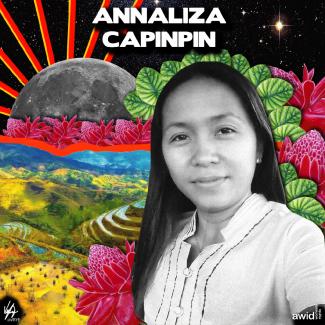
Annaliza Dinopol Gallardo Capinpin

Annaliza était la présidente du Conseil de réforme agraire des pionniers de Mindanao, un groupe de coordination de la ville de Tacurong, aux Philippines.

Mère aimée de quatre enfants, sa communauté se souvient d’Annaliza comme de « celle qui dirige quand personne ne veut diriger, qui parle quand personne ne veut parler, qui a eu le courage d'aider les bénéficiaires de la réforme agraire à acquérir des terres ».

Annaliza a été abattue par des assaillants inconnus devant l'Université d'État de Sultan Kudarat (SKSU) alors qu'elle se rendait au lycée national Salabaca à Esperanza.

Sa famille a déclaré : « Naghihintay pa rin kami ng hustisya para sa kanya » (nous attendons toujours que justice lui soit rendue).


Что подразумевается под внешним финансированием?

Внешнее финансирование включает гранты и другие формы финансирования от благотворительных фондов, правительств, двусторонних, многосторонних или корпоративных спонсоров и индивидуальных доноров – как внутри вашей страны, так и из-за рубежа. Сюда не входят ресурсы, которые группы, организации и/или движения генерируют самостоятельно, такие как, например, членские взносы, добровольные взносы "сотрудниц(-ков), участниц(-ков) и/или сторонниц(-ков), сборы через сообщество, сдача помещений в аренду или продажа услуг. Для удобства в опрос включены определения различных видов финансирования и краткие описания различных доноров.

Defendiendo nuestra tierra del poder corporativo

Estas industrias 'extraen' materias primas de la tierra: minería, gas, petróleo y madera son algunos ejemplos.

Este modelo económico explota desenfrenadamente la naturaleza e intensifica las desigualdades norte, donde sus grandes corporaciones se benefician y sur, de donde extraen los recursos.

Contaminación del agua, daño irreparable al medioambiente, comunidades forzadas a desplazarse son algunas de las consecuencias inmediatas.

Lee nuestro reporte de INDUSTRIAS EXTRACTIVAS

Hay alternativas sostenibles para el medioambiente y los derechos humanos de la mujer.


Descubre además cómo nos afecta económicamente

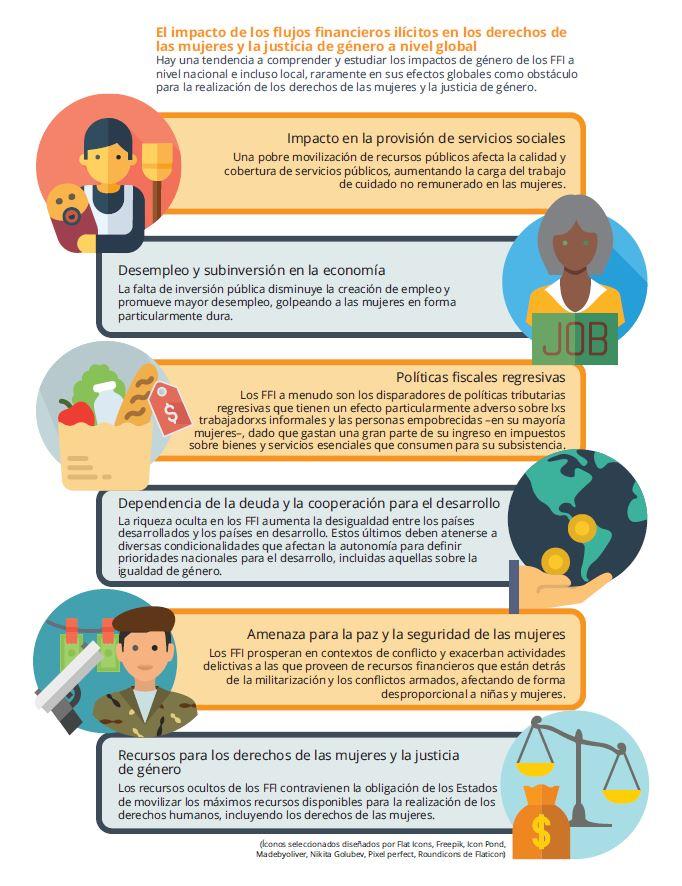
El impacto de los flujos financieros ilícitos en los derechos de las mujeres y la justicia de género a nivel global

Conoce qué son los FLUJOS FINANCIEROS ILÍCITOS

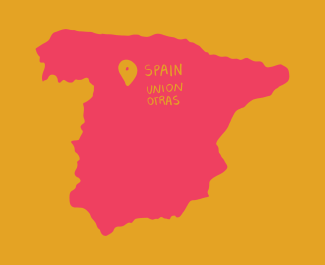
Snippet FEA Map of Spain Union Otras (ES)

Fondo mostaza con mapa de España en rosa y pin amarillo de la ubicación del Sindicato Otras;

Solidarity: membership why page

Solidaridad

Nos solidarizamos unxs con otrxs, y con las distintas luchas por la justicia y las libertades. Procuramos movilizar y fortalecer la acción colectiva, y practicamos formas significativas de trabajar en conjunto.