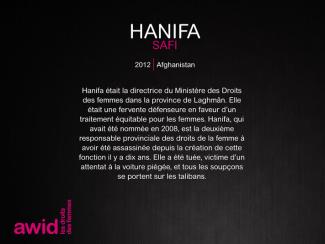
Sonia Pierre
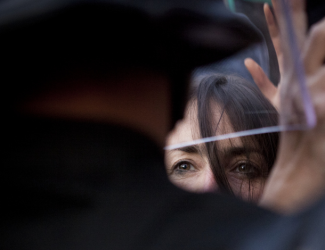
WHRDs are self-identified women and lesbian, bisexual, transgender, queer and intersex (LBTQI) people and others who defend rights and are subject to gender-specific risks and threats due to their human rights work and/or as a direct consequence of their gender identity or sexual orientation.
WHRDs are subject to systematic violence and discrimination due to their identities and unyielding struggles for rights, equality and justice.
The WHRD Program collaborates with international and regional partners as well as the AWID membership to raise awareness about these risks and threats, advocate for feminist and holistic measures of protection and safety, and actively promote a culture of self-care and collective well being in our movements.
WHRDs are exposed to the same types of risks that all other defenders who defend human rights, communities, and the environment face. However, they are also exposed to gender-based violence and gender-specific risks because they challenge existing gender norms within their communities and societies.
We work collaboratively with international and regional networks and our membership
We aim to contribute to a safer world for WHRDs, their families and communities. We believe that action for rights and justice should not put WHRDs at risk; it should be appreciated and celebrated.
Promoting collaboration and coordination among human rights and women’s rights organizations at the international level to strengthen responses concerning safety and wellbeing of WHRDs.
Supporting regional networks of WHRDs and their organizations, such as the Mesoamerican Initiative for WHRDs and the WHRD Middle East and North Africa Coalition, in promoting and strengthening collective action for protection - emphasizing the establishment of solidarity and protection networks, the promotion of self-care, and advocacy and mobilization for the safety of WHRDs;
Increasing the visibility and recognition of WHRDs and their struggles, as well as the risks that they encounter by documenting the attacks that they face, and researching, producing, and disseminating information on their struggles, strategies, and challenges:
Mobilizing urgent responses of international solidarity for WHRDs at risk through our international and regional networks, and our active membership.
Juhi est passionnée de technologie, titulaire d'une licence en génie informatique de l'Université Technologique du Gujarat et d'une formation de troisième cycle en télécommunications sans fil et en gestion de projet du Humber College. Passionnée par la résolution de problèmes et aimant garder une longueur d'avance dans un paysage technologique en constante évolution, Juhi s'est retrouvée à naviguer dans divers secteurs en tant que technicienne informatique. Grâce à l'environnement stimulant de la School Board, Juhi a eu l'occasion d'appliquer ses compétences techniques dans divers contextes, relevant toujours de nouveaux défis avec enthousiasme. Au-delà du code et des circuits, Juhi aime les aventures de la vie. Explorer de nouveaux lieux et cultures constitue pour elle une bouffée d’air frais. Qu'il s'agisse de découvrir des trésors cachés de la ville, d'essayer des cuisines exotiques ou de se lancer dans des sports d'aventure palpitants, Juhi est toujours partante pour de nouvelles expériences.

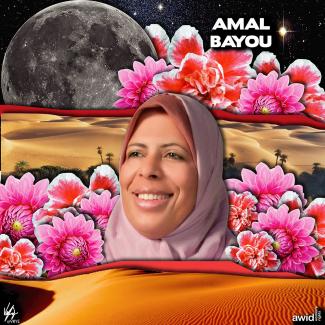
Amal était une femme politique et une parlementaire de premier plan en Libye.
Membre du corps professoral de l'Université de Benghazi de 1995 jusqu’à sa mort en 2017, elle militait par ailleurs au sein de la société civile et était membre de diverses initiatives sociales et politiques. Elle a aidé les familles des martyrs et des disparus et a été l'une des membres fondateurs-trices d'une initiative de jeunesse intitulée « Jeunesse de Benghazi en Libye ».
Lors des élections législatives de 2014, Amal avait été élue à la Chambre des représentants avec plus de 14 000 voix (le plus grand nombre de voix jamais obtenues aux élections de 2014). Amal restera dans les mémoires de beaucoup comme une femme politique qui a œuvré pour assurer un avenir meilleur dans l'un des contextes les plus difficiles et les plus conflictuels de la région.
Faites partie d’une organisation et d’une communauté internationales, associatives et féministes. Nos membres sont établi·e·s dans toutes les régions du monde; iels apprennent les un·e·s des autres et se soutiennent mutuellement dans un réseau mondial fondé sur la solidarité.
Jessica is a queer artist- activist from Toronto, Canada, but is currently based in Bulgaria. Jessica has over 15 years experience in the HIV response working at the intersections of gender and HIV with key populations (sex workers, women who use drugs, LGBTQI communities, incarcerated people and of course people living with HIV). Jessica loves movement building and thinking/taking/strategizing about arts-based interventions. One fun project she started in 2013 was LOVE POSITIVE WOMEN that engages over 125 community groups and organizations globally every February 1-14th to celebrate women living with HIV in their communities.
Sim, é acessível para pessoas com uma variedade diversificada de capacidades auditivas, de movimento, visuais e cognitivas.
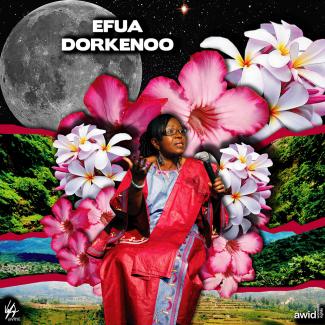
Affectionately known as “Mama Efua”, her work to end Female Genital Mutilation (FGM) movement spanned three decades and helped bring international attention and action to end this harmful practice.
In 1983 Efua co-founded FORWARD (The Foundation for Women’s Health, Research and Development), which became a leading organisation in the battle to raise awareness about FGM. Her 1994 book, “Cutting the Rose: Female Genital Mutilation,” is considered the first on FGM and, featured in Columbia University’s “Africa’s 100 Best Books for the 20th Century”.
Originally from Ghana and a nurse by training, Efua joined the WHO in 1995 and successfully pushed for FGM to go on the agendas of WHO member states. She also worked closely with the Nigerian government in formulating a comprehensive National Policy that laid the groundwork for Nigeria’s anti-FGM laws, still in place today.
Her ground breaking work culminated in an Africa-led campaign, “The Girl Generation,” which is committed to ending FGM within a generation. Efua demonstrated how one person can become the unifying voice for a movement, and her wise words - “shared identity can help bring activists from different backgrounds together with a common sense of purpose” – are more relevant than ever.
We take a position in solidarity with each other and diverse struggles for justice and freedoms. We strive to mobilize and strengthen collective action and practice meaningful ways of working with each other.
Ȃurea Mouzinho es una activista feminista por la justicia económica de Luanda, Angola, que tiene una carrera de diez años en investigación, otorgamiento de subvenciones, incidencia y construcción de movimientos por los derechos de las mujeres y la justicia económica en toda África y en el Sur global. Actualmente es Directora de Programa para África en Thousand Currents, y es parte del consejo editorial de Feminist Africa. También integra Ondjango Feminista, una colectiva feminista que cofundó en 2016. Recientemente ha sido madre de un niño de Géminis, y disfruta los días tranquilos con su joven familia y los largos paseos por la playa. Ocasionalmente publica tweets con el nombre de usuarie @kitondowe.
الوقت المقدّر لتعبئة الاستطلاع هو 30 دقيقة.
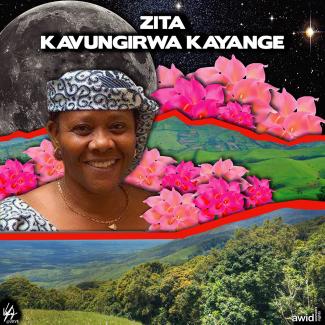
Zita fue una activista por los derechos de las mujeres que defendió los derechos de las mujeres rurales en el Gran Kivu.
Fue la primera directora ejecutiva de UWAKI, una organización de mujeres muy conocida. A través de su trabajo con la Red de Mujeres por los Derechos y la Paz (RFDP) y el Foro de Mujeres por la Paz de Kivu del Sur, dedicó su vida a ayudar a restablecer la paz en la zona oriental de la República Democrática del Congo. Se manifestó firmemente en contra del uso de la violencia sexual como arma de guerra.
En 2006, se propuso como candidata en las primeras elecciones democráticas del país. Aunque no ganó, siguió defendiendo los derechos de las mujeres y la comunidad de Kivu del Sur la recuerda con cariño.
Trabajamos por un mundo basado en la justicia social, ambiental y económica; y por la interdependencia, la solidaridad y el respeto. Trabajamos para desmantelar los sistemas de poder opresivo y contra todas sus manifestaciones, incluidos el patriarcado, los fundamentalismos, los militarismos, los fascismos y el poder corporativo que amenazan nuestras vidas y nuestro mundo. Queremos un mundo justo en el que los recursos y el poder sean compartidos en formas que permitan que todas las personas prosperen.
A nomad of cultures, born in Hong Kong, rooted in Turkish-Pakistani heritage, Fatima’s love for narratives - both in reading and co-creating them - fueled her passion for communications activism. Supported by her education in journalism, Fatima has worked for 7 years in digital and media communications fields with NGOs that provide education opportunities and legal aid to refugee and asylum seekers, as well as with the Muslim feminist movement which applies feminist and rights-based lenses in understanding and searching for equality and justice within Muslim legal tradition. She is a regular op-ed writer on feminist issues in the Global South.
Through storytelling in this hyper-digital age of social media, Fatima continues to collaborate with community organizers and grassroots activists to create audiovisual content with the aim to cultivate bridges of understanding towards collective liberation and decolonization. On days when she’s not working, she intently watches independent feminist films coming from Iran, Morocco and Pakistan and on other days, she performs spoken word poetry with her comrades in Kuala Lumpur.