Organizing creatively, facing an increasing threat
Young feminist activists play a critical role in women’s rights organizations and movements worldwide by bringing up new issues that feminists face today. Their strength, creativity and adaptability are vital to the sustainability of feminist organizing.
At the same time, they face specific impediments to their activism such as limited access to funding and support, lack of capacity-building opportunities, and a significant increase of attacks on young women human rights defenders. This creates a lack of visibility that makes more difficult their inclusion and effective participation within women’s rights movements.
A multigenerational approach
AWID’s young feminist activism program was created to make sure the voices of young women are heard and reflected in feminist discourse. We want to ensure that young feminists have better access to funding, capacity-building opportunities and international processes. In addition to supporting young feminists directly, we are also working with women’s rights activists of all ages on practical models and strategies for effective multigenerational organizing.
Our Actions
We want young feminist activists to play a role in decision-making affecting their rights by:
Fostering community and sharing information through the Young Feminist Wire. Recognizing the importance of online media for the work of young feminists, our team launched the Young Feminist Wire in May 2010 to share information, build capacity through online webinars and e-discussions, and encourage community building.
Researching and building knowledge on young feminist activism, to increase the visibility and impact of young feminist activism within and across women’s rights movements and other key actors such as donors.
Promoting more effective multigenerational organizing, exploring better ways to work together.
Supporting young feminists to engage in global development processes such as those within the United Nations
Collaboration across all of AWID’s priority areas, including the Forum, to ensure young feminists’ key contributions, perspectives, needs and activism are reflected in debates, policies and programs affecting them.
Related Content
FRMag - United against violence (FR)
Ensemble contre la violence
par Karina Ocampo
C’est dans un recoin caché du Chiapas, au Mexique, que nous sommes arrivées, femmes et dissidentes sexuelles, pour organiser nos actions. (...)
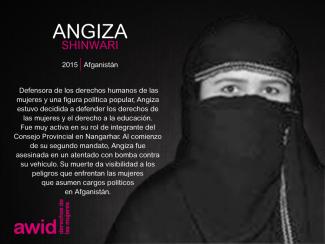
"No era una persona. Era una potencia". - Así recuerda unx compañerx activista a Navleen Kumar.
Nacida el 15 de octubre de 1994, Navleen Kumar fue una ferviente activista por el derecho a la tierra y la justicia social de la India.
Con integridad y compromiso, trabajó durante más de una década para proteger y restaurar las tierras de los pueblos indígenas (adivasi) en el distrito de Thane, un área arrebatada por los propietarios y promotores inmobiliarios a través de medios como la coerción y la intimidación. Luchó contra esta injusticia y estos crímenes a través de intervenciones legales en diferentes tribunales, y descubrió que la manipulación de los registros de las tierras era una característica recurrente en la mayoría de los casos de adquisición de terrenos. En uno de los casos, el de los Wartha (una familia tribal), Navleen descubrió que la familia había sido engañada con la complicidad de funcionarixs gubernamentales.
Así, a través de su trabajo, ayudó a restituir la tierra a la familia Wartha, y siguió dedicándose a otros casos de transferencias de tierras adivasi.
"Su artículo sobre el impacto de la alienación de la tierra en las mujeres y las niñas y niños adivasi traza la historia y las complejidades de la alienación tribal desde la década de los 70, cuando las familias de clase media comenzaron a trasladarse a los suburbios de Mumbai, que se extendían mientras el valor de la propiedad en la ciudad aumentaba de forma exponencial.
Los complejos de viviendas proliferaron en estos suburbios, y lxs integrantes de las comunidades tribales, que eran analfabetxs, pagaron el precio por ello. El costo de las tierras de primera, cerca de las líneas de ferrocarril, alcanzó un precio elevado y los constructores se abalanzaron sobre este cinturón como buitres, arrebatando de forma ilegal las tierras a las comunidades tribales y otrxs residentes locales ". - Jaya Menon, Comisión de Justicia y Paz.
Durante el curso de su activismo, Navleen recibió numerosas amenazas y sobrevivió a varios atentados contra su vida. A pesar de ello, siguió trabajando no sólo en lo que era importante para ella, sino que además contribuyó a cambiar la vida y la realidad de las muchas personas a las que apoyó en su lucha por la justicia social.
Navleen murió apuñalada el 19 de junio de 2002 en su edificio de departamentos. Dos gánsteres locales fueron arrestados por su asesinato.
Pourquoi l’AWID a-t-elle choisi de tenir le Forum à Taipei ?
Les recherches à distance et les consultations menées auprès de nos allié·e·s nous ont permis d’éliminer plusieurs options de la région.
Nous avons ensuite organisé une série complète de visites au Népal, en Malaisie, au Sri Lanka, en Thaïlande, en Indonésie et (plus tard) à Taïwan. Sur place, chaque visite comprenait non seulement un examen de l’infrastructure logistique, mais aussi des réunions avec des activistes et des groupes féministes locales·aux afin de mieux comprendre la situation et leur analyse des risques et opportunités potentielles quant à un Forum de l’AWID dans leur contexte.
Durant nos visites sur place, nous avons rencontré de formidables mouvements féministes locaux, divers et dynamiques.
Ils ont souvent exprimé des sentiments partagés entre risques et opportunités liées à la visibilité apportée par un événement comme le Forum. Durant l’une des réunions, les activistes présent·e·s soulignèrent à l'unanimité, au cours des 30 premières minutes, que le Forum de l’AWID pouvait entraîner de nombreux contrecoups, que les droits LGBTQ étaient un sujet politique particulièrement sensible et que les groupes fondamentalistes chercheraient de toutes leurs forces à interrompre l’événement. Lorsque nous répliquâmes « ok, donc vous ne pensez pas que ce soit une bonne idée », leur réponse également unanime fut « bien sûr que si, nous voulons changer les récits !».
Il était difficile d’entendre et de voir dans certains endroits le nombre d’activistes féministes qui voulaient utiliser l’opportunité de visibilité d’un tel événement comme levier, prêt·e·s à faire face aux risques locaux ; mais l’accueil de près de 2000 personnes venues du monde entier nécessitait de prendre en compte d’autres calculs de risque et de faisabilité.
Nous avons également débattu de questions sur ce qu’implique l’organisation d’un forum féministe en cohérence avec les principes d’inclusion, de réciprocité et d’autodétermination, là où les politiques et les pratiques étatiques vont généralement à leur encontre (même si les représentant·e·s des Ministères du Tourisme ont tenté ardemment de concilier ce point).
Nous avons pris en considération l’infrastructure au regard des opportunités éventuelles permettant d’insuffler un élan pour certaines priorités féministes nationales, ainsi que le contexte politique du pays.
Dans beaucoup d’endroits, suivre le contexte donnait des impressions de balancier pouvant pencher vers l’ouverture et la sécurité des débats féministes à un moment donné, et vers la répression totale et la xénophobie l’instant d’après, sacrifiant les priorités féministes dans les négociations politiques cherchant à apaiser l’extrême droite ou les forces anti-droits.
Ce processus a donné lieu à des réflexions sur le contexte extrêmement difficile pour l’activisme des droits des femmes et de la justice de genre au niveau mondial.
Les défis de la région Asie-Pacifique nous ont amené à nous demander : ne serait-ce pas plus simple de tenir le Forum dans une autre région ?
Pour autant, nous ne pourrions aujourd’hui organiser un Forum de l’AWID à Istanbul comme nous l’avions fait en 2012, ou au Brésil comme en 2016.
Malgré toute cette complexité, l’AWID a finalement choisi Taipei comme lieu de Forum car :
La ville offre un certain degré de stabilité et de sécurité aux divers·e·s participant·e·s du Forum que nous voulons rassembler.
Elle dispose aussi de capacités logistiques importantes, en plus d’être accessible pour beaucoup de voyageurs·ses (avec une facilitation de procédure de visa électronique pour les conférences internationales).
Le mouvement féministe sur place est accueillant vis-à-vis du Forum et désire s’engager avec des féministes du monde entier.
L’organisation du Forum de l’AWID implique pour nous la création et la disposition d’un espace qui s’ajuste au mieux à une diversité de formes d’expression de solidarité, d’indignation, d’espoir et d’inspiration. Celles-ci sont au cœur de nos mouvements féministes.
Actuellement, Taipei nous semble donc être l’emplacement de la région Asie-Pacifique qui nous permet au mieux de bâtir un espace sécurisé et désobéissant pour notre communauté féministe mondiale.
Le fait est qu’il n’existe pas d’emplacement idéal dans le monde actuel pour tenir un Forum qui se concentre sur les Réalités féministes. Peu importe où nous irons, nous devrons construire cet espace ensemble !
We would like to thank the Amar.ela collective of women feminists activists and creatives who made this series possible, and especially Natalia Mallo (the team’s octopus) for her support and accompaniment throughout this journey.
We also extend our deepest gratitude and admiration to all the collectives and people who participated in this project, and we thank them for sharing their time, wisdom, dreams and hopes with us. We thank you for making this world a more just, feminist and sustainable one.
We hope the rest of the world will be as inspired by their stories as we are.
Snippet - Resources to rally - FR
Ressources à mobiliser en vue de la CSW69
FRMag - Esmeralda takes over the Internet
Esmeralda takes over the Internet : How social media has helped Romani women to reclaim visibility
by Émilie Herbert-Pontonnier
Remember Esmeralda? The exotic "Gypsy" heroine born under the pen of the French literary giant Victor Hugo and popularized by Disney studios with their Hunchback of Notre Dame. (...)
« Le privé est politique » - tel est le mantra féministe que personnifiait la fougueuse et courageuse Nadyn Jouny. Nadyn avait personnellement vécu la douleur de la violence structurelle des systèmes juridiques qui refusent aux femmes de jouir de leurs droits.
Lorsqu’elle décide de demander le divorce, les tribunaux religieux chiites – conformément aux lois relatives au statut personnel du Liban – lui refusent la garde de son jeune fils Karam. Comme tant d’autres femmes au Liban et d’autres pays, Nadyn s’est retrouvée dans la situation douloureuse et insoutenable de devoir abandonner ses droits sur son enfant pour pouvoir quitter une relation abusive et non voulue. Mais Nadyn s’est battue, jusqu’au dernier jour.
Elle s’est servie de ses compétences médiatiques pour devenir la voix de celles qui n’en ont pas dans leur combat contre un droit de la famille discriminant, tant au Liban qu’à l’étranger. Nadyn a cofondé le groupe autofinancé « Protecting Lebanese Women » (PLW) et s’est alliée à d’autres mères libanaises vivant des situations similaires. Ensemble, elles ont cherché à sensibiliser la société en manifestant pour leurs droits devant les tribunaux religieux et attirant l’attention des médias sur les très grandes injustices qu’elles subissaient.
Nadyn a également collaboré avec ABAAD – Resource Center for Gender Equality, une autre organisation libanaise pour les droits des femmes, à l’occasion de campagnes pour la défense des droits des femmes, l’égalité dans le droit de la famille et la garde des enfants, et contre le mariage forcé et précoce.
Nadyn a tragiquement perdu la vie dans un accident de voiture le 6 octobre 2019, alors qu’elle se rendait à une manifestation contre les augmentations de taxes injustifiées, dans un pays qui connaît déjà une crise financière croissante. Nadyn Jouny n’avait que 29 ans au moment de son décès.
Freeing the Church, Decolonizing the Bible for West Papuan Women
By Rode Wanimbo (@rodwan986), Jayapura, Papua Province of Indonesia
“Lord, we are unworthy. We are the ones who committed sin for Eve ate the fruit in Eden. We are just women who grow sweet potatoes, look after pigs and give birth to children. We believe you died on the cross to set us free. Thank you, In Jesus’s name Amen.”
This is a typical prayer of women I have heard during my visits to ministries in several villages. Even I said the same prayer for many years.
I was born and grew up in Agamua, the Central Highlands of West Papua. My father belongs to the Lani tribe and my mother comes from Walak.
In Lani and Walak languages - languages spoken in the Central Highlands - tiru means a pillar. There are four tiru (pillars) standing firmly in the middle of the Lani roundhouse (honai), around wun’awe or a furnace. Tiru is always made of the strongest type of wood called a’pe (ironwood tree). The longer the wood gets heated and smoked from the fire in the honai, the stronger it becomes. Without tiru, the honai cannot stand firm. West Papuan women are these tiru.
West Papua is located in the western part of the New Guinea island, containing some of the world’s highest mountains, densest jungle, and richest mineral resources. It is home to over 250 groups and has an incredible biodiversity. Due to its natural wealth, West Papua has, over the centuries, been targeted by foreign occupiers. Until 1963, we were colonized by the Dutch. However in 1969, after a manipulative political act, we were transferred from the Dutch to Indonesia.
The first German missionaries arrived in Mansinam Island, Manokwari, in 1855. Then, in the 1950s, Christianity was brought to the Central Highlands of West Papua by Protestant missionaries of European descent from America, Canada, Australia and New Zealand.
According to Scripture in Genesis 1: 26-27, Man and Woman are created in the image of God. It means all humanity is made with the call and capacity to exercise dominion. Radah, the Hebrew word for dominion, means stewardship. Radah is not a call to exercise imperial power as declared by Pope Nicolas V, granting Catholic nations the right to “discover” and claim dominion over non-Christian lands. To diminish the capacity of humans to exercise dominion, is to diminish the image of God on earth (Lisa Sharon Harper, The Very Good Gospel).
The Evangelical Church of Indonesia (GIDI) was established as an institution in 1963. In the Sunday Service liturgy of GIDI, Women are considered unworthy to take any responsibility except collecting offerings. In 2003, after 40 years, the Department of Women was introduced within the structure of the Synod leadership.
In November 2013, I was entrusted to be a chairperson of the Women’s Department of the GIDI Synod.
Together with several other women leaders, we started a cell group that is committed to “decolonizing the Bible.” We learn together how to reconstruct the interpretation of biblical texts to champion women.
A feminist theologian named Elisabeth S Florenza calls it a feminist hermeneutic theory (Josina Wospakrik, Biblical Interpretation and Marginalization of Woman in the Churches of West Papua).
Besides the cell group, we interview our elderly women to collect our ancestors’ wisdom and values. As Bernard Narakobi in his book The Melanesian Way said: “Our history did not begin with contact with the Western explorers. Our civilization did not start with the coming of the Christian missionaries. Because we have an ancient civilization. It is important for us to give proper dignity and place to our history”.
Yum is a knotted net or woven bag handmade from wood fiber or leaves. Yum is highly valued for it symbolizes life and hope. When women of Lani and Walak get married, our maternal aunts put yum on our heads. It means we bear the responsibility for giving life and for providing food. Yum is used to carry garden produce as well as being used as a container to put a baby to sleep in as it gives warmth and a sense of security.
“West Papuan Women are Yum and Tiru” became the prime references as we contextualized women in the eyes of Jesus Christ in seminar and focus group discussions. From 2013 to 2018, we focused on reconstructing the view of women in GIDI and in gaining a healthy self-image. We are still in the process of understanding who we are to Jesus, rather than who we have been told we are by theologians and the fathers of the early Churches. Josina Wospakrik, a West Papuan Theologian said “The Gospel is incredibly rich but it was impoverished due to human ambitions and agendas.”
Since 2018, the GIDI Women Leadership team and I have formulated four priority programs: Decolonizing the Bible, Storytelling in a circle, Training of trainers for Literacy and Gender. The fourth, supported simple bookkeeping and savings groups workshops facilitated by Yapelin and Yasumat, which are faith based organizations established by GIDI leaders to reach the economic, social and health needs of women in the communities.
Storytelling in a Circle
In this programme we create a safe space for women to talk - each woman has a story. We all sit together and learn how to be good listeners.
“I became Christian and was taught that the government is God’s representative. Why did the government do nothing when the army burnt down my village and killed my relatives?” asked one woman in the storytelling circle. “My aunt was raped.” She stopped for a while. Could not talk. She cried. We all did.
The process of storytelling has driven us into deep conversation. We began to contextualize Biblical texts within our daily realities.
We started asking questions amongst ourselves: Where is God in our toughest times? Does the state government truly represent God on earth? Why does the Creator allow privileged people to destroy His own image in the name of Christianity and Development? During the process, I realized that I have been reading the Bible using somebody else’s glasses.
The church has to be a safe place to share stories and be a place of comfort to be still and rest. As we reflect on the testimonies, those who tell their stories begin the process of recovering from wounds and trauma.
Financial Literacy for Women
Culturally, West Papuans invest in relationships. The concept of saving is understood as an investment in relations, not in a bank account. And while the Indonesian central government has granted special autonomy to respond to West Papuans’ demand for self-determination, many government policies harm the quality of family life and they do not account for women’s lives. High illiteracy rates amongst women mean most women do not have access to a bank account. With no money saved, access to medical services becomes a struggle.
Through the priority programmes, Yapelin, with the active involvement and support of women, created saving groups in Bokondini and Jayapura. The saving groups are chaired by women who have access to a bank.
In coordination with Yayasan Bethany Indonesia (YBI) and Yayasan Suluh, a faith-based organization (FBO) based in Jayapura, we facilitated four literacy workshops. The literacy team facilitated the training of trainers in three different dioceses: Merauke, Sentani, and Benawa. We now have 30 facilitators in different congregations who run literacy programs.
Lack of financial support for our programs will not stop us. Being stigmatized as rebels will not stop us from standing up and speaking in church evaluation meetings and conferences. It is stressful but I am committed together with several women leaders to calling on the power-holders within to free the church.
The Gospel known as Good News should become news that liberates women from a very patriarchal circle of power, liberates women from social stigma and returns women to the original purpose of The Creator.
The Gospel must be a mirror to reflect who we are collectively. As Lisa Sharon Harper, in her book The Very Good Gospel said “The Gospel is not only about an individual’s reconciliation with God, self and communities. But also speaks on systemic justice, peace between people groups and freedom for the oppressed”.
Rode Wanimbo is the chairperson of the Women’s Department of Evangelical Church of Indonesia (GIDI).
“Offerings for Black Life”
By Sokari Ekine (@blacklooks), New Orleans
Coming from a place of healing and self-care is a political act that guides us to be focused and to move as one. In New Orleans, we created and will be creating altars in honour of those murdered by police and white supremacists vigilantes!
Investissement à impact de genre et émergence de fausses solutions :
une analyse pour les mouvements féministes
L'investissement à impact de genre est désormais considéré comme une solution contre les inégalités de genre. Et pourtant, comme le montre notre rapport, il fait partie du problème. Les institutions publiques et privées en font la promotion en tant que moyen pour parvenir à l'égalité de genre et pour accroître les ressources des femmes et des filles.
Mais en aucun cas, ces affirmations ne sont étayées par des preuves.
Au contraire, l’investissement à impact de genre constitue plutôt une nouvelle version de vies et de sociétés soumises à une même logique financière, qui continue de façonner les profondes inégalités de notre monde.
Avec ce rapport, l'AWID offre aux lecteurs·rices - féministes, défenseur·euse·s de la justice de genre et autres parties prenantes de l'investissement à impact de genre - une analyse critique et des preuves étayées pour comprendre l’investissement à impact de genre, ses récits et les implications économiques et politiques qu’il a pour les mouvements féministes.
📅 Thursday, March 13, 2025
🕒 09.30-11.30am EST
🏢 Outright International Office, 17th Floor, 216 E 45th Street, New York
🎙️AWID speaker: Inna Michaeli, Co-Executive Director
Organizer: Outright International
FRMag - Let the invisible be visible
Hagamos que lo invisible sea visible: manifiesto de unx fisicoculturista de género fluido en Hong Kong
por Siufung Law
«¡97…! 98… ¿dónde está 98? ¡98! ¡Por favor, vuelve a la formación!... ¡99! ¡100!...» La dama detrás del escenario le pedía incesantemente a cada atleta que formara una fila en el espacio húmedo, transpirado y abarrotado detrás de escena. (...)
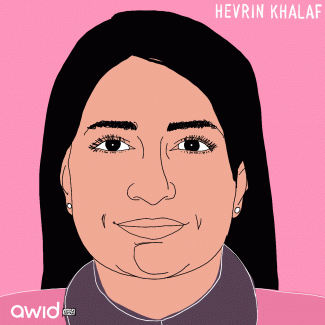
Hevrin Khalaf was a prominent Syrian Kurdish political leader in the autonomous region of Rojava where Kurdish women are risking their lives to resist the Turkish offensive and build a feminist system.
She was Secretary-General of the Future Syria Party (FSP), a group that aimed to build bridges, reconcile different ethnic groups and work towards a “democratic, pluralistic, and decentralized Syria.”
Hevrin was a symbol of this reconciliation effort. She also worked to promote equality between women and men and was a representative for visiting journalists, aid workers, and diplomats.
Hevrin was also a civil engineer from Derik, and was one of the founders of the Foundation for Science and Free Thought in 2012.
On 12 October 2019 she was tortured and murdered by the Turkish-backed militia, Ahrar al-Sharqiya during a military operation against Syrian Democratic Forces in Rojava.
“The killing of Khalaf is a turning point in Syria’s modern history. It once again demonstrated the old Kurdish proverb “no friends but the mountains.” I will always be a friend of Khalaf and her vision of a better world.” - Ahed Al Hendi
Principios de participación para el Festival
¡Bienvenidxs a Crear | Résister | Transform: un festival para movimientos feministas!
Principios de participación para el Festival
AWID está comprometida con la creación de un espacio virtual que nos invite y desafíe a todxs a funcionar desde un lugar de valentía, curiosidad, generosidad y responsabilidad compartida.
Te invitamos a crear conjuntamente con nosotrxs espacios libres de acoso y violencia, donde todas las personas sean respetadas en su identidad y expresión de género, raza, capacidad, clase, religión, idioma, etnia, edad, ocupación, tipo de educación, sexualidad, tamaño corporal y apariencia física. Espacios donde reconozcamos las desigualdades que prevalecen en nuestro mundo, y nos esforcemos por transformarlas.
Queremos crear un espacio donde:
podamos estar “presentes”:
Esto significa escucharnos, comprendernos y vincularnos. Sentirnos cerca, a pesar de la virtualidad. Para eso, contaremos con interpretación y abriremos canales (como el chat y otras herramientas) para reaccionar y compartir. Para lograr escucharnos mejor, les invitamos a utilizar audífonos o auriculares durante la sesión. Si puedes hacerlo, te sugerimos cerrar tus correos electrónicos y cualquier otra posible distracción mientras estás en la conversación.
todas las formas de conocimiento son valoradas:
Celebremos los distintos saberes y las múltiples formas en que estos se expresan. Nos acercamos al espacio con curiosidad y apertura para aprender de otrxs y permitiéndonos desaprender y reaprender a partir del intercambio, sentando las posibilidades para la construcción colectiva de conocimiento.
todxs nos sintamos bienvenidxs:
Estamos comprometidxs con un enfoque holístico de la accesibilidad, conscientes de las diferentes necesidades físicas, mentales, de idioma y de seguridad. Queremos un espacio que acoja a gente de contextos, creencias, capacidades y experiencias diversas. Seremos proactivxs, pero también te pedimos que nos comuniques tus necesidades, para que, dentro de nuestras posibilidades, nos ocupemos de satisfacerlas.
todxs nos sintamos segurxs y respetadxs:
Asumimos compromisos individuales y colectivos de respetar la privacidad y contar con el consentimiento de otrxs para difundir imágenes o contenido generado durante la conversación.
Crear un ambiente más seguro, respetuoso y disfrutable para las conversaciones es responsabilidad de todxs.
Cómo reportar
Si notas que alguien se está comportando de forma discriminatoria u ofensiva, por favor, contacta a la persona de referencia que se indicará al comienzo de la sesión.
Cualquier participante que se exprese con lenguaje opresivo o imágenes ofensivas será eliminadx de la videoconferencia y no será admitidx nuevamente. No interactuaremos con esa persona de ninguna manera.
With smart filtering for both databases, you can connect with funders based on:
Nature of funding:
Due to global funding cuts and freezes
Recipient type:
Filter for organizations or individual funding opportunities
Preferred languages:
Boil them down to communications language preferences
Funding type:
Be it rapid response, grantmaking, seed, direct aid and more
Movement and Struggle:
Connect with funders that speak to your movement
FRMag - Ghosts Of Girlhood
Les fantômes des jeunes filles
par Akua Antiwiwaa
J’ai une vieille photo, floue, devant les yeux. J’y suis vêtue tout de blanc, des perles nacrées attachées à mes cheveux, collés contre mes oreilles, à celles qui pendent de mes poignets. (...)
Diana Isabel Hernández Juárez fue una maestra guatemalteca, defensora de los derechos humanos y activista comunitaria y del medioambiente. Fue la coordinadora del programa ambiental de la parroquia de Nuestra Señora de Guadalupe, en la costa sur del país.
Diana dedicó su vida a co-crear conciencia ambiental, y trabajó de modo particularmente estrecho con comunidades locales para abordar problemas ambientales y proteger los recursos naturales. Inició proyectos tales como viveros forestales, granjas municipales, huertas familiares y campañas de limpieza. Participó activamente en programas de reforestación, tratando de recuperar especies nativas y paliar la falta de agua, en más de 32 comunidades rurales.
El 7 de septiembre de 2019, Diana recibió disparos y fue asesinada por dos hombres armados desconocidos mientras se encontraba participando de una procesión en su comunidad. Diana tenía solamente 35 años en el momento de su muerte.