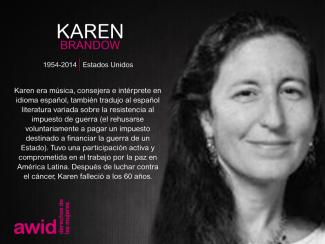
Karen Brandow
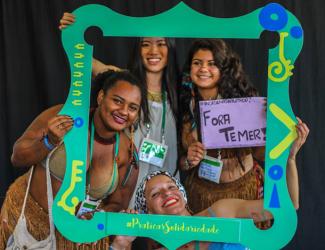
Young feminist activists play a critical role in women’s rights organizations and movements worldwide by bringing up new issues that feminists face today. Their strength, creativity and adaptability are vital to the sustainability of feminist organizing.
At the same time, they face specific impediments to their activism such as limited access to funding and support, lack of capacity-building opportunities, and a significant increase of attacks on young women human rights defenders. This creates a lack of visibility that makes more difficult their inclusion and effective participation within women’s rights movements.
AWID’s young feminist activism program was created to make sure the voices of young women are heard and reflected in feminist discourse. We want to ensure that young feminists have better access to funding, capacity-building opportunities and international processes. In addition to supporting young feminists directly, we are also working with women’s rights activists of all ages on practical models and strategies for effective multigenerational organizing.
We want young feminist activists to play a role in decision-making affecting their rights by:
Fostering community and sharing information through the Young Feminist Wire. Recognizing the importance of online media for the work of young feminists, our team launched the Young Feminist Wire in May 2010 to share information, build capacity through online webinars and e-discussions, and encourage community building.
Researching and building knowledge on young feminist activism, to increase the visibility and impact of young feminist activism within and across women’s rights movements and other key actors such as donors.
Promoting more effective multigenerational organizing, exploring better ways to work together.
Supporting young feminists to engage in global development processes such as those within the United Nations
Collaboration across all of AWID’s priority areas, including the Forum, to ensure young feminists’ key contributions, perspectives, needs and activism are reflected in debates, policies and programs affecting them.
Search for funders based on their requirements for groups to be registered.
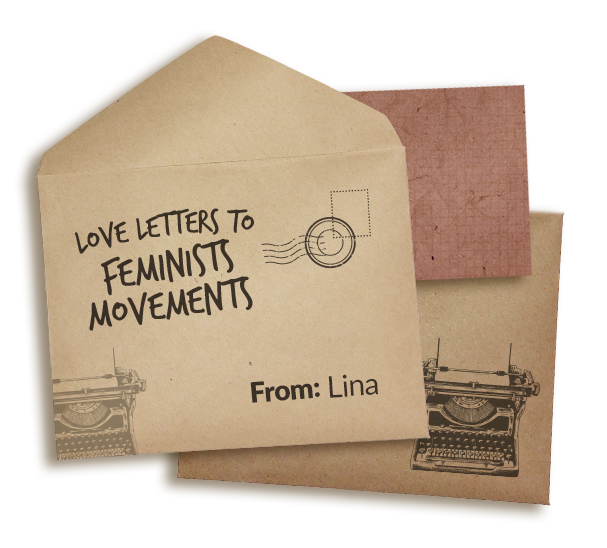
I have belonged to you for as long as I can remember. As a young girl, I did not know there was a word -feminist- for us people, who aspire to overcome and dismantle the patriarchy, who seek refuge in the arms of inclusion and intersectionality, who treat people as equals regardless of their gender, race, sexuality, religion, and ethnicity, who are constantly learning to do better, to be better and to use their privilege to uplift others.
When I was 14, my middle school French teacher, a 6ft tall thirty-year-old man, assaulted a female student in my class in front of all of us. The student, who was a childhood friend of mine, and several girls in my class went to the headmaster to report him, parents got involved, and the entire class of 30 students vouched for the girl. But all our attempts to hold him accountable failed and the administration covered up the girl’s story and he never got fired or persecuted. The girls in my class and I were outraged so we did what every young raging feminist would do. WE EGGED HIS CAR! and though the eggs get washed off easier and the paint we used to write “Pig” and “Khamaj '' -scumbag- needed to get scrubbed off. I will never forget how that made us girls feel. Liberated, enraged, happy, close-knit, and in power. The same feeling replicates in every feminist setting I have been in ever since. The teen feminist in me grew up to join Women Deliver, AWID, Unootha, facilitate feminist workshops at university, and even get persecuted for my feminist affiliation at 19, but that’s another story for another letter.
Feminist movements and spaces offer me safety and empowerment. They are the mothers we wished we had and the link we needed to connect and organize ourselves despite our differences against a common enemy that has been undermining everyone, patriarchy. It is through you that I learned to be resilient and to gather my strengths and skills and direct them towards uplifting others and bringing to light the marginalized and giving a voice to the voiceless.
What I love most about you, feminist movements is that you mess up sometimes, you disregard and marginalize as well, you have bias as does every other movement but what makes you different is that you always strive to be better. Accountability is not something you’re afraid of and you are an ever-changing collective that reflects how altruism and philanthropy in the effort of gender equity change as time passes.
May you always grow, may you do better, may you always rage, may you always roar, may you always love, may you always speak different tongues, and may you always be in power.
Love, light, and rage,
Lina
2-5 December, 2024, Bangkok, Thailand! We will gather at the Queen Sirikit National Convention Center (QSNCC) as well as virtually online.
Conoce el programa del Club de Cine Feminista de AWID «Holding up the Skies» [«Sosteniendo los cielos»], una serie de películas sobre realidades feministas de África y la Diáspora Africana, curada por Gabrielle Tesfaye.
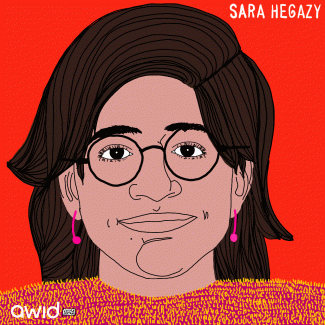
Sarah Hegazy, una audaz activista egipcia por los derechos LGBTQI+, vivía en una sociedad en la que lxs integrantes de su comunidad, sus cuerpos y sus vidas, enfrentan prejuicios letales a menudo. La resistencia de Sarah estaba arraigada en la deconstrucción del sistema dominante, opresor y patriarcal, y de sus actores antiderechos.
«[En Egipto], toda persona que no sea varón, musulmán, suní, heterosexual y partidario del sistema, es rechazada, reprimida, estigmatizada, arrestada, exiliada o asesinada. Este problema se relaciona con el sistema patriarcal en su conjunto, ya que el Estado no podría ejercer su represión contra lxs ciudadanxs, si no hubiera una opresión preexistente desde la infancia», escribió Sarah Hegazy el 6 de marzo de 2020
La supresión de la voz de Sarah por parte del gobierno egipcio alcanzó su pico más violento en 2017, cuando fue arrestada por alzar una bandera arcoíris en el recital de Mashrou’ Leila (una banda libanesa cuyo cantante principal es abiertamente gay) en El Cairo. Fue acusada de pertenecer a un grupo ilegal, y de «promover la desviación sexual y el libertinaje».
«Fue un acto de apoyo y solidaridad, no solamente con el cantante [de Mashrou’ Leila] sino con todas las personas oprimidas... Nos enorgulleció alzar la bandera. Nunca nos imaginamos la reacción de la sociedad y del Estado egipcio. Para ellos, yo era una criminal: alguien que buscaba destruir la estructura moral de la sociedad.» - Sarah Hegazy
Sarah estuvo encarcelada por tres meses, durante los cuales fue torturada y agredida sexualmente. En enero de 2018, después de ser liberada bajo fianza, pidió asilo en Canadá, donde estaba segura, pero seguía prisionera de los recuerdos del abuso y la violencia que su cuerpo y su alma habían sufrido.
«Salí de esta experiencia después de tres meses con un caso muy intenso y serio de TEPT [trastorno por estrés postraumático]. La prisión me mató. Me destruyó», dijo Sarah Hegazy a NPR.
Sarah se quitó la vida el 14 de junio de 2020, luego de dejar una nota escrita a mano en árabe:
«A mis hermanxs: traté de encontrar redención y fallé, perdónenme.
A mis amigxs: la experiencia [el viaje] fue muy dura y soy demasiado débil como para resistir, perdónenme.
Al mundo: has sido tremendamente cruel, pero perdono.»
Su legado y su coraje continuarán, llevados adelante por quienes la aman y creen en aquello por lo que Sarah luchó.
«A Sarah: Descansa, solo descansa, libre de esta violencia implacable, de este patriarcado letal impulsado por el Estado. Con rabia, con dolor, con extenuación, resistimos.» - Rasha Younes, investigadora sobre derechos LGBT de Human Rights Watch. Lee el texto completo
El vocalista de Mashrou’ Leila canta un tributo a Sarah Hegazy
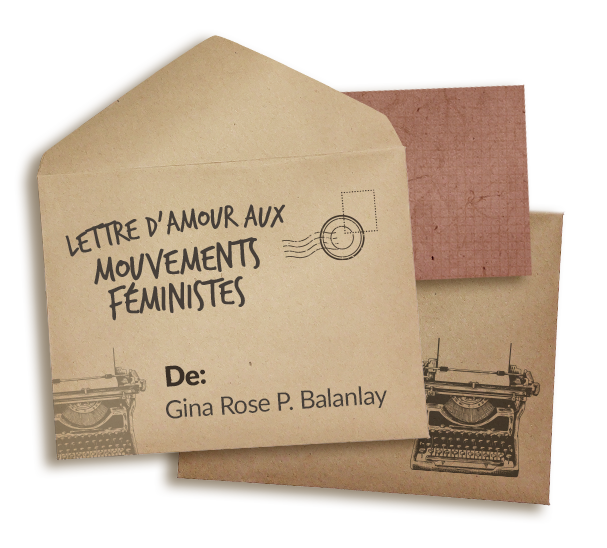
Je suis ravie de te faire part d’un de mes rendez-vous les plus remarquables en tant que féministe en situation de handicap. C’était le 30 mai 2014. L’Organisation nationale des puissantes dames porteuses d’un handicap visuel (NOVEL) participait aux festivités de la Fashion Week 2014 des Philippines, au profit de notre campagne de plaidoyer pour les cannes blanches. Deux dames aveugles défilaient sur le podium pour promouvoir la canne blanche comme symbole de l’égalité des genres, de l’autonomisation, de l’inclusion totale et de la participation égale des femmes et des filles porteuses de handicap visuel au sein de la société.
J’étais extrêmement nerveuse au moment de leur passage devant la foule, en tant que porte-parole de notre projet auprès des productions Runway (j’avais douloureusement attendu cette approbation pendant une année entière), sachant qu’elles n’étaient pas des mannequins, elles avaient été nommées Madame Philippines Vision et la première dauphine 2013 de Madame Philippines sur Roues, Signe et Vision par Tahanang Walang Hagdanan, Inc. (« Maison sans marches »). Elles n’avaient pas pu participer à leur séance d’orientation et s’étaient entraînées la veille au soir sans pouvoir le faire avec des mannequins professionnelles. Avant que ne commence le spectacle, je les avais appelées pour booster leur confiance et prier ensemble que Dieu les guide. Lorsqu’elles ont quitté le podium, j’ai pris une grande respiration alors que les larmes coulaient sur mes joues. Je me sentais euphorique parce que nous y étions parvenues malgré toutes les difficultés! Notre message au monde disant que les femmes et les filles en situation de handicap visuel pouvaient marcher en toute dignité, liberté et indépendance sur la même base d’égalité que les autres, grâce à notre appareil d’aide – les cannes blanches – qui était passé! On a parlé de nous sur les réseaux sociaux ainsi que sur les chaînes de télévision.
Ma vie de féministe en situation de handicap a débutcé comme un moyen de réparer mon manque de confiance et de trouver une autre trajectoire de réussite pour ma vie après avoir survécu à une vicieuse attaque à l’acide en 2007, alors que j’attendais le véhicule qui devait me ramener chez moi depuis le bureau. Mes yeux ont été fortement touchés, au point où je suis devenue une femme malvoyante.
Ce progrès n’est pas sans coût, tout comme il n’est pas parfait. Les activistes féministes, les groupes et les activistes se retrouvent face aux difficultés typiques rencontrées dans les contextes conservateurs et affectés par des conflits. Mais l’impact du mouvement des jeunes féministes au Soudan mérite d’être encensé. Dépasser les obstacles internes des différences de culture, de religion et des conflits historiques est un défi en soi, que les jeunes féministes au Soudan semblent relever activement. La création d’écoles féministes au Darfour et dans le Kordofan révèle la trajectoire unique du travail des jeunes féministes au Soudan, dont nous pouvons tirer des enseignements.
Je n’avais jamais pensé que ma vie pourrait être aussi joyeuse et pleine de sens avant de rencontrer les femmes leaders du mouvement pour le genre et le handicap, qui n’ont cessé depuis d’exercer une influence positive sur moi. Leurs mots d’encouragement m’ont plu et sont devenus la musique la plus douce à mes oreilles. Mon cœur brisé bondit comme un oiseau qui prend son envol à chaque fois que je pense à elles et au féminisme qui m’a encouragée à contribuer pour que les choses changent pour nos sœurs en situation de handicap qui sont invisibles et pour celles qui continuent à être discriminées. Jusqu’à ce jour, je suis consumée par le désir d’être avec le mouvement. Je ne peux cacher mon excitation chaque fois que je soumets des propositions de projets à différentes parties prenantes pour l’autonomisation, le développement et la promotion de nos sœurs en situation de handicap. Ou à chaque fois que j’interviens dans des conversations locales, nationales et internationales pour faire entendre nos voix, même lorsque cela est à mes dépens.
De manière inattendue, j’ai été choisie pour représenter notre pays à l’assemblée générale de l’Union mondiale des aveugles (UMA) en 2012 en Thaïlande, bien que je venais d’arriver dans le mouvement en faveur du handicap. Cette même année, j’ai été la seule femme élue au comité de l’Union philippine des aveugles (UPA). J’ai eu envie de me rapprocher de nos sœurs ayant un handicap visuel et de les informer sur leurs droits et afin qu’elles connaissent les questions transversales. En 2013, nous avons officiellement lancé NOVEL pour soutenir l’autonomisation de nos sœurs en situation de handicap, constituer des coalitions de mouvements de plurihandicap et de mouvements de femmes et promouvoir le développement inclusif du genre du handicap.
Ma participation en tant que copersonne pour les ressources des femmes en situation de handicap dans notre soumission au rapport alternatif à la CEDAW en 2016 avec les groupes de femmes marginalisées, coordonné par Women’s Legal and Human Rights Bureau (WLB), m’a ouvert de nombreuses portes et également permis de travailler avec différentes organisations de femmes et de participer aux Journées internationales de l’inclusion de Berlin en 2017, aux côtés de trois leaders philippines en situation de handicap; journées au cours desquelles nous avons fait part de nos bonnes pratiques, et principalement de notre engagement auprès de mouvements des femmes d’autres pays.
Ma trajectoire en tant que féministe en situation de handicap a été une véritable montagne russe émotionnelle pour moi. J’en ai retiré beaucoup de joie et un sentiment de valeur lors du travail pour la promotion de nos sœurs en situation de handicap pour une participation totalement inclusive, égale et efficace dans la société, mais je me suis également sentie frustrée et en colère lorsque j’ai tout donné et que j’ai essuyé des remarques négatives. Malgré tout, c’est ce que je ressens parce que je suis amoureuse du mouvement.
Je vois mon avenir dans le travail en solidarité avec le mouvement afin de veiller à ce que nos sœurs, en situation de handicap ou non, puissent profiter de, et participer également et entièrement dans la société.
Plein d’amour,
Gina Rose P. Balanlay
Féministe en situation de handicap
Philippines
Las inscripciones comenzarán a principios de 2024. Pronto anunciaremos la fecha exacta de inscripción y el valor correspondiente. La inscripción incluirá la participación en el Foro, así como almuerzo y refrigerios (el desayuno se proporcionará en los hoteles) y una cena en el lugar.
A complex and evolving network of anti-rights actors is exerting increasing influence in international spaces as well as domestic politics. Often backed by obscure funding, these actors build tactic alliances across issues, regions, and faiths to increase their impact.
Feminist and women’s rights organizations don’t just rely on institutional funding, we resource ourselves. Our organizing is powered by passion, political commitment, solidarity and collective care.
These resources are self- generated and autonomous, and often invisible in our budgets, but they are the backbone of our organizing.
The body is a powerful entity. As women, our bodies are controlled, oppressed and policed from the womb. The way we look, move, dress, walk, speak, gesture, laugh. I often wondered at what drives patriarchal fears around the power of female bodies. Where I come from sex work and sex workers were whispered of with simultaneous contempt, disgust, fascination, pity and condemnation.
Where I come from sex work and sex workers were whispered of with simultaneous contempt, disgust, fascination, pity and condemnation.
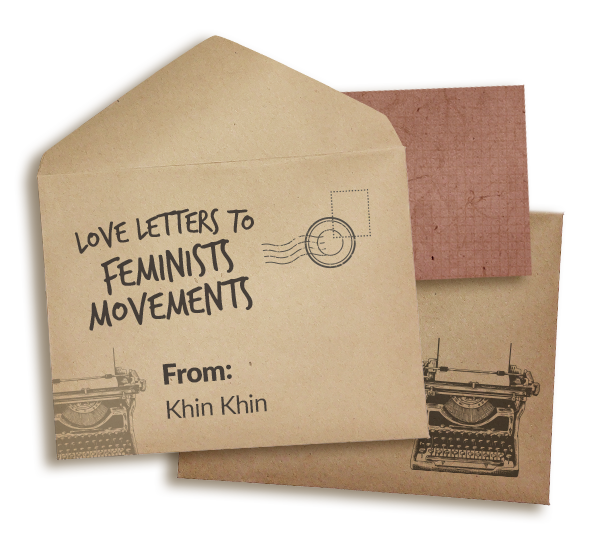
I first encountered sex work and sex workers at age 22. Simple conversations, sitting in circles, chatting over coffee and tea, we explored each other’s lives, experiences, thoughts and feelings.
For sex workers, sex work was the most worthwhile choice out of all other options to pay bills, to support family, to have more flexible working hours, to have sex. Just as I chose my job as the most worthwhile, to pay bills, to support family, to have more flexible working hours.
These individuals, women and men, taught me that I made my own decisions about my body… where I focus its life and energy, whether I use it for pleasure or pain, whether I trade it in or give it freely, and how I want to feel about my body. The awareness was as exciting as it was empowering.
Crear | Résister | Transform: a festival for feminist movements – 2021… you accompanied me through a series of life-changing moments (!!!)
We call these ‘events,’ though in truth, to me, your feminist learning spaces are, where I take a little of what’s inside me, a little of what your speakers say and some from the discussions to go deeper into our understanding.
Sharing… Partaking… Immersing…
in strength, in vulnerability, in pleasure.
Simply being the transformative feminist that I am, without pretentions, without misgivings…
Welcoming the transformative feminist that I have always been, without even knowing the term or acknowledging it in such a manner or in such terms…
Finding home for the fiercely transformative feminist living within me…
Despite the anger, rage and frustration of not being treated as equals and being treated with ‘less __ than,’
I did not always consider myself a feminist nor did I recognise myself within the feminist movement or discourse… Truly, I appreciate doors being held open, chairs being pulled out to be seated, acknowledgement as a woman, of my femininity.
At times I dismissed the patriarchy with annoyance, at times, I responded with frustration and anger but I did not address it… I did not notice its sinister, insidious toxicity… I was privileged enough to be able to work through it, to survive it, to overcome it, to excel in spite of it… I did not question enough, challenge enough, push my boundaries enough… I did not do enough…
connecting with sex workers, exploring sexuality, and the women for peace and security...
Until I became fully aware and understood the implications of both privilege and oppression that was intersectional.
Until I realised what it meant to fight for gender justice and not simply ‘equality for all.’
Practitioner and facilitator no longer, I am a transformative feminist practitioner and facilitator.
Being a feminist means that I will act
Plunging into uncertain, fragile, complex (and possibly quite violent) future…
I am deeply grateful for you and I promise to remain fierce in addressing and redressing problematic issues around gender, race, ethnicity, social class, sexual orientation and ability, and remain present and faithful to the struggle for inclusion, equity and justice.
Khin Khin
Si votre groupe ou votre organisation est récipiendaire de fonds, vous feriez bien de vous entretenir dès maintenant avec votre organisme de financement pour savoir si ce dernier est en mesure de prendre en charge votre voyage et votre participation au Forum. De nombreuses institutions planifient leur budget pour l'année prochaine dès le début de l'année 2023, aussi vaudrait-il mieux ne pas reporter cette discussion à l'année prochaine.
¿Es usted una persona que diseña políticas en la ONU y quiere saber quiénes son los principales grupos anti-derechos y frente a qué discursos mantenerse alerta? ¿O unx feminista que busca argumentos para refutar esos discursos rápidamente? Esta cartilla de 8 páginas le ofrece información importante de un vistazo.
How movements are resisting fascist agendas in relation to climate change.
📅 Tuesday, November 11, 2025
📍 Beira Rio Hotel, Belém, Pará
We’re committed to protecting your privacy, so here we explain how we use cookies on our website.
If you have any questions, please get in touch via the form on our contact page.
A cookie is a small data file downloaded by your web browser (for example Chrome or Internet Explorer) and stored on your computer. They are downloaded automatically when you visit websites. Cookies are used to perform essential tasks on a website, to record how people use a website and to gather data for marketing.
We provide essential information on our website to millions of people every year. To do this, we have to manage our website effectively and to reach out to more people who need our support and information. Cookies are a small, but essential way to make all this happen. We use cookies to:
You can update your cookie preferences by clicking on the button below.
In addition, most browsers allow you to manage cookies saved on your device – just go to the help section of your browser. To learn more about cookies and how to manage them, visit the ICO website.
Cookies never record your credit card details or easily identifiable personal data such as your name and address. You have every right to refuse to accept cookies from our website.
If you disable cookies you will still be able to access nearly all the information on our website. But please remember that this may affect some functionality.
You can disable cookies by changing your settings in your web browser or you can use the incognito option on Google Chrome. To find out more about your browser settings, visit the relevant support page below:
We believe so! It is still very early in the planning process, so please stay tuned as plans are forming.
Le premier rapport de l’Observatoire sur l’universalité des droits (OURs) - disponible en anglais et en espagnol - compile les informations disponibles sur les tendances antidroits dans les sphères internationales. Découvrez les principaux groupes religieux, les discours et les tactiques antidroits à l’œuvre au sein de l’ONU.