AWID Forum: Co-creating Feminist Futures

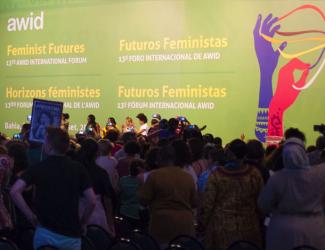
In September 2016, the 13th AWID international Forum brought together in Brazil over 1800 feminists and women’s rights advocates in a spirit of resistance and resilience.

This section highlights the gains, learnings and resources that came out of our rich conversations. We invite you to explore, share and comment!


What has happened since 2016?

One of the key takeaways from the 2016 Forum was the need to broaden and deepen our cross-movement work to address rising fascisms, fundamentalisms, corporate greed and climate change.

With this in mind, we have been working with multiple allies to grow these seeds of resistance:

And through our next strategic plan and Forum process, we are committed to keep developing ideas and deepen the learnings ignited at the 2016 Forum.

What happens now?

The world is a much different place than it was a year ago, and it will continue to change.

The next AWID Forum will take place in the Asia Pacific region (exact location and dates to be announced in 2018).

We look forward to you joining us!

About the AWID Forum

AWID Forums started in 1983, in Washington DC. Since then, the event has grown to become many things to many peoples: an iterative process of sharpening our analyses, vision and actions; a watershed moment that reinvigorates participants’ feminisms and energizes their organizing; and a political home for women human rights defenders to find sanctuary and solidarity.

Learn more about previous Forums

Related Content

Clone of Clone of CFA 2023 - Hybrid like never before: in person - FR

Hybride comme jamais auparavant

Pour la première fois, le Forum de l'AWID propose trois modes de participation :

En personne

Les participant.e.s se réuniront à Bangkok, en Thaïlande. Nous sommes impatient.e.s de vous y retrouver!

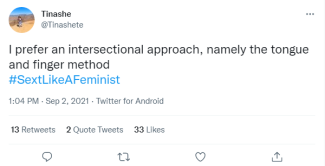
#5 - Sexting like a feminist Tweets Snippet EN

For a thorough analysis, we must apply every tool at our disposal…

Image of a tweet. Text says: I prefer an intersectional approach, namely the tongue and finger method.

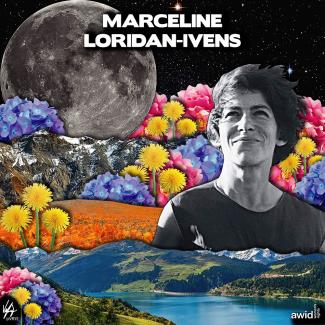
Marceline Loridan-Ivens

Born in 1928, Marceline worked as an actress, a screenwriter, and a director.

She directed The Birch-Tree Meadow in 2003, starring Anouk Aimee, as well as several other documentaries. She was also a holocaust survivor. She was just fifteen when she and her father were both arrested and sent to Nazi concentration camps. The three kilometres between her father in Auschwitz and herself in Birkenau were an insurmountable distance, which she writes about in one of her seminal novels “But You Did Not Come Back.”

In talking about her work, she once said: "All I can say is that everything I can write, everything I can unveil — it's my task to do it.”


Marceline Loridan-Ivens, France

2021: Feminist Power in Action

In 2021, AWID, along with many other organizations, was coming to grips with the implications of the on-going global pandemic for how we work and our role in this particular time. The year taught us three critical lessons about navigating this moment as a global feminist movement-support organization.

Download the full 2021 Annual review


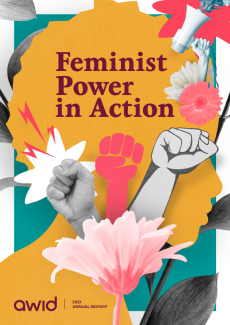
English language cover for the 2021 AWID Annual Report. It shows a collage of protests fists raised, along with flowers and a silhouette of a person with short hair in the back.

Through dialogue and exchanges critical to their work, AWID connected thousands to feminists from around the world.

Our experience in 2021 reaffirmed the importance of building and sustaining a global feminist community, and AWID’s core mission to support feminist movements as a whole. We believe that at this moment, a strong community bound by a shared vision and collective care is the foundation of all social change and transformation.

Download the full 2021 Annual review

Posso compartilhar o inquérito com outras pessoas?

Claro que sim! Encorajamo-lo a compartilhar a ligação do nosso inquérito com as suas redes. Quanto mais perspetivas diversas recolhermos, melhor será a nossa compreensão do cenário financeiro para a organização feminista.

CFA 2023 - Submit application card - ar

نرحب بالطلبات عبر مجموعة كاملة من المواضيع والتقاطعات المهمة للحركات النسوية وحركات العدالة الجندرية. 

تقديم الطلب

Zuhour Mahmoud | Snippet ES

Portrait of Zuhour Mahmoud

Zuhour Mahmoud es la estratega de comunicación de Kohl. Es una escritora y editora y una DJ ocasional radicada en Berlín. Su trabajo se centra en los enfoques críticos a la música, la tecnología y la política y sus ciclos de vida en la esfera digital.

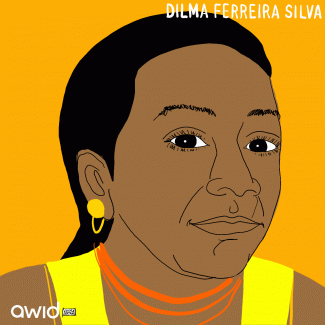
Dilma Ferreira Silva

Dilma Ferreira Silva was a leading Amazonian rights activist who fought for decades for the rights of people affected by dams.

She herself was among the 32,000 people displaced by the Tucuruí, a mega-hydroelectric power plant, built in Brazil during the 1964-1985 military dictatorship.

In 2005 Dilma was invited to join the Movement of Dam-Affected Peoples in Brazil (MAB), and in 2006 she formed the women’s collective, eventually becoming regional coordinator of the movement.

In speaking about her activism, her colleagues commented:

“She stood out very fast because she was always very fearless in the struggle.” 

Dilma lived in the rural settlement of Salvador Allende,50 kilometers from Tucuruí, and dedicated her life to better protect communities and the land affected by the construction of mega projects. She was especially concerned with the gendered impacts of such projects and advocated for women’s rights.

At a national MAB meeting in 2011, Dilma spoke to women affected by the dams, saying:

“We are the real Marias, warriors, fighters who are there, facing the challenge of daily struggle”.

In the following years, Dilma organized grassroots MAD groups and worked with the community to form farming cooperatives that created a better distribution of food for the community. They improved the commercialization of fishing, and developed a cistern project for safe drinking water. She was also an advocate for farmers whose lands were being coveted by ‘grileiros’ (land grabbers). 

On 22nd March 2019, at the age of 48, Dilma, her husband and their friend were all brutally murdered. The three killings came as part of a wave of violence in the Amazon against the Movimento dos Trabalhadores Sem Terra (translates as ‘landless workers’ movement’), environmental and indigenous activists. 

Stephanie Bracken

Biography

Stephanie Bracken est une féministe qui se consacre à la construction et au soutien de systèmes solides qui répondent aux besoins du moment et des personnes qui interagissent avec eux, tout en servant les principes de justice. Elle est titulaire d'un master en droits humains de l'Université de Sydney et d'une licence en études de genre, histoire et philosophie de l'Université McGill. Elle possède une expérience de travail avec des organisations féministes et de justice sociale dans les domaines du suivi, de l'évaluation et de l'apprentissage, de la planification stratégique du travail, de la gouvernance, de la gestion de projet et de la création de systèmes et de processus opérationnels. Stephanie est basée à Tiohtià:ke/Montréal, où elle aime chanter avec d’autres, camper, pratiquer les arts textiles et passer du temps avec ses enfants et sa communauté.

Position
Cheffe des Opérations
Add to stories
Off

Membership why page - Loyiso Lindani

Tengo la convicción de que las mujeres empoderadas dotan de empoderamiento a otras mujeres, y es por ello que la he pasado tan bien como afiliada de AWID. Todo lo que sé y lo que entiendo de feminismo e interseccionalidad se ha ampliado gracias a los contactos que tuve como parte del Equipo de la Calle de la Comunidad AWID. Espero que más mujeres se sumen y compartan temas e ideas que ayuden a otras mujeres. - Loyiso Lindani, Sudáfrica.

Forum 2024 - FAQ - General Information FR

Informations générales

Communiquer le désir | Small Snippet FR

Communiquer le désir et autres 

pratiques politiques incarnées

On pense souvent que la communication de notre désir se cantonne à l’intimité des quatre murs de nos chambres et à nos relations personnelles. Mais est-il également possible d’envisager ce genre de communication comme étant structurelle, une pratique qui éclairerait notre travail et la manière dont nous sommes, dont nous existons dans le monde?

Lire plus

Molara Ogundipe

"Pero, ¿ fue el maestro alguna vez 
seducido por el poder?
¿Alguna vez se rompió
 un sistema con aceptación ?
¿Cuándo el JEFE te entregará el poder con amor?
¿En Jo'Burg, en Cancún o en la ONU? - Molara Ogundipe

En una entrevista, realizada en la Feria Internacional del Libro de Ghana de 2010, Molara Ogundipe se presentó con estas palabras "...Soy una nigeriana. He vivido, posiblemente, en todo el mundo, excepto en la Unión Soviética y China".

A través de los diferentes continentes y países, la profesora Ogundipe enseñó literatura comparada, escritura, género y filología inglesa, y utilizó la literatura como vehículo para la transformación social y el replanteamiento de las relaciones de género.

Molara Ogundipe, como pensadora, escritora, editora, crítica social, poeta y activista feminista, logró combinar el trabajo teórico con la creatividad y la acción práctica. Se la considera una de las principales voces críticas de los feminismos africanos, los estudios de género y la teoría literaria.  

Molara acuñó el concepto de "estiwanismo" a partir de las siglas STIWA (Social Transformations in Africa Including Women) [Transformaciones Sociales en África Incluyendo a las Mujeres], con el fin de reconocer la necesidad de “alejar la definición del feminismo y los feminismos en relación con Euro-América u otro lugar, y declamar lealtades o deslealtades". Con su obra fundamental, "Recreándonos Nosotras Mismas", de 1994, Molara Ogundipe (publicada bajo el nombre de Molara Ogundipe-Leslie) dejó tras de sí un inmenso cuerpo de conocimientos que descolonizó el discurso feminista y "re-centró a las mujeres africanas en sus completas y complejas narrativas... guiadas por una exploración de la liberación económica, política y social de las mujeres africanas y la restauración de la agencia femenina en las diferentes culturas de África".

Comentando los retos a los que se enfrentó como joven académica, dijo:

"Cuando empecé a hablar y escribir sobre el feminismo a finales de los años sesenta y en los setenta, se me veía como una chica buena y admirable que se había extraviado, una mujer cuya cabeza se había arruinado con un exceso de aprendizaje".

Molara Ogundipe se destacó por su liderazgo a la hora de combinar el activismo con el mundo académico; en 1977 fue una de las fundadoras de la Asociación de Mujeres en la Investigación y el Desarrollo, AAWORD (por sus siglas en inglés),. En 1982 fundó Mujeres en Nigeria, WIN (por sus siglas en inglés), con el fin de abogar por un acceso pleno a los "derechos económicos, sociales y políticos" para las mujeres nigerianas. Posteriormente, estableció y dirigió la Fundación Internacional para la Educación y el Monitoreo y pasó muchos años en el consejo editorial del periódico The Guardian.

Luego de haber crecido con el pueblo yoruba, sus tradiciones, cultura e idioma, dijo una vez:

"Creo que la celebración de la vida, de las personas que mueren después de una vida llena de logros, es uno de los aspectos más hermosos de la cultura yoruba".

El nombre de alabanza yoruba 'Oiki' de Molara era Ayike. Molara nació el 27 de diciembre de 1940 y falleció el 18 de junio de 2019 a la edad de 78 años, en Ijebu-Igbo, Estado de Ogun, Nigeria.
Kasia Staszewska

Biography

Kasia has been supporting the work of feminist and social justice movements for the last 15 years. Before joining AWID, Kasia used to lead policy and advocacy for ActionAid and Amnesty International while organizing with feminists and social justice groups in Poland for access to abortion and against violence on the European borders. Kasia is passionate about resourcing feminist organizing in all their boldness, richness and diversity. She shares her time between Warsaw and her DIY community village in the forest. She loves saunas and is crazy about her dog named Wooly.

Position
Manager, Resourcing Feminist Movements
Add to stories
Off

Snippet - Blog post Quote_EN

"We believe that this is the time for us to continue to organize from a place of solidarity, hope and radical imaginations."

- Beijing+30 & CSW: Feminist meaning-making at a time of polycrisis

Read here

Forum 2024 - FAQ - Call for Activities FR

Appel à activités

Illumination by the Light of the Full Moon | Snippet Small FR

Illumination par la lumière de la pleine lune : une expérience BDSM africaine

Plus qu’une entorse amusante pour explorer des sensations, le BDSM peut être un moyen d’aborder la douleur émotionnelle et les traumatismes. Cela a été pour moi un moyen de guérison sexuelle, offrant une forme radicale de libération. 

Lire plus