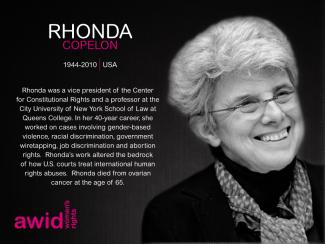
Rhonda Copelon
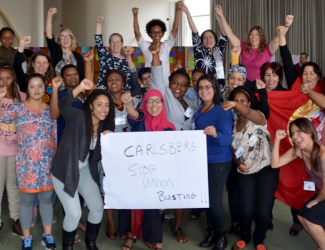
Women human rights defenders (WHRDs) worldwide defend their lands, livelihoods and communities from extractive industries and corporate power. They stand against powerful economic and political interests driving land theft, displacement of communities, loss of livelihoods, and environmental degradation.
Extractivism is an economic and political model of development that commodifies nature and prioritizes profit over human rights and the environment. Rooted in colonial history, it reinforces social and economic inequalities locally and globally. Often, Black, rural and Indigenous women are the most affected by extractivism, and are largely excluded from decision-making. Defying these patriarchal and neo-colonial forces, women rise in defense of rights, lands, people and nature.
WHRDs confronting extractive industries experience a range of risks, threats and violations, including criminalization, stigmatization, violence and intimidation. Their stories reveal a strong aspect of gendered and sexualized violence. Perpetrators include state and local authorities, corporations, police, military, paramilitary and private security forces, and at times their own communities.
AWID and the Women Human Rights Defenders International Coalition (WHRD-IC) are pleased to announce “Women Human Rights Defenders Confronting Extractivism and Corporate Power”; a cross-regional research project documenting the lived experiences of WHRDs from Asia, Africa and Latin America.
"Women Human Rights Defenders confronting extractive industries: an overview of critical risks and Human Rights obligations" is a policy report with a gender perspective. It analyses forms of violations and types of perpetrators, quotes relevant human rights obligations and includes policy recommendations to states, corporations, civil society and donors.
"Weaving resistance through action: Strategies of Women Human Rights Defenders confronting extractive industries" is a practical guide outlining creative and deliberate forms of action, successful tactics and inspiring stories of resistance.
The video “Defending people and planet: Women confronting extractive industries” puts courageous WHRDs from Africa, Asia, and Latin America in the spotlight. They share their struggles for land and life, and speak to the risks and challenges they face in their activism.
Challenging corporate power: Struggles for women’s rights, economic and gender justice is a research paper outlining the impacts of corporate power and offering insights into strategies of resistance.
AWID acknowledges with gratitude the invaluable input of every Woman Human Rights Defender who participated in this project. This project was made possible thanks to your willingness to generously and openly share your experiences and learnings. Your courage, creativity and resilience is an inspiration for us all. Thank you!
Sim, é acessível para pessoas com uma variedade diversificada de capacidades auditivas, de movimento, visuais e cognitivas.
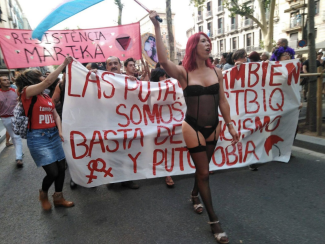
Sindicato OTRAS
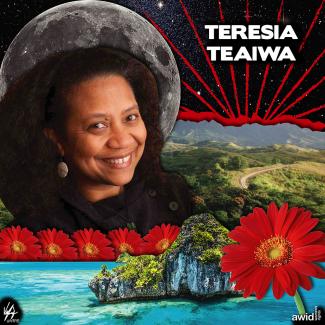
Described by the Guardian as one of Kiribati’s national icons, Teresia was a fearless advocate who worked closely with feminist groups in Fiji.
She used her research to address the issues of feminism and gender in the Pacific, as well as being co-editor of the International feminist Journal of Politics. Her influence spanned the academic frontier as well as social justice movements in the Oceania region.
Creemos que para que los movimientos feministas sean transformadores y sólidos debemos seguir trabajando en nuestras similitudes y diferencias. También debemos cuestionar el poder y los privilegios, tanto dentro como fuera de nuestros movimientos.
The Monterrey Conference on Financing for Development marked the beginning of discussions on the Financing for Development agenda.
الوقت المقدّر لتعبئة الاستطلاع هو 30 دقيقة.
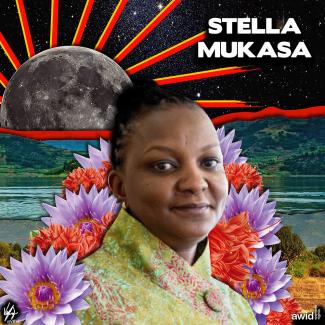
Stella comenzó su carrera en el Ministerio de Género y Desarrollo Comunitario en Uganda colaborando con lxs legisladores en reformas legales, incluida la Constitución de Uganda de 1995, que estableció algunas de las reformas más progresistas para las mujeres en la región.
Stella es respetada y admirada en toda la región por sus incansables esfuerzos para crear y hacer cumplir leyes y políticas que tomen en cuenta cuestiones de género. También desempeñó un papel clave en la redacción de la Ley de Violencia Doméstica de Uganda y en la movilización de apoyo para las constituciones sensibles al género tanto en Uganda como en Ruanda.
A través de su trabajo con el Centro Internacional para la Investigación sobre la Mujer (ICRW, por sus siglas en inglés), abordó la violencia contra lxs niñxs y trabajó para fortalecer las capacidades de las organizaciones de base que abordan la violencia de género. Stella fue profesora en cursos sobre derechos de género y la ley, en la Universidad Makerere, y formó parte de las juntas directivas de Akina Mama wa Afrika, ActionAid International Uganda y Open Society Initiative para África Oriental.
Если по какой-либо причине вы хотите, чтобы ваш ответ был отозван и удален, вы имеете на это право. Пожалуйста, свяжитесь с нами через форму здесь, указав «Опрос «Где деньги?»» в качестве заголовка вашего сообщения, и мы удалим ваш ответ.
Linda Porn is yet another heroine of feminist union organizing and sex worker activism nationally (in Spain) and transnationally.
Originally from Mexico, she has been living in Spain since the 2000s. She is a sex worker, an activist, a single mother and a multidisciplinary artist. Drawing from these different identities, she uses performance, video art and theater to vizibilize struggles at the intersections of transfeminism, sex work, migration, colonialism and motherhood.
She combines art and sex work while caring for her daughter as a single mother.
Linda also belongs to sex workers collectives that fight for their rights, such as the OTRAS union and CATS Murcia. She also co-founded the group 'Madrecitas' - that visibilises and denounces racist institutional violence against migrant families. Violence to which she and her daughter were subjected as a sex worker and migrant single mother.
You can follow her art work here.
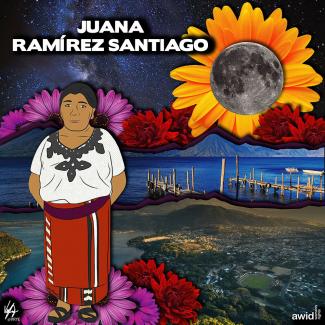
Ayant co-fondé le réseau Red de Mujeres Ixiles de Nebaj, une organisation de défense des droits des femmes autochtones, membre de l’Initiative mésoaméricaine des femmes défenseur-e-s des droits humains (IM-Defensoras en espagnol), Juana était actuellement membre de son conseil d’administration.
Elle était également sage-femme et mère de 7 enfants. Juana avait reçu des menaces de mort qui avaient été signalées au bureau du procureur. Juana est la troisième défenseure autochtone assassinée dans la région en 2018. L'Ombudsman pour le Guatemala a signalé qu'au total 20 défenseur-e-s ont été tué-e-s dans le pays cette année.
Juana Ramírez Santiago a été abattue par des assaillants non identifiés alors qu'elle traversait un pont à Nebak, Quiché, au Guatemala. Les enquêtes visant à identifier les auteurs sont en cours.
The AWID Forum will be organized around 6 interconnected topics. These ‘anchors’ center feminist realities.
La première session de rédaction du document final de la troisième Conférence sur le financement du développement