
Sunila Abeyseke
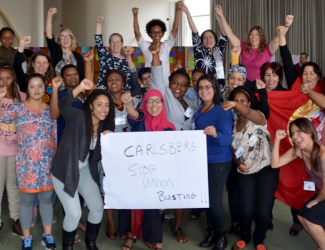
Women human rights defenders (WHRDs) worldwide defend their lands, livelihoods and communities from extractive industries and corporate power. They stand against powerful economic and political interests driving land theft, displacement of communities, loss of livelihoods, and environmental degradation.
Extractivism is an economic and political model of development that commodifies nature and prioritizes profit over human rights and the environment. Rooted in colonial history, it reinforces social and economic inequalities locally and globally. Often, Black, rural and Indigenous women are the most affected by extractivism, and are largely excluded from decision-making. Defying these patriarchal and neo-colonial forces, women rise in defense of rights, lands, people and nature.
WHRDs confronting extractive industries experience a range of risks, threats and violations, including criminalization, stigmatization, violence and intimidation. Their stories reveal a strong aspect of gendered and sexualized violence. Perpetrators include state and local authorities, corporations, police, military, paramilitary and private security forces, and at times their own communities.
AWID and the Women Human Rights Defenders International Coalition (WHRD-IC) are pleased to announce “Women Human Rights Defenders Confronting Extractivism and Corporate Power”; a cross-regional research project documenting the lived experiences of WHRDs from Asia, Africa and Latin America.
"Women Human Rights Defenders confronting extractive industries: an overview of critical risks and Human Rights obligations" is a policy report with a gender perspective. It analyses forms of violations and types of perpetrators, quotes relevant human rights obligations and includes policy recommendations to states, corporations, civil society and donors.
"Weaving resistance through action: Strategies of Women Human Rights Defenders confronting extractive industries" is a practical guide outlining creative and deliberate forms of action, successful tactics and inspiring stories of resistance.
The video “Defending people and planet: Women confronting extractive industries” puts courageous WHRDs from Africa, Asia, and Latin America in the spotlight. They share their struggles for land and life, and speak to the risks and challenges they face in their activism.
Challenging corporate power: Struggles for women’s rights, economic and gender justice is a research paper outlining the impacts of corporate power and offering insights into strategies of resistance.
AWID acknowledges with gratitude the invaluable input of every Woman Human Rights Defender who participated in this project. This project was made possible thanks to your willingness to generously and openly share your experiences and learnings. Your courage, creativity and resilience is an inspiration for us all. Thank you!
Да, в конце опроса мы попросим вас поделиться более подробной информацией по важным для вас аспектам, ответив на открытые вопросы.
Nous avons le plaisir de vous présenter Sopo Japaridze, féministe féroce, dirigeante syndicale et présidente du syndicat de service indépendant Réseau de Solidarité.
Elle a quitté le pays très jeune pour les États-Unis, où elle est devenue politiquement active en tant qu'organisatrice syndicale. Elle a toujours gardé la Géorgie à l'esprit pendant tout ce temps, jusqu'au jour où, 20 ans plus tard, elle a décidé de revenir.
La confédération syndicale géorgienne existante à cette époque était loin d'être idéale. C’est pourquoi, armée de ses compétences, de ses connaissances et de son expérience en matière de syndicalisation, Sopo est retournée en Géorgie et a formé son propre syndicat.
Elle est aussi une chercheuse passionnée et une écrivaine. Elle étudie les relations de travail et les relations sociales, écrit pour diverses publications et est co-éditrice de Left East, une plate-forme analytique d'Europe de l'Est. Elle a également cofondé l'initiative et le podcast d'histoire politique, Réimaginer la Géorgie Soviétique, où elle explore les complexités et les nuances des expériences du pays sous l'Union soviétique, pour mieux comprendre son passé et construire un avenir meilleur.
So'oalo was a fervent human rights advocate, especially pertaining to the rights of the LGBTQI community in the Pacific.
She was a member of the Samoa Fa’afafine Association (SFA) and a passionate advocate for the acknowledgement of a third gender in the island country. Under her leadership, the SFA pushed for the recognition of the validity and rights of the fa’afafine community.
She was also a pioneer in articulating the links between human rights, exploitation of fa’afafines in Samoa and the Pacific, and the health, wellbeing and security of the LGBTQI community.
She was an inspiration, a visionary and her dedication to the pursuit of rights for her community is admirable and will be remembered.

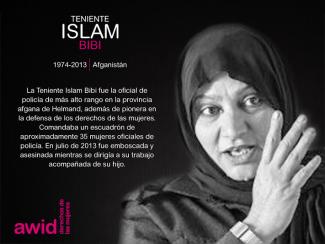
Este año honramos a 19 defensoras de la región de América Latina y el Caribe. De ellas, 16 fueron asesinadas, incluyendo a 6 periodistas y 4 defensoras LGBTQI. Únete a nosotras en la conmemoración de sus vidas y trabajo, compartiendo los memes aquí incluidos con tus colegas, amistades y redes; y tuiteando las etiquetas #WHRDTribute y #16Días.
Por favor, haz click en cada imagen de abajo para ver una versión más grande y para descargar como un archivo.


Voyez grand ! Notre rayonnement international nous permet de combiner notre travail analytique avec des outils politiques et pratiques de plaidoyer et de transformation afin de faire avancer la cause des mouvements féministes à tous les niveaux.
Os dados serão processados para fins estatísticos para esclarecer o estado de financiamento dos movimentos feministas globalmente e serão divulgados apenas em forma agregada. A AWID não divulgará informações sobre uma organização específica ou informações que permitam identificar uma organização através da respetiva localização ou características sem o respetivo consentimento comprovado.
The Sex Workers' Trade Union Organisation (Organización de Trabajo Sexual, OTRAS) is the first union of sex workers in the history of Spain. It was born out of the need to ensure social, legal and political rights for sex workers in a country where far-right movements are on the rise.
After years of struggles against the Spanish legal system and anti-sex workers groups who petitioned to shut it down, OTRAS finally obtained its legal status as a union in 2021.
Its goal? To decriminalize sex work and to ensure decent working conditions and environments for all sex workers.
The union represents over 600 professional sex workers, many of whom are migrant, trans, queer and gender-diverse.
Samira fue una activista siria bajo el régimen de Bashar al-Asad.
Desde muy joven, se opuso a todas las formas de despotismo, especialmente en relación al régimen autoritario en el que vivía. En 2013, Samira fue secuestrada junto a otrxs tres destacadxs activistas. Se cree que se la llevaron del Centro para la Documentación de Violaciones de Duma, en el área rural de Damasco.
El principal sospechoso de su desaparición es el Ejército del Islam (el cual niega estar involucrado). No ha habido una investigación formal de la desaparición de Samira y desde entonces no se ha sabido nada de ella. Samira estaba comprometida con su país y se negaba a abandonar Siria hasta tanto no sintiera que su trabajo por el empoderamiento de las mujeres y en la documentación de los crímenes ya no fuera necesario.

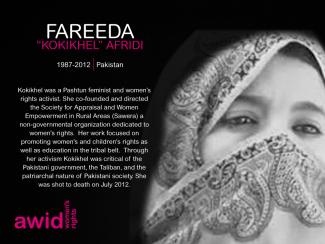
7 Women Human Rights Defenders from across the South and Southeast Asian region are honored in this year’s Online Tribute. These defenders have made key contributions to advancing human and women’s rights, indigenous people’s rights, and the right to education. These WHRDs were lawyers, women’s rights activists, scholars, and politicians. Please join AWID in commemorating t their work and legacy by sharing the memes below with your colleagues, networks and friends and by using the hashtags #WHRDTribute and #16Days.
Please click on each image below to see a larger version and download as a file


We celebrate everyone's right to choose their identities, relationships, goals, work, dreams and pleasures, and what they do with their mind, body and spirit. We believe in working towards access to resources, information and safe and enabling environments that allow this to happen.
كلا. يبني هذا الاستطلاع على المعلومات التي حشدتها جمعية حقوق المرأة في التنمية حول كيفية الحصول على تمويل أكبر وأفضل للحركات النسوية وحركات التغيير الاجتماعي وهذه الدورة الثالثة لاستطلاع "أين التمويل للتنظيمات النسوية". نهدف للقيام بالاستطلاع مرة كل ثلاثة أعوام.
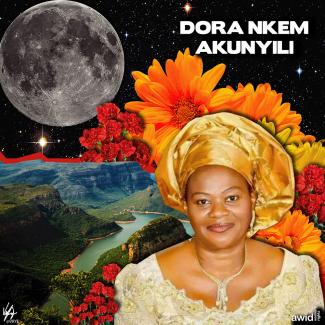
Née dans l'État de Benue, au Nigeria, Dora était une pharmacienne experte et érudite ainsi qu’une dirigeante communautaire de renommée mondiale.
Lorsqu'elle est devenue directrice générale de l'Agence nationale pour la gestion et le contrôle des aliments et drogues (NAFDAC) entre 2001 et 2008, son travail d’envergure révolutionnaire a initié un changement de paradigme au sein de la fonction publique nigériane. Au cours de son mandat, elle a mené des réformes dans l'application des politiques et des réglementations qui ont permis de réduire de manière radicale le nombre de faux médicaments qui ont affecté le secteur pharmaceutique nigérian.
Après avoir incarné la réalité d’une femme courageuse et compétente qui a défié les maux d’une société à dominante patriarcale et qui a conduit au changement, elle est devenue une icône de l’émancipation des femmes. Entre 2008 et 2010 elle a été nommée ministre de l'Information et de la Communication.
Elle est décédée des suites d'un cancer et laisse dans le deuil son mari, ses six enfants et ses trois petits-enfants.
Before starting the WITM research methodology, it is important you prepare the background and know what to expect.
With AWID’s WITM research methodology, we recommend that you first review the entire toolkit.
While this toolkit is designed to democratize WITM research, there are capacity constraints related to resources and research experience that may affect your organization’s ability use this methodology.
Use the “Ready to Go?” Worksheet to assess your readiness to begin your own WITM research. The more questions you can answer on this worksheet, the more prepared you are to undertake your research.
Before beginning any research, we recommend that you assess your organization’s connections and trust within your community.
In many contexts, organizations may be hesitant to openly share financial data with others for reasons ranging from concerns about how the information will be used, to fear of funding competition and anxiety over increasing government restrictions on civil society organizations.
As you build relationships and conduct soft outreach in the lead-up to launching your research, ensuring that your objectives are clear will be useful in creating trust. Transparency will allow participants to understand why you are collecting the data and how it will benefit the entire community.
We highly recommend that you ensure data is collected confidentially and shared anonymously. By doing so, participants will be more comfortable sharing sensitive information with you.
We also recommend referring to our “Ready to Go?” Worksheet to assess your own progress.
Al unirme a AWID, espero poder ayudar a la movilización del movimiento feminista. No solo para las mujeres privilegiadas, sino para TODAS las mujeres y activistas feministas.- Angelina Mootoo, feminista interseccional y caribeña, Guyana/EEUU