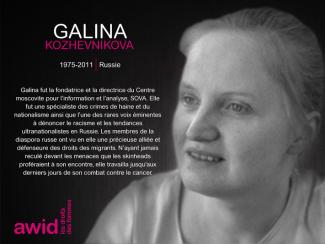
Galina Kozhevnikova
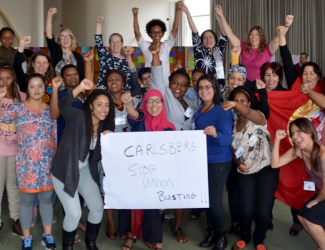
Women human rights defenders (WHRDs) worldwide defend their lands, livelihoods and communities from extractive industries and corporate power. They stand against powerful economic and political interests driving land theft, displacement of communities, loss of livelihoods, and environmental degradation.
Extractivism is an economic and political model of development that commodifies nature and prioritizes profit over human rights and the environment. Rooted in colonial history, it reinforces social and economic inequalities locally and globally. Often, Black, rural and Indigenous women are the most affected by extractivism, and are largely excluded from decision-making. Defying these patriarchal and neo-colonial forces, women rise in defense of rights, lands, people and nature.
WHRDs confronting extractive industries experience a range of risks, threats and violations, including criminalization, stigmatization, violence and intimidation. Their stories reveal a strong aspect of gendered and sexualized violence. Perpetrators include state and local authorities, corporations, police, military, paramilitary and private security forces, and at times their own communities.
AWID and the Women Human Rights Defenders International Coalition (WHRD-IC) are pleased to announce “Women Human Rights Defenders Confronting Extractivism and Corporate Power”; a cross-regional research project documenting the lived experiences of WHRDs from Asia, Africa and Latin America.
"Women Human Rights Defenders confronting extractive industries: an overview of critical risks and Human Rights obligations" is a policy report with a gender perspective. It analyses forms of violations and types of perpetrators, quotes relevant human rights obligations and includes policy recommendations to states, corporations, civil society and donors.
"Weaving resistance through action: Strategies of Women Human Rights Defenders confronting extractive industries" is a practical guide outlining creative and deliberate forms of action, successful tactics and inspiring stories of resistance.
The video “Defending people and planet: Women confronting extractive industries” puts courageous WHRDs from Africa, Asia, and Latin America in the spotlight. They share their struggles for land and life, and speak to the risks and challenges they face in their activism.
Challenging corporate power: Struggles for women’s rights, economic and gender justice is a research paper outlining the impacts of corporate power and offering insights into strategies of resistance.
AWID acknowledges with gratitude the invaluable input of every Woman Human Rights Defender who participated in this project. This project was made possible thanks to your willingness to generously and openly share your experiences and learnings. Your courage, creativity and resilience is an inspiration for us all. Thank you!
Fuente: Censo de População de Rua, Prefeitura de São Paulo
 |
Edificios abandonados/desocupados |
 |
||
Personas que viven en la calle |
||||
|
31,000 |
40.000 |
Sara AbuGhazal es una feminista palestina que vive en Beirut. Es cofundadora de Sawt al-Niswa, un colectivo que produce conocimiento en Beirut. Es codirectora de The Knowledge Workshop [«Taller del conocimiento»], una organización feminista con sede en Beirut que trabaja en la historia oral y el archivo feminista. Sara es actualmente la Coordinadora Regional de la Coalición Regional para Defensoras de los Derechos Humanos en el Medio Oriente y África del Norte.
Sara lucha para ayudar a crear espacios de transformación feminista y solidaridad. Su trabajo se centra principalmente en la construcción de movimientos sostenibles en la región del MOAN. Sara se empeña en temas de la Palestina, la producción de conocimiento y la transformación feminista. Publica regularmente en sawtalniswa.org y su obra de ficción también aparece en la revista electrónica Romman
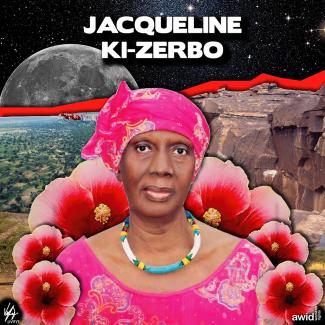
Jacqueline was a pioneering Malian/Burkinabe feminist, nationalist and educator.
She taught English in Senegal, before being recruited in 1961 as an English teacher at the Lycée Philippe Zinda Kaboré in Ouagadougou, Burkina Faso. Through her activism, she was involved in the popular uprising of January 3, 1966. Between 1961 and 1966, Jacqueline was also responsible for the trade union press, Voices of the Teachers. She was appointed as the head of the Normal Course for Young Girls (now known as Nelson Mandela High School) until 1974, and dedicated herself to girls’ education and advancing women’s rights.
In 1984 she was awarded the Paul G. Hoffmann Award for outstanding work in national and international development.
 |
 |
 |
 |
 |
 |
 |
 |
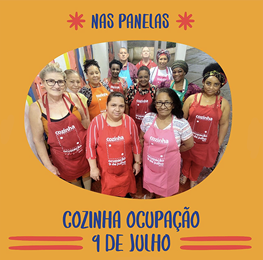
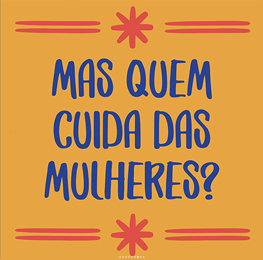
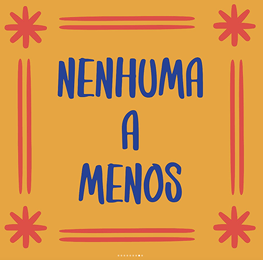
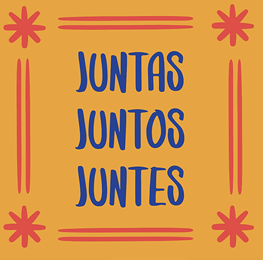
Les Femmes Maintiennent les Soins | Les Soins Soutiennent la Vie | La Vie Soutient l'Économie | Qui s'Occupe des Femmes ? | Pas Une de Moins1 | Ensemble | Déjeuner du Dimanche
1Nenhuna a menos se traduit littéralement par « pas une femme de moins » ou « ni una menos » en espagnol - un célèbre slogan féministe en Amérique latine qui a émergé en Argentine en réponse à l'augmentation de la violence sexiste.
Salome est une activiste féministe originaire de Tbilisi, Géorgie, qui se consacre à la justice de genre et sociale. Titulaire d’une Maîtrise en études sur le genre, elle s’est impliquée auprès de mouvements féministes, queers et écologiques au cours des neuf dernières années, travaillant entre autres sur les questions de la violence liée au genre, la violence domestique, la santé sexuelle et reproductive et les droits afférents, les droits LGBTIQ et la sécurité et les droits holistiques et numériques.
Depuis 2014, elle travaille activement sur les questions de sécurité et de sûreté des activistes et des femmes défenseures des droits humains, organisant des ateliers sur la sécurité intégrée et la sécurité numérique spécialement pour les activistes de groupes défavorisés (personnes homosexuelles, minorités ethniques et religieuses, femmes et filles rurales, etc.) ainsi que pour de grandes organisations féministes. Salome est membre de l’Independent Group of Feminists (Groupe indépendant de féministes)- une initiative non-formelle, non hiérarchique et non enregistrée qui réunit des féministes géorgiennes ayant différents parcours. Elle travaille actuellement avec le Fonds pour les femmes de Géorgie, où elle est pleinement impliquée dans la construction de mouvements de femmes/féministes, tout en offrant un financement féministe et encourageant la philanthropie féministe locale.
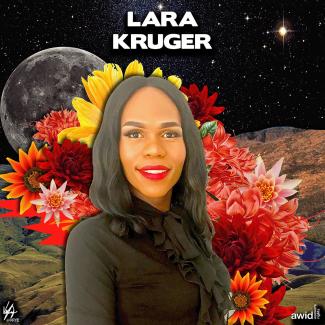
Lara fue una muy conocida y querida DJ de radio en la FM Motsweding, en Sudáfrica.
Fue una de las primeras conductoras abiertamente transgénero en una estación de radio comercial. Trabajó mucho para echar luz sobre los temas LGTBI.
El activismo de Lara comenzó a temprana edad, cuando defendía vivamente su derecho a vestirse y comportarse de una forma que le resultara cómoda y lo hacía frente a integrantes de su comunidad que todavía no entendían qué significaba ser transgénero.
Meet Clemencia Carabalí Rodallega, an extraordinary Afro-Colombian feminist.
She has worked relentlessly for three decades towards the safeguarding of human rights, women’s rights and peace-building in conflict areas on the Pacific Coast of Colombia.
Clemencia has made significant contributions to the fight for truth, reparations and justice for the victims of Colombia’s civil war. She received the National Award for the Defense of Human Rights in 2019, and also participated in the campaign of newly elected Afro-Colombian and long-time friend, vice-president Francia Marquez.
Although Clemencia has faced and continues to face many hardships, including threats and assassination attempts, she continues to fight for the rights of Afro-Colombian women and communities across the country.

Pour renforcer notre voix et notre pouvoir collectifs en faveur de davantage de financement de meilleure qualité pour l’organisation des mouvements féministes, de défense des droits des femmes, des personnes LBTQI+ et des mouvements alliés dans le monde entier.
Patience is a global human resources professional with over a decade of experience in human resources (HR) management in the not-for-profit sector. Patience previously worked at Mercy Corps as the Global HR Officer for Africa supporting the full employee life cycle for expatriates in the Eastern and Southern African region and provided HR technical guidance to Human Resources leaders in country offices within the African region. Before joining the global people team, she was the Country Human Resources and Safeguarding Focal Point, she was part of the senior management team leading on all human resources and safeguarding matters. Prior to Mercy Corps she led the HR and Operations department at SNV Netherlands Development Organization and was a member of the country management team. She also has HR Consultancy experience which she gained while she was still studying for her BSc Honors degree in Human Resource Management. She has a passion for HR, loves working with people and she takes wellbeing and safeguarding as her core values and in her professional work. As someone who loves sports, you can also find Patience at the basketball court, the tennis court or on the soccer field.
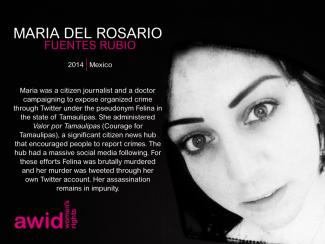
Maria a consacré la majeure partie de sa vie à l’intégration d’une perspective féministe et de la parité hommes-femmes dans les activités institutionnelles et organisationnelles, ainsi qu’au renforcement des capacités.
Enfant, Maria s'intéressait beaucoup à l'art, à la communication, à la nature, à la littérature et à la justice, en particulier pour les femmes et les groupes marginalisés.
Elle a milité en faveur droits sexuels et reproductifs et était membre du Conseil national pour une éducation intégrale à la sexualité. Celleux qui l’aimaient se souviennent d’elle comme d’une « combattante passionnée et infatigable », résolument engagée en faveur des droits des femmes et des enfants
 |
 |
 |
 |
 |
|
|
|
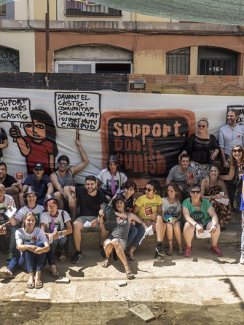
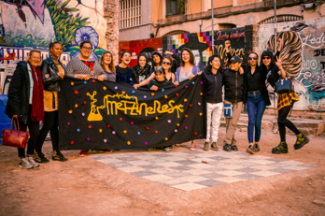
Activistas de Metzineres en acción |
The global survey is a key pillar of the third iteration of our action-oriented research: “Where is the Money for Feminist Organizing?” (in short, Where is the Money or WITM). The results of the survey will be further elaborated and explored through in-depth conversations with activists and funders and cross-referenced with other existing analysis and research on the state of funding for feminists and gender equality globally.
The full “Where is the Money for Feminist Organizing” report will be published in 2026.
 To learn more how AWID has been shining a light on money for and against feminist movements check out the work of our Resourcing Feminist Movements Initiative here.
Durante sus 38 años de carrera, Debbie Stothard ha trabajado con diferentes comunidades y activistas para involucrar en los derechos humanos y la justicia a los Estados, organizaciones intergubernamentales y otras partes interesadas a lo largo de Asia, África, Europa y las Américas. Su trabajo está enfocado en las prioridades temáticas de las empresas y en los derechos humanos, en la prevención de las atrocidades y en el liderazgo de las mujeres. Por ello, ha sido facilitadora o persona de referencia en casi 300 eventos de capacitación durante los últimos 15 años. La mayoría fueron talleres orientados a las bases, desarrollados en el terreno, centrados en la incidencia en derechos humanos, alfabetización económica, en empresas y derechos humanos, y en justicia transicional y prevención de las atrocidades. Su trabajo en justicia transicional y prevención de las atrocidades ha estado enfocado principalmente en Burma/Myanmar, aunque también ha proveído asesoramiento para responder a situaciones de otros países alrededor del mundo.
Entre 1981 y 1996, Debbie trabajó como periodista especializada en crímenes, activista estudiantil, analista política, académica, consejera de gobierno y proveedora de comida en Malasia y Australia, mientras era voluntaria en causas de derechos humanos. En 1996, fundó ALTSEAN-Burma, que encabezó una variedad de programas de innovación y empoderamiento en derechos humanos. Entre ellos, el programa intensivo permanente de liderazgo de ALTSEAN para diferentes mujeres jóvenes de Burma, que, durante los últimos 22 años, ha ayudado a fortalecer y ampliar el liderazgo de las mujeres en las zonas afectadas por el conflicto. Se desempeñó como integrante de la Junta de la Federación Internacional de Derechos Humanos (FIDH) durante 9 años como secretaria general adjunta (2010-2013) y secretaria general (2013-2019), durante los cuales promovió la misión y el perfil de la FIDH en, aproximadamente, 100 reuniones y conferencias por año.
So'oalo was a fervent human rights advocate, especially pertaining to the rights of the LGBTQI community in the Pacific.
She was a member of the Samoa Fa’afafine Association (SFA) and a passionate advocate for the acknowledgement of a third gender in the island country. Under her leadership, the SFA pushed for the recognition of the validity and rights of the fa’afafine community.
She was also a pioneer in articulating the links between human rights, exploitation of fa’afafines in Samoa and the Pacific, and the health, wellbeing and security of the LGBTQI community.
She was an inspiration, a visionary and her dedication to the pursuit of rights for her community is admirable and will be remembered.