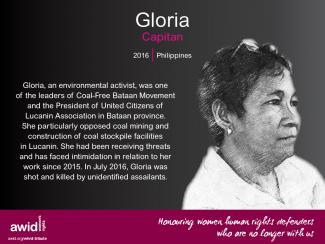
Gloria Capitan
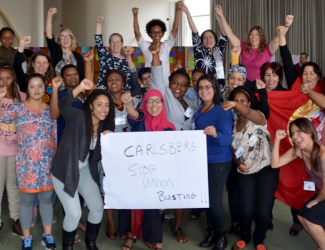
Women human rights defenders (WHRDs) worldwide defend their lands, livelihoods and communities from extractive industries and corporate power. They stand against powerful economic and political interests driving land theft, displacement of communities, loss of livelihoods, and environmental degradation.
Extractivism is an economic and political model of development that commodifies nature and prioritizes profit over human rights and the environment. Rooted in colonial history, it reinforces social and economic inequalities locally and globally. Often, Black, rural and Indigenous women are the most affected by extractivism, and are largely excluded from decision-making. Defying these patriarchal and neo-colonial forces, women rise in defense of rights, lands, people and nature.
WHRDs confronting extractive industries experience a range of risks, threats and violations, including criminalization, stigmatization, violence and intimidation. Their stories reveal a strong aspect of gendered and sexualized violence. Perpetrators include state and local authorities, corporations, police, military, paramilitary and private security forces, and at times their own communities.
AWID and the Women Human Rights Defenders International Coalition (WHRD-IC) are pleased to announce “Women Human Rights Defenders Confronting Extractivism and Corporate Power”; a cross-regional research project documenting the lived experiences of WHRDs from Asia, Africa and Latin America.
"Women Human Rights Defenders confronting extractive industries: an overview of critical risks and Human Rights obligations" is a policy report with a gender perspective. It analyses forms of violations and types of perpetrators, quotes relevant human rights obligations and includes policy recommendations to states, corporations, civil society and donors.
"Weaving resistance through action: Strategies of Women Human Rights Defenders confronting extractive industries" is a practical guide outlining creative and deliberate forms of action, successful tactics and inspiring stories of resistance.
The video “Defending people and planet: Women confronting extractive industries” puts courageous WHRDs from Africa, Asia, and Latin America in the spotlight. They share their struggles for land and life, and speak to the risks and challenges they face in their activism.
Challenging corporate power: Struggles for women’s rights, economic and gender justice is a research paper outlining the impacts of corporate power and offering insights into strategies of resistance.
AWID acknowledges with gratitude the invaluable input of every Woman Human Rights Defender who participated in this project. This project was made possible thanks to your willingness to generously and openly share your experiences and learnings. Your courage, creativity and resilience is an inspiration for us all. Thank you!
We welcome applications across the full range of thematic areas and intersections important to feminist and gender justice movements.
De hecho, el 38% de nuestra membresía tienene menos de 30 años de edad.
Creemos que lxs activistas jóvenes son el presente y el futuro de la lucha por los derechos de las mujeres. Mediante nuestro programa «Activismo Joven Feminista» que atraviesa todos los aspectos de nuestro trabajo, promovemos a líderes jóvenes en el movimiento mundial por los derechos de las mujeres. A la vez, al definir a este programa como una de nuestras Áreas Prioritarias, contribuimos con nuevos análisis a los debates actuales para asegurarnos que las jóvenes activistas feministas sean capaces de articular sus prioridades y darle voz a los temas que les preocupan.
กำหนดเส้นตายในการปิดรับรายละเอียดกิจกรรมใหม่ : 1 กุมภาพันธ์ 2567
ด้วยเจตนารมณ์ของประเด็นสาระหลักของเวทีนี้ เราจึงขอเชิญท่านร่วมเสนอหัวข้อและรูปแบบของกิจกรรม อันหลากหลายซึ่งจะ
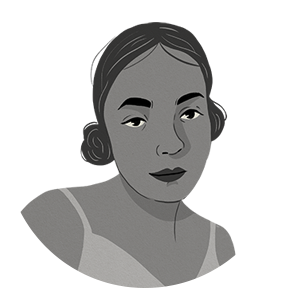
Zuhour Mahmoud est la stratège en communication de Kohl. Écrivaine, rédactrice et DJ à ses heures, elle est basée à Berlin. Son travail se concentre sur les approches critiques de la musique, de la technologie et de la politique et sur leurs cycles de vie au sein de la sphère numérique.
Nous vous invitons à explorer nos sections Domaines prioritaires et Informez-vous ou utlisez l'outil de recherche pour trouver des informations sur un suject spécifique.
Nous recommendons particulièrement la consultation de notre boîte à outils « Où est l’argent pour les droits des femmes ? » (« Where Is The Money for Women's Rights? », WITM). Cette boîte à outils est une méthodologie de recherche autogérée pour soutenir les individus et les organisations qui souhaitent mener leur propre recherche sur les tendances de financement en adaptant la méthodologie de recherche de l’AWID à une région, une question ou une population spécifique.
Regístrate para ser miembrx de AWID y conectar con más de 9,600 movimientos feministas globales y co-crear una variedad de plataformas y espacios diseñados especialmente para activistas y organizaciones, desde espacios de aprendizaje hasta espacios de solidaridad y encuentros entre miembrxs.
La comunidad de membresía de AWID está disponible como una app. Descarga la app y comienza a conectar con movimientos!
 |
 |
When I was 6, I learned that my grandfather owned a movie theater. My mother recounted to me how it had opened in the early 1960s, when she was also about 6 years old. She remembered that they screened The Sound of Music on the first night...

The Women’s Working Group on Financing for Development (WWG on FfD), an alliance of women’s rights organizations and networks, was launched in October 2007 to advocate for the advancement of gender equality, women’s empowerment and human rights in the FfD related UN processes.
Organizado por les socies de Alliance for Feminist Movements: AWID, Prospera, Consorcio Poner en Práctica lo que se Predica
Sesión 1: Financiar la solidaridad en tiempos de transición
📅 Martes, 28 de abril | 3:30 - 4:30 pm
Sesión 2: Financiamiento autónomo: Cómo los movimientos feministas se sostienen a sí mismos
📅 Miércoles, 29 de abril | 9:30 - 11:00 am
Sesión 3: Financiando futuros feministas: Un programa de conversación sobre lo que sigue para el financiamiento de los movimientos
📅 Jueves, 30 de abril | 10:30 - 11:30 am
¡Detalles próximamente!
You are welcome to submit up to 2 activities as the organizer. You can still be a partner on other applications.
هل اختبرتم من قبل لحظات من الصفاء الذهني العميق أثناء أو بعد ممارسة الجنس؟
📅 Du 27 au 28 avril
De Nami à Naarm est un rassemblement féministe intensif de deux jours visant à créer des ponts entre les féministes du Pacifique, aux Fidji, et la conférence Women Deliver. Leur programme comprendra des sessions de stratégie et d’apprentissage axées sur la justice de genre et environnementale, s’appuyant sur leur programme Power to Poverty ainsi que sur le travail des petit·e·s agriculteur·rice·s locaux·ales et des défenseur·euse·s des terres.