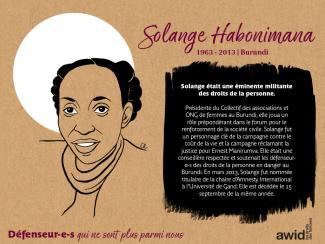
Solange Habonimana
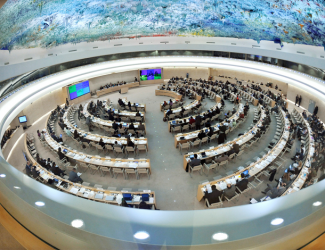
The Human Rights Council (HRC) is the key intergovernmental body within the United Nations system responsible for the promotion and protection of all human rights around the globe. It holds three regular sessions a year: in March, June and September. The Office of the UN High Commissioner for Human Rights (OHCHR) is the secretariat for the HRC.
Debating and passing resolutions on global human rights issues and human rights situations in particular countries
Examining complaints from victims of human rights violations or activist organizations on behalf of victims of human rights violations
Appointing independent experts (known as “Special Procedures”) to review human rights violations in specific countries and examine and further global human rights issues
Engaging in discussions with experts and governments on human rights issues
Assessing the human rights records of all UN Member States every four and a half years through the Universal Periodic Review
AWID works with feminist, progressive and human rights partners to share key knowledge, convene civil society dialogues and events, and influence negotiations and outcomes of the session.
Pour renforcer notre voix et notre pouvoir collectifs en faveur de davantage de financement de meilleure qualité pour l’organisation des mouvements féministes, de défense des droits des femmes, des personnes LBTQI+ et des mouvements alliés dans le monde entier.
Claudia es Maestra en Igualdad y Equidad para el Desarrollo, psicóloga feminista, activista por la defensa de los derechos humanos desde hace 30 años y por los derechos de las mujeres desde hace 24 años.
Trabajando en El Salvador, Claudia está cofundadora y directora Ejecutiva de la Asociación Mujeres Transformando, desde hace 16 años es defensora de derechos laborales de las trabajadoras del sector maquila textil y confecciones. Ha colaborado en la formulación de iniciativas de Ley, propuestas de políticas públicas e investigaciones tendientes a mejorar la calidad del empleo para las trabajadoras de este sector, además de trabajar incansablemente en el fortalecimiento organizativo y empoderamiento de las obreras de la maquila textil y bordadoras a domicilio.
Participa activamente en acciones de incidencia a nivel nacional, regional e internacional por la defensa y reivindicación de los derechos laborales de la clase trabajadora del Sur Global desde una perspectiva, feminista, anticapitalista, antipatriarcal y desde la toma de conciencia de clase y de género. Es parte del Consejo Directivo de la Iniciativa Spootlithg y del Grupo Nacional de Referencia de la minsma. Tambien es parte del Grupo Asesor de la Sociedad Civil de ONUMujeres.
El cuidado como base de las economías
La pandemia de COVID-19 puso de relieve la crisis mundial de los cuidados y demostró los fracasos del modelo económico dominante que está destruyendo servicios públicos esenciales, infraestructuras sociales y sistemas de atención en todo el mundo.
Cozinha Ocupação 9 Julho, Asociación de Mujeres Afrodescendientes del Norte del Cauca (ASOM) y Metzineres son solo algunos ejemplos de economías de cuidado que centran las necesidades de las personas marginalizadas y la Naturaleza, así como el trabajo de cuidados, el trabajo reproductivo, invisibilizado y no remunerado necesario para garantizar la sostenibilidad de nuestras vidas, nuestras sociedades y nuestros ecosistemas.
The global survey is a key pillar of the third iteration of our action-oriented research: “Where is the Money for Feminist Organizing?” (in short, Where is the Money or WITM). The results of the survey will be further elaborated and explored through in-depth conversations with activists and funders and cross-referenced with other existing analysis and research on the state of funding for feminists and gender equality globally.
The full “Where is the Money for Feminist Organizing” report will be published in 2026.
 To learn more how AWID has been shining a light on money for and against feminist movements check out the work of our Resourcing Feminist Movements Initiative here.
Sanyu est une féministe panafricaine basée à Nairobi, au Kenya. Elle a passé la dernière décennie à soutenir les mouvements syndicaux, féministes et de défense des droits humains en faveur de la redevabilité des entreprises, de la justice économique et de la justice de genre. Elle a travaillé avec le Business & Human Rights Resource Centre, IWRAW Asia Pacific et la Commonwealth Human Rights Initiative. Elle est titulaire d’un master en droits humains et d’une licence en droit de l’Université de Nottingham. Ses écrits ont été publiés dans le Business and Human Rights Journal, Human Rights Law Review, Open Global Rights, Open Democracy et d’autres encore. Pendant son temps libre, elle adore se promener en forêt et chasser les papillons.

Eni Lestari is an Indonesian domestic worker in Hong Kong and a migrant rights activist. After escaping her abusive employer, she transformed herself from a victim into an organizer for domestic workers in particular, and migrant workers in general. In 2000, she founded the Association of Indonesian Migrant Workers (ATKI-Hong Kong) which later expanded to Macau, Taiwan, and Indonesia. She was the coordinator and the one of the spokesperson of the Asia Migrants Coordinating Body (AMCB) - an alliance of grassroots migrants organisations in Hong Kong coming from Indonesia, Philippines, Thailand, Nepal and Sri Lanka. She is also the current chairperson of International Migrants Alliance, the first-ever global alliance of grassroots migrants, immigrants, refugees, and other displaced people.
She has held important positions in various organizations including and current Regional Council member of Asia Pacific Forum on Women, Law and Development (APWLD), former Board Member of Global Alliance Against Traffic in Women (GAATW), spokesperson for Network of Indonesian Migrant Workers (JBMI), advisor for ATKI-Hong Kong and Macau as well as the Association of Returned Migrants and Families in Indonesia (KABAR BUMI). She has been an active resource person in forums organized by academics, interfaith groups, civil societies, trade unions and many others at national, regional, and international arenas.
She has actively participated in United Nations assemblies/conferences on development and migrants’ rights and was chosen as a speaker at the opening of the UN General Assembly on Large Movement of Migrants and Refugees in 2016 in New York City, USA. She received nominations and awards such as Inspirational Women by BBC 100 Women, Public Hero Award by RCTI, Indonesian Club Award, and Non-Profit Leader of Women of Influence by American Chamber Hong Kong, and Changemaker of Cathay Pacific.

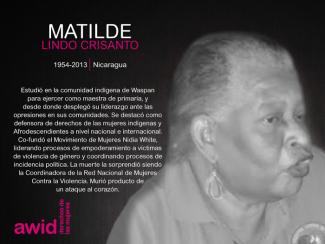
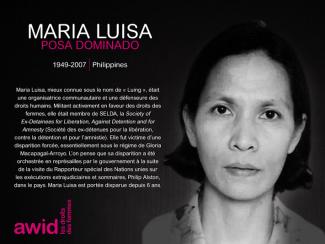
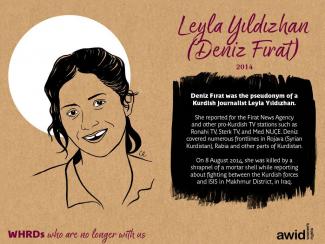
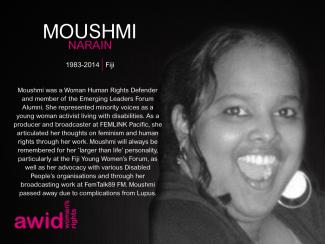
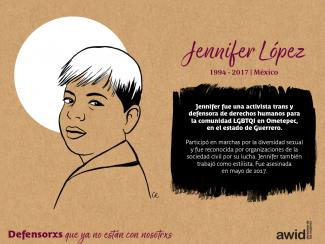
AWID honors feminists and Women Human Rights Defenders (WHRDs) who have died and whose contributions to the advancement of human rights are very much missed.
AWID’s WHRD Tribute is a photo exhibition featuring feminist, women’s rights and social justice activists from around the world who are no longer with us.
The Tribute was first launched in 2012, at AWID’s 12th International Forum, in Turkey. It took shape with a physical exhibit of portraits and biographies of feminists and activists who passed away. The initiative was described by Forum participants as being a unique, moving and energizing way to commemorate our collective history.
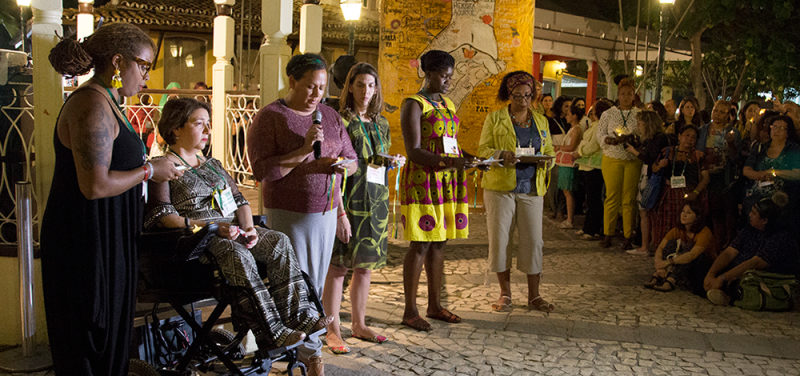
At the 13th International Forum in Brazil, we honored activists and WHRDs with a mural unveiling ceremony in four languages, a dance performance and a Brazilian ritual.
In between the events, the Tribute lives as an online gallery that is updated every year as part of the 16 Days Campaign Against Gender Based Violence (25 November – 10 December).
Since 2012, through our annual Tribute to Women Human Rights Defenders (WHRDs) no longer with us, over 400 feminists and WHRDs from 11 regions and 80 countries have been featured.
AWID would like to thank the families and organizations who shared their personal stories and contributed to this memorial. We join them in continuing the remarkable work of these women and forging efforts to ensure justice is achieved in cases that remain in impunity.
Visit the WHRD Tribute online exhibit
In addition to paying homage to these incredible activists, the Tribute particularly sheds light on the plight of WHRDs who have been assassinated or disappeared.
One third of those featured in the Tribute were activists who have been murdered or disappeared in suspicious circumstances. They were specifically targeted for who they were and the work they did to challenge:
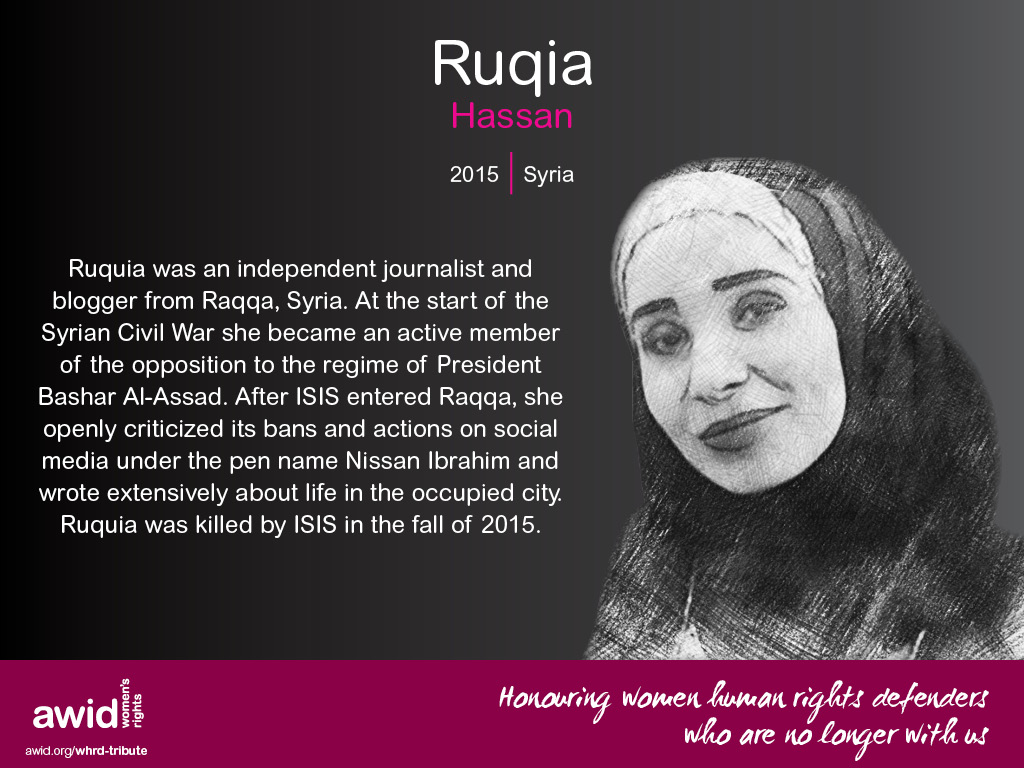
Women like Agnes Torres, from Mexico, was killed because of her gender identity and sexual orientation; or Cheryl Ananayo, an environmental activist from the Philippines was assassinated as she struggled against a mining company; or Ruqia Hassan, a Syrian independent journalist and blogger killed for her criticism of ISIS. And so many others.
With the WHRD Tribute, we bring them all into our collective memory and carry their legacy of struggle as our torch in the feminists’ and women’s rights movements. We recognize that security, safety and self-care must be a priority in all our political agendas. And we call on to governments and international bodies to collectively address violence against feminists and WHRDs.
No, we are asking for just one completed survey per group.