Jean-Marc Ferré | Flickr (CC BY-NC-ND 2.0)
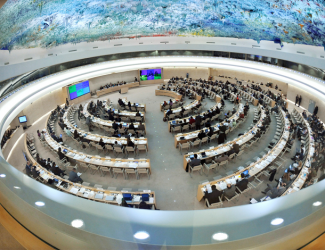
A general view of participants at the 16th session of the Human Rights Council in Geneva, Switzerland.

Human Rights Council (HRC)

The Human Rights Council (HRC) is the key intergovernmental body within the United Nations system responsible for the promotion and protection of all human rights around the globe. It holds three regular sessions a year: in March, June and September. The Office of the UN High Commissioner for Human Rights (OHCHR) is the secretariat for the HRC.

The HRC works by:

  • Debating and passing resolutions on global human rights issues and human rights situations in particular countries

  • Examining complaints from victims of human rights violations or activist organizations on behalf of victims of human rights violations

  • Appointing independent experts (known as “Special Procedures”) to review human rights violations in specific countries and examine and further global human rights issues

  • Engaging in discussions with experts and governments on human rights issues

  • Assessing the human rights records of all UN Member States every four and a half years through the Universal Periodic Review

Learn more about the HRC


AWID works with feminist, progressive and human rights partners to share key knowledge, convene civil society dialogues and events, and influence negotiations and outcomes of the session.

With our partners, our work will:

◾️ Monitor, track and analyze anti-rights actors, discourses and strategies and their impact on resolutions

◾️ Raise awareness of the findings of the 2017 and 2021 OURs Trends Reports.

◾️Support the work of feminist UN experts in the face of backlash and pressure

◾️Advocate for state accountability
 
◾️ Work with feminist movements and civil society organizations to advance rights related to gender and sexuality.
 

Related Content

Film club - outrun

Out Run (2016) English | Tagalog with English subtitles

Mobilizing working-class transgender hairdressers and beauty queens, the dynamic leaders of the world’s only LGBT political party wage a historic quest to elect a trans woman to the Philippine Congress.


Join the Live Conversation with S. Leo Chiang and Johnny Symons, the filmmakers of “Out Run”

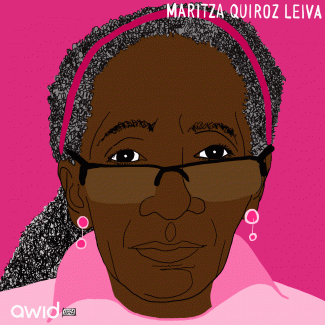
Maritza Quiroz Leiva

Maritza Quiroz Leiva was an Afro Colombian social activist, a community leader and women human rights defender. Among the 7.7 million Colombians internally displaced by 50 years of armed conflict, Maritza dedicated her advocacy work to supporting the rights of others, particularly in the Afro Colombian community who suffered similar violations and displacement.

Maritza was the deputy leader of the Santa Marta Victim's Committee, and an important voice for those seeking justice in her community, demanding reparations for the torture, kidnapping, displacement, and sexual violence that victims experienced during the armed conflict. She was also active in movement for land redistribution and land justice in the country. 

On 5 January 2019, Maritza was killed by two armed individuals who broke into her home. She was 60 years old. 

Maritza joined five other Colombian social activists and leaders who had been murdered just in the first week of 2019. A total of 107 human rights defenders were killed that year in the country. 

When and Where will the Forum be?

2-5 December, 2024, Bangkok, Thailand! We will gather at the Queen Sirikit National Convention Center (QSNCC) as well as virtually online.

Snippet - Section Two Funding Resources in One Place - EN

A Universe of Funders & Funding Commitments

Feminist film club - holding up the skies

Conoce  el programa del Club de Cine Feminista de AWID «Holding up the Skies» [«Sosteniendo los cielos»], una serie de películas sobre realidades feministas de África y la Diáspora Africana, curada por Gabrielle Tesfaye.

MIRAR

Roxana Reyes Rivas

Roxana Reyes Rivas, filósofa, feminista, lesbiana, poeta, política y activista por los derechos humanos de las mujeres y las personas LGBTI en Costa Rica. Dueña de una pluma afilada y un humor agudo, con la risa a flor de piel. Nació en 1960 y creció en San Ramón de Alajuela, cuando era una zona rural, y su vida entera rompería con los mandatos de lo que significaba ser mujer. 

Desde El Reguero (grupo de lesbianas en Costa Rica) organizó festivales lésbicos por más de 10 años, espacios lúdico-formativos de encuentro en momentos donde el gobierno y la sociedad costarricense perseguía y criminalizaba la existencia lésbica. Para cientos de mujeres los festivales lésbicos eran el único lugar donde podían ser ellas mismas y encontrarse con otras como ellas.

Roxana decía que fundar partidos políticos era uno de sus pasatiempos. “Es importante que en Costa Rica la gente entienda que hay otras formas de hacer política, que muchos temas es necesario resolverlos colectivamente”. Fue una de lxs fundadores de los partidos Nueva Liga Feminista y VAMOS, un partido centrado en los derechos humanos.  

“El oficio de la filosofía es meter la puya, ayudar a que la gente empiece a preguntarse cosas. La filósofa que no irrita a nadie, no está haciendo bien su trabajo”. Durante 30 años, Roxana fue profesora de filosofía en universidades públicas costarricenses. De su mano generaciones enteras de estudiantes reflexionaron sobre los dilemas éticos en la ciencia y la tecnología. 

La herramienta favorita de Roxana era el humor, ella creó el premio del Chiverre Incandescente, un reconocimiento a la estupidez que otorgaba vía redes sociales a diferentes figuras públicas, ridiculizando sus exabruptos y afirmaciones anti-derechos.

Un cáncer agresivo se llevó a Roxana a fines del 2019, antes de que alcanzara a publicar la compilación de sus poemas, un último regalo de la mente creativa de una feminista que siempre levantó la voz para denunciar la injusticia. 

Body

¿Cuándo puedo registrarme para el Foro? ¿Cuánto cuesta registrarse? ¿Qué incluye la inscripción?

Las inscripciones comenzarán a principios de 2024. Pronto anunciaremos la fecha exacta de inscripción y el valor correspondiente. La inscripción incluirá la participación en el Foro, así como almuerzo y refrigerios (el desayuno se proporcionará en los hoteles) y una cena en el lugar.

Snippet2 - WCFM Regional focus: - EN

globe icon

Regional focus:

Filter for funders that support initiatives in your geographical area.

ours chapter 4

Chapter 4
Anti-Rights Actors

A complex and evolving network of anti-rights actors is exerting increasing influence in international spaces as well as domestic politics. Often backed by obscure funding, these actors build tactic alliances across issues, regions, and faiths to increase their impact.

Read more

Dorothy Masuka

“Je n’avais pas prévu d’être chanteuse; c’est le chant qui avait prévu de m’habiter”  - Dorothy Masuka (interview avec Mail & Guardian)

Dorothy Masuka, née en 1935 à Bulawayo (alors en Rhodésie du Sud, aujourd’hui le Zimbabwe), a grandi en Afrique du Sud. Elle est devenue une auteure, compositrice, chanteuse de jazz et activiste renommée, et fervente partisane de la lutte contre l’apartheid. Qualifiée d’“architecte du discours de la musique populaire de libération africaine”, Dorothy a souvent chanté la politique dans des langues africaines autochtones et tout au long de son oeuvre, et s’est opposée aux politiques racistes du gouvernement sud-africain. 

L’une de ses chansons, intitulée "Dr Malan" (du nom de l'homme politique pro-apartheid D.F. Malan) a été censurée. Elle a poursuivi avec l’enregistrement de "Lumumba" (1961), une chanson sur l'assassinat du leader anticolonialiste Patrice Lumumba. Le travail et l'activisme de Dorothy ont alors attiré l'attention de la section spéciale de la police sud-africaine, ce qui la contraignit à un exil politique qui s’étendit sur plus de 3 décennies. Tout au long de cette période, elle travailla avec des groupes pro-indépendantistes, dont le Congrès national africain. En 1992, alors que l'apartheid commençait à s'effondrer et que Nelson Mandela fut libéré de prison, elle retourna en Afrique du Sud. 

Parmi ses autres œuvres, on peut citer sa première chanson, enregistrée en 1953 et intitulée "Hamba Notsokolo", qui fut un tube des années 1950 et un grand classique. Elle composa également "El Yow Phata Phata", une chanson adaptée par Miriam Makeba qui contribua à offrir une popularité internationale à "Pata, Pata"

Ancrés dans la résistance, la musique et l’activisme de Dorothy étaient entrelacés et laissent un merveilleux héritage inspirant. Elle était également très connue sous le nom de “Auntie Dot”.   

Le 23 février 2019, Dorothy s’est éteinte à Johannesburg à 83 ans des suites d’une maladie.


Regardez l'interview de Dorothy Masuka pour Mail & Guardian (seulement en anglais)

Écoutez sa musique :

Hamba Nontsokolo
El Yow Phata Phata
Body

L'AWID octroie-t-elle des bourses permettant d'assister au Forum ?

Notre fonds d'accès offrira un nombre limité de bourses pour financer la participation d'activistes qui ne pourraient autrement pas se rendre sur place, sachant qu’ils·elles ne bénéficient pas du soutien de bailleurs de fonds leur permettant de couvrir leur participation. Si d'autres possibilités s'offrent à vous, n'hésitez pas à les explorer. Nous ferons de notre mieux pour accorder un maximum de bourses, et échangerons plus d'informations concernant cette procédure et les modalités de candidature au début de l’année 2024.

Snippet - Take the quiz

Take the Quiz!

"Where is the money for feminist organizing?"

How much do you know about feminist resourcing? 📊 Take AWID's "Where is the Money for Feminist Organizing?" quiz to test your knowledge:


Take the quiz onlineDownload and print it


Derechos en riesgo: Hora de actuar (Informe OURS 2021)

Informe:

Derechos en riesgo: Hora de actuar – Informe sobre tendencias 2021

El informe más reciente del Observatorio sobre la Universalidad de los Derechos desarma discursos como los de la «ideología de género», el «genocidio prenatal» y el «imperialismo cultural». También investiga los flujos de fondos para CitizenGo, la Alliance Defending Freedom/ADF Internacional y otros grupos anti-derechos. En este informe también se puede encontrar un análisis de los sistemas regionales de derechos humanos así como de las estrategias exitosas y los logros feministas.

Obtén el informe

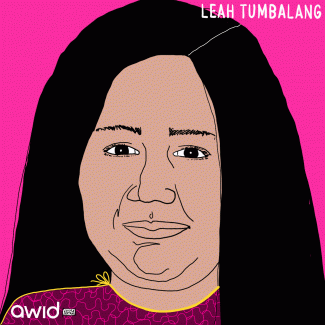
Leah Tumbalang

Leah Tumbalang was a Lumad woman of Mindanao in the Philippines. The story of Lumad Indigenous peoples encompasses generations of resistance to large-scale corporate mining, protection of ancestral domains, resources, culture, and the fight for the right to self-determination. 

Leah was a Lumad  leader as well as a leader of Kaugalingong Sistema Igpasasindog to Lumadnong Ogpaan (Kasilo), a Lumad and peasant organization advocating against the arrival of mining corporations in Bukidnon, Mindanao province. She was unwavering in her anti-mining activism, fervently campaigning against the devastating effects of mineral extraction on the environment and Indigenous peoples’ lands. Leah was also an organizer of the Bayan Muna party-list, a member of the leftist political party Makabayan.

For almost a decade, Leah (along with other members of Kasilo) had been receiving threats for co-leading opposition against the deployment of paramilitary groups believed to be supported by mining interests. 

“Being a Lumad leader in their community, she is at the forefront in fighting for their rights to ancestral land and self-determination.” - Kalumbay Regional Lumad Organization

Being at the forefront of resistance also often means being a target of violence and impunity and Leah not only received numerous death threats, but was murdered on 23 August 2019 in Valencia City, Bukidnon. 

According to a Global Witness report, “the Philippines was the worst-affected country in sheer numbers” when it comes to murdered environmental activists in 2018. 


Read the Global Witness report, published July 2019

Find out more about Lumad women in the Philippines and their inter-generational struggle for self-determination