Contenu lié
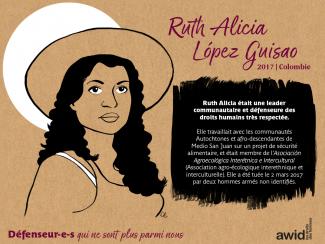
Front Line Defenders: Assassinat de Ruth Alicia Lopez Guisao
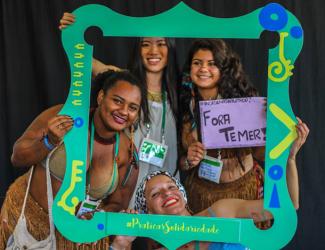
Young feminist activists play a critical role in women’s rights organizations and movements worldwide by bringing up new issues that feminists face today. Their strength, creativity and adaptability are vital to the sustainability of feminist organizing.
At the same time, they face specific impediments to their activism such as limited access to funding and support, lack of capacity-building opportunities, and a significant increase of attacks on young women human rights defenders. This creates a lack of visibility that makes more difficult their inclusion and effective participation within women’s rights movements.
AWID’s young feminist activism program was created to make sure the voices of young women are heard and reflected in feminist discourse. We want to ensure that young feminists have better access to funding, capacity-building opportunities and international processes. In addition to supporting young feminists directly, we are also working with women’s rights activists of all ages on practical models and strategies for effective multigenerational organizing.
We want young feminist activists to play a role in decision-making affecting their rights by:
Fostering community and sharing information through the Young Feminist Wire. Recognizing the importance of online media for the work of young feminists, our team launched the Young Feminist Wire in May 2010 to share information, build capacity through online webinars and e-discussions, and encourage community building.
Researching and building knowledge on young feminist activism, to increase the visibility and impact of young feminist activism within and across women’s rights movements and other key actors such as donors.
Promoting more effective multigenerational organizing, exploring better ways to work together.
Supporting young feminists to engage in global development processes such as those within the United Nations
Collaboration across all of AWID’s priority areas, including the Forum, to ensure young feminists’ key contributions, perspectives, needs and activism are reflected in debates, policies and programs affecting them.
Nous vous invitons à explorer nos sections Domaines prioritaires et Informez-vous ou utlisez l'outil de recherche pour trouver des informations sur un suject spécifique.
Nous recommendons particulièrement la consultation de notre boîte à outils « Où est l’argent pour les droits des femmes ? » (« Where Is The Money for Women's Rights? », WITM). Cette boîte à outils est une méthodologie de recherche autogérée pour soutenir les individus et les organisations qui souhaitent mener leur propre recherche sur les tendances de financement en adaptant la méthodologie de recherche de l’AWID à une région, une question ou une population spécifique.
Contenu lié
Front Line Defenders: Assassinat de Ruth Alicia Lopez Guisao

📅Lundi 11 mars
🕒16 h 30 - 18 h HNE
Organisateurs : AWID, IJSC et NAWI
🏢 Church Center des Nations Unies, 777 United Nations Plaza, New York, 11e étage
(Interprétation en français et en espagnol disponible)
The Women’s Working Group on Financing for Development (WWG on FfD), an alliance of women’s rights organizations and networks, was launched in October 2007 to advocate for the advancement of gender equality, women’s empowerment and human rights in the FfD related UN processes.
.
Jour 3

Thanks to our global feminist community! From May to August 2024, nearly 1,200 organizations working for Women's rights, gender justice, and LBTQI+ equality shared their experiences in the WITM survey. The results offer a unique picture of how feminist movements are resourced and where gaps remain.
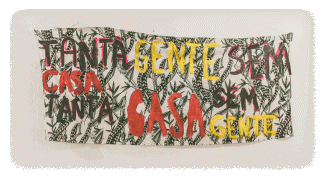
Nació en Bahía, la parte noreste de Brasil. Es inmigrante, activista social y madre de 8 hijxs.
Carmen experimentó la falta de vivienda a los 35 años, después de migrar sola a São Paulo. Esto la llevó a convertirse en una feroz defensora de las comunidades vulnerables, marginalizadas e invisibilizadas más afectadas por la crisis de la vivienda. Eventualmente se convirtió en una de las fundadoras del MSTC en 2000.
Como organizadora política visionaria y líder actual del MSTC, el trabajo de Carmen ha puesto al descubierto la crisis de la vivienda de la ciudad y ha inspirado a otrxs sobre diferentes formas de organizar y gestionar las ocupaciones.
Se mantuvo firme al frente de varias ocupaciones. Uno de ellos es la Ocupación 9 de Julho, que ahora sirve como escenario para la democracia directa y un espacio donde todxs pueden ser cuidadxs, escuchadxs, apreciadxs y trabajar juntos.
Carmen ha sido celebrada durante mucho tiempo por su audacia al devolver la vida a edificios abandonados en el corazón de São Paulo.
¡Si quieres saber más sobre Carmen, puedes seguir su cuenta de Instagram!
Sessions de consultation complémentaires sur la version préliminaire du document final

To build feminist-realities centered evidence on how money moves and who it is reaching