Organizing creatively, facing an increasing threat
Young feminist activists play a critical role in women’s rights organizations and movements worldwide by bringing up new issues that feminists face today. Their strength, creativity and adaptability are vital to the sustainability of feminist organizing.
At the same time, they face specific impediments to their activism such as limited access to funding and support, lack of capacity-building opportunities, and a significant increase of attacks on young women human rights defenders. This creates a lack of visibility that makes more difficult their inclusion and effective participation within women’s rights movements.
A multigenerational approach
AWID’s young feminist activism program was created to make sure the voices of young women are heard and reflected in feminist discourse. We want to ensure that young feminists have better access to funding, capacity-building opportunities and international processes. In addition to supporting young feminists directly, we are also working with women’s rights activists of all ages on practical models and strategies for effective multigenerational organizing.
Our Actions
We want young feminist activists to play a role in decision-making affecting their rights by:
Fostering community and sharing information through the Young Feminist Wire. Recognizing the importance of online media for the work of young feminists, our team launched the Young Feminist Wire in May 2010 to share information, build capacity through online webinars and e-discussions, and encourage community building.
Researching and building knowledge on young feminist activism, to increase the visibility and impact of young feminist activism within and across women’s rights movements and other key actors such as donors.
Promoting more effective multigenerational organizing, exploring better ways to work together.
Supporting young feminists to engage in global development processes such as those within the United Nations
Collaboration across all of AWID’s priority areas, including the Forum, to ensure young feminists’ key contributions, perspectives, needs and activism are reflected in debates, policies and programs affecting them.
Related Content
Ali Chavez Leeds
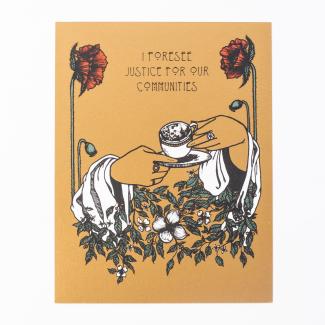
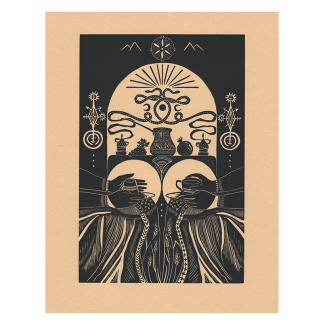
Print on paper, 4 color screen print, 8.5x11, 2016
“Tasseography”
Tasseography is the study of coffee grounds and/or tea leaves for the act of divination. It is a practice that has been passed down through the women on my Armenian side of the family and was taught to me by my mother, she from her mother, and so on. As I would watch my Nana read the coffee grounds from the Armenian coffee prepared for family and friends, I would notice how often times she would see what she would want to say. These prints say some of the things I want to see in the world; I hope you do too.
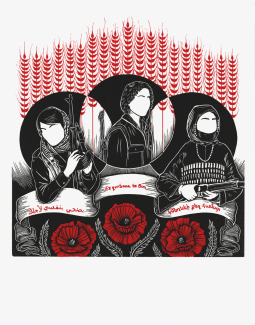
Prints on paper, Relief, 11 × 14 in, 2021
“Our Promise”
This print celebrates the resilience, sacrifice and strength of SWANA freedom fighters throughout history and the solidarity that exists. It was originally inspired by an article I read about an exhibition held in Tatvan, a district of Bitlis that was highlighting the Armenian presence in the region. My ancestors are from Bitlis, now within the borders of modern day Turkey.
Prints on paper, Relief, 8.5 × 11 in, 2020
“Looking at the Cup”
Tasseography (the study of reading coffee grounds) is a cultural practice that Armenian women have used for hundreds of years to speak among and to each other, a coded language to open up conversations, to build inter-relatedness and weave connections.
About Ali Chavez Leeds
Ali Cat Leeds (she/they) is an artist and print maker living on unceded Cowlitz, Multnomah and Confederated Tribes of Grand Ronde land at the confluence of two rivers, also know as Portland, Oregon. She produces her work under the name Entangled Roots Press. Their prints mingle the literal and metaphorical to illuminate and comment upon the world around us. Relief, screen, and letterpress prints span from the carnage of clear-cuts to the beauty of peoples movements. Ali’s prints pull from ancestral herstories and push towards liberatory futures; entangling lessons from gardens, symbols in coffee cups, woven threads from Armenia and Euskal Herria, to the printed page.
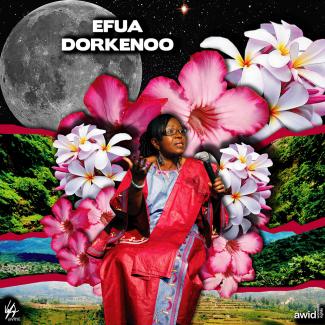
Affectueusement connue sous le nom de « Mama Efua », Efua a lutté contre les mutilations génitales féminines (MGF) pendant trois décennies et a contribué à attirer l'attention et l'action de la communauté internationale pour mettre fin à cette pratique néfaste.
En 1983, Efua a cofondé FORWARD (fondation pour la santé, la recherche et le développement des femmes), qui est devenue une organisation de premier plan dans la lutte contre les MGF. Son livre intitulé « Cutting the Rose: Female Genital Mutilation » (couper la rose), publié en 1994, est considéré comme le premier ouvrage sur les mutilations génitales féminines. Il figure parmi « Les 100 meilleurs livres africains du XXe siècle » de l’Université de Columbia.
Originaire du Ghana et infirmière de formation, Efua a rejoint l'OMS en 1995 et a réussi à faire en sorte que les mutilations génitales féminines fassent partie des agendas politiques des États membres de l'OMS. Elle a également travaillé en étroite collaboration avec le gouvernement nigérian pour élaborer une politique nationale globale qui servirait de base légale aux lois nigérianes contre les mutilations et qui est toujours en vigueur à ce jour.
Son travail de pionnière a abouti à une campagne menée par l'Afrique intitulée « The Girl Generation », qui s'est engagée à mettre fin aux MGF en une génération. Efua a montré comment une seule personne peut devenir la voix unificatrice d'un mouvement : « Une identité partagée peut aider à rassembler des activistes d'horizons différents dans un but commun ». Ces mots, emplis de sagesse, sont plus pertinents que jamais.
Membership why page - Kirthi Jayakumar quote
Participé en una actividad solo para afiliadxs, y lo que me conmovió en particular fue ver cómo había espacio para que todas compartieran, y que no había ningún juicio al respecto. Toda la sesión fue enérgica y vibrante.- Kirthi Jayakumar, fundadora de The Gender Security Project, India
إن رغبتم/ن في سحب استطلاعكم/ن ومحيه لأي سبب كان، لديكم/ن الحق الكامل بالقيام بذلك. الرجاء التواصل معنا عن طريق هذا النموذج وكتابة "استطلاع المال" في عنوان رسالتكم/ن وسنقوم بسحب ومحي أجوبتكم/ن.
Notre rapport annuel 2013 retrace les temps forts du travail que nous avons réalisé au cours de l'année, afin de contribuer à l'avancement des droits des femmes et de l'égalité des genres à travers le monde.
Nous présentons ici certains points saillants de notre analyse du contexte mondial, la position que nous adoptons en tant qu’organisation associative féministe mondiale dans ce contexte, les résultats que nous souhaitons atteindre et l’organisation de notre travail dans le but d’atteindre ces résultats.
La ternura es la resistencia más intensa
Un ciclo de cine sobre realidades feministas de Asia-Pacífico
Curado por Jess X. Snow
Con asistencia de Kamee Abrahamian y Zoraida Inglés
Editado por Kamee Abrahamian
A través de Asia y el Pacífico, y de toda su vasta diáspora, mujeres feroces y personas trans han estado luchando por un futuro en el que todxs puedan ser libres. A medida que la subida de los niveles del mar amenaza a las islas del Pacífico y las costas de Asia continental, la batalla por proteger la Tierra y los océanos se intensifica en todo el mundo. Nuestro planeta guarda una memoria geológica de todo lo que ha experimentado. El auge de la colonización, la industrialización y la destrucción ambiental está conectado con el crecimiento del Estado-Nación patriarcal binario. El poder que reside en la Tierra para reencarnar, sanar y florecer a pesar de la violencia debe, por lo tanto, conectarse con las mujeres, con la maternidad, con la indigeneidad, y con todas las fuerzas expansivas, sagradas y queer. No es una coincidencia que las realidades feministas unan la lucha por la protección de los derechos de las mujeres y de las personas trans y LGBTQ+ con la lucha por la protección de la Tierra. Desde las madres-hijas protectoras de Mauna Kea en el Reino de Hawái hasta las complejas relaciones madre-hijx de lxs refugiadxs vietnamitas, los despertares sexuales queer en la conservadora India, la recuperación del hogar en Mongolia Interior y la lucha por la liberación LGBTQ en Filipinas: esta colección de películas es una cosmología de las formas en las que las mujeres y las personas queer y trans contemporáneas de Asia-Pacífico defienden el camino hacia nuestra liberación colectiva, a través de océanos y fronteras.
Todas estas películas tienen un fuerte sentido de lugar: activistas indígenas protegen sus territorios sagrados, lxs jóvenes despejan las narrativas coloniales de su tierra natal para descubrir verdades ocultas, se exploran complejas relaciones de maternidad y cuidados, y lxs personajes recurren a sus propios cuerpos y a su sexualidad como santuario, cuando la familia y la ciudad que lxs rodea amenazan su seguridad.
AFTEREARTH
por Jess X. Snow
«Una película inolvidable, con asombrosas tomas que invocan la resistencia ambiental feminista, y cuán profundamente arraigada está esa resistencia en la historia cultural y en la tierra...»
- Jessica Horn, activista feminista panafricana, escritora y co-creadora del sitio web the temple of her skin
En el documental experimental Afterearth, cuatro mujeres luchan por preservar el volcán, el océano, la tierra y el aire para las generaciones futuras. A través de música, poesía y sentidos testimonios que honran zonas próximas al Océano Pacífico: Hawái, Filipinas, China y América del Norte, Afterearth es una meditación poética sobre la relación intergeneracional y feminista de cuatro mujeres con las tierras y las plantas de las cuales provienen.
STANDING ABOVE THE CLOUDS [DE PIE SOBRE LAS NUBES]
por Jalena Keane Lee
En Standing Above the Clouds, dos activistas nativas hawaianas (madre e hija) luchan juntas para proteger su montaña sagrada, Mauna Kea, y evitar que sea utilizada como sitio de la construcción de uno de los telescopios más grandes del mundo. Como protectoras de Mauna Kea, esta película muestra la relación interconectada entre Aloha ʻĀina (amor a la tierra) y el amor a lxs ancianxs y a las generaciones venideras.
NƯỚC (WATER/HOMELAND) [AGUA/TIERRA NATAL]
por Quyên Nguyen-Le
En el cortometraje narrativo experimental Nước (agua/tierra natal) unx adolescente vietnamita-estadounidense genderqueer desafía las narrativas dominantes sobre la Guerra de Vietnam en Los Ángeles, California. A través de potentes secuencias oníricas y quiebres de la realidad, esta película sigue el camino de lx joven que intenta reconstruir y entender la experiencia de su madre como refugiada de la Guerra de Vietnam.
KAMA’ĀINA
por Kimi Lee
En Kama’āina, una joven queer de dieciséis años debe pilotear su vida en las calles de Oahu hasta que, finalmente, guiada por una tía, encuentra refugio en el Pu’uhonua o Wai’anae, el campamento organizado de personas sin techo más grande de Hawái.
DEVI [DIOSA]
por Karishma Dev Dube
En Devi (diosa, en hindi) Tara, una joven lesbiana no declarada, arriesga tanto su familia como su tradición al aceptar su atracción por la criada de su infancia. Ambientada en Nueva Delhi, Devi es una historia de transición a la adultez, así como un comentario sobre las distinciones sociales y de clase que actualmente dividen a las mujeres en la India contemporánea.
HEADING SOUTH [YENDO AL SUR]
por Yuan Yuan
En Heading South, Chasuna, una niña de 8 años criada por su madre en la meseta de Mongolia Interior, visita a su padre violento en la gran ciudad. En casa de su padre se encuentra con una nueva incorporación a la familia, y debe aceptar el hecho de que su verdadero hogar es inseparable de su madre y de su tierra.
Outrun
por Johnny Symons & S. Leo Chiang
El largometraje Outrun sigue la trayectoria de la primera mujer transgénero del Congreso de Filipinas. Confrontando la opresión de una nación predominantemente católica, su viaje triunfal se convierte en un clamor por los derechos de las personas LGBTQ+ de todo el mundo.
Abarcando formas documentales, narrativas y experimentales, estas películas muestran que los cuidados comunitarios, el amor por unx mismx y la escucha transformadora profunda entre nuestros seres amados son un portal a las realidades feministas a las que hoy estamos dando existencia. Desde toda la zona de Asia-Pacífico y su diáspora, estas historias nos enseñan que, frente a la violencia, la ternura es la fuerza de resistencia más intensa.
Jess X. Snow es directorx de cine, artista y poeta nominadx al premio Pushcart. Es, además, autorx de libros infantiles y educadorx artísticx comunitarix . En sus relatos Jess X. Snow crea historias de inmigrantes queer asiáticxs que trascienden las fronteras, los binarismos y el tiemp
Síguenos en las redes sociales para recibir noticias sobre futuros eventos y proyecciones:
Linda Porn est une autre héroïne de l'organisation syndicale féministe et de l'activisme des travailleur·euses du sexe au niveau national (en Espagne) et transnational.
Originaire du Mexique, elle vit en Espagne depuis les années 2000. Elle est travailleuse du sexe, militante, mère célibataire et artiste multidisciplinaire.
Puisant dans ces différentes identités, elle utilise la performance, l'art vidéo et le théâtre pour rendre visibles les luttes aux intersections du transféminisme, du travail du sexe, de la migration, du colonialisme et de la maternité. Elle combine l'art et le travail du sexe tout en prenant soin de sa fille en tant que mère célibataire.
Linda appartient également à des groupes de travailleur·euses du sexe qui luttent pour leurs droits, comme le syndicat OTRAS et CATS Murcia. Elle a également cofondé le groupe 'Madrecitas' - qui rend visible et dénonce la violence institutionnelle raciste contre les familles migrantes. Violence à laquelle elle et sa fille ont été soumises en tant que travailleuse du sexe et mère célibataire migrante.
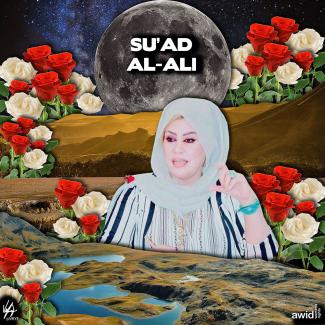
Su’ad was a strong advocate of women’s and children’s rights, and was the head of Al-Weed Al-Alaiami - an Iraqi human rights organisation.
She participated in the July 2018 demonstrations that took place in Basra and several other Iraqi cities protesting unemployment and demanding jobs and proper public services for citizens, as well as calling for the elimination of rampant corruption.
On 25 September 2018, Su’ad was assassinated in the Al-Abbasiyah district in downtown Basra. A video of the incident showed a person approaching her as she was getting into her car, firing a bullet at the back of her head and pointing another bullet at her driver Hussain Hassan, who was injured in the shoulder. Al-Ali was 46 and the mother of four children.
Forum anchors (Forum page)
Points d’ancrage thématiques
Le Forum de l’AWID s’articulera autour de 6 sujets interconnectés. Ces ‘points d’ancrage’ sont centrés sur les réalités féministes.
Могу ли я связаться с кем-либо, если у меня возникнут вопросы?
Если у вас есть какие-либо вопросы или сомнения, пожалуйста, свяжитесь с нами через форму здесь, указав «Опрос «Где деньги?» (WITM Survey) в качестве заголовка вашего сообщения. или напишите нам по адресу witm@awid.org
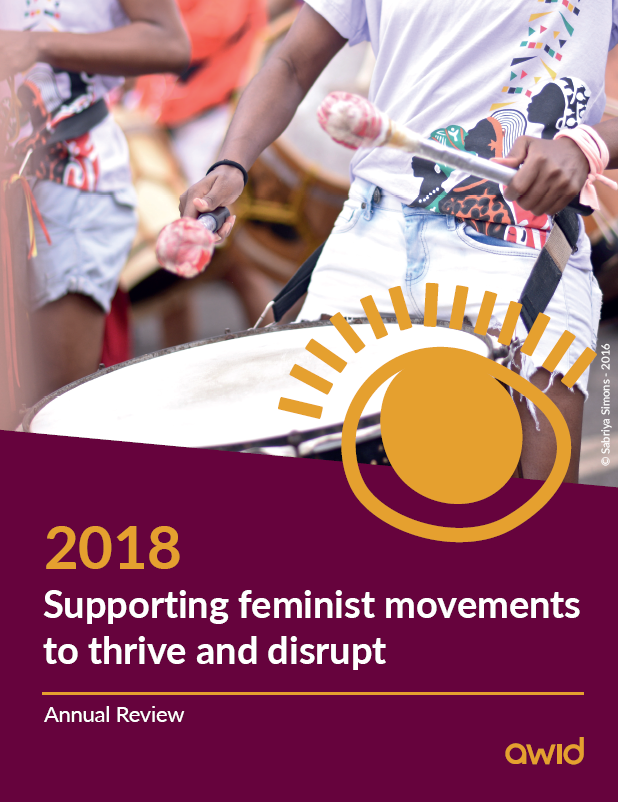
2018: Supporting feminist movements to thrive and disrupt
This report looks back and celebrates the first year of AWID’s new strategic plan as we took our first steps towards our desired outcomes of supporting feminist movements to thrive, challenging anti-rights agendas and co-creating feminist realities.
We worked with feminists to disrupt anti-rights agendas, achieving important victories fought and won within the United Nations system when ground-breaking language on structural discrimination, sexual rights, and states’ obligations were included in a number of resolutions. Yes, the multilateral system is in crisis and in need of serious strengthening but these victories are important as they contribute to the legitimacy of feminist demands, providing feminist movements with more pressure points and momentum to advance our agendas.
We tried and tested different ways to build knowledge with feminist movements through webinars, podcasts and ‘live’ conversations. We developed facilitation guides with popular educators to reclaim knowledge in the interest of social and gender justice, even about a topic as seemingly opaque as illicit funding flows. We commissioned blogs and opinions about how feminist groups fund and resource themselves and threw light on the threats facing our human rights systems.
Within AWID, we practiced and learned from our shared leadership approach, and told the story of the trials and tribulations of co-leading a global, virtual organization. We don’t have a definitive answer to what feminist leadership looks like, but we know, a year on, that a continued commitment to collective experimentation and learning has enabled us to keep building an organization that we are all excited to contribute to.
As we look back on this year, we want to thank all our friends and supporters, colleagues and companions, who have given their time and shared their wealth of knowledge and wisdom with us. We want to thank our members who helped frame our strategic plan and joined us to make feminist demands. We could not do this work without you.
Un réseau complexe et mouvant d’antidroits exerce une influence croissante dans les sphères internationales et les politiques locales. Souvent soutenu·e·s par des financements d’origine imprécise, ces acteur·rice·s renforcent leur impact en créant des alliances tactiques entre thématiques, régions et croyances.
Alors que les discours des fascistes et fondamentalistes sont tout à fait nationalistes, leurs assises idéologiques, alliances politiques et réseaux de financement ne connaissent pas de frontières. Parfois soutenus par des flux de financement d’origine obscure, en lien avec de grosses entreprises ou des partis d’extrême droite, ces groupes concluent des alliances stratégiques, voire avec des sous-groupes de mouvements féministes et pour les droits des femmes, dans certains cas, tout en s’éloignant d’éléments ouvertement extrêmes pour acquérir davantage de légitimité. Ces acteur·rice·s diffusent et reproduisent également partout dans le monde leur modèle d’organisation antidroits : leurs manières de faire campagne, de faire pression ou de mener des actions stratégiques en justice.
Sommaire
CitizenGo
Alliance Defending Freedom (ADF)
Le financement des antidroits
Les liens entre féministes antitrans et fondamentalistes chrétien·ne·s
Exercice : Cartographions le paysage
Histoire du mouvement de la résistance. Catolicadas, un outil de communication efficace pour promouvoir l’égalité des genres et les droits sexuels et reproductifs
“Afterwards
After love the first time,
Our naked bodies and minds
A hall of mirrors,
Wholly unarmed, utterly fragile,
We lie in one another's arms
Breathing with care,
Afraid to break
These crystal figurines.” - Fahmida Riaz
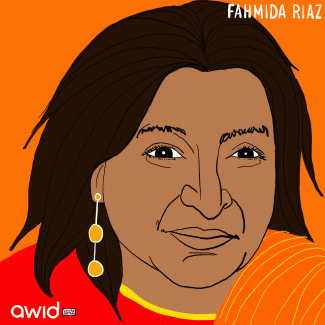
Fahmida Riaz broke social taboos by writing about female desire in her poetry, creating alternative narratives about women’s bodies and sexuality, and setting new standards in Urdu literature.
Her work faced harsh criticism from conservatives, who accused her of using erotic and “pornographic” expressions in her poetic language.
Fahimida was eventually blacklisted and charged with sedition under Section 124A of the Pakistan Penal Code) during the dictatorship of Zia Ul Haq. Forced into exile in 1981, she spent almost seven years in India before returning to Pakistan.
As part of the preface to “Badan Dareeda” ('The Torn-Bodied'), a collection of poetry published in 1974, she wrote:
If, indeed, I am forced to stand before this maqtal today and face the gallows, I should face them with my head held high. My poems are the trace of a mangled head: emanating sounds even as it is suspended from ropes... A Body Torn has taken the form of a razmia, or the sound of rupture. And if such rupture indeed shocks a people, then consider the poet as having achieved her purpose: she has managed to disturb them. (translation from Urdu by Asad Alvi)
The brilliance of Fahmida was in defying any singular logic or categories of gender, nation, religion or culture. She refused to be put in the role of a ‘woman poet’, breaking with traditional definitions of feminine poetry and concepts and themes (ranging from political consciousness, body, culture, desire, religion, home) and knocking down inhibitions put on her gender.
“You have to understand that culture can have no essence. Cultures move, flowing into one another, forming new cultures. Culture is born this way. There is no clash of cultures.”
Fahmida authored more than 15 books on poetry and fiction including her poem ‘Taaziyati Qaraardaaden’ (‘Condolence Resolutions’) that might serve as an appropriate tribute to her life and legacy and a collection of poems (Apna Jurm To Saabit He ‘My Crime Stands Proven’) published in 1988 during her time in exile.
Fahmida Riaz was born in Meerut, India on 28 July 1946 and passed away on 21 November 2018 in Lahore, Pakistan.
FR Editor's note
Editor's note
Feminist Realities is a warm and caring invitation, a kind of en masse-care (versus self-care) act of preservation, an invitation to archive, to take stock of all the work lest it disappear. (...)
The AWID Community is an online social networking platform specifically for AWID. It is a feminist space for connection, resistance and celebration. A space for critical feminist conversations, collective power and solidarity. It is also a space for post-event dialogues, navigating difficult political learnings and community care.
Join AWID membership to be part of the AWID Community today.
![]Ali Chavez Leeds portrait](/sites/default/files/styles/max_325x325/public/2021-10/portrait.jpeg?itok=0yU3PqLe)