
Adolfo Lujan | Flickr (CC BY-NC-ND 2.0)
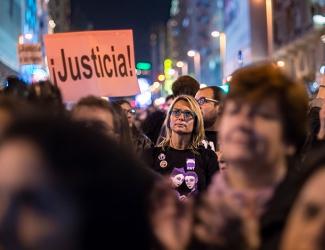
Mass demonstration in Madrid on International Women's Day
Multitudinaria manifestación en Madrid en el día internacional de la mujer

Priority Areas

Supporting feminist, women’s rights and gender justice movements to thrive, to be a driving force in challenging systems of oppression, and to co-create feminist realities.

Advancing Universal Rights and Justice

Uprooting Fascisms and Fundamentalisms

Across the globe, feminist, women’s rights and gender justice defenders are challenging the agendas of fascist and fundamentalist actors. These oppressive forces target women, persons who are non-conforming in their gender identity, expression and/or sexual orientation, and other oppressed communities.


Discriminatory ideologies are undermining and co-opting our human rights systems and standards,  with the aim of making rights the preserve of only certain groups. In the face of this, the Advancing Universal Rights and Justice (AURJ) initiative promotes the universality of rights - the foundational principle that human rights belong to everyone, no matter who they are, without exception.

We create space for feminist, women’s rights and gender justice movements and allies to recognize, strategize and take collective action to counter the influence and impact of anti-rights actors. We also seek to advance women’s rights and feminist frameworks, norms and proposals, and to protect and promote the universality of rights.


Our actions

Through this initiative, we:

  • Build knowledge: We support feminist, women’s rights and gender justice movements by disseminating and popularizing knowledge and key messages about anti-rights actors, their strategies, and impact in the international human rights systems through AWID’s leadership role in the collaborative platform, the Observatory on the Universality of Rights (OURs)*.
  • Advance feminist agendas: We ally ourselves with partners in international human rights spaces including, the Human Rights Council, the Commission on Population and Development, the Commission on the Status of Women and the UN General Assembly.
  • Create and amplify alternatives: We engage with our members to ensure that international commitments, resolutions and norms reflect and are fed back into organizing in other spaces locally, nationally and regionally.
  • Mobilize solidarity action: We take action alongside women human rights defenders (WHRDs) including trans and intersex defenders and young feminists, working to challenge fundamentalisms and fascisms and call attention to situations of risk.  


Related Content

Como é que os dados recolhidos através do questionário serão divulgados e processados?

Os dados serão processados para fins estatísticos para esclarecer o estado de financiamento dos movimentos feministas globalmente e serão divulgados apenas em forma agregada. A AWID não divulgará informações sobre uma organização específica ou informações que permitam identificar uma organização através da respetiva localização ou características sem o respetivo consentimento comprovado.

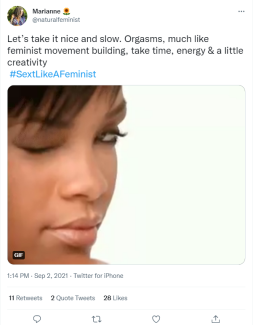
#8 - Sexting like a feminist Tweets Snippet EN

When you’ve just met and need a good opening line.

Let's take it nice and slow. Orgasms, much like feminists movement building, take time, energy and a little creativity.

حالة التمويل للحركات النسوية ووقائعها تتغير بسرعة. هل هذا الاستطلاع لمرة واحدة؟

كلا. يبني هذا الاستطلاع على المعلومات التي حشدتها جمعية حقوق المرأة في التنمية حول كيفية الحصول على تمويل أكبر وأفضل للحركات النسوية وحركات التغيير الاجتماعي وهذه الدورة الثالثة لاستطلاع "أين التمويل للتنظيمات النسوية". نهدف للقيام بالاستطلاع مرة كل ثلاثة أعوام.

التعبير عن الرغبة وغيرها من الممارسات السياسيّة الأيديولوجيّة المجسَّدة | Title Snippet AR

التعبير عن الرغبة وغيرها من الممارسات السياسيّة الأيديولوجيّة المجسَّدة

مع منال التميمي وليديوي راسيكوالا ولويز ماليرب حقوق ملكيّة المدوّنة الصوتية: زهور محمود

Snippet - WITM Who should - PT

Quem deve realizar este inquérito?

O inquérito destina-se a grupos, organizações e movimentos que trabalham especificamente ou principalmente pelos direitos das mulheres, pessoas LBTQI+ e pela justiça de género, em todos os contextos, em todos os níveis e em todas as regiões. Se este for um dos pilares principais do seu grupo, da sua comunidade, da sua rede ou de qualquer outro tipo de organização, quer esteja registada ou não, seja nova ou já estabelecida, convidamo-lo a participar neste inquérito.

* De momento, não solicitamos respostas de indivídues ou de fundos feministas e de mulheres.

Perguntas Frequentes

Disintegration | Title Snippet EN

Disintegration

Adapted from a tale by Ester Lopes

Photos by Mariam Mekiwi
Costume design and modeling by El Nemrah

Snippet - CSW69 - Feminist Solidarity Space - EN

Feminist Solidarity Space

✉️ By registration for larger groups. Drop-ins for smaller groups. Register here

📅 Tuesday, March 11, 2025
🕒 12.00-2.00pm and 4.00-6.00pm EST

🏢 Chef's Kitchen Loft with Terrace, 216 East 45th St 13th Floor New York

Organizer: AWID

Moving Conversation | Small Snippet EN

Moving Conversation

"We were finally experiencing that other form of love – that pleasure of being together and listening to each other. For me, these kinds of chats are among the expressions of love that life had only recently allowed me to enjoy..."

Read more

Snippet - CSW69 - Challenging the Status Quo - EN

Challenging the Status Quo

A Critical Dialogue on Gender Equality and Human Rights

✉️ Online registration available. Register here

📅 Friday, March 21, 2025
🕒 2.30pm EST

🏢 Church Center of the United Nations, 11th Floor. 777 United Nations Plaza, New York, NY 10017

🎙️AWID speaker: Anissa Daboussi, Manager, Advancing Universal Rights and Justice team

Organizer: IWRAW AP, OURs, AWID, SRI

Communicating Desire | Small Snippet AR

التعبير عن الرغبة وغ

وغيرها من الممارسات السياسيّة الأيديولوجيّة المجسَّدة

المضيفة: نحن نميل إلى الاعتقاد أنّ التعبير عن الرغبة يقتصر على العلاقة الحميمة داخل غرفة النوم وعلى علاقاتنا الشخصيّة. ولكن هل يمكننا أيضًا اعتبار هذا النوع من التعبير كبُنية، أو ممارسة أيديولوجيّة توجّه عملنا، وما نحن عليه، وكيف سنكون في هذا العالم؟

اقرأ أكثر

Snippet - WCFM type of funding- EN

Type of funding:

Be it core funding, programmes & projects or rapid response/ emergency grants.

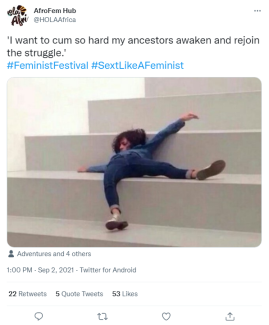
#1 - Sexting like a feminist Tweets Snippet AR

مفضّلتي: لا مزاح في حضرة القوى العظمى

Image of a tweet with a woman fainted on a set of stairs. Text says: I want to cum so hard my ancestors awaken and rejoin the struggle.

عزمي الوصول الى الذروة الجنسية، كفيلة بإيقاظ الأجداد من مثواهم الأخير وإعادتهم الى صفوف الثورة التقدميّة

Snippet WITM survey result - EN

DATA SNAPSHOTS

Where is the money for feminist organizing?

1,174 feminist, women's rights & LGBTQI+ organizations 
from 129 countries participated in AWID's 2024 survey.

The data reveals the state of resourcing for feminist movements between 2021-2023, amid current major defunding trends in aid and philanthropy.

Our collective power knows no boundaries, but our bank accounts do.

Snippet Welcome Message_Fest (EN)

Welcome message

Hakima Abbas, AWID

"We're using the tools that we have to share our resistance, strategies and continue to build our power to take action and create new brave and just worlds."

watch opening

Snippet - COP30 - The People's Summit

The People's Summit

The climate summit by movements, for movements.

📅 November 12 - November 16, 2025
📍 Universidade Federal do Pará, Belém

More info here

Snippet - COP30 - Ecozine card - EN

📰 Feminist Transnational Solidarity: an Antidote to Ecocide

This collaborative zine originated from a series of sharing circles that brought together feminists from around the world throughout 2022. The purpose was to exchange ideas and mutually learn how communities are responding to the climate crisis in various local contexts.

Download the Zine

Snippet 8 - What's happening at HRC61 Intro

AWID Forum: Co-creating Feminist Futures

In September 2016, the 13th AWID international Forum brought together in Brazil over 1800 feminists and women’s rights advocates in a spirit of resistance and resilience.

This section highlights the gains, learnings and resources that came out of our rich conversations. We invite you to explore, share and comment!


What has happened since 2016?

One of the key takeaways from the 2016 Forum was the need to broaden and deepen our cross-movement work to address rising fascisms, fundamentalisms, corporate greed and climate change.

With this in mind, we have been working with multiple allies to grow these seeds of resistance:

And through our next strategic plan and Forum process, we are committed to keep developing ideas and deepen the learnings ignited at the 2016 Forum.

What happens now?

The world is a much different place than it was a year ago, and it will continue to change.

The next AWID Forum will take place in the Asia Pacific region (exact location and dates to be announced in 2018).

We look forward to you joining us!

About the AWID Forum

AWID Forums started in 1983, in Washington DC. Since then, the event has grown to become many things to many peoples: an iterative process of sharpening our analyses, vision and actions; a watershed moment that reinvigorates participants’ feminisms and energizes their organizing; and a political home for women human rights defenders to find sanctuary and solidarity.

Learn more about previous Forums

Related Content

Vie Féminine et Handicap : lutter contre les discriminations au Sénégal
Vie Féminine et Handicap : lutter contre les discriminations au Sénégal

L’association Vie Féminine et Handicap est devenue membre de l’AWID en 2008 « pour mieux défendre nos idées, mieux sensibiliser sur les discriminations dont les femmes en situation de handicap sont victimes en Afrique et offrir une meilleure visibilité de nos actions », confie la Présidente de l’association, Ndoya Kane. 


Prendre en compte les besoins spécifiques des femmes en situation de handicap 
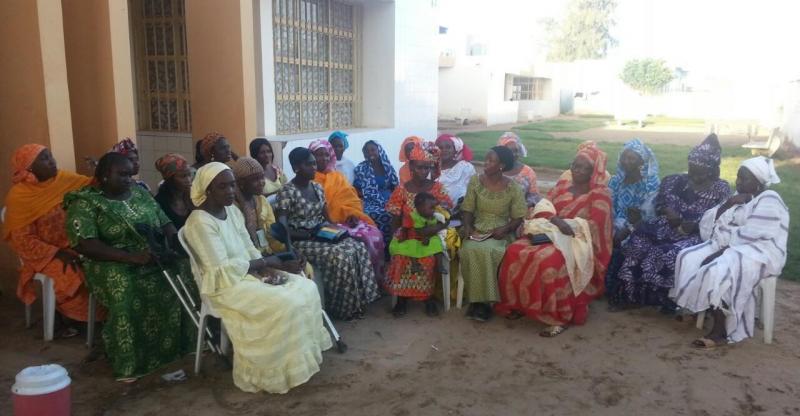
Créée en 2008, Vie Féminine et Handicap se donne pour mission de lutter contre la pauvreté des femmes en situation de handicap au Sénégal et de façon plus globale sur tout le continent africain. Dans le cadre d’une vision où le handicap ne devrait pas constituer un frein à la dignité et au bien-être des femmes, l’association se donne pour objectifs principaux de lutter contre la pauvreté, les Infections Sexuellement Transmissibles et le Sida chez les femmes en situation de handicap, tout en renforçant leur accès aux nouvelles technologies de l’information. 

Vie Féminine et Handicap a été créée pour que les problématiques des femmes handicapées soient gérées à partir d’une perspective qui prenne en compte leurs besoins spécifiques, liés à la fois à leurs statuts de femme et de personne handicapée, et pour que leur situation économique évolue de façon positive et que la société soit mieux sensibilisée aux questions du handicap sans préjugés négatifs. 
Constituée d’une cinquantaine de membres et agissant principalement sur les départements de Pikine et de Guédiawaye dans la région de Dakar, Vie Féminine et Handicap entreprend des activités de sensibilisation et de formation des femmes en situation de handicap ainsi que de plaidoyer envers les autorités, qui portent à la fois sur la question de l’exercice des droits humains des femmes handicapées, leur pouvoir économique et leur santé sexuelle et reproductive.  « Nous organisons des activités de sensibilisation sur le handicap dans les quartiers en y invitant les autorités communales, les jeunes et les personnes « valides » car le handicap est entouré de beaucoup de préjugés négatifs dans la culture sénégalaise et africaine en général. Nous participons aussi à des conférences aux niveaux africain et international pour débattre de la situation des femmes handicapées en Afrique et dans le monde pour une meilleure harmonisation de nos stratégies », souligne Ndoya Kane.

« Sans faire preuve de solidarité, sans comprendre que notre combat n’est pas mené pour défendre les intérêts d’une seule organisation de personnes handicapées, mais de tou-te-s, nous n’obtiendrons jamais de résultats. Toutes les organisations de personnes handicapées doivent comprendre que le combat que nous menons est plus important que les rivalités internes et que nous devons avancer ensemble pour réussir à obtenir des résultats durables », expliquait Ndoya Kane en 2010 dans un rapport de l'AWID.

Mutualisation des ressources et autofinancement des membres
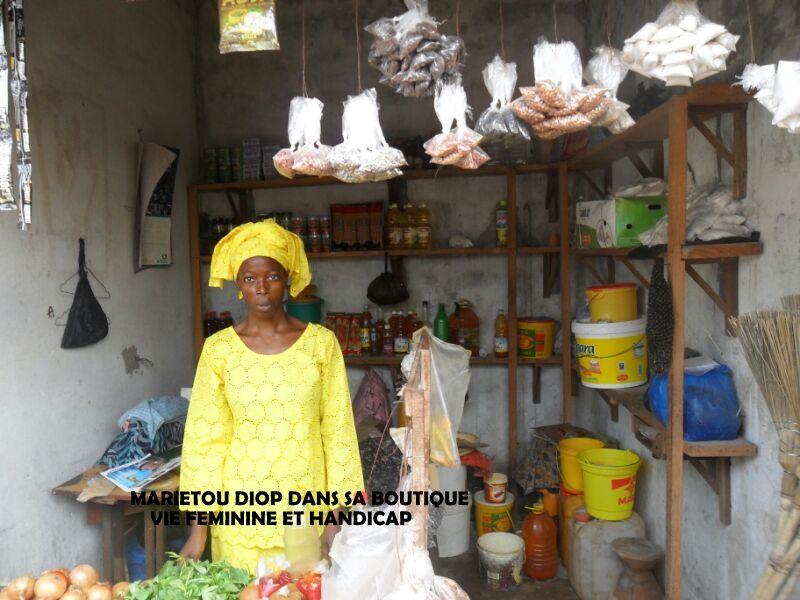
L’association a mis en place depuis février 2010 une caisse d’autofinancement (CAF), qui consiste à mettre en commun les cotisations des membres pour permettre à chacune de disposer de financements de petits projets personnels et d’initier des activités génératrices de revenus pour ses membres, axées notamment autour du petit commerce. L’idée de créer cette CAF est née de la volonté des membres elles-mêmes, qui constituent un groupe très précaire disposant de faibles ressources économiques et dont l’accès aux crédits formels s’avère par conséquent impossible.

La CAF a par exemple permis à Marétou Diop, une habitante de Guédiawaye, d’ouvrir une boutique dans le marché de son quartier pour y vendre des denrées alimentaires. « Maintenant, les autres femmes viennent adhérer à notre Caisse d’Autofinancement pour trouver du crédit et financer leurs activités », souligne Ndoya Kane. 

« Les discussions de groupe sont d’autant plus importantes qu’elles permettent de nous retrouver entre femmes handicapées et renforcent la confiance chez certaines pour parler de leur condition de femme en toute aisance. Nous choisissons ensemble quel problème existe et essayons d’avoir recours à des spécialistes pour nous entretenir sur la question », raconte Ndoya Kane.
Source
AWID

Feminine Life and Disability: Fighting against the discrimination in Senegal

Feminine Life and Disability: Fighting against the discrimination in Senegal

The organization Vie Féminine et Handicap (Feminine Life and Disability) became an AWID member in 2008 “to better defend our ideas, to better promote awareness of the discrimination faced by women living with disability in Africa, and to increase visibility of our work,” says President of the organization, Ndoya Kane. 


Considering the specific needs of women living with disability

Launched in 2008, the mission of Vie Féminine et Handicap is to fight against poverty among women living with disability in Senegal and globally, but especially across the African continent. With a vision where disability is no longer a barrier to a woman’s dignity or well-being, the main objectives of the organization are to combat poverty, sexually transmitted infections, and AIDS among women living with disability, while strengthening their access to new information technologies.    

Vie Féminine et Handicap was created to address the issues of disabled women from a perspective that considers their specific needs, related to both their status as a woman and as a person living with a disability – and to ensure that their economic situation evolves in a positive way and to better sensitize society to disability issues without the negative prejudice. 

Comprised of some fifteen members and working mainly across the Pikine and Guédiawaye departments in the Dakar region, the work of Vie Féminine et Handicap includes awareness raising and training for women living with disability, as well as advocacy with decision-makers around the human rights of women living with disability, their economic empowerment, and their sexual and reproductive health. “We do awareness raising on the issue of disability in neighbourhoods by inviting community authorities, youth and ‘able-bodied’ people, because disability is surrounded by a lot of negative prejudice in the Senegalese and African context in general. We also participate in conferences at the African and International level to discuss the situation of disabled women in Africa and around the world to better align our strategies,” highlights Kane. 

 “Without solidarity, without an understanding that the fight that we lead is not done in the interest of a sole disabled people’s organization, but in the interest of all, we will never achieve any results. Each disabled people’s organization to understand that the fight that we lead outweighs the competition and that we have to go forward together to succeed in getting long lasting results,” explained Ndoya Kane in 2010, in a repport produced by AWID

Pooling resources and the self-financing of members

Since February 2010, the organization has established a self-financing fund, which consists of pooling member contributions to allow each one to finance small personal projects and to initiate income-generating activities for its members, mainly focused on small business. The idea to create the fund originated from our members themselves, a vulnerable group with limited economic resources and for which access to credit is nearly impossible.

The Fund for example allowed Marétou Diop, a resident of Guédiawaye, to open a shop in her neighbourhood market and sell foodstuffs. “Now the other women are joining our self-financing fund to receive credit and finance their activities,” highlights Ndoya Kane.  

“Group discussions are even more important as they give us the opportunity to meet among women living with disability and build confidence in some to comfortably talk about the issues they face as women. Together we decide which challenges exist and try to engage specialists in addressing the issue,” says Kane.    

Source
AWID

Género y discapacidad: la lucha contra la discriminación en Senegal

Género y discapacidad: la lucha contra la discriminación en Senegal

La organización Vie Féminine et Handicap [vida femenina y discapacidad] se afilió a AWID en el año 2008. La Presidenta de la organización, Ndoye Kane, afirma que esto se hizo  « con el fin de defender mejor nuestras ideas, mejorar la concientización  sobre la discriminación experimentada por las mujeres que viven con discapacidad en África y para dar mayor visibilidad a nuestro trabajo». 


Tener en cuenta las necesidades específicas de las mujeres que viven con discapacidad

Vie Féminine et Handicap comenzó a operar en 2008 y su misión es luchar contra la pobreza que sufren las mujeres que viven con discapacidad en Senegal y en todo el mundo –aunque   especialmente en el continente africano. En su visión, la discapacidad dejar de ser una barrera para la dignidad o el bienestar de las mujeres. Los principales objetivos de la organización son la lucha contra la pobreza, las infecciones de transmisión sexual y el sida entre las mujeres que viven con diversidad funcional, fortaleciendo su acceso a las nuevas tecnologías de la información.

Vie Féminine et Handicap se creó para abordar cuestiones relevantes a las  mujeres con diversidad funcional — desde una perspectiva que toma en cuenta sus necesidades específicas como mujeres y personas que viven con una discapacidad —;   para garantizar que su situación económica evoluciona de manera positiva;  y para mejorar la sensibilidad social a temas relacionados con la discapacidad, eliminando los prejuicios negativos.

La organización cuenta con 15 integrantes y trabaja, principalmente,  en los departamentos de Pikine y Guédiawaye de la región de Dakar. Su tarea incluye crear conciencia y capacitar a mujeres que viven con diversidad funcional;  y también hacer incidencia con tomadores de decisión por los derechos humanos de las mujeres que viven con discapacidad, su empoderamiento económico y su salud sexual y reproductiva. «Creamos conciencia sobre el tema de la diversidad funcional en las comunidades, invitando a las autoridades, a la juventud y a las personas sin discapacidades, porque en Senegal y en el contexto africano hay, por lo general, muchos prejuicios negativos en torno a las capacidades diferentes. También participamos en conferencias regionales e internacionales para hablar de la situación de las mujeres discapacitadas en África y en el mundo; y para alinear mejor nuestras estrategias», subraya Kane.

«Sin solidaridad, sin una comprensión de que la lucha que nosotras lideramos no es para una sola organización de personas discapacitadas, sino para todas, nunca lograremos ningún resultado. Cada organización de personas con diversidad funcional debe comprender que la lucha que estamos librando es más importante que la competencia y que debemos avanzar juntas para seguir obteniendo resultados duraderos.», explicó Ndoya Kane,  en el 2010 en un informe de AWID.

Recursos combinados y el financiamiento autónomo de la membresía

En febrero de 2010, la organización creó un fondo de autofinanciamiento,  que combina los aportes de su membresía para que cada integrante financie pequeños proyectos personales y para iniciar actividades de generación de ingresos, particularmente bajo la forma de pequeños negocios. La idea de crear este fondo surgió de la propia membresía –un  grupo vulnerable con recursos económicos limitados y para  el que resulta casi imposible acceder al crédito.

Un ejemplo de este trabajo es la historia de Marétou Dio, quien vive en Guédiawaye: el fondo le permitió instalar un puesto en el mercado de su comunidad y vender productos alimenticios. «Ahora hay mujeres que se están sumando a nuestro fondo autofinanciado para obtener crédito y costear sus actividades», indica Ndoya Kane.

«Las conversaciones grupales son todavía más importantes porque  abren la oportunidad de reunirnos con otras mujeres que viven con discapacidad y  generar relaciones de confianza para hablar cómodamente sobre los problemas que nosotras enfrentamos. Decidimos colectivamente cuáles son los desafíos que afrontamos e intentamos traer especialistas para abordarlos», explica Kane.

Source
AWID

Annual Report 2009

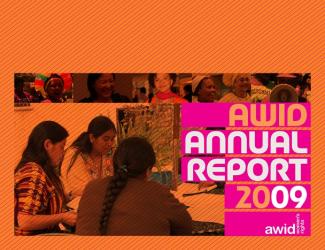
3 women sitting on a roundtable with dmall thumbnails of women's faces on top and text that reads, "AWID ANNUAL REPORT 2009"

Our 2009 Annual Report includes highlights of another busy year of action and reflection at AWID as we implement our commitment to boldly, creatively and effectively contribute to the advancement of women’s rights and gender equality worldwide.

In the report you can find out about our programmatic achievements, membership, finances, what to watch out for in 2010, as well as information about our Board and Staff.

Download PDF