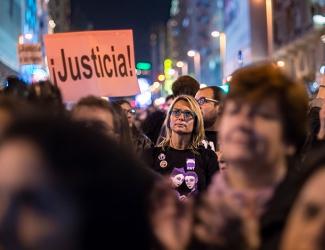
Adolfo Lujan | Flickr (CC BY-NC-ND 2.0)
Mass demonstration in Madrid on International Women's Day
Multitudinaria manifestación en Madrid en el día internacional de la mujer

Priority Areas

Supporting feminist, women’s rights and gender justice movements to thrive, to be a driving force in challenging systems of oppression, and to co-create feminist realities.

Advancing Universal Rights and Justice

Uprooting Fascisms and Fundamentalisms

Across the globe, feminist, women’s rights and gender justice defenders are challenging the agendas of fascist and fundamentalist actors. These oppressive forces target women, persons who are non-conforming in their gender identity, expression and/or sexual orientation, and other oppressed communities.


Discriminatory ideologies are undermining and co-opting our human rights systems and standards,  with the aim of making rights the preserve of only certain groups. In the face of this, the Advancing Universal Rights and Justice (AURJ) initiative promotes the universality of rights - the foundational principle that human rights belong to everyone, no matter who they are, without exception.

We create space for feminist, women’s rights and gender justice movements and allies to recognize, strategize and take collective action to counter the influence and impact of anti-rights actors. We also seek to advance women’s rights and feminist frameworks, norms and proposals, and to protect and promote the universality of rights.


Our actions

Through this initiative, we:

  • Build knowledge: We support feminist, women’s rights and gender justice movements by disseminating and popularizing knowledge and key messages about anti-rights actors, their strategies, and impact in the international human rights systems through AWID’s leadership role in the collaborative platform, the Observatory on the Universality of Rights (OURs)*.
  • Advance feminist agendas: We ally ourselves with partners in international human rights spaces including, the Human Rights Council, the Commission on Population and Development, the Commission on the Status of Women and the UN General Assembly.
  • Create and amplify alternatives: We engage with our members to ensure that international commitments, resolutions and norms reflect and are fed back into organizing in other spaces locally, nationally and regionally.
  • Mobilize solidarity action: We take action alongside women human rights defenders (WHRDs) including trans and intersex defenders and young feminists, working to challenge fundamentalisms and fascisms and call attention to situations of risk.  


Related Content

Snippet - COP30 - The People's Summit

The People's Summit

The climate summit by movements, for movements.

📅 November 12 - November 16, 2025
📍 Universidade Federal do Pará, Belém

More info here

Snippet - COP30 - Ecozine card - EN

📰 Feminist Transnational Solidarity: an Antidote to Ecocide

This collaborative zine originated from a series of sharing circles that brought together feminists from around the world throughout 2022. The purpose was to exchange ideas and mutually learn how communities are responding to the climate crisis in various local contexts.

Download the Zine

Snippet 8 - What's happening at HRC61 Intro

Body

AWID Forum: Co-creating Feminist Futures

In September 2016, the 13th AWID international Forum brought together in Brazil over 1800 feminists and women’s rights advocates in a spirit of resistance and resilience.

This section highlights the gains, learnings and resources that came out of our rich conversations. We invite you to explore, share and comment!


What has happened since 2016?

One of the key takeaways from the 2016 Forum was the need to broaden and deepen our cross-movement work to address rising fascisms, fundamentalisms, corporate greed and climate change.

With this in mind, we have been working with multiple allies to grow these seeds of resistance:

And through our next strategic plan and Forum process, we are committed to keep developing ideas and deepen the learnings ignited at the 2016 Forum.

What happens now?

The world is a much different place than it was a year ago, and it will continue to change.

The next AWID Forum will take place in the Asia Pacific region (exact location and dates to be announced in 2018).

We look forward to you joining us!

About the AWID Forum

AWID Forums started in 1983, in Washington DC. Since then, the event has grown to become many things to many peoples: an iterative process of sharpening our analyses, vision and actions; a watershed moment that reinvigorates participants’ feminisms and energizes their organizing; and a political home for women human rights defenders to find sanctuary and solidarity.

Learn more about previous Forums

Related Content

Cuatro décadas haciendo campaña por la seguridad y los derechos de lxs trabajadorxs sexuales

Cuatro décadas haciendo campaña por la seguridad y los derechos de lxs trabajadorxs sexuales

Desde 1975 el English Collective of Prostitutes [Colectivo Inglés de Prostitutas, ECP] viene trabajando a nivel nacional e internacional contra la criminalización del trabajo sexual y para lograr condiciones de trabajo más seguras para lxs trabajadorxs sexuales. ECP ha respaldado a mujeres y otrxs trabajadorxs sexuales que enfrentaban cargos por prostitución, órdenes de clausura, órdenes civiles por comportamiento antisocial (ASBO por sus siglas en inglés) y por el mantenimiento de burdeles.


No somos criminales

«Somos mujeres que trabajamos o hemos trabajado en diferentes áreas de la industria del sexo - tanto en las calles como en locales.»

ECP tiene sede en el Reino Unido y hace incidencia por la abolición de las leyes que criminalizan a lxs trabajadorxs sexuales y a sus familias y por la eliminación de sus antecedentes penales. También  trabaja para lograr viviendas, alternativas económicas y beneficios y sueldos más altos para que lxs trabajadorxs sexuales tengan la posibilidad de dejar ese trabajo si así lo desean.

Haciendo frente al poder del estado
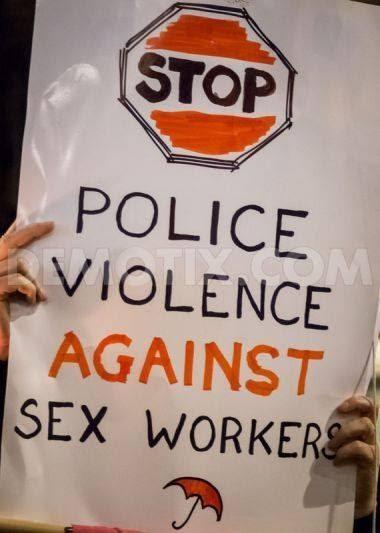
La lucha por los derechos de lxs trabajadorxs sexuales ha sido continua y ya lleva varias décadas. Se requiere valentía para luchar contra leyes criminalizadoras aprobadas por autoridades estatales y aplicadas por el poder policial. La valentía que ha demostrado ECP en sus muchos años de defensa y resistencia a menudo ha dado buenos resultados.

En 1982, durante 12 días, 50 mujeres del Colectivo ocuparon una iglesia en Londres para protestar contra las acciones ilegales de la policía, y también contra la violencia y el racismo hacia lxs trabajadorxs sexuales. En 1995 y con el apoyo de Women Against Rape [Mujeres Contra la Violación], ECP ganó un caso que sentó precedente (y que fue el primer juicio por violación iniciado por una organización a título particular) después de que las autoridades declinaron procesar a un violador en serie que atentaba específicamente contra trabajadorxs sexuales. Y hace diez años, luego del asesinato de cinco mujeres en Ipswich, el colectivo lanzó la Safety First Coalition [Coalición por la Seguridad Ante Todo], una campaña en contra de la Ley sobre Delito y Vigilancia Policial que daba mayor poder a la policía para «arrestarnos por prostitución, obligarnos a ir a ‘rehabilitación’, hacer redadas en nuestros apartamentos, conseguir que nos desalojaran y robar nuestros ingresos y bienes. También criminalizaba a los clientes». 
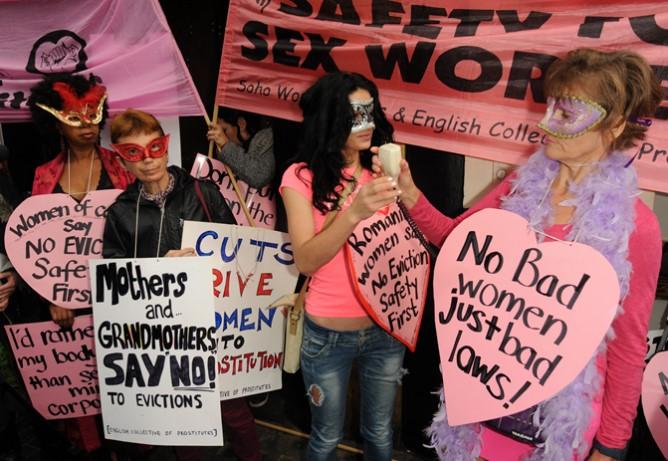
Actualmente, el Colectivo Inglés de Prostitutas se opone a la nueva Ley de Reforma de la Asistencia Social que suprime el apoyo a la renta, porque las madres y víctimas de violencia doméstica dependen de esta única prestación. Según lo que explicaron a AWID, «La mayoría de lxs trabajadorxs sexuales somos madres intentando hacer lo mejor para nuestrxs hijxs. A las madres se las debe apoyar y no atacar.»

«Estamos en contacto con trabajadorxs sexuales de todo el mundo. Nuestro punto de partida siempre ha sido la situación de aquellxs de nosotrxs que estamos en el Sur Global y de las que trabajamos en las calles, a menudo mujeres negras, otras mujeres de color y/o inmigrantes».

ECP, afiliada institucional de AWID desde 2014, también es parte del International Prostitutes Collective [Colectivo Internacional de Prostitutas].


Mira un video en el que Niki Adams del ECP habla (en inglés) sobre la despenalización del trabajo sexual en Soho.


Conéctate:

Quarante ans de campagne pour les droits et la sécurité des travailleuses du sexe

Quarante ans de campagne pour les droits et la sécurité des travailleuses du sexe

Depuis 1975, l’English Collective of Prostitutes (ECP, le Collectif anglais des prostituées) lutte pour obtenir la décriminalisation du travail du sexe et des conditions de travail plus sûres pour les travailleuses du sexe, tant au niveau national qu’au niveau international.


L’ECP apporte son soutien à toutes les personnes vivant du travail du sexe, indépendamment de leur genre, lorsqu’elles sont poursuivies pour racolage ou pour des faits de tenue de maison close, quand elles se voient contraintes de fermer leur lieu de travail ou qu’elles sont soumises à une ordonnance pour comportement antisocial (Anti-social behaviour orders, ASBOs) .

Nous ne sommes pas des criminelles

« Nous sommes des femmes qui travaillons ou avons travaillé dans différents domaines de l’industrie du sexe,  que ce soit dans la rue ou dans des établissements. »

Basé au Royaume-Uni, l’ECP milite pour que les lois qui  criminalisent les travailleuses du sexe et leurs familles soient abolies,  pour que les faits relatfs au travail du sexe soient supprimés du casier juduciaire et enfin pour que les travailleuses du sexe se voient offrir des alternatives en matière de logement et de développement économique ainsi que des salaires et dans les mots d'ECP, de sorte que "chacune de nous peut sortir de la prostitution si et quand nous le voulons."

Tenir tête au pouvoir de l’État

La lutte en faveur des droits des personnes qui vivent du travail du sexe est permanente et dure depuis des décennies. Il faut du courage pour résister aux lois criminalisantes adoptées par les autorités publiques et à la mise en application de celles-ci par les forces de police. Le courage de l’ECP a souvent été récompensé au cours de ces longues années de lutte et de résistance.

En 1982, 50 femmes du collectif ont occupé une église londonnienne pendant 12 jours pour protester contre les interventions illégales de la police mais aussi contre la violence et le racisme dont sont victimes des travailleurs-euses du sexe qui exercent leurs activités dans la rue. En 1995, avec le soutien de l’organisation Women against Rape (Femmes contre le viol), l’ECP a remporté une victoire qui a fait date. Cette toute première poursuite au privé pour viol avait été lancée parce que les autorités publiques avaient auparavant refusé de poursuivre un violeur en série qui ciblait les travailleuses du sexe.

Il y a dix ans, après le meurtre de cinq femmes à Ipswich, l’ECP a lancé la « Safety First Coalition » (la coalition pour la sécurité avant tout). Cette coalition a été le fer de lance d’une campagne contre la loi relative au maintien de l’ordre et à la prévention de la criminalité (le « Policing and Crime Act »),  qui octroyaient des pouvoirs étendus aux policiers pour « nous arrêter pour racolage, nous contraindre à suivre des programme de réhabilitation, rafler nos appartements, nous faire expulser, voler notre argent et nos biens. Cette loi criminalisait également les clients. »

Actuellement, l’ECP fait campagne contre la loi de réforme de la protection sociale qui abolit certaines aides sociales, qui étaient les seules sources de revenu sur lesquelles les mères et les victimes de violence domestique pouvaient compter. Comme l’ECP l’a expliqué à l’AWID, « la plupart des travailleuses du sexe sont des mères qui tentent de faire de leur mieux pour leurs enfants. Il faut les protéger plutôt que les agresser ».

« Nous sommes en contact avec des travailleurs-euses du sexe dans le monde entier. Notre point de départ est toujours la situation que nous vivons dans les pays du Sud, celle que nous vivons dans les rues, alors que beaucoup d’entre nous sont des femmes noires, métisses et/ou des immigrées. »

Membre institutionnel de l’AWID depuis 2014, l’ECP fait également partie de l’International Prostitutes Collective.


Regardez une vidéo dans laquelle Niki Adams, de l’ECP, parle de la décriminalisation du travail du sexe à Soho (en anglais)


Connectez-vous

Feminism, motherhood and the struggle for gender equality

Feminism, motherhood and the struggle for gender equality

“In our struggle for equality, we tend to forget that women are also mothers (if they chose to be).  We should not be ashamed of our ability to give birth to a human being. The rights of mothers are also women's rights. Being a mother and a feminist is not a contradiction” says Aleksandra Miletić-Šantić, a lawyer and single mother of three children.


Aleksandra is originally from Mostar in Bosnia and Herzegovina (BH). She currently lives and works in Sarajevo as a BH focal point person for the Council of Europe’s Human Education for Legal Professionals Programme. She is also a specialist in the Monitoring and Evaluation of Development Programmes.

The years 1992-1995 was a tumultuous period in war torn Bosnia and Herzegovina when Aleksandra worked as a War Studio of Mostar correspondent for the Sarajevo-based Radio-Television BH. The multi-ethnic Studio had been created with the goal of being a source of optimism to citizens and as part of an attempt to preserve cultural and artistic life under abnormal conditions.  This studio was attacked and subsequently closed. In 1993 it was permanently destroyed when the building it occupied with the Headquarters of the BH Army was set on fire.

Aleksandra’s journalistic background and experience of living through armed conflict as a young woman has made her a passionate advocate for peace building.

In her current professional capacity she works on the implementation of the United Nations (UN) Security Council Resolution 1325 on Women, Peace and Security. She has designed and facilitated training programs on gender and security, and also engages with the UN Women Office in BH to support national gender mechanisms in the implementation of the Resolution 1325.

“In the ideal world, being a feminist would be a matter of decency as it would be considered normal that all people have the same rights and liberties. That would include all rights - civil, social, economic and political.”

For the past 15 years, Aleksandra has been working on the improvement of human rights in BH, and was one of the pioneer gender advisors for the Common Security and Defence Policy missions of the European Union (EU).

In her role as gender advisor for the EU Police Mission (EUPM) in BH she introduced the action plan for gender mainstreaming as a tool that focuses on improving the internal position of women staff members, while integrating gender in the EUPM mandate activities in BH.

Aleksandra’s dream of a better world drives her in the work she does:

“My dream is a world where everybody will be able to achieve their full potential, where not a single person will know about poverty or insecurity. Sadly, so many years after the adoption of basic human rights instruments, a way of life is still not a matter of individual choice.”

Aleksandra has been an AWID member since February 2014.

“I have become an AWID member as its mission and the way it is implemented strongly correspondents to my ideals. I also cherish the way AWID treats its members by paying due attention to every single member regardless of any basis. It makes every member feel as an important actor of change.”  

Feminismo, maternidad y la lucha por la igualdad de género

Feminismo, maternidad y la lucha por la igualdad de género

«En nuestra lucha por la igualdad, tendemos a olvidar que las mujeres también son madres (si así lo deciden). No deberíamos sentirnos avergonzadas por tener la capacidad de dar a luz a un ser humano. Los derechos de las madres son también parte de los derechos de las mujeres. Ser madre y feminista no es una contradicción», dice Aleksandra Miletić-Šantić, abogada y madre soltera de tres hijas/os.


Aleksandra es oriunda de Mostar, Bosnia y Herzegovina (BH). Actualmente vive y trabaja en Sarajevo como la persona de contacto en BH para el programa Human Rights Education for Legal Professionals [Formación en Derechos Humanos para Profesionales del Derecho] del Consejo de Europa. Aleksandra también es especialista en el seguimiento y evaluación de programas de desarrollo.

El período que va de 1992 a 1995 fue tumultuoso en una Bosnia y Herzegovina devastada por la guerra. Aleksandra trabajó en la estación de radio War Studio [Estudio de Guerra] de Mostar como corresponsal para la Radio-Televisión BH de Sarajevo. Era una estación de radio multiétnica que había sido creada con el objetivo de ser una fuente de optimismo para la ciudadanía y de preservar la vida cultural y artística en una situación anormal, pero que fue atacada y posteriormente cerrada. En 1993, la estación fue destruida para siempre cuando incendiaron el edificio que ocupaba junto al Cuartel General del Ejército de BH.

Su experiencia como periodista y como mujer joven que vivió durante un conflicto armado ha hecho que hoy día Aleksandra sea una ferviente defensora de la consolidación de la paz. En su actual rol como profesional, trabaja en la implementación de la Resolución 1325 del Consejo de Seguridad de las Naciones Unidas (ONU) sobre Mujeres, Paz y Seguridad. Aleksandra ha diseñado y facilitado programas de capacitación sobre género y seguridad y colabora con la Oficina de ONU Mujeres en BH para apoyar  a los organismos estatales que se ocupan del género en la implementación de la Resolución 1325 a nivel nacional.

«En un mundo ideal, ser feminista sería simplemente una cuestión de decencia, ya que sería considerado normal que todas las personas tuvieran los mismos derechos y libertades. Esto incluiría todos los derechos—civiles, sociales, económicos y políticos.»

Durante los últimos quince años, Aleksandra ha trabajado para mejorar los derechos humanos en BH y ha sido una de las asesoras pioneras en temas de género para las misiones de la Política Común de Seguridad y Defensa de la Unión Europea (UE). En su rol como asesora en género para la Misión de Policía de la UE en BH, Aleksandra introdujo el plan de acción para la transversalización de género como una herramienta enfocada a mejorar la situación del personal femenino al interno de la organización, al mismo tiempo que incorporaba temas de género en el mandato de la Misión para sus actividades en BH.

El sueño de Aleksandra por lograr un mundo mejor es lo que la impulsa a hacer el trabajo que hace:

«Mi sueño es un mundo donde todas las personas puedan alcanzar su máximo potencial y donde nadie sepa lo que son la pobreza o la inseguridad. Lamentablemente, tantos años después de haber adoptado las herramientas básicas de derechos humanos todavía hay personas que no tienen la libertad de elegir de qué forma quieren vivir.»

Aleksandra es afiliada a AWID desde febrero de 2014.

«Me afilié a AWID porque su misión y la forma en que la implementan coinciden totalmente con mis ideales. También valoro la forma como AWID trata a su membresía, prestando la debida atención a cada una/o, independientemente de quienes sean. Eso hace todas/os sientan que son agentes de cambio importantes.”  


Para comunicarte con ella, por favor envía un mensaje a membership@awid.org y/o encuéntrala en nuestro directorio en línea.

Féminisme, maternité et combat pour l’égalité de genre

Féminisme, maternité et combat pour l’égalité de genre

« Dans notre combat pour l’égalité, nous avons tendance à oublier que les femmes sont aussi des mères (si elles ont choisi de l’être). Nous ne devons pas avoir honte de notre capacité à donner naissance à un être humain. Les droits des mères font aussi partie des droits des femmes. Être une mère et être une féministe n’est pas contradictoire », affirme Aleksandra Miletić-Šantić, une avocate qui élève seule ses trois enfants.


Aleksandra est originaire de Mostar en Bosnie-Herzégovine. Elle vit actuellement à Sarajevo, où elle exerce en tant que point focal du Programme de formation aux droits de l’homme pour les professionnels du droit du Conseil de l’Europe. Elle est aussi spécialiste du suivi et de l’évaluation des programmes de développement.

Lors de la tourmente des années 1992-1995, pendant lesquelles la Bosnie-Herzégovine était déchirée par la guerre, Aleksandra était correspondante au War Studio de Mostar pour la Radio-télévision nationale basée à Sarajevo. Ce studio pluriethnique avait été créé dans l’objectif de redonner espoir aux habitants de la ville et il contribuait aux efforts pour préserver une vie culturelle et artistique malgré les conditions anormales. Le studio a dû fermer suite à un attentat, et en 1993 il a été complètement détruit lorsque l’immeuble dans lequel il se trouvait, qui abritait également le quartier général de l’armée de Bosnie-Herzégovine, a été incendié.

Son passé de journaliste et le conflit armé qu’elle a vécu alors qu’elle était une jeune femme ont fait d’elle une militante passionnée de la construction de la paix. De par ses fonctions actuelles elle participe activement à la mise en œuvre de la Résolution 1325 du Conseil de Sécurité de l’ONU sur les femmes, la paix et la sécurité. Elle a conçu et organisé des programmes de formation sur le genre et la sécurité, et elle collabore avec le Bureau de ONU Femmes en Bosnie-Herzégovine pour que soient créés des mécanismes de genre au niveau national favorisant la mise en œuvre de la Résolution 1325.

« Dans un monde idéal, être féministe serait la moindre des corrections car il serait considéré comme normal que toutes et tous aient les mêmes droits et les mêmes libertés. Tous les droits - civils, sociaux, économiques et politiques. »

Ces 15 dernières années, Aleksandra a œuvré à l’amélioration des droits humains en Bosnie-Herzégovine, et elle a été l’une des toutes premières conseillères en matière de genre auprès des missions de la Politique de sécurité et de défense commune (PSDC) de l’Union Européenne (UE). En tant que conseillère en matière de genre auprès de la Mission de police de l’Union européenne (MPUE) en Bosnie-Herzégovine, elle a mis en place un plan d’action pour l’intégration de la dimension du genre ; un outil axé sur l’amélioration du statut du personnel féminin, et qui visait aussi à intégrer la question du genre dans les activités entreprises par la MPUE au titre de son mandat en Bosnie-Herzégovine.

Aleksandra rêve d’un monde meilleur et c’est ce qui la motive dans sa vie professionnelle :

« Je rêve d’un monde où chacune et chacun pourra réaliser pleinement son potentiel, où personne ne connaîtra la pauvreté et l’insécurité. Malheureusement, alors qu’il y tant d’années que les instruments des droits humains fondamentaux ont été mis en place, le mode de vie n’est toujours pas une affaire de choix personnel. »

Aleksandra est membre de l’AWID depuis février 2014.

« Je suis devenue membre de l’AWID car sa mission et la façon dont elle la met en œuvre correspondent en tout point à mon idéal. J’apprécie aussi la façon dont l’AWID traite ses membres, en accordant la même attention à chacun d’entre eux sans aucun préjugé. Grâce à cela, chaque membre se sent un acteur/une actrice important-e du changement. »


Pour la contacter, vous pouvez écrire à membership@awid.org et/ou la retrouver dans l'annuaire des membres en ligne.

WE-Change: Las voces de las mujeres LBT* en el Caribe se escuchan más fuerte

WE-Change: Las voces de las mujeres LBT* en el Caribe se escuchan más fuerte

En todo el Caribe, la incidencia por el reconocimiento y la realización de los derechos de lesbianas, gays, personas bisexuales y trans* (LGBT*) tiene lugar en un contexto excluyente, homofóbico y transfóbico.


Women’s Empowerment for Change [Empoderamiento de las Mujeres para el Cambio, WE-Change], afiliada a AWID desde su creación en mayo de 2015, crea conciencia acerca de los derechos de las mujeres lesbianas, bisexuales y trans* (LBT*) en Jamaica y el Caribe y los defiende. Es una organización de base comunitaria, liderada por mujeres. Veinte mujeres LBT* crearon WE-Change con el objetivo de fortalecer el movimiento de mujeres dentro de la comunidad LGBT* e incrementar la participación de las mujeres LBT* en la promoción y defensa de la justicia social en Jamaica y la región, reconociendo que en el Caribe los espacios de incidencia LGBT* en general están dominados por los hombres, se centran en ellos y suelen marginar a las mujeres.

“Las personas LGBT* cada vez defienden más sus derechos, la igualdad ante la ley, la equidad en los servicios sociales y la protección, y exigen ser tratadas con la dignidad intrínseca con la que nacieron. Yo soy una de esas personas LGBT*. Y tengo un compromiso permanente con la eliminación de todas las formas de estigma y discriminación contra mi comunidad en general y contra las mujeres de mi comunidad en particular”. – Latoya Nugent, Cofundadora y Directora Adjunta de WE-Change

A los pocos meses de haber sido creado, este grupo organizó sesiones de capacitación en nociones básicas de derecho aplicado a la violencia doméstica y sobre la Ley de Violencia Doméstica, además de preparar a facilitadoras para que supieran cómo dar respuesta a y abordar la violencia de género y la causada por la pareja. Para esta actividad se asoció con el Jamaica Forum of Lesbians, All-Sexuals and Gays [Foro Jamaiquino de Lesbianas, Pansexuales y Gays, J-FLAG]; aquí podrás escuchar lo que dijeron las participantes (en inglés).

“WE-Change quiere una sociedad en la que se reconozcan, respeten y protejan los derechos de cada persona, y en la que garantes de obligaciones y proveedores de cuidados se comprometan a crear un ambiente que permita a todas las personas aportar al desarrollo sostenible de Jamaica”.

Al mismo tiempo que procura crear espacios alternativos y seguros en los que la comunidad LBT* pueda expresarse y reducir la homofobia y la transfobia, WE-Change también promueve el autocuidado y el bienestar a través de clases de danza, el yoga y entrenamiento físico (fitness boot camp). Por ejemplo: en la ‘danza aeróbica’, a las participantes se les enseñan “distintos pasos de danza al ritmo de los últimos éxitos de la soca y el dancehall (géneros musicales caribeños)”. Y para celebrar el amor durante #Pride2015 [Orgullo 2015], las mujeres de WE-Change hicieron el video siguiente (en inglés) porque ¡#LoveWins [El amor triunfa]!

Region
El Caribe
Source
WE-Change

WE-Change: faire entendre les voix des femmes LBT dans les Caraïbes

WE-Change: faire entendre les voix des femmes LBT dans les Caraïbes

Dans les Caraïbes, le plaidoyer en faveur de la reconnaissance et du respect des droits des personnes lesbiennes, gaies, bisexuelles et trans* (LGBT) s’effectue dans un climat homophobe, transphobe et non-inclusif.


L’organisation Women’s Empowerment for Change - WE-Change (l’autonomisation des femmes pour le changement), membre de l’AWID depuis sa création en mai 2015, œuvre pour sensibiliser et défendre les droits des femmes lesbiennes, bisexuelles et trans* (LBT) en Jamaïque et dans les Caraïbes. Cette organisation communautaire est dirigée par des femmes. Sur la base du constat que la majorité des espaces dédiés à la sensibilisation en faveur des personnes lesbiennes, gaies, bisexuelles et trans* (LGBT) sont dominés par et centrés sur les hommes et que les femmes y sont souvent marginalisées, une vingtaine de femmes LBT ont créé WE-Change, avec l’objectif de renforcer le mouvement des femmes au sein de la communauté LGBT et d’augmenter la participation des femmes LBT aux actions de plaidoyer et de sensibilisation en faveur de la justice sociale en Jamaïque et dans la région.

« De plus en plus de personnes lesbiennes, gaies, bisexuelles et trans* (LGBT) se mobilisent pour faire valoir leurs droits, pour l’égalité devant la loi, pour l’équité en matière de services et de protection sociale et exigent d’être traitées avec la dignité qui leur est due. Je suis une de ces personnes LGBT et je m’engage en faveur de l’élimination de tout forme de stigmatisation et de discrimination contre ma communauté en général et contre les femmes de ma communauté en particulier. » Latoya Nugent, Co-fondatrice et Directrice associée de WE-Change

Deux mois à peine après sa création, le groupe a déjà organisé des ateliers de formation sur les aspects juridiques de la violence domestique, une formation de formatrices sur la manière de traiter et de répondre à la violence basée sur le genre et à la violence dans les relations intimes, ainsi qu’une formation sur la loi relative à la violence domestique. Ces sessions ont été co-organisée avec le Jamaica Forum of Lesbians, All-Sexuals and Gays ou J-FLAG (forum jamaïcain des personnes lesbiennes, bisexuelles et gaies). Découvrez ce que les participantes en ont pensé. (en anglais)

« WE-Change envisage une société où les droits de chaque personne sont reconnus, respectés, et protégés et où les responsables et le personnel soignant s’engagent à créer un environnement propice dans lequel chaque personne peut contribuer au développement durable de la Jamaïque. »

En parallèle de la création d’espaces alternatifs et sécurisants pour que la communauté LBT puisse s’exprimer et pour faire reculer l’homophobie et la transphobie, WE-Change promeut également le souci de soi et le bien-être grâce à des cours de danse, de yoga et des sessions de fitness intensives. Pendant les ‘dancerobics’ par exemple, les participantes ont pu apprendre « des mouvements de danse sur les nouveaux tubes de soca et de dancehall ». Pour célébrer l’amour pendant la #Pride2015, les femmes de WE-Change ont réalisé cette vidéo (en anglais) car #LoveWins (l’amour triomphe) !

Region
Les Caraïbes
Source
WE-Change

WE-Change: Stronger voices of LBT women in the Caribbean

WE-Change: Stronger voices of LBT women in the Caribbean

Across the Caribbean, advocacy for the recognition and fulfillment of Lesbian, Gay, Bisexual and Transgender (LGBT) rights occur in a non-inclusive, homophobic and transphobic context.


Women’s Empowerment for Change (WE-Change), an AWID member since their launch in May 2015, works on raising awareness and defending the rights of lesbian, bisexual and transgender (LBT) women in Jamaica and the Caribbean. The organisation is women-led and community-based. Recognising that LGBT advocacy spaces in the Caribbean are largely dominated by and focused on men - and women are often marginalized -, 20 LBT women founded WE-Change with the aim of strengthening the women’s movement within the LGBT community and increasing the participation of LBT women in social justice advocacy in Jamaica and the region.

“More and more LGBT people [are] standing for their rights, for equality before the law, for equity in social services and protection, and demanding that they be treated with the inherent dignity with which they were born. I am one of those LGBT people. And I remain committed to eliminating all forms of stigma and discrimination against my community in general and against the women in my community in particular.” – Latoya Nugent, Co-founder and Associate Director of WE-Change

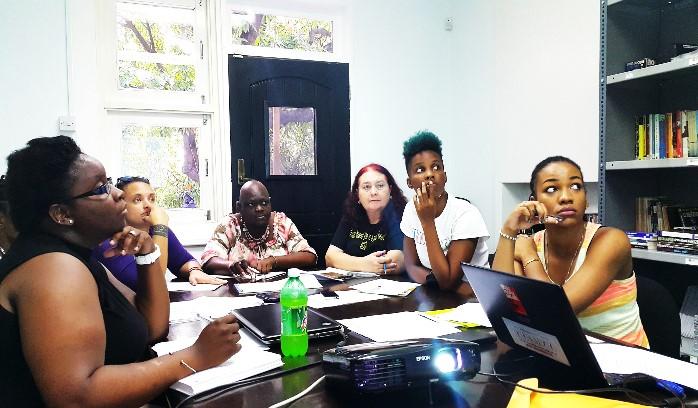
Within just a couple of months of existence, the group organised legal literacy training sessions on domestic violence, training of facilitators on responding to and addressing gender-based violence and intimate partner violence, and a training on the Domestic Violence Act. Hosted in partnership with the Jamaica Forum of Lesbians, All-Sexuals and Gays (J-FLAG), watch what these participants had to say.

”WE-Change envisions a society where the rights of every person are recognised, respected, and protected, and where duty bearers and caregivers commit to creating an enabling environment for every person to contribute to the sustainable development of Jamaica.”

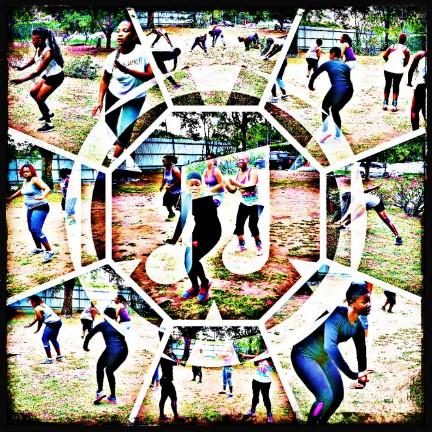
While working on creating alternative and safe spaces for the vocalisation of the LBT community and reducing homophobia and transphobia, WE-Change also promotes self-care and wellness through dance, yoga and fitness boot camp classes. During the ‘dancerobics’ for example participants were taught “several dance moves to the tune of new soca and dancehall hits.” And to celebrate love during #Pride2015, the women of WE-Change made this video because #LoveWins!

Region
The Caribbean
Source
WE-Change

About the AWID International Forum

More than an event!

The AWID International Forum is a truly global space that gives participants an opportunity to network, build alliances, celebrate, and learn in a stimulating, emotive and safe atmosphere. 

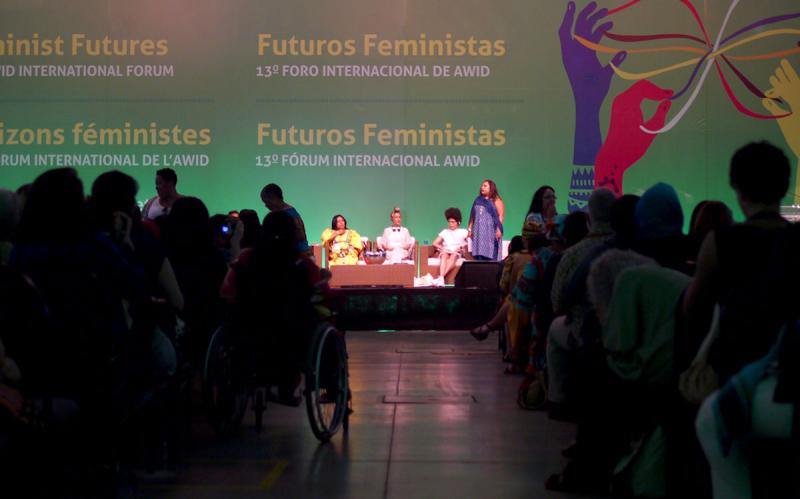
AWID International Forum in Costa de Sauipe, Brazil, 2016

More and more, we are trying to bring the Forum process outside of the convening’s borders. Engaging with partners and deepening relationships all year round, connecting with local movements to better understand problems and co-create solutions. The Forum event itself, held every three to four years in a different region of the world, is just a crystallization of all these alliances that we are building as part of our work.

The AWID Forum dissolves our inner and external boundaries, fosters deep discussion, personal and professional growth, and strengthens our movements for gender justice and women’s rights.

As a convening, it is a response to the urgency to promote stronger and more coordinated engagement and action by feminists, women’s rights and other social justice advocates, organizations and movements. We also believe that the Forum is more than just an event – it can facilitate a process to influence thinking and set agendas for feminist movements and other related actors.

Evolving from a national conference of around 800 people, the event now brings together around 2000 feminists, community leaders, social justice activists, and donor agencies from around the world. 

The 14th AWID International Forum will take place 11-14 January 2021 in Taipei, Taiwan.

Find out more!


The past Forums

2016 - Feminist Futures: Building Collective Power for Rights and Justice (Costa de Sauipe, Brazil)

Participants at the Black Feminisms Forum in Brazil, 2016

Given the complex world that we face today, the 2016 AWID Forum did not focus on a particular “issue”, but rather on creating more effective ways of working together!

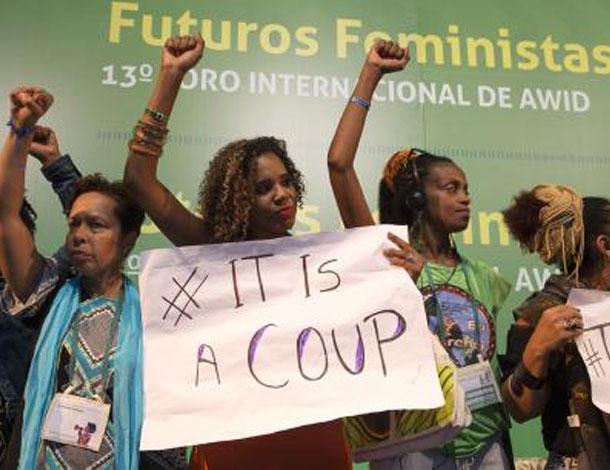
Despite the challenging contexts in which the 2016 Forum took place (the Zika epidemic, a strike by Brazilian foreign-service workers, the impeachment of President Dilma Rousseff and subsequent turmoil), it succeeded in bringing together over 1800 participants from 120 countries and territories across all regions of the world.

What happened at the 13th AWID international Forum:

  • For 96% of participants who responded to the post Forum evaluation survey, the Forum was a major source of inspiration and energy.

  • 98% of participants considered it an important convening space for feminist movements and expressed hope that AWID continues to organize forums.

  • 59% of Forum evaluation survey respondents declared to be very satisfied with the Forum and 34% somewhat satisfied.

  • Over 150 sessions were delivered in different formats on a variety of topics ranging from bodily integrity and freedoms, to gender-based violence in the workplace, to strategies for building collective power.

  • The first-time Black Feminisms Forum (BFF), held just before the main AWID Forum, brought together 250 Black feminists from all over the world to co-create a powerful space to build and strengthen ongoing, intergenerational, transnational connections

Read more about what the 2016 AWID Forum achieved:

Download the Forum evaluation report


2012 - Transforming Economic Power to Advance Women's Rights and Justice (Istambul, Turkey)

AWID International Forum, in Cape Town, South Africa, 2008

The 12th AWID Forum was the largest and most diverse AWID Forum to date, bringing together 2239 women’s rights activists from 141 countries. Of these participants, around 65% were from the Global South and close to 15% were young women under 30, and 75% attended an AWID Forum for their first time.

The Forum program focused on transforming economic power to advance women’s rights and justice and featured over 170 different kinds of sessions including feminist economics toolbox skills-building sessions, breakout sessions representing all 10 Forum themes, in-depth sessions, and solidarity roundtables. 

Building on the momentum of the 2012 Forum, we transformed the website into a resource and learning Hub, which builds on the content generated by participants by featuring multi-media resources on all Forum components. 

Visit the 2012 Forum web archive


All AWID Forums

  • 2016: Feminist Futures: Building Collective Power for Rights and Justice (Costa de Sauipe, Brazil). Read the 2016 Forum Evaluation report
  • 2012: Transforming Economic Power to Advance Women's Rights and Justice (Istanbul, Turkey)
  • 2008: The Power of Movements (Cape Town, South Africa). Read our 2008 Forum Report
  • 2005: How does change happen? (Bangkok, Thailand)
  • 2002: Reinventing Globalization (Guadalajara, Mexico)
  • 1999: Leading Solutions for Equality and Justice (US)
  • 1996: Beyond Beijing From Words to Action (US)
  • 1993: Joining Forces to Further Shared Visions (US)
  • 1991: Working Together/Learning Together: A South North Dialogue (US)
  • 1989/1990: Global Em-Powerment for Women (US)
  • 1987: Moving Forward: Innovations in Development Policy, Action and Research (US)
  • 1985: Women Creating Wealth; Transforming Economic Development (US)
  • 1983: ‘Women in Development’ (Washington D.C, US)
Main image
Story-2-Banner.png
Body

Mexican WHRDs

The data from our tribute indicate that Mexico is a particularly dangerous country for defenders. Out of the 12 Mexican Women Human Rights Defenders (WHRDs) we commemorate in this years’ Tribute, 11 were murdered. They were journalists, women’s rights advocates, trans* rights and social activists. Join us in remembering and honoring these WHRDs, their work and legacy by sharing the memes below and tweeting by using the hashtags #WHRDTribute and #16Days. 


Please click on each image below to see a larger version and download as a file


Main image
AWID-CSW_header.png
Body

7. Synthesize your research findings

Now that you have analyzed all your data – from your survey, interviews, desk research and potentially other sources – you can create your final product.

In this section:

Create your final product

Your final product will be the document that will summarize, analyze and criticize your data. That will be the piece that you will share with your community to present and explain your research to your audience.

At AWID, we often write a comprehensive written report that analyzes each set of data and synthesizes all of our findings, then later create smaller products, such as infographics and summaries (explained in the subsequent section “Finalize and format”).

1. Write clearly

  • Organize your data as you would like to tell a story. You can follow the order of your survey. Or you can regroup some questions to lead to your conclusion in a smooth and progressive way.
  • Adapt your language to your audience. Use universal language and avoid jargon or too technical terms.

Importance of the editor

An editor will proofread, ensure concise writing, conduct fact-checking, point out inconsistencies that need to be resolved, arrange the flow of the document and possibly suggest titles.

Your editor should preferably be someone who understands and knows your WITM work but who was not directly involved in the research. This will bring in a fresh perspective.

2. Make it pretty

  • Use the data collected to create graphs and tables. These type of visuals are a compelling way to highlight the main findings of your research and validate your analysis.

  • Source relevant images that can illustrate your report.

  • Highlight key-numbers and/or powerful testimonials.

Remember: The more accessible your product is, the more people will want to read (and share!) it.

Back to top


Gather review & inputs

At this point, you have collected all your data, analyzed it and transformed it into your final product, likely in a long report.

1. Polish your results

Before moving on to the next steps – you should share your final research product with your advisor organizations, activists, and donors.

This is a great moment to check the following points:

  • Are there any key points missing in your analysis of the present funding landscape and trends?
  • Are there any key points missing in your conclusions?
  • Are there any inaccuracies in the data that need to be corrected?
  • General suggestions on strengthening the report to achieve your goals as listed in your research framing.

Once you have inputted all feedback from your advisors, be sure to run it by your editor once more.

This will now be the final, completed version of your report.  If you intend to publish the final report in other languages, now is the time to send it for translation.

2. Facilitate the feedback

  • Your advisors are likely busy with their regular responsibilities. Be sure to request feedback within a reasonable deadline.
  • Keep your request for feedback brief and specific, so it is easy for them to respond. If you like, you can simply copy and paste the bullet points we have provided.
  • If you are publishing in multiple languages, ensure you have advisors who can also review the final translated versions of your product(s).

This is a significant contribution from your advisors. Consider offering them some form of recognition.

Back to top


Previous step

6. Conduct desk research

Next step

8. Finalize and format


Estimated time:

• 2 - 5 months

People needed:

• 1 or more research person(s)
• 1 Editor (or web-editor if you create an online product)
• Translator(s), if done in more than one language

Resource needed:

• List of advisor organizations, activists, and donors.
• Concept note (from “Frame your research” section)
• Survey topline results
• Prepared interview questions
• Interview results
• Desk research data
• All other data used in report


Previous step

6. Conduct desk research

Next step

8. Finalize and format


Ready to Go? Worksheet

Download the toolkit in PDF

Protection of the Family - Opposition Views

New conservative alliance:

Conservative organizing and policy

State supporters

Administrative Office

For administrative purposes you can contact our office at:

  • +1 416 594 3773
  • 192 Spadina Avenue, Suite 300 | Toronto, ON, M5T 2C2 | Canada

Вместе под Зонтом: Феминизм и Права Секс-Работниц/ков

Ассоциация «Права женщин в развитии» и Фонд «Красный зонт» приглашают Вас принять участие  в диспуте-семинаре на тему феминизма и секс-работы.


Вместе под Зонтом: Феминизм и Права Секс-Работниц/ков

10 ноября 2020г. в 14:00 по UTC (сверьтесь с вашим местным временем)

В рамках данной сессии, сотрудницы (-ки) Ассоциации «Права женщин в развитии» будут делиться своими знаниями и опытом работы в условиях виртуального общения. Мы поговорим об основных сложностях и интерсекциональности в работе секс-работниц (-ков) и феминисток (-ов).

Подумайте над своими вопросами!

Для участниц (-ков) будет предоставлен перевод на испанский, французский и русский языки.


Спикеры

Кей Тхи Вин 

Кей Тхи является секс-работницей и с 2007 года лоббирует вопросы здоровья и прав секс-работниц (-ков). За последние девять лет она участвовала в программе по предупреждению ВИЧ среди женщин, работающих в секс-индустрии, и мужчин, имеющих половые связи с мужчинами, в Мьянме. В настоящее время Кей Тхи является региональной координаторкой  Азиатско-Тихоокеанской сети секс-работниц (-ков) (АТССР) и работает с партнерами по всему Азиатско-Тихоокеанскому региону.

Гитанджали Мишра 

Гитанджали является соосновательницей и исполнительной директоркой организации CREA (Нью-Дели). Она феминистка и любительница кино, работала по вопросам сексуальности, репродуктивного здоровья, гендера, прав человека и насилия в отношении женщин на различных уровнях - в качестве активистки, грантодательницы и на директивном уровне.

Вера Родригез

Вера присоединилась к фонду «Красный зонт» в августе 2017 года в качестве сотрудницы по программам. Вера родилась в Испании, где окончила факультет журналистики Университета Сан Пабло в Валенсии. Последние 7 лет она является активной участницей организации «X-talk», очень вовлечена в работу Коллектива Стриптизерш (-ров) Восточного Лондона, а также является участницей съемочной группы «Опера секс-работниц (-ков)».

Заинтересованы в том, чтобы вскоре стать частью этого диспут-семинарa и других обучения?!

Присоединяйтесь сейчас как участница/участник!