Contenido relacionado
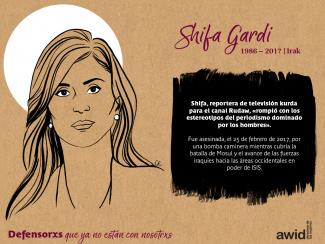
El Mundo: Una bomba mata en Mosul a una reportera de la TV kurda
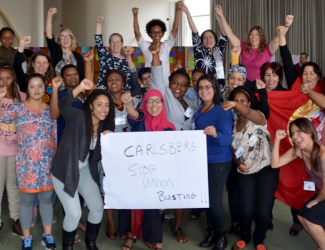
Women human rights defenders (WHRDs) worldwide defend their lands, livelihoods and communities from extractive industries and corporate power. They stand against powerful economic and political interests driving land theft, displacement of communities, loss of livelihoods, and environmental degradation.
Extractivism is an economic and political model of development that commodifies nature and prioritizes profit over human rights and the environment. Rooted in colonial history, it reinforces social and economic inequalities locally and globally. Often, Black, rural and Indigenous women are the most affected by extractivism, and are largely excluded from decision-making. Defying these patriarchal and neo-colonial forces, women rise in defense of rights, lands, people and nature.
WHRDs confronting extractive industries experience a range of risks, threats and violations, including criminalization, stigmatization, violence and intimidation. Their stories reveal a strong aspect of gendered and sexualized violence. Perpetrators include state and local authorities, corporations, police, military, paramilitary and private security forces, and at times their own communities.
AWID and the Women Human Rights Defenders International Coalition (WHRD-IC) are pleased to announce “Women Human Rights Defenders Confronting Extractivism and Corporate Power”; a cross-regional research project documenting the lived experiences of WHRDs from Asia, Africa and Latin America.
"Women Human Rights Defenders confronting extractive industries: an overview of critical risks and Human Rights obligations" is a policy report with a gender perspective. It analyses forms of violations and types of perpetrators, quotes relevant human rights obligations and includes policy recommendations to states, corporations, civil society and donors.
"Weaving resistance through action: Strategies of Women Human Rights Defenders confronting extractive industries" is a practical guide outlining creative and deliberate forms of action, successful tactics and inspiring stories of resistance.
The video “Defending people and planet: Women confronting extractive industries” puts courageous WHRDs from Africa, Asia, and Latin America in the spotlight. They share their struggles for land and life, and speak to the risks and challenges they face in their activism.
Challenging corporate power: Struggles for women’s rights, economic and gender justice is a research paper outlining the impacts of corporate power and offering insights into strategies of resistance.
AWID acknowledges with gratitude the invaluable input of every Woman Human Rights Defender who participated in this project. This project was made possible thanks to your willingness to generously and openly share your experiences and learnings. Your courage, creativity and resilience is an inspiration for us all. Thank you!
Contenido relacionado
El Mundo: Una bomba mata en Mosul a una reportera de la TV kurda
For decades, feminist scholars and advocates have articulated important concepts related to gender to understand and challenge oppression and discrimination. Those concepts have now become the target of anti-rights actors who claim that oppressive patriarchal gender roles are “common sense”, strategically painting all other ideas, cultural norms, and forms of social life as a dangerous, conspirative ideology.
Read our Brief on “Gender Ideology” Narratives: A Threat To Human Rights

Día 1
ECONOMIAS DE CUIDADOSAGROECOLOGÍA Y SOBERANÍA ALIMENTARIACOOPERATIVISMO FEMINISTASINDICALISMO FEMINISTA
(¡con invitades especiales!)
📅Martes 12 de marzo
🕒6:00 p. m. - 9:30 p. m. EST
🏢 Blue Gallery, 222 E 46th St, New York
Entrada solo con confirmación previa
.
 |
 |
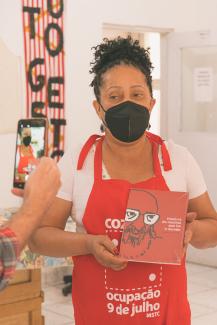 |
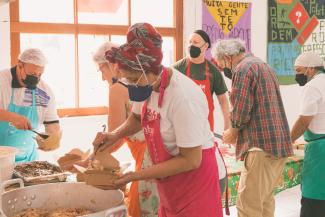
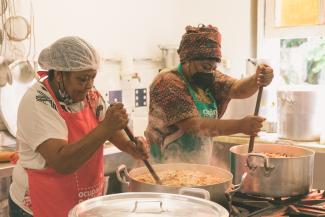
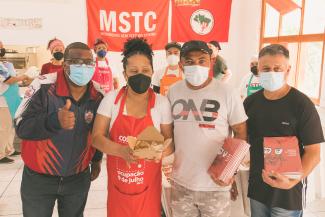 Femmes et collaborateurs à la cuisine de l'Ocupação 9 de Julho |
 |
L’enquête s’adresse aux groupes, organisations et mouvements qui travaillent spécifiquement, ou principalement, à la défense des droits des femmes, des personnes LBTQI+ et pour la justice de genre dans tous les contextes, à tous les niveaux, dans toutes les régions. Si c’est un des principaux piliers du travail de votre groupe, collectif, réseau ou tout autre type d’organisation, que votre structure soit déclarée ou non, récemment constituée ou plus ancienne, nous vous invitons à participer à cette enquête.

*Nous ne collectons pas les réponses à titre individuel ou de fonds féministes et pour les femmes à l’heure actuelle.
En savoir plus sur l'enquête :
Consultez la foire aux questions
Asociación de Mujeres Afrodescendientes del Norte del Cauca

Pour revendiquer votre pouvoir en tant qu’experte sur la situation du financement des mouvements féministes.