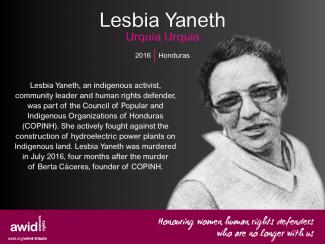
Lesbia Yaneth Urquía Urquía
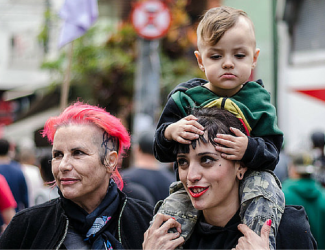
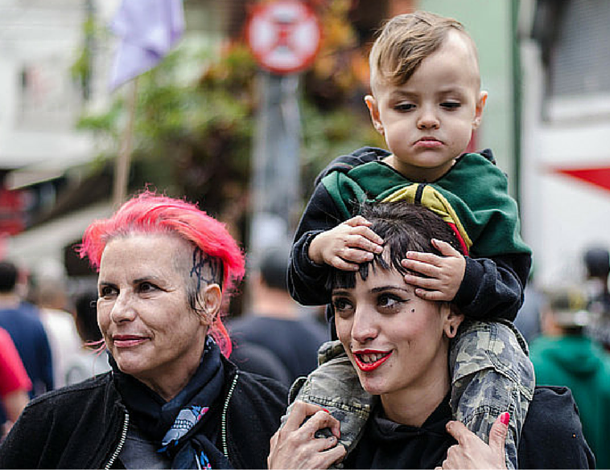
Over the past few years, a troubling new trend at the international human rights level is being observed, where discourses on ‘protecting the family’ are being employed to defend violations committed against family members, to bolster and justify impunity, and to restrict equal rights within and to family life.
The campaign to "Protect the Family" is driven by ultra-conservative efforts to impose "traditional" and patriarchal interpretations of the family, and to move rights out of the hands of family members and into the institution of ‘the family’.
Since 2014, a group of states have been operating as a bloc in human rights spaces under the name “Group of Friends of the Family”, and resolutions on “Protection of the Family” have been successfully passed every year since 2014.
This agenda has spread beyond the Human Rights Council. We have seen regressive language on “the family” being introduced at the Commission on the Status of Women, and attempts made to introduce it in negotiations on the Sustainable Development Goals.
AWID works with partners and allies to jointly resist “Protection of the Family” and other regressive agendas, and to uphold the universality of human rights.
In response to the increased influence of regressive actors in human rights spaces, AWID joined allies to form the Observatory on the Universality of Rights (OURs). OURs is a collaborative project that monitors, analyzes, and shares information on anti-rights initiatives like “Protection of the Family”.
Rights at Risk, the first OURs report, charts a map of the actors making up the global anti-rights lobby, identifies their key discourses and strategies, and the effect they are having on our human rights.
The report outlines “Protection of the Family” as an agenda that has fostered collaboration across a broad range of regressive actors at the UN. It describes it as: “a strategic framework that houses “multiple patriarchal and anti-rights positions, where the framework, in turn, aims to justify and institutionalize these positions.”
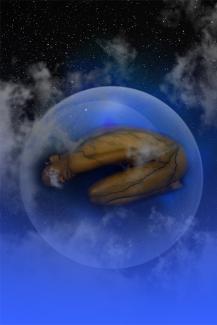
Cette œuvre est la collaboration photographique et illustrative réalisée par Siphumeze et Katia pendant le confinement. Elle se penche sur les récits de sexe et de plaisir des queers noirs, le bondage, le sexe protégé, les jouets, la santé mentale et le sexe et bien d'autres choses encore. Elle a été créée pour accompagner l'anthologie Touch.
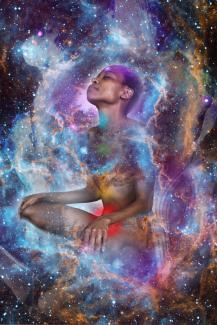
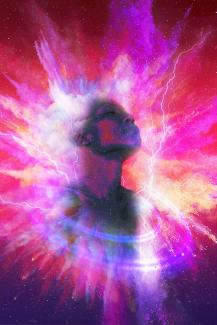
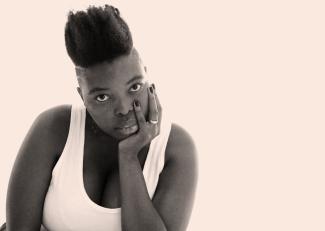
Siphumeze Khundayi est une créatrice d'art, photographe et animatrice qui s'intéresse aux moyens créatifs de réunir le dialogue et la pratique artistique en relation avec l'identité queer africaine.
Elle est directrice créative de HOLAAfrica!, un collectif panafricaniste féministe en ligne.
Ses travaux de performance en solo et collaboratifs ont été présentés dans un certain nombre de festivals et d'espaces théâtraux tels que le festival Ricca Ricca au Japon.
Elle a mis en scène deux productions nominées aux Naledi Awards en 2017 et 2018. Elle a aussi mis en scène un spectacle qui a remporté un prix Standard Bank Ovation en 2020.
En tant que photographe, elle a participé à une exposition de groupe intitulée Flowers of my Soul (Fleurs de mon âme) en Italie, organisée par le Misfit Project. Elle a produit trois publications pour HOLAAfrica et a été publiée dans le deuxième volume, pour lequel elle a fourni la couverture: As You Like des Gerald Kraak Anthologies.
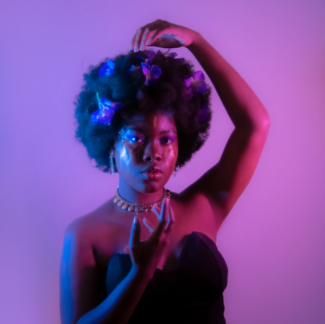
Katia Herrera est une artiste visuelle numérique de 21 ans originaire de la ville bruyante de Saint-Domingue, en République dominicaine. Bien que Herrera soit une introvertie autoproclamée, ses œuvres d'art sont remarquablement fortes dans un monde qui tente de faire taire les voix des personnes noires. Avec des titres comme Black Woman (Femme Noire), You Own the Moon (La Lune t’Appartient), Earth Goddess (Déesse de la Terre), Forever (Pour Toujours) et Universe Protector (Protecteur.rice de l’Univers), l'héritage de Herrera sera marqué par sa volonté passionnée de mettre en lumière l'endurance et la persévérance des Noir·e·s d'hier et d'aujourd'hui, afin de contrer le discours selon lequel la peau noire ne devrait être associée qu'à l'esclavage.
L'une de ses œuvres la plus belle et la plus vivante, Universe Protector, dépeint l'âme noire comme une entité divine pleine de force, de puissance et de grandeur. C’est dans sa jeunesse que son amour du graphisme a été stimulé grâce à l'art de ses parents et le Photoshop qu'ils avaient téléchargé sur leur ordinateur pour leur photographie professionnelle.
We encourage you to use the material in support of your advocacy!
إن موضوع المنتدى – “النهوض معًا” – هو دعوة للتفاعل مع أنفسنا بالكامل، والتواصل مع بعضنا البعض بتركيز واهتمام وبشجاعة، حتى نتمكن من الشعور بنبض الحركات العالمية والنهوض معًا لمواجهة تحديات هذه الأوقات.
تمر الحركات النسوية وحقوق المرأة والعدالة الجندرية ومجتمع الميم عين والحركات الحليفة في جميع أنحاء العالم بمرحلة حرجة، وتواجه ردة فعل قوية على الحقوق والحريات المكتسبة سابقًا. لقد جلبت السنوات الأخيرة صعوداً سريعاً للأنظمة الاستبدادية، والقمع العنيف للمجتمع المدني، وتجريم النساء والمدافعين عن حقوق الإنسان من مختلف الأنواع الاجتماعية، وتصاعد الحروب والصراعات في أجزاء كثيرة من عالمنا، واستمرار الظلم الاقتصادي، والمشاكل الصحية والأزمات البيئية والمناخية المتقاطعة.
إن حركاتنا تترنح، وفي الوقت نفسه، تسعى إلى بناء والحفاظ على القوة والثبات اللازمين للعمل الذي ينتظرنا. لا يمكننا القيام بهذا العمل بمفردنا، في صوامعنا. يعد الاتصال والشفاء ضروريين لتحويل اختلالات القوة المستمرة والتصدعات داخل حركاتنا. ويجب علينا أن نعمل ونضع الاستراتيجيات بطرق مترابطة، حتى نتمكن من تحقيق النجاح معًا. يعزز منتدى جمعية حقوق المرأة في التنمية هذا العنصر الحيوي المتمثل في الترابط في البقاء أقوياء/ قويات وتأثير النمو والتحول للتنظيم النسوي على مستوى العالم.
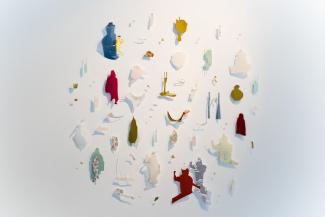
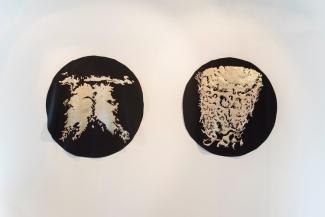
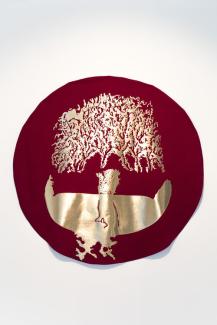
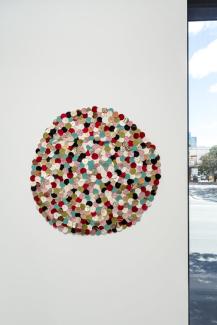
An exhibition by Nicole Barakat, embodying her reconnection with the diaspora of objects from her ancestral homelands in the South West Asia and North Africa (SWANA) region.
Barakat presents a collection of textile works as manifestations of her practice of engaging with displaced, and often stolen objects held within Western museum collections including the Louvre, British Museum and Nicholson Museum.
To by-pass the gatekeepers and breach the vitrines holding these ancestral objects, Barakat reclaims pre-colonial, non-linear, receptive forms of knowing that are often devalued and dismissed by colonial and patriarchal institutions - engaging with coffee cup divination, dream-work, intuitive listening and conversations with the objects themselves (source).
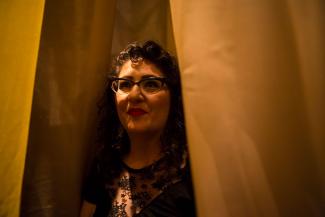
Enciende tu fuego feminista leyendo nuestras investigaciones y publicaciones varias sobre financiamiento, defensoras de derechos humanos, construcción de movimientos, fundamentalismos, justicia económica, seguimiento y evaluación feminista y más
We tend to think about communicating desire as something that is limited to the private intimacy of the bedroom and our personal relationships. But can we also think of this kind of communication as a structure, a praxis that informs our work, and how we are, how we do in the world?
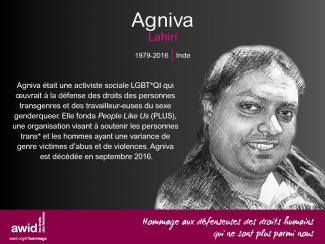
En la Comisión Africana y en el Sistema Interamericano, los actores antiderechos impulsan nociones esencialistas de cultura y género para impedir el avance de los derechos y socavar las responsabilidades. Como vemos, los actores anti-derechos están ejerciendo su influencia sobre los sistemas regionales de derechos humanos, así como en los espacios internacionales.
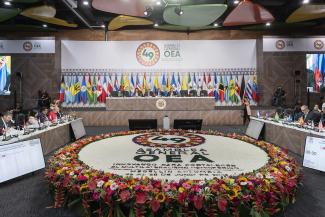
La Comisión Africana de Derechos Humanos y de los Pueblos ha comenzado a definir a los derechos sexuales y de las mujeres como un menoscabo a su capacidad de ocuparse de los «derechos reales» y como contrarios a los «valores africanos», con lo cual se establece un precedente anti-derechos preocupante. La anulación del estatus de observador de la Coalición de Lesbianas Africanas es un ejemplo de esta tendencia y muestra la forma en que el espacio para el involucramiento feminista panafricanista está siendo restringido.
En la Organización de Estados Americanos (OEA) y en el Sistema Interamericano de Protección de los Derechos Humanos, las estrategias anti-derechos incluyen la oenegización de grupos religiosos, la utilización de discursos seculares, y la cooptación de marcos de discriminación. La influencia antiderechos se ha materializado de diversas maneras, que incluyen la intimidación de activistas trans y la obstrucción de la introducción de lenguaje progresista en las resoluciones.