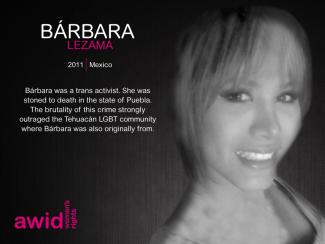
Barbara Lezama
Over the past few years, a troubling new trend at the international human rights level is being observed, where discourses on ‘protecting the family’ are being employed to defend violations committed against family members, to bolster and justify impunity, and to restrict equal rights within and to family life.
The campaign to "Protect the Family" is driven by ultra-conservative efforts to impose "traditional" and patriarchal interpretations of the family, and to move rights out of the hands of family members and into the institution of ‘the family’.
Since 2014, a group of states have been operating as a bloc in human rights spaces under the name “Group of Friends of the Family”, and resolutions on “Protection of the Family” have been successfully passed every year since 2014.
This agenda has spread beyond the Human Rights Council. We have seen regressive language on “the family” being introduced at the Commission on the Status of Women, and attempts made to introduce it in negotiations on the Sustainable Development Goals.
AWID works with partners and allies to jointly resist “Protection of the Family” and other regressive agendas, and to uphold the universality of human rights.
In response to the increased influence of regressive actors in human rights spaces, AWID joined allies to form the Observatory on the Universality of Rights (OURs). OURs is a collaborative project that monitors, analyzes, and shares information on anti-rights initiatives like “Protection of the Family”.
Rights at Risk, the first OURs report, charts a map of the actors making up the global anti-rights lobby, identifies their key discourses and strategies, and the effect they are having on our human rights.
The report outlines “Protection of the Family” as an agenda that has fostered collaboration across a broad range of regressive actors at the UN. It describes it as: “a strategic framework that houses “multiple patriarchal and anti-rights positions, where the framework, in turn, aims to justify and institutionalize these positions.”
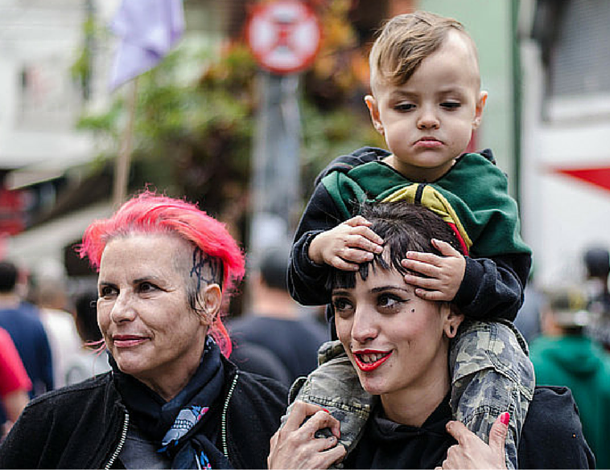
1,174 feminist, women's rights & LGBTQI+ organizations
from 129 countries participated in AWID's 2024 survey.
The data reveals the state of resourcing for feminist movements between 2021-2023, amid current major defunding trends in aid and philanthropy.
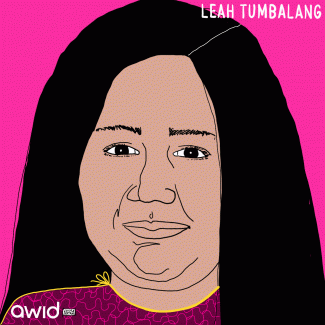
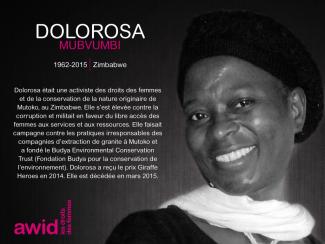
Leah Tumbalang was a Lumad woman of Mindanao in the Philippines. The story of Lumad Indigenous peoples encompasses generations of resistance to large-scale corporate mining, protection of ancestral domains, resources, culture, and the fight for the right to self-determination.
Leah was a Lumad leader as well as a leader of Kaugalingong Sistema Igpasasindog to Lumadnong Ogpaan (Kasilo), a Lumad and peasant organization advocating against the arrival of mining corporations in Bukidnon, Mindanao province. She was unwavering in her anti-mining activism, fervently campaigning against the devastating effects of mineral extraction on the environment and Indigenous peoples’ lands. Leah was also an organizer of the Bayan Muna party-list, a member of the leftist political party Makabayan.
For almost a decade, Leah (along with other members of Kasilo) had been receiving threats for co-leading opposition against the deployment of paramilitary groups believed to be supported by mining interests.
“Being a Lumad leader in their community, she is at the forefront in fighting for their rights to ancestral land and self-determination.” - Kalumbay Regional Lumad Organization
Being at the forefront of resistance also often means being a target of violence and impunity and Leah not only received numerous death threats, but was murdered on 23 August 2019 in Valencia City, Bukidnon.
According to a Global Witness report, “the Philippines was the worst-affected country in sheer numbers” when it comes to murdered environmental activists in 2018.
Read the Global Witness report, published July 2019
Reconocemos que el viaje involucra muchos desafíos y por eso brindaremos más información y detalles sobre cómo llegar a Bangkok cuando abramos el proceso de inscripción a principios del próximo año.
Hello again, and again, and again. I have known and loved you my entire adult life, since I first met you meaningfully, after graduating from university. I’d seen you one time before then. That was you appearing as Betty Friedan on a local TV talk show in the US Midwest, in the late-1960s. At the time, Mrs. Wells, my other mother, and I commented on what wild, far-fetched ideas this woman was trying to convince us about. Decade after decade since then I have fallen more deeply in love with you, Beloved, and understand and witness your political and theoretical brilliance, ethical and moral authority, creativity, joy, and love, above all. Nearly 60 years later, I know we are partners forever.
The early years of our acquaintanceship was ok. I was quite self-involved--figuring racial, gender, and sexual identity; getting clear on my core politics, values, and ethics; completing my formal education--and you provided numerous settings, intellectual drop-in centers, and comforting holding environments where and through which I was able to craft the young-adult building blocks of the feminist and human being whom I would become.
The predominantly white women’s movement of Cambridge and Boston, including Daughters of Bilitis, was my starting place. That suited me at the time but soon realized I desired something more. Poof! Like magic (serendipity), I connected with a small group of radical, anti-imperialist, Black, socialist lesbian women and we soon became the Combahee River Collective.
That early Combahee experience, combined with critical life lessons and particular African-American/Korean immigrant racial politics of early-1990s in the US, prepared me for the journey that has led me to identify and work as a transnational feminist to address militarism and to dedicate myself to imagining other worlds where all living beings will thrive.
The next two critical women’s-movement moments were decades after Combahee years but deeply linked. First was meeting and being invited into the Korean feminist movement organizing against US military bases and supporting the “kijichon women” the Korean women whose lives, including for some, their mixed-race children, revolved around servicing US military personnel in numerous ways in villages and towns adjacent to the bases. Korean Beloved Feminists, especially Kim Yon-Ja and Ahn Il-Soon, the first sisters I met and traveled with, made me see and understand the critical importance of nation as an analytical and organizing principle. The “capstone” was living, working in occupied Palestine. The late Maha Abu-Dayyeh introduced me to the Palestinian women’s movement, with a profound comment, “you can leave Palestine but Palestine will never leave you.” So true. And, all my work and experiences across many borders brought me to AWID--my second home.
As you know, Beloved, being with you has not been easy or simple. Indeed, you are demanding, consistently riddled with contradictions, and sometimes even hurtful. Nonetheless, you continue to grow and develop, as you are supporting my political, emotional, and spiritual growth and development. I guess we are growing each other--a very profound process to which I will dedicate the rest of my time in my current form.
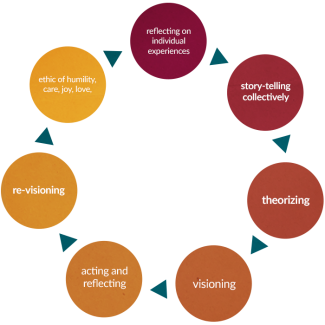
The through-line of being with you all these decades is this:
Feminists Collectively Engaging the Heads, Hearts, Hands, and Spirits to transform our worlds
So much love, Feminist Movements!
Your Margo
AKA DJ MOR Love and Joy
Wellfleet Massachusetts USA
Want to join the growing numbers of people saying “enough” to the infiltration of the UN by anti-rights actors?

Feminist movements need core and long-term funding - including savings and reserves - to stay focused on systemic change. Reserves aren’t extras; they're essential for sustainability.
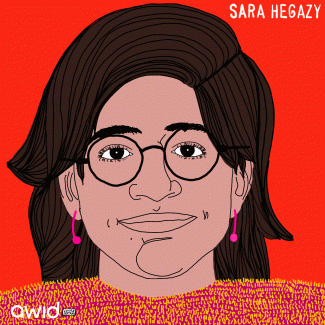
Sarah Hegazy, una audaz activista egipcia por los derechos LGBTQI+, vivía en una sociedad en la que lxs integrantes de su comunidad, sus cuerpos y sus vidas, enfrentan prejuicios letales a menudo. La resistencia de Sarah estaba arraigada en la deconstrucción del sistema dominante, opresor y patriarcal, y de sus actores antiderechos.
«[En Egipto], toda persona que no sea varón, musulmán, suní, heterosexual y partidario del sistema, es rechazada, reprimida, estigmatizada, arrestada, exiliada o asesinada. Este problema se relaciona con el sistema patriarcal en su conjunto, ya que el Estado no podría ejercer su represión contra lxs ciudadanxs, si no hubiera una opresión preexistente desde la infancia», escribió Sarah Hegazy el 6 de marzo de 2020
La supresión de la voz de Sarah por parte del gobierno egipcio alcanzó su pico más violento en 2017, cuando fue arrestada por alzar una bandera arcoíris en el recital de Mashrou’ Leila (una banda libanesa cuyo cantante principal es abiertamente gay) en El Cairo. Fue acusada de pertenecer a un grupo ilegal, y de «promover la desviación sexual y el libertinaje».
«Fue un acto de apoyo y solidaridad, no solamente con el cantante [de Mashrou’ Leila] sino con todas las personas oprimidas... Nos enorgulleció alzar la bandera. Nunca nos imaginamos la reacción de la sociedad y del Estado egipcio. Para ellos, yo era una criminal: alguien que buscaba destruir la estructura moral de la sociedad.» - Sarah Hegazy
Sarah estuvo encarcelada por tres meses, durante los cuales fue torturada y agredida sexualmente. En enero de 2018, después de ser liberada bajo fianza, pidió asilo en Canadá, donde estaba segura, pero seguía prisionera de los recuerdos del abuso y la violencia que su cuerpo y su alma habían sufrido.
«Salí de esta experiencia después de tres meses con un caso muy intenso y serio de TEPT [trastorno por estrés postraumático]. La prisión me mató. Me destruyó», dijo Sarah Hegazy a NPR.
Sarah se quitó la vida el 14 de junio de 2020, luego de dejar una nota escrita a mano en árabe:
«A mis hermanxs: traté de encontrar redención y fallé, perdónenme.
A mis amigxs: la experiencia [el viaje] fue muy dura y soy demasiado débil como para resistir, perdónenme.
Al mundo: has sido tremendamente cruel, pero perdono.»
Su legado y su coraje continuarán, llevados adelante por quienes la aman y creen en aquello por lo que Sarah luchó.
«A Sarah: Descansa, solo descansa, libre de esta violencia implacable, de este patriarcado letal impulsado por el Estado. Con rabia, con dolor, con extenuación, resistimos.» - Rasha Younes, investigadora sobre derechos LGBT de Human Rights Watch. Lee el texto completo
El vocalista de Mashrou’ Leila canta un tributo a Sarah Hegazy
Les langues de travail de l'AWID sont l'anglais, le français et l'espagnol. Le thaï sera ajouté comme langue locale, ainsi que la langue des signes et d'autres mesures d'accessibilité. D'autres langues étant susceptibles d’être ajoutées si le financement le permet, nous vous invitons à consulter régulièrement les mises à jour. La justice linguistique nous tient à cœur et nous essaierons d'inclure autant de langues que possible en fonction de nos ressources. Nous espérons créer de multiples occasions pour que chacun·e d'entre nous puisse s'exprimer dans sa langue et communiquer avec les autres.
El cuerpo es una entidad poderosa. Por ser mujeres, nuestros cuerpos son controlados, oprimidos y vigilados desde que estamos en el útero. Nuestro aspecto, la forma en que nos movemos, nos vestimos, caminamos, hablamos, gesticulamos, reímos. A menudo me he preguntado qué es lo que genera los temores patriarcales respecto del poder de los cuerpos femeninos.
En el lugar de donde provengo, se murmuraba sobre el trabajo sexual y lxs trabajadorxs sexuales con desprecio, asco, fascinación, lástima y condena, todo en simultáneo.
Descubrí el trabajo sexual y a lxs trabajadorxs sexuales cuando tenía 22 años. En conversaciones sencillas, sentadxs en círculo, charlando mientras tomábamos café y té, explorábamos nuestras vidas, experiencias, pensamientos y sentimientos.
Para lxs trabajadorxs sexuales, el trabajo sexual era la opción más conveniente de todas, para pagar las cuentas, para sostener a la familia, para tener un horario laboral más flexible, para tener sexo. Así elegí mi trabajo, como el más conveniente, para pagar las cuentas, para sostener a la familia, para tener un horario laboral más flexible.
Estas personas, mujeres y hombres, me enseñaron que yo tomaba mis propias decisiones sobre mi cuerpo: dónde focalizo su vida y su energía, si lo uso para el placer o para el dolor, si lo comercializo o lo ofrezco en forma gratuita, y cómo quiero sentirme en relación con mi cuerpo. Esta conciencia fue tan excitante como empoderadora.
Crear | Résister | Transform: un festival para movimientos feministas – 2021… ustedes me acompañaron a lo largo de una serie de momentos que cambiaron mi vida (¡!¡!¡!)
Los llamamos «eventos», pero en verdad, para mí, sus espacios de aprendizaje feministas son el lugar adonde llevo un poco de lo que tengo adentro, y de donde me llevo un poco de lo que dicen sus disertantes y algo de las discusiones que penetran más profundamente en nuestra comprensión.
Compartir... Participar... Sumergirse...
en la fortaleza, en la vulnerabilidad, en el placer.
Simplemente siendo la feminista transformadora que soy, sin pretensiones, sin recelos...
Apreciando a la feminista transformadora que siempre he sido, sin siquiera conocer la palabra ni reconocerla de esa manera o en esos términos...
Encontrar un hogar para la feminista ferozmente transformadora que vive dentro de mí...
A pesar de la ira, la rabia y la frustración por no ser tratada como una igual y ser tratada como alguien «menos _ que».
No siempre me consideré feminista ni me reconocí a mí misma dentro del movimiento feminista o del discurso feminista. De verdad, aprecio que las puertas me fueran abiertas, que se me acercaran sillas para sentarme, el reconocimiento como mujer, el reconocimiento de mi feminidad.
Algunas veces desestimé al patriarcado con fastidio, otras veces respondí con frustración y enojo, pero no lo enfrenté... no notaba su toxicidad siniestra e insidiosa... era lo suficientemente privilegiada como para poder trabajar a través de él, para sobrevivir a él, para superarlo, para destacarme a pesar de él... no lo cuestionaba lo suficiente, no lo desafiaba lo suficiente, no sobrepasaba mis límites lo suficiente... no hacía lo suficiente...
…conectándome con trabajadorxs sexuales, explorando la sexualidad y las mujeres para tener paz y seguridad…
Hasta que fui plenamente consciente y comprendí las implicancias tanto del privilegio como de la opresión que eran interseccionales.
Hasta que me di cuenta de lo que significaba pelear por la justicia de género y no simplemente por la «igualdad para todxs».
Ya no más practicante y facilitadora: soy una practicante y facilitadora feminista transformadora.
Ser feminista significa que voy a actuar
Zambulléndome en un futuro incierto, frágil, complejo (y posiblemente bastante violento)…
Estoy profundamente agradecida por tenerlxs a ustedes y les prometo continuar siendo implacable al enfrentar y reparar los temas problemáticos relacionados con el género, la raza, la etnia, la clase social, la orientación sexual y la capacidad, y seguir estando presente y siendo fiel a la lucha por la inclusión, la equidad y la justicia.
- Khin Khin
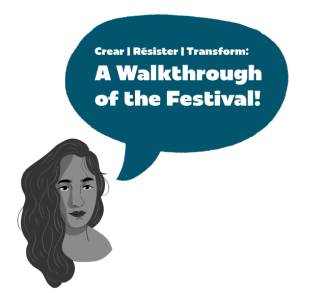
Ghiwa Sayegh is an anarcha-queer writer, independent publisher, and archivist. She is the founding editor of Kohl: a Journal for Body and Gender Research and the co-founder of Intersectional Knowledge Publishers. She has an MA in gender studies from Université Paris 8 Vincennes – Saint-Denis. She is passionate about queer theory, transnational circulations, and imagined or unknown histories. Her influences are Audre Lorde and Sara Ahmed.
How movements are resisting fascist agendas in relation to climate change.
📅 Tuesday, November 11, 2025
📍 Beira Rio Hotel, Belém, Pará
La montée en puissance des antidroits a préparé son terrain. Nous devons comprendre la montée de l’ultranationalisme, du pouvoir incontrôlé des entreprises, de la répression croissante et de l’amenuisement de l’espace civique pour contextualiser les menaces actuelles contre nos droits.
Comment réagir quand on sent que le monde nous tombe dessus ? Pour Tidinha, ça a été l’occasion de sentir qu’on pouvait l’écouter lorsqu’elle questionnait le choix du lieu, de découvrir qu’elle partageait des visions et des rêves avec d’autres participantes et de réaliser qu’elle n’était pas seule.
Découvrez toutes les histoires Télécharger le rapport complet
con Luam Kidane, Mariama Sonko, Yannia Sofia Garzon Valencia y Nomsa Sizani
Movimientos que marchan en todo el mundo por la justicia climática.
📅 Sábado, 15 de noviembre de 2025
📍 Varias ubicaciones
Nouveaux
Les participant.e.s se rassembleront physiquement sur un certain nombre de sites en dehors du site de Bangkok, dans différentes parties du monde, chaque jour du Forum. Tous ces sites auto-organisés seront virtuellement connectés au site du Forum à Bangkok pour des sessions conjointes et hybrides. Tout comme pour les personnes se connectant en ligne, les participant.e.s au Hub pourront animer des sessions, participer à des conversations et profiter d'un programme riche et diversifié.
Les lieux de rencontre seront annoncés en 2024.