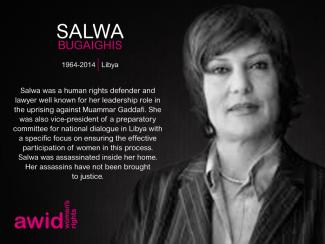
Salwa Bugaighis
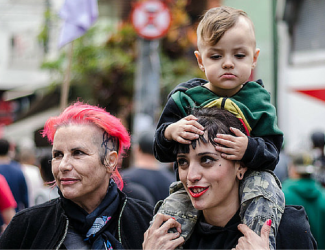
Over the past few years, a troubling new trend at the international human rights level is being observed, where discourses on ‘protecting the family’ are being employed to defend violations committed against family members, to bolster and justify impunity, and to restrict equal rights within and to family life.
The campaign to "Protect the Family" is driven by ultra-conservative efforts to impose "traditional" and patriarchal interpretations of the family, and to move rights out of the hands of family members and into the institution of ‘the family’.
Since 2014, a group of states have been operating as a bloc in human rights spaces under the name “Group of Friends of the Family”, and resolutions on “Protection of the Family” have been successfully passed every year since 2014.
This agenda has spread beyond the Human Rights Council. We have seen regressive language on “the family” being introduced at the Commission on the Status of Women, and attempts made to introduce it in negotiations on the Sustainable Development Goals.
AWID works with partners and allies to jointly resist “Protection of the Family” and other regressive agendas, and to uphold the universality of human rights.
In response to the increased influence of regressive actors in human rights spaces, AWID joined allies to form the Observatory on the Universality of Rights (OURs). OURs is a collaborative project that monitors, analyzes, and shares information on anti-rights initiatives like “Protection of the Family”.
Rights at Risk, the first OURs report, charts a map of the actors making up the global anti-rights lobby, identifies their key discourses and strategies, and the effect they are having on our human rights.
The report outlines “Protection of the Family” as an agenda that has fostered collaboration across a broad range of regressive actors at the UN. It describes it as: “a strategic framework that houses “multiple patriarchal and anti-rights positions, where the framework, in turn, aims to justify and institutionalize these positions.”
Alexandra is an anglo-colombian feminist with over 20 years of experience in local, national and international HIV and sexual and reproductive health and rights programming. She has extensive experience in resource mobilization and donor relations with private philanthropic foundations and multilateral agencies on behalf of international, national and local NGOs, predominantly in Latin America and the Caribbean. Prior to AWID, Alexandra worked at Fundación Si Mujer, a feminist abortion provider and educator in Colombia, RedTraSex and the International HIV/AIDS Alliance.
Alexandra has a BA in International Relations and Development Studies from Sussex University and a MSc in Public Health from the London School of Hygiene and Tropical Medicine. In rare moments when she is not working or parenting, she loves to swim, eat and has recently begun to play Zelda: Breath of the Wild with her son.
Alors que le capitalisme hétéropatriarcal s’acharne à nous contraindre au consumérisme et à la conformité, nous constatons que nos luttes sont cloisonnées et séparées par des frontières aussi bien physiques que virtuelles.
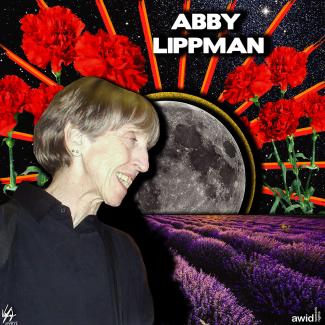
Abby était une féministe pionnière, militante des droits humains.
Ancienne épidémiologiste de l'Université McGill, Abby était réputée pour défendre les causes sociales et pour ses critiques perspicaces concernant les technologies de procréation humaine assistée et d'autres sujets médicaux. Plus précisément, elle a fait campagne contre ce qu'elle a appelé la « généticisation » des technologies de procréation, contre l'hormonothérapie substitutive et pour des recherches plus qualitatives et plus longues avant l'approbation de nouveaux vaccins comme celui contre le papillomavirus humain.
À la nouvelle de son décès, ses ami-e-s et collègues l'ont décrite avec affection comme une « ardente défenseure » de la santé des femmes.
Jemutai is a passionate plant lover who finds inspiration in the natural world and its intricate web of interconnections. This fascination with the universe's interrelatedness is mirrored in their approach to work, community building, care and support.
She believes in the vibrant presence of their ancestors within them and lives to experience, remember, uphold, appreciate and celebrate their struggles, triumphs and values.
As an intersectional queer feminist and human rights activist, Jemutai has dedicated their career to advocating for equity and inclusivity. They are passionate about Organizational Development, with a background in Grants Making and Administration, and now pursuing a path in creating impactful experiences for convenings and providing operational leadership and support, ensuring that spaces are inclusive, safe and curated with precision and care.
Jemutai is also a strong believer in the philosophy of Ubuntu – the idea that "I am because we are." This belief in our shared humanity and mutual interdependence informs their collaborative approach and commitment to fostering a supportive, inclusive environment for all, especially structurally silenced and marginalized people.
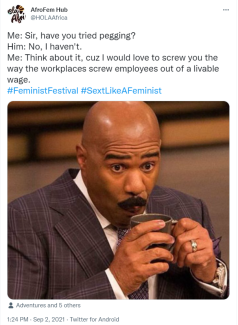
Moi : Monsieur, avez-vous essayé le pegging?
Lui : Non, madame.
Moi : Pensez-y, parce que j’aimerais bien vous baiser comme ces entreprises qui baisent leur personnel pour un salaire à peine minimum.
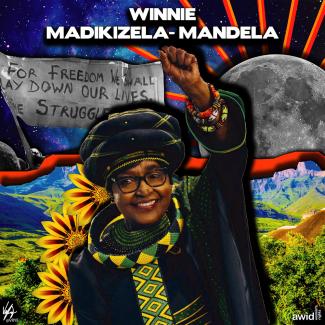
Winnie has been described as a “militant firebrand activist” who fought the apartheid regime in South Africa.
She was imprisoned multiple times, and on many occasions placed in solitary confinement.
Ma’Winnie, as she is affectionately remembered, was known for being outspoken about the challenges Black women faced during and after apartheid, having been on the receiving end of these brutalities herself as a mother, wife and activist during the struggle. She transcended the misconception that leadership is gender, class or race-based. Despite being a controversial figure, she is remembered by many by her Xhosa name, “ Nomzamo”, which means "She who endures trials".
Ma’Winnie continues to be an inspiration to many, particularly young South African women for whom her death has spurred a burgeoning movement, with the mantra: "She didn't die, she multiplied."
Nuestrxs afiliadxs conforman una dinámica red de personas de todo el mundo, que se desempeñan como investigadorxs, académicxs, estudiantes, educadorxs, activistas, empresarixs, diseñadorxs de políticas públicas, personas que trabajan en desarrollo, donantes, y más. La membresía - de todas las edades – es lo que hace de AWID una asociación feminista mundial única.
Ofrecemos diferentes tipos de membresía según el nivel de ingresos y también según quieras afiliarte a título individual o institucional. En la actualidad contamos con más de 5000 afiliadas/os, individuales e institucionales, de 164 países.
Ofrecemos diferentes tipos de membresía según el nivel de ingresos y también según quieras afiliarte a título individual o institucional. En la actualidad contamos con más de 5000 afiliadxs, individuales e institucionales, de 164 países.
Colaboramos en acciones de incidencia sobre temas específicos; la membresía vota y elige a la Junta Directiva y también puede participar y contribuir en las Áreas Prioritarias, por ejemplo, a través de webinarios, encuestas o acciones urgentes.
La membresía institucional la constituye una amplia gama de organizaciones interesadas en el avance de la justicia de género y los derechos humanos de las mujeres, incluyendo organizaciones por los derechos de las mujeres del ámbito local al mundial, de redes de base, instituciones internacionales de gran escala, departamentos gubernamentales, programas universitarios y más. El 63% de lxs afiliadxs pertenece al sur global y el 38% es menor de 30 años de edad.
Moriviví es un colectivo de jóvenes artistas mujeres que trabajan en arte público desde abril de 2013. Con sede en Puerto Rico, hemos obtenido reconocimiento por la creación de murales y de arte comunitario.
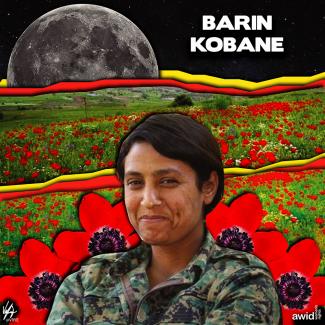
Barin integraba la unidad de batalla formada íntegramente por mujeres de la Unidad de Protección del Pueblo Kurdo (YPG).
La mataron cuando estaba en servicio activo.
La periodista libanesa Hifaa Zuaiter escribió: «Barin representa todo lo que hemos oído acerca del coraje de las combatientes kurdas, y su muerte es mucho más que el matar a un rival o el resultado de una lucha política o étnica. El horror de exhibir su cuerpo sólo porque es una mujer surge del hecho de que ella se atrevió a amenazar la hegemonía masculina al convertirse en una combatiente en un campo de batalla que se suponía era solo para hombres».
Nous ne pouvons pas examiner les propositions ou les demandes de financement.
Nous vous invitons à consulter notre liste de bailleurs fonds pouvant potentiellement financer votre organisation pour les droits des femmes
Voir notre liste de bailleurs de fonds (en anglais)
Plus de ressources sont disponible depuis la page de Domaine prioriataire Ressources des mouvements féministes
En collaboration avec l'artiste Naadira Patel, nous avons créé un album qui met en lumière une sélection de moments marquants, représentatifs des quatre décennies de soutien de AWID aux mouvements féministes.
Contarás con todos los materiales estándar para talleres y presentaciones: rotafolios, marcadores, notas autoadhesivas, así como proyectores y equipos audiovisuales. Cualquier material adicional será responsabilidad de lxs organizadorxs de la actividad. El equipo de logística de AWID estará disponible para responder preguntas y aconsejar.
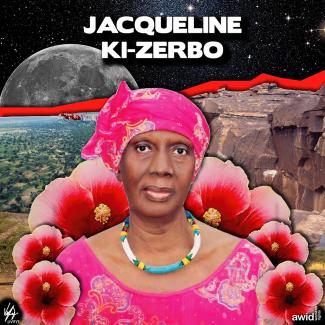
Jacqueline était une éducatrice malienne pionnière de la cause féministe et nationaliste.
Elle a d’abord enseigné l'anglais au Sénégal avant d'être recrutée en 1961 par le Lycée Philippe Zinda Kaboré à Ouagadougou, au Burkina Faso. Etant donné son engagement militant, elle a pris part au soulèvement populaire du 3 janvier 1966. Entre 1961 et 1966, Jacqueline était par ailleurs responsable de la presse syndicale, La voix des enseignants. Elle a été nommée directrice du Cours normal des jeunes filles (aujourd’hui connu sous le nom de lycée Nelson Mandela) jusqu'en 1974 et s'est consacrée à l'éducation des filles et à la promotion des droits des femmes.
En 1984, elle a reçu le prix Paul G. Hoffmann pour sa contribution remarquable en matière de développement national et international.